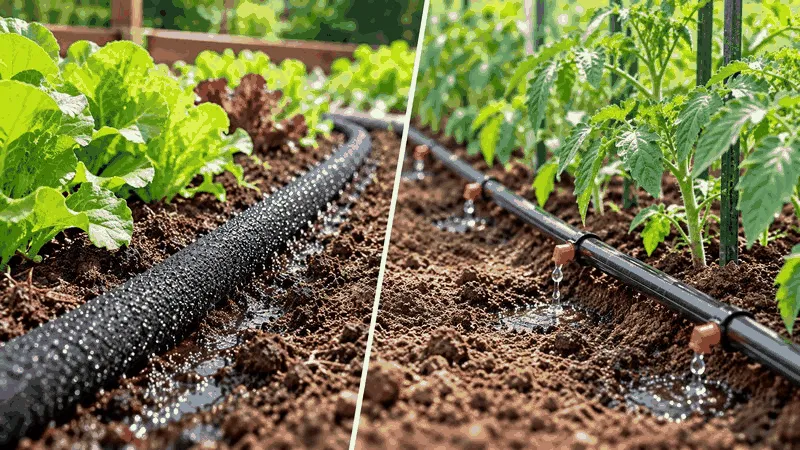
Soaker hose vs drip irrigation is a common question for vegetable growers. Smart watering starts with a few simple irrigation tips and a clear view of how each option works. Both deliver water to the roots instead of the leaves, but they suit different beds. This review covers pros and cons, water use, top soaker hoses, beginner kits, and timers. It also helps you pick the right drip irrigation parts for your plot.
Soaker Hose vs Drip Irrigation: The Basics
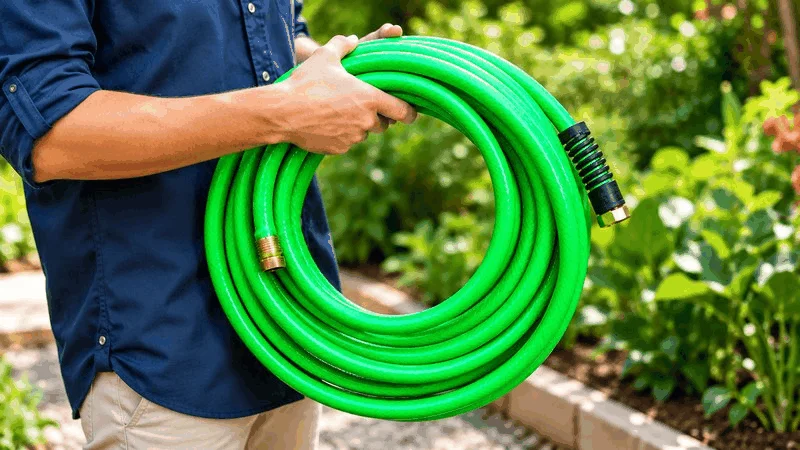
Both watering systems deliver water to the roots efficiently with minimal wastage. Here’s how they work and which is best for your beds.
What Is a Soaker Hose?
A soaker hose is a type of hose that allows water to trickle through its entire length. A soaker hose is inexpensive and easy to install, so watering plants becomes easy. Because water trickles out at low pressure close to the ground, evaporation is minimal; soaker hoses work well for vegetable rows, flower beds, and hedgerows.
What Is Drip Irrigation?
Drip irrigation systems use water tubes with emitters that deliver water to specific spots, usually near the plant. The system is expensive to begin with and requires a lot of planning, but it is much more flexible and controllable.
Soaker Hose vs Drip Irrigation: Which Is Better?
Which is better? It depends on your beds. For even surfaces and a limited budget, soaker hoses work well, while drip irrigation is ideal for sloping land, intercropping, and precise control. A comparison table is given below:
| Feature | Soaker hose | Drip irrigation |
| Water delivery | Seeps along the whole hose | Released at each emitter |
| Setup | Easy, usually no regulator (follow the maker’s pressure rating) | More parts and planning |
| Cost | Low up front | Higher up front |
| Slopes | Best on level ground | Handles slopes with the right emitters |
| Upkeep | Wears in sun and can kink | Emitters can clog, but parts are repairable |
Sketching your beds first makes either choice easier, and a simple DIY irrigation system plan shows where lines should run.
Soaker Hose vs Drip Irrigation for Vegetable Gardens
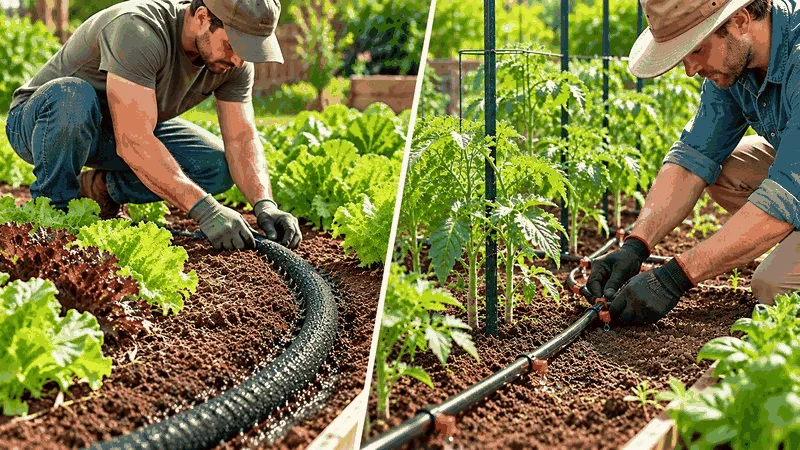
What are the pros and cons of drip irrigation vs. soaker hoses for vegetable gardens? Both deliver water at the base of the plant, keeping leaves dry. When comparing soaker hose vs drip irrigation, both can also reduce evaporation compared with sprinkler systems. So they can be useful parts of a larger watering and irrigation system. Differences can be observed in the following details:
- Soaker hose pros: low price, fast installation, and mobility.
- Soaker hose cons: imprecision, deterioration under intense sunlight, and the possibility of kinking. It works best on flat areas, and according to the extension advice, watering lines longer than 100 feet or uphill will not distribute water evenly.
- Drip pros: precision of water distribution, zones that can be turned on and off, and success with sloped areas, potted plants, and long rows.
- Drip cons: expensive, more time-consuming to set up, and emitters can clog, so it is recommended to install a filter.
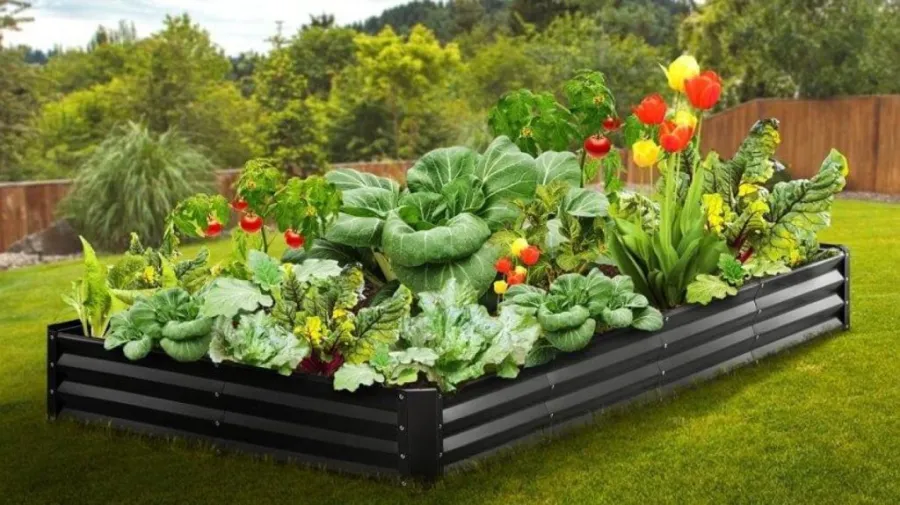
For small flat beds, a soaker hose might be enough. It could be a straightforward way to go when deciding on a soaker hose for vegetable gardens, especially when you need an economical system. But then again, maybe a drip irrigation system would be more suitable for long rows, sloping beds, and irregular planting schemes. There are things to keep in mind when considering soaker hose vs drip irrigation systems. Both types can water raised garden beds properly.
Soaker Hose Water Efficiency: Which Uses Less Water?
Which uses less water, a soaker hose or drip irrigation, and for which plants? When comparing soaker hose vs drip irrigation. Drip irrigation is generally more efficient because it delivers water directly to plant roots through individual emitters. Soaker hoses can also be efficient, especially when run on timers and monitored; otherwise, they’re likely to waste more water. According to the UGA Cooperative Extension, drip or soaker hoses use 30 to 50 percent less water compared to sprinklers. Understanding soaker hose water efficiency can help you choose the right watering method for your garden.
Drip irrigation systems are for container gardens, sloping areas, shrubs, and long rows of vegetables. Soaker hoses are ideal for flat beds and short rows. If you’re deciding between soaker hose vs drip irrigation, consider your garden layout and the types of plants you grow. In both cases, watering deeply and infrequently promotes good root growth.
A general guideline is to run them for 30 minutes, then dig to check how deep the water penetrates, and adjust as needed. Extension recommends a moisture depth of 2 inches. Even watering from a rain barrel can save mains water usage if your irrigation system operates at low pressure.
Top Soaker Hoses and Beginner Drip Kits
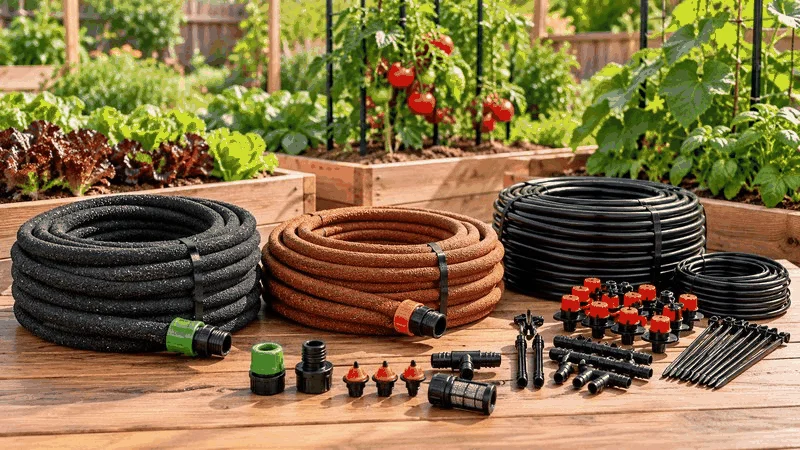
What are the top-rated soaker hose options for allotments and raised beds, and how do they differ? When comparing soaker hose vs drip irrigation, consider the hose length, material, water pressure, and coverage. Bob Vila’s tests show five options. They differ in length, materials, and pressure. The sizes, materials, pressure, and wetting distances below are based on the tests above, and all five are suitable for raised-bed irrigation.
| Hose | Size | Material | Standout |
| Water Right 700 Series | 1/2 in | Polyurethane, brass fittings | Very flexible, wets about 6 in each side |
| Secbulk linkable kit | 4 sections of 50 ft, 1/2 in | Vinyl with fabric cover | Links up for large plots, plastic connectors |
| H2O Works flat soaker | 50 ft, 1/2 in | PVC, brass fittings | Held about 55 PSI, UV-protected |
| Taisia | 100 ft, 1/2 in | Recycled rubber, polyethylene | Took 40 PSI, stiff in cool weather |
| Styddi | 50 ft, 1/2 in | Recycled rubber, brass connectors | Hard to position, so warm it in the sun first |
Water pressure is another factor to consider when comparing soaker hose vs drip irrigation. High pressure reduces watering efficiency by causing spraying. Thus, the Water Right hose sprayed at 40 PSI, but the H2O Works hose retained about 55 PSI with little spraying, whereas the Taisia hose absorbed 40 PSI.
Moreover, the Secbulk kit wetted the area up to 4 inches from both sides, while the H2O Works and Taisia hoses wetted up to 8 inches. Connectors for hose and hose end caps are available, along with other items used for watering.
Get a flexible 50 ft hose for raised beds since it bends in corners. Opt for a linkable or 100 ft hose for an allotment plot with long rows. When deciding between soaker hose vs drip irrigation. Place the hose in the soil and mulch it to keep water near the roots and reduce weed growth. For trees located on the edges of a plot, use tree watering bags.
Recommended For Your Project
Best Drip Irrigation Kit for Beginners
Which drip irrigation kits are easiest for beginners to install and what do they include? When comparing soaker hose vs drip irrigation, beginners should consider how easy each system is to install and operate. The best drip irrigation kit for beginners should include tubing, drippers, and clear instructions. According to Bob Vila’s drip system tests, the first two kits listed below took half an hour or less to assemble; these numbers come from the same review.
| Kit | What is included | Setup note | Limit |
| Rain Bird Landscape and Garden Drip Watering Kit | 50 ft of 1/2 in mainline, 50 ft of 1/4 in tubing, 20 drippers, micro sprinklers, bubblers, tool, stakes | Under 30 minutes for 17 drippers | No timer |
| Raindrip Automatic Watering Kit with Timer | 75 ft of tubing, 20 emitters, mechanical timer | About 15 minutes for 17 plants | Cannot be expanded |
| Orbit Shrub and Flower Bed Drip Kit | 8 bubblers, filter, pressure regulator, timer | Easy to set up and adjust | Bubblers use more water |
| VEVOR drip fittings kit | 300 fittings for 1/4 in tubing | Tubing not clearly listed, so confirm it | Fittings only |
If you’re after a vegetable bed, choose a kit with an assembled filter and regulator, since both devices are used to prevent early failures. If you’re comparing soaker hose vs drip irrigation for a permanent vegetable garden, dripline can be a suitable option. Drip tape is generally intended for temporary use. The Rain Bird kit suits a small garden with up to 22 plants, while the third kit suits a 250 sq ft area.
The second kit cannot be expanded because of the pressure drop and is better for patio planters. If you want an automatic garden watering system with a timer, check whether the kit includes one or if you need to buy one separately. Specifications can change, so confirm them on each maker’s page. You can easily add spare connectors, caps, and other drip irrigation fittings later.
Automatic Garden Watering System With Timer
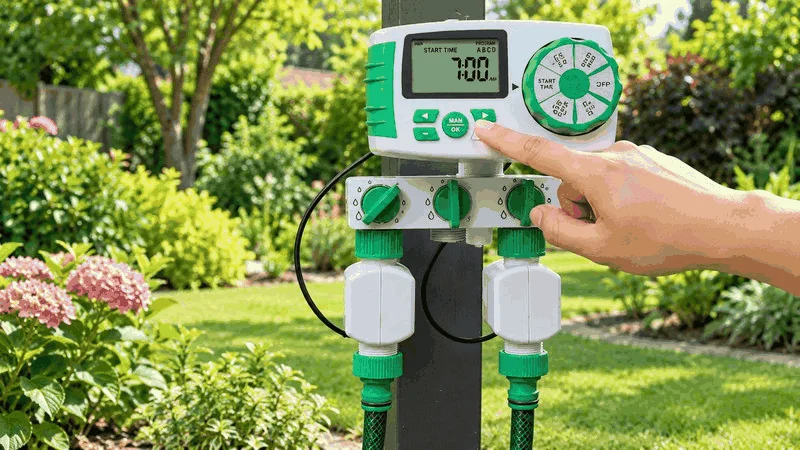
Recommend the best setup for watering a vegetable garden automatically with a timer. Whether you choose soaker hose or drip irrigation, a timer takes the hassle out of it. Connect either drip tubing or soaker hose to the tap timer, and include a filter and pressure regulator for drip.
Follow these steps to set up an automatic garden watering system with a timer.
- Fit the timer. An example is the Wi-Fi sprinkler timer, which has only one outlet and is ideal for just one bed or zone. It can support as many as five schedules and a rain delay of 24, 48, or 72 hours.
- Add protection. These include a backflow valve, filter, and pressure regulator that reduces your tap pressure to the level specified for the kit, usually around 20 PSI for drip irrigation. They are included in the list of regular watering accessories.
- Lay the lines. Run drip along rows and the soaker hose in flat beds, then cover the lines with mulch. Keep each soaker hose line short, and don’t exceed the drip lines’ recommended length.
- Split the zones. Two outlets on a Wi-Fi timer allow two zones, but the product page doesn’t say they have separate schedules, so check that. Two zones connected to one faucet require staggering times to maintain constant water pressure.
- Set the schedule. Water in the morning or at night when it’s cold, but only when necessary and deep enough. Rain sensors save you watering on rainy days. A simple manual timer prevents overwatering, while a smart timer can follow a weekly schedule.
- Test for leaks. If the faucet stays open with a timer, make sure all connections are tightly secured. There is a hose size chart to help you choose the right hose size.
Whether you choose soaker hose vs drip irrigation, regular checks help keep your automatic watering setup working throughout the growing season. Keep your system in good working order all season long. Change the filter monthly or every other month, and run the lines periodically. Before any frost, drain your system so any remaining water will not freeze and damage your tubing.
Conclusion
When comparing soaker hose vs drip irrigation, the best choice depends on your garden layout and watering needs. Between soaker hose and drip irrigation, it all depends on the beds. If you have smaller, flat beds, use a soaker hose; for longer beds, slopes, or containers, use drip irrigation. Using a timer, proper filters, and mulch can minimize water waste. It all depends on the soil, design, and timing of the irrigation system.
Frequently Asked Questions
How long can a soaker hose be?
However, most soaker hoses work best over short distances. Long-distance runs of more than 100 feet, or uphill runs, may not provide even watering.
Do soaker hoses need a pressure regulator?
It depends on the hose you use. If you’re deciding between soaker hose vs drip irrigation, check the manufacturer’s guidelines to see whether a pressure regulator is required. Make sure the water pressure stays below the hose’s limit.
Which uses less water: a soaker hose or drip irrigation?
Drip irrigation can also reduce water loss by delivering water directly to each plant’s base. Similarly, soaker hoses can save water compared with overhead sprinklers. Effectiveness depends on several factors.
How often should I clean a drip irrigation filter?
Check the filter regularly and clean it whenever dirt builds up or water flow slows. Cleaning it once every one or two months would be a good initial step to take.