Using a hose reel properly helps prevent problems like tangling, leaks, and premature hose cracking. Properly storing your hose requires following a few basic steps in order: connect, wind, remove, lock, and store. This guide covers all of these steps, how to use a hose reel, along with information on sizing, installation, and maintenance. Whether you have a hose cart, wall mount, or retractable hose reel, these practices will help.
How to Use a Hose Reel: Setup and Winding
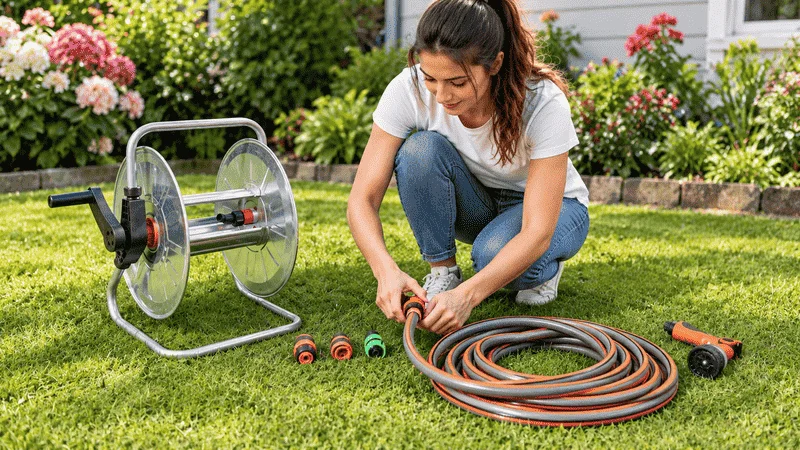
How to use a hose reel: Attach the hose to the reel, roll it up neatly, and fasten the loose end. Do it once, and you will save yourself a lot of trouble next time. The trick is simply using the right hose.
Choose the Right Hose Length and Diameter
How do I choose the right hose length and diameter for my hose reel? When learning how to use a hose reel, start by determining the capacity of your reel, select the shortest one capable of reaching the most distant bed, and consider these criteria to irrigate effectively. A hose that is too long or too large may not coil properly, and an overloaded hose reel can jam. Typically, 50 feet is sufficient for small and medium gardens, and 75 to 100 feet for large ones.
The hose diameter and material also affect how to use a hose reel properly. For width, 5/8 inches is the most common hose size, though 3/4 inches offers more versatility and suits a stronger reel. Rubber hose resists kinking and performs well across temperature ranges; vinyl is lightweight but wears out quickly; and expandable hose is hard to roll onto the reel.
| Situation | Length | Diameter | Note |
| Small to medium yard | About 50 ft | 5/8 in is common | Pick the shortest hose that reaches |
| Larger yard | 75 to 100 ft | 5/8 in, or 3/4 in for more flow | Needs a sturdier reel; confirm capacity |
If you would rather skip sizing altogether, a reel with the hose already fitted takes out the guesswork. The VEVOR 25 m reel comes pre-loaded with 82 ft (25 m) of 1/2 in hose, so the length is set at purchase and there is nothing to match.
Before learning how to use a hose reel, make sure the reel is securely mounted. Measure the distance between the reel and the tap, then connect them with the feeder hose from the set and an outdoor tap connector with a secure, corrosion-resistant connection. Before drilling into the wall, check for any water pipes or electrical wires inside.
Choose a good mounting position near the outdoor tap, and mark the bracket holes precisely. Use masonry anchors if the wall is made of brick. Tighten the screws gradually to ensure that the bracket is level with the weight of the reel. Following these steps makes how to use a hose reel easier and safer. For more details, see this installation guide.
Connect and Wind the Hose
When learning how to use a hose reel, follow these steps to connect and wind the hose correctly on a manual reel:
- Warm the hose. Let it lie in the sun briefly so it becomes flexible and kinks less.
- Shut off the water. Turn off the water supply, unscrew the hose from the faucet, and drain any remaining water.
- Check the fit. Make sure the hose fits the reel in length, diameter, and fittings.
- Connect to the inlet. Attach the hose to the reel inlet by hand. Insert a rubber washer to prevent leaks, but don’t tighten the hose too much.
- Wind slowly. Turn the handle with one hand and lay the hose out in even layers with the other hand. Overwinding causes flat spots and cracking.
- Secure the end. Attach the hose’s free end to the reel to prevent it from unwinding. Understanding how to use a hose reel also means knowing that winding the hose is the reverse of attaching a hose to a reel.
Pull Out, Lock and Rewind a Retractable Hose Reel
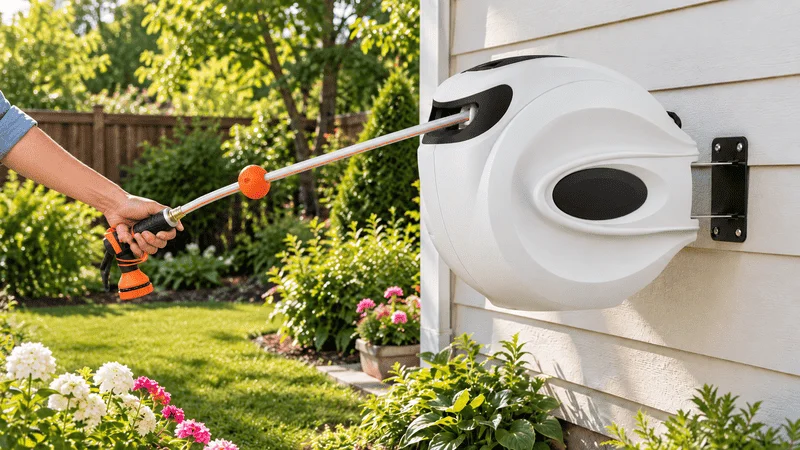
How do I pull out, lock, and rewind a retractable hose reel without it jamming? Remove the hose smoothly, lock it at your desired length, and allow it to rewind slowly. Ease the hose out gently, secure it at the desired length, and let it rewind slowly when done. When learning how to use a hose reel, don’t rewind too fast or create overlapping loops. Other causes of jams include using an overly long or thick hose on the reel, missing the hose guide, or using fittings that aren’t compatible with the system. Garden watering starts with a hose that retracts smoothly.
How to Lock a Retractable Hose Reel
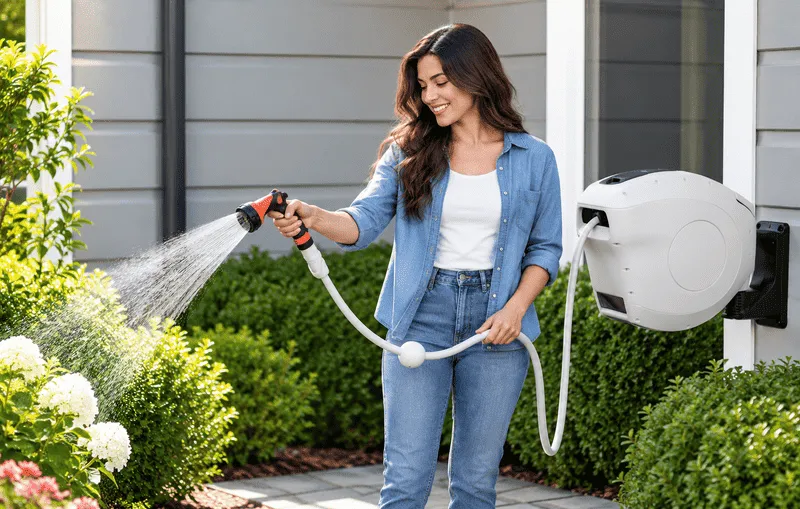
To understand how to use a hose reel with a locking mechanism, pull the hose to the required length and give it a gentle tug to lock it in place. For long hoses, stop periodically to ensure even hose feeding. Set the nozzle before turning on the water tap and apply gentle pressure. Locks differ by manufacturer, so read the instructions provided in your manual. Locks differ by manufacturer, so read the instructions provided in your manual. A retractable hose reel is ideal for gardens where one tap serves all beds
How to Rewind a Retractable Hose Reel
Learning how to use a hose reel correctly also means knowing how to rewind it without causing damage. Turn off the water and press the handle to relieve the pressure before using the hose. Gently pull the hose to retract it, then let it coil back slowly. Don’t let it snap back. If it gets stuck, uncoil it completely, stretch it flat, and then coil it again. Don’t drag the hose over rough terrain when using it, as it can scratch. The mount is important for wall-mounted retractable hose reels as the base takes the strain.
Hose Reel Maintenance: Kinks, Leaks and Bursts
What maintenance steps prevent kinks, leaks, or burst hoses and extend their lifespan? Regular hose reel maintenance is an important part of how to use a hose reel correctly. Short, frequent checks help prevent kinking and other hose problems. Always keep spare quick connectors and nozzles ready in case something goes wrong.
- After each use: release pressure, rewind completely, and store the reel in the shade or covered.
- Monthly: clean the frame and drum, check for slow leaks, and inspect the hose for cracks or bulges.
- Each season: inspect the washers, fittings, mounting bolts, and the hose for any wear. Tighten loose parts and promptly repair any rust or damaged coatings. Lubricate moving parts only as instructed by the manual.
- Always shut off the water source and release pressure when the hose is not in use. Excessive pressure may put unnecessary strain on some weak parts.
- Fittings: hand-tight is sufficient, and missing or worn-out washers are the primary cause of leaks.
Following these simple steps helps you understand how to use a hose reel safely and maintain reliable performance over time.
Recommended For Your Project
How to Prevent Garden Hose Kinks
Kinks weaken the hose and can eventually cause it to crack. Learning how to use a hose reel properly helps prevent these problems and keeps your hose in good condition. Before rolling up the hose, warm it up, roll it manually, and stop to correct any loops you notice.
In case kinking continues, unroll and re-roll the hose. Use the hose guide on the reel, and avoid dragging the hose through sharp corners. These simple steps help you prevent garden hose kinks and keep your watering and irrigation system operates efficiently.
Easiest Hose Reels for Beginners and Winter Storage
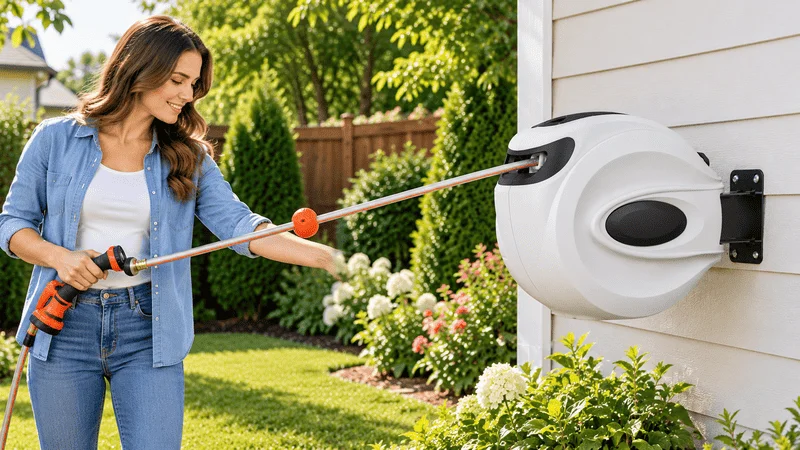
Which hose reels are easiest for beginners to set up and use in a small garden? Beginners can learn to operate hose reels quickly with an easy-to-use model. Select a lightweight hose reel that is easy to assemble. A wall-mounted retractable hose reel with the hose already mounted won’t require you to size and connect it. A 65.6 ft wall reel is one such option.
Wheeled carts are best for beds in a bigger yard, but they need space on the ground and a good path; they are easy to move out but harder to put away. The hose reel cart can accommodate up to 175 feet of 5/8-inch hose, though the hose comes separately. Knowing how to use a hose reel also means handling it carefully. Whichever you choose, don’t drag the cart by the hose, yank it, or run over the hose, as any of these will reduce its lifespan.
How to Store a Hose Reel Over Winter
To preserve your hose reel through winter, drain it, dry it, and store it in a safe place. Some 40m wall reels will detach from the bracket within a few minutes, allowing you to move the whole reel indoors. Here is how you do it:
- Disconnect. Detach the leader hose from the tap before the first frost comes.
- Drain. Drain the garden hose and the reel’s leader hose. Water left inside can freeze, expand, and cause damage to the hose or fittings.
- Rewind properly. Unwind the hose, drain the water, and rewind it into neat layers, ready for easy watering next season.
- Dry. Dry the reel, paying special attention to metal parts.
- Store. Store it indoors in a garage, shed, or basement, away from sunlight and frost.
- Thaw gently. If any part freezes, let it thaw naturally; never use hot water.
Conclusion
Once you how to use a hose reel, watering becomes easier. Choose the right hose for your reel, coil it in layers, secure it, and maintain it through the seasons. Taking a couple of minutes to maintain your hose will prevent any leaks and kinks. The right hose reels make these steps easy.
Frequently Asked Questions
Can I use an expandable hose on a reel?
Some expandable hoses might not roll up well on the reel. Verify that the hose is compatible with the reel by consulting the manufacturer’s guidelines.
Do I need a leader hose?
The leader hose connects the reel to the outdoor tap. Most reels include one so you can position the reel some distance from the water source. It also makes connecting the reel to the tap easier when setting up.
How often should I clean a hose reel?
Clean the spool every few weeks to remove dust and other particles. Monitor the hose and connections and clean them if necessary. Regular cleaning is an important part of how to use a hose reel and keep it in good condition.
Why does my hose reel leak at the connection?
A loose fit or a damaged rubber washer can cause leakage. Turn off the water, inspect the connection, and replace the washer if required. Tighten the fitting by hand, but don’t over-tighten it.
Should I rewind the hose after every use?
Yes. After using the hose for watering, always rewind it to avoid kinking. If you have a retractable reel, unwind the hose gently instead of letting it snap back.