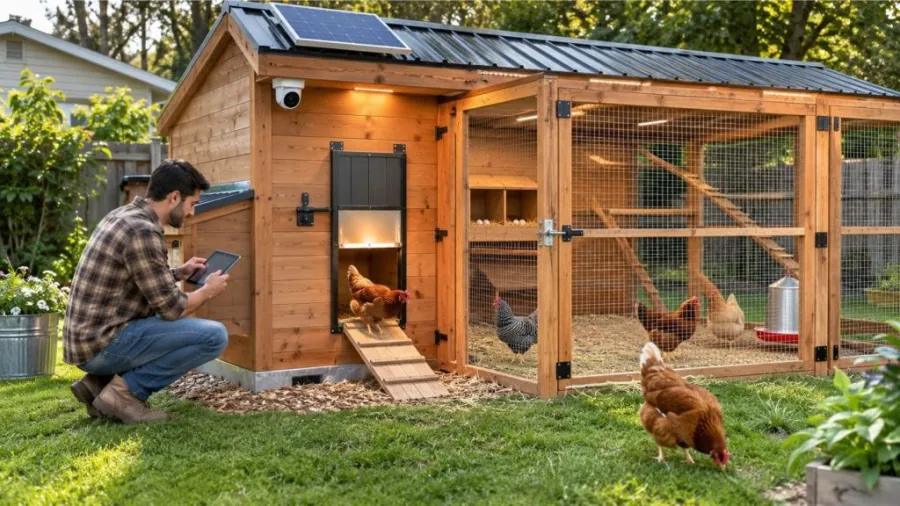
One forgotten latch at dusk is all it takes. A raccoon finds the gap, and by morning the flock is gone. That worry, being there at sunrise and sundown every single day, is what pushes most keepers toward a smart chicken coop. An automatic chicken coop runs the door, watches for predators, and pings your phone while you sleep.
Because safe housing is the real reason to keep a flock secure at night, automation removes human error. This guide covers what a smart hen house includes, how to upgrade the metal coop you already own, and how to choose one for your backyard.
What Are Smart Chicken Coops?
A smart chicken coop is a standard coop fitted with automation and monitoring so the daily jobs run themselves. People also call it a smart hen house or a smart poultry coop, same idea, different label. The difference shows up at 5 a.m., when a sensor opens the door while you stay in bed.
What Is a Smart Chicken Coop?
A smart chicken coop is a hen house or walk-in run fitted with automated, app-connected devices, an automatic coop door, cameras, sensors, and sometimes feeders, that manage and watch the flock with little daily input. An app-controlled coop lets you run those devices from your phone, and an indoor camera means you never have to guess what’s happening in the run. The structure can be wood, plastic, or galvanized steel; the tech bolted onto it is what makes it smart.
Smart Coop vs. a Traditional Coop
The core difference is who does the work. A traditional coop leans on you for every open, close, and head count; an automated poultry house hands those tasks to timers, sensors, and your phone. Both keep birds housed; one drops the dawn alarm. That’s the whole case for a smart chicken coop.
| Daily task | Traditional coop | Smart chicken coop |
| Opening and closing the door | By hand, twice a day | Automatic on timer or light sensor |
| Predator watch | In-person checks | Camera motion alerts to your phone |
| Feeding and watering | Daily refills | Scheduled auto-dispensers |
| Cleaning the floor | Weekly muck-out | Slide-out trays on a self-cleaning coop |
| Away from home | Need a sitter | Monitor from the app |
What Features Should a Smart Chicken Coop Have?
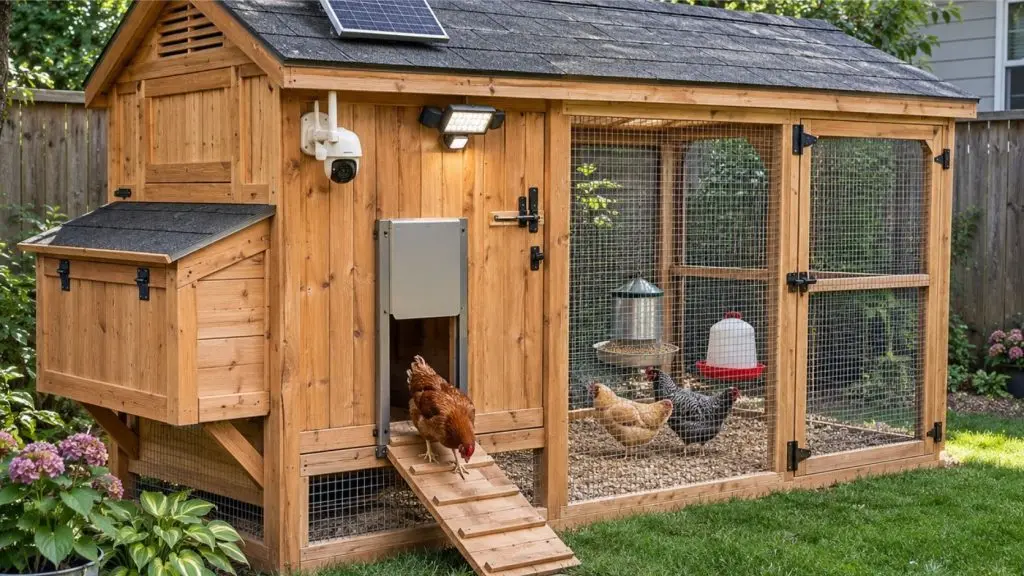
A few core features turn a plain pen into an automatic chicken coop; the rest are nice extras. Start with the door, then add monitoring and feeding as your budget allows.
Automatic Coop Doors
The automatic coop door is the single most useful upgrade, because it shuts the run at dusk whether or not you’re home, the exact window when most predator attacks start. A good coop door opener runs on a timer, a light sensor, or both, and the better ones add an anti-pinch sensor that stops the door if a slow hen is still in the gap. A timer-and-light-sensor door opener that seats tight against the frame handles most backyards, and a solar coop door keeps running where there’s no outlet.
This is the part new keepers ask about most. Are there any automatic door latches for chicken coops? Yes, most seat a geared or guillotine-style panel flush against the frame, and some coop door opener kits add a separate locking latch for extra hold against a determined raccoon. If you’re in heavy-predator country, choose an automatic coop door with a snug track and keep a manual latch as backup.
Automatic openers such as the VEVOR coop door opener come with timer and light-sensor modes plus an adjustable anti-pinch force. It’s worth comparing a few automatic coop door openers on power source, since a solar coop door, a battery unit, and a DC model each suit a different setup.
| Control mode | How it works | Best for |
| Timer | Opens and closes at set clock times | Fixed routines year-round |
| Light sensor | Triggers at dawn and dusk light levels | Following natural daylight |
| Timer + light sensor | Both modes, switchable | Most backyard setups |
| App / Wi-Fi smart | Remote control from an app-controlled coop | Travelers who want eyes on it |
| Example: VEVOR automatic coop door | Timer and light sensor with adjustable anti-pinch force | Walk-in metal runs |
Cameras, Sensors, and Climate Monitoring
Cameras and sensors are what let you check the flock without walking outside. A coop with a camera streams the run to your phone, temperature and humidity sensors flag heat or cold stress, and motion alerts tell you when something’s moving at the fence line. Two-way audio on an app-controlled coop even lets you scare a hawk out of the coop. Pair that camera with a well-equipped chicken coop to read conditions from one screen.
Automatic Feeders, Waterers, and Cleaning
Automatic feeders and waterers keep food and water flowing on a schedule, which matters most on travel days. Treadle or gravity feeders cut waste and lock rodents out, while heated waterers stop freeze-ups in winter. A self-cleaning coop goes one step further, using slide-out trays or droppings boards so mucking out takes minutes, not an afternoon. Plan those trays when you map the coop’s interior layout, and a self-cleaning coop handles the messiest chore for you.
How to Make an Existing Chicken Coop Smart
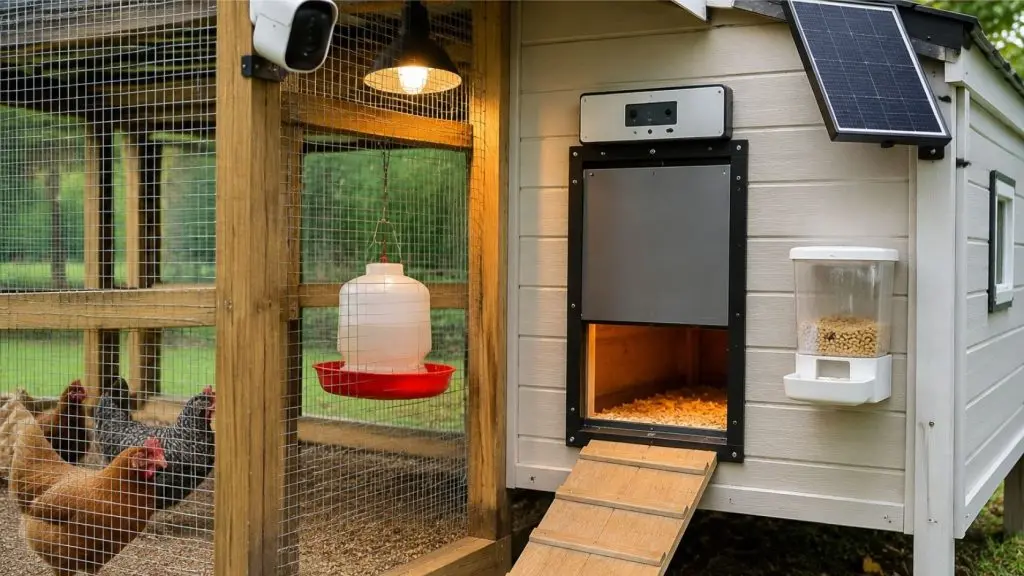
You don’t need a brand-new setup. Most keepers turn a coop they already own into a smart chicken coop by adding devices in order of payoff. A sturdy walk-in run makes an ideal base for an automated poultry house, since the steel frame holds doors and cameras without sagging.
4 Add-Ons That Upgrade Any Coop
Work in this order: automatic coop door, camera, power, then feeding. That fixes the biggest risk first and spreads the cost over a few paydays. The same plan works on a walk-in metal chicken coop or a wooden one, as long as there’s a solid surface to mount hardware. Add a solar coop door if there’s no outlet nearby, and a droppings tray if you want a self-cleaning coop. If you’re also building the coop itself, leave room near the pop-hole for the door motor.
| Add-on | What it does | Where it mounts |
| Coop door opener | Opens and closes on timer, light, or app control | Pop-hole or run gate |
| Wi-Fi camera | Live view and motion alerts from an app-controlled coop | Facing the door and nest boxes |
| Temperature/humidity sensor | Flags heat or cold stress | Inside the hen house |
| Slide-out droppings tray | Turns the floor into a self-cleaning coop | Under the roosts |
| Solar or battery pack | Powers a solar coop door and devices off-grid | Roof or sheltered wall |
| Example: VEVOR walk-in metal chicken coop | Galvanized steel frame that holds add-ons securely | The backyard base structure |
Chicken Coop Security and Automation
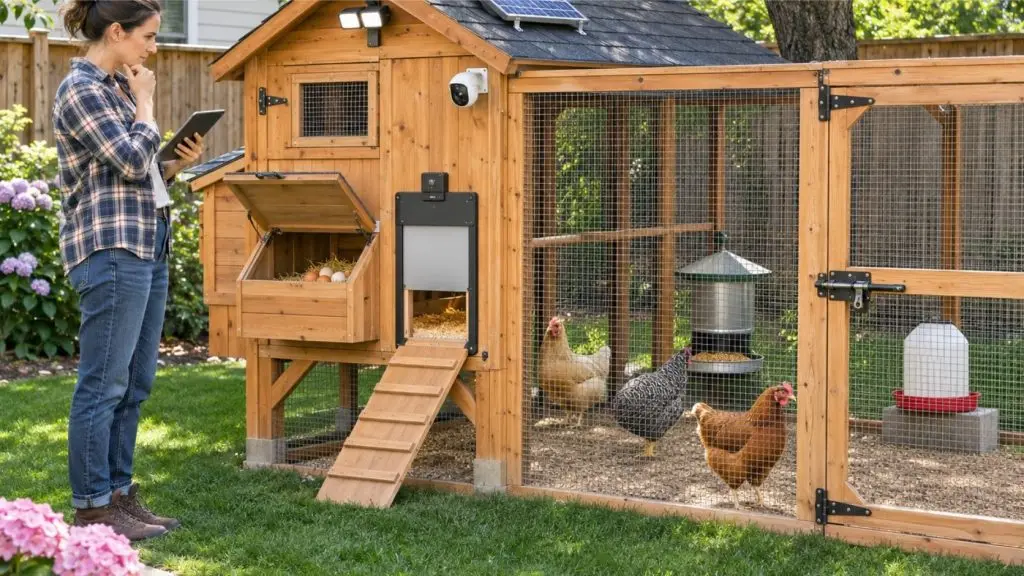
Security and automation are two sides of the same coin, on an automatic chicken coop, the self-closing door delivers the security, since nothing gets in after dark. This section covers keeping predators out and letting the coop run on its own.
Predator Protection That Actually Works
The strongest defense is an automatic coop door that closes tight at dusk and stays shut till dawn, backed by hardware cloth over any opening wider than half an inch. Lights and alarms help, but they should support a secure structure, not replace it.
A question that comes up a lot is about deterrent lights. What are the best ways to use Coop Defender to protect my chickens? Mount the solar predator light at nocturnal animal eye level, a few inches off the ground, and set two to four units facing out on each side so there’s no dark approach. Keep the panel in direct sun all day, and treat the flashing light as a backup to a locked door, not the main defense. Pair it with a coop with a camera, and you’ll see exactly what tripped the sensor.
| Predator | When it strikes | Automation that helps |
| Raccoon | Night | Automatic coop door shut by dusk plus a tight latch |
| Hawk | Day | Covered run and a coop with camera for motion alerts |
| Fox or coyote | Dawn and dusk | Solar coop door on a light sensor and buried hardware cloth |
| Rat or weasel | Night | Sealed gaps and sensor-triggered alerts |
Running the Coop on a Schedule
Automation means setting it once and letting it run. On an app-controlled coop, you program the door to the season’s daylight, set feeders to dispense morning and evening, and let cameras record on motion. An auto door with adjustable closing force is the piece most people schedule first. For a bigger flock, map the automated poultry house around a larger chicken flock’s layout so feeders and roosts don’t crowd the door.
How to Choose the Best Smart Chicken Coop?
The best smart chicken coop fits your flock size, climate, and how hands-off you want to be. Whether a seller calls it a smart poultry coop or a smart hen house, settle those three points first, then compare your options against them.
How do I choose the best smart coop for my backyard chickens?
Match the coop to your flock first: allow 2–3 square feet per bird inside the hen house and 8–10 in the run, then add the automation your routine needs. If you’re away often, an app-controlled coop with a door and camera earns its keep; if winters bite, prioritize power backup and a heated waterer. Hate mucking out? Put a self-cleaning coop near the top of your list. It helps to know the space each bird needs before you size an automatic chicken coop.
| Flock size | Minimum walk-in run | First automation to add |
| 2–4 birds | About 6–13 ft long | Automatic coop door |
| 5–8 birds | About 13–20 ft long | Coop door opener and a coop with camera |
| 9–15 birds | About 20–25 ft long | Door, camera, and auto feeder |
For a small backyard flock, a mid-size walk-in coop leaves room for a feeder without crowding the birds, even with a dozen or more. A larger 25-foot metal chicken coop run gives each hen space to stretch while the automatic coop door still does the daily work. Turning either one into an automated poultry house is easier once you’ve compared chicken coop kits with a build-your-own setup.
Are there reviews comparing different smart coop brands?
Yes. Independent reviews on retailer sites, poultry forums, and video channels compare the main all-in-one smart poultry coop kits against retrofit brands on reliability, battery life, and app quality. Read a few before buying an automatic chicken coop, and weigh how a device held up over a full winter. Pairing a trusted coop door opener with your own camera beats a sealed smart hen house on price and repairs.
Recommended For Your Project
Conclusion
A smart chicken coop isn’t about gadgets; it’s about buying back your mornings and sleeping while the door shuts itself. Start with the upgrade that removes the most risk, the automatic coop door, then add a camera, power, and feeding as you go. Call it a smart hen house or a smart poultry coop, build it on a solid walk-in frame, match the size to your flock, and let the sensors handle the rest. Do that, and daily chicken keeping shrinks to the parts you actually enjoy: collecting eggs and watching the flock.
FAQs
Do smart chicken coops need Wi-Fi?
Most app features need Wi-Fi, but an automated poultry house can still run on a timer or light sensor with no internet. Choose based on whether you want remote alerts or just hands-off opening and closing.
Are smart chicken coops worth it for a small flock?
Yes, even for 2–4 birds. A compact smart poultry coop still pays off, since one predator loss usually costs more than an automatic coop door, and the daily time saved adds up fast.
How are smart coop doors powered?
Most run on batteries, a solar panel, or a DC adapter. A solar coop door often pairs solar with a battery backup, so it keeps working at night and through short power outages.
Can a smart coop stop all predators?
No. Automation closes the door and alerts you, but a secure structure with hardware cloth over gaps does the real protecting. Treat the tech as one layer, not the whole defense.
Will an automatic door hurt a slow hen?
Not if it has an anti-pinch sensor. These stop or reverse the door when something blocks the gap, and many let you adjust the closing force for extra peace of mind.