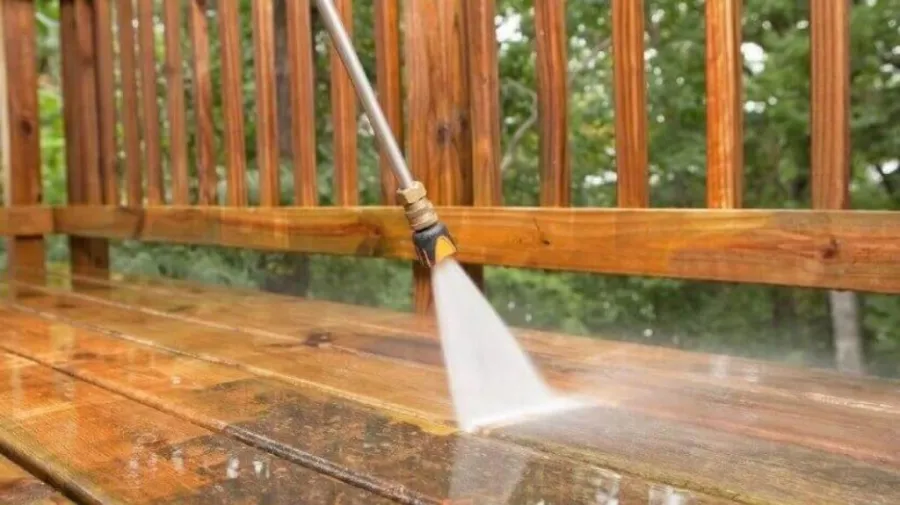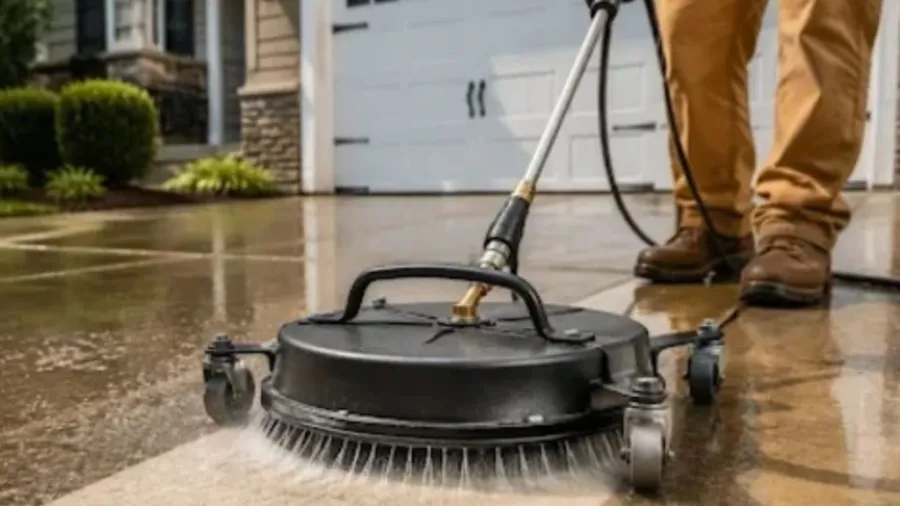
The uneven bands across the slab are overlap marks, and the 15-degree wand that left them also gave you a sore shoulder and soaked shoes. At that point, a flat spinning disk merits its position. With no splash-back, a pressure washer surface cleaner attachment attaches to your machine and cleans a large area in a single pass. This guide explains how to connect it, what pressure it requires, and which parts wear out before you buy a pressure washer surface cleaner.
- What Is a Pressure Washer Surface Cleaner Attachment?
- Pressure Washer Surface Cleaner Compatibility: Matching the Attachment to Your Machine
- The Pressure Washer Connector and Quick-Connect Fit
- Pressure Washer Surface Cleaner Size Guide: Picking the Right Cleaning Width
- Surface Cleaner Nozzle, Spray Bar, and Replacement Parts
- Using and Caring for Your Pressure Washer Surface Cleaner Attachment
Recommended For Your Project
What Is a Pressure Washer Surface Cleaner Attachment?
Swap off the wand and a pressure washer surface cleaner attachment clicks on instead: a disc-shaped housing, often 15 inches across, that rides flat on the ground. Hidden jets underneath do the scrubbing, while a bristle skirt traps the spray so nothing flies back at you. Think of it as a water-powered floor scrubber you push along like a vacuum, made for open, level areas where a thin wand would take too long.
Why a Surface Cleaner Attachment Beats a Bare Spray Tip
Picture a 3-inch cutting path: every sweep has to double back over the last one, and the edges where they meet dry darker than the middle. A surface cleaner attachment covers a wide circle in one sweep, which is why a patio that takes an hour with a wand is done in a fraction of that time. These are among the most practical outdoor cleaning tools for any yard, and a power washer attachment like this saves more time on flat ground than any add-on you can buy. Ask around at any hardware counter, and the add-on in most carts, right after a 3,000 PSI unit comes home, is a pressure washer patio cleaner.
How the Spinning Spray Bar and Nozzles Work
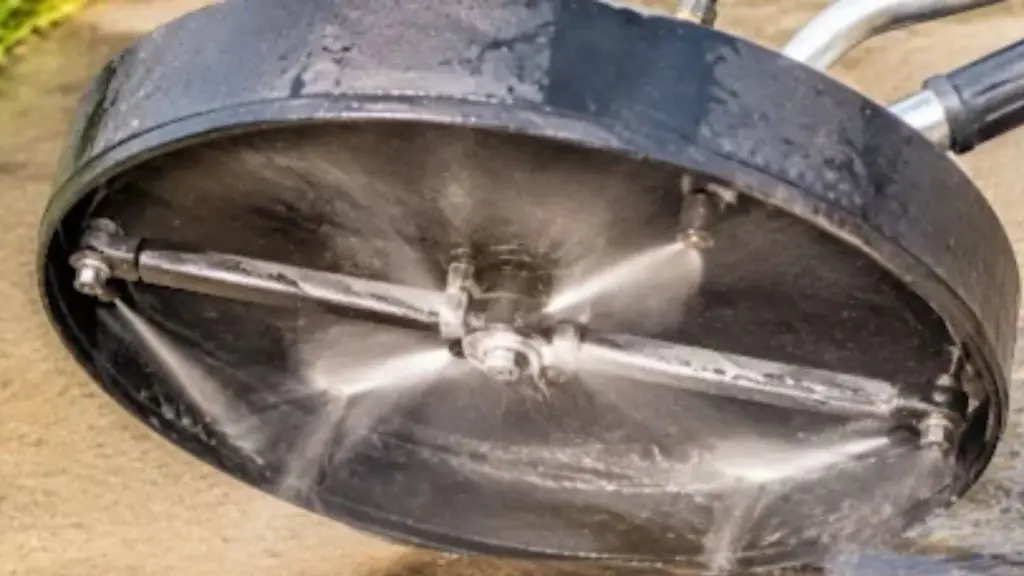
When you turn the housing over, you’ll see a bar with two or three jets. It is also known as a rotary surface cleaner because, when water rushes through, the spray bar spins and the jets trace overlapping circles across the ground.
A rotary surface cleaner applies pressure uniformly and leaves a clean sheet of concrete rather than the stripes that a wand creates, because each surface cleaner nozzle is angled.
The first sign a surface cleaner needs replacing is a clogged or worn nozzle, which causes uneven spin and a patchy finish.
Pressure Washer Surface Cleaner Compatibility: Matching the Attachment to Your Machine
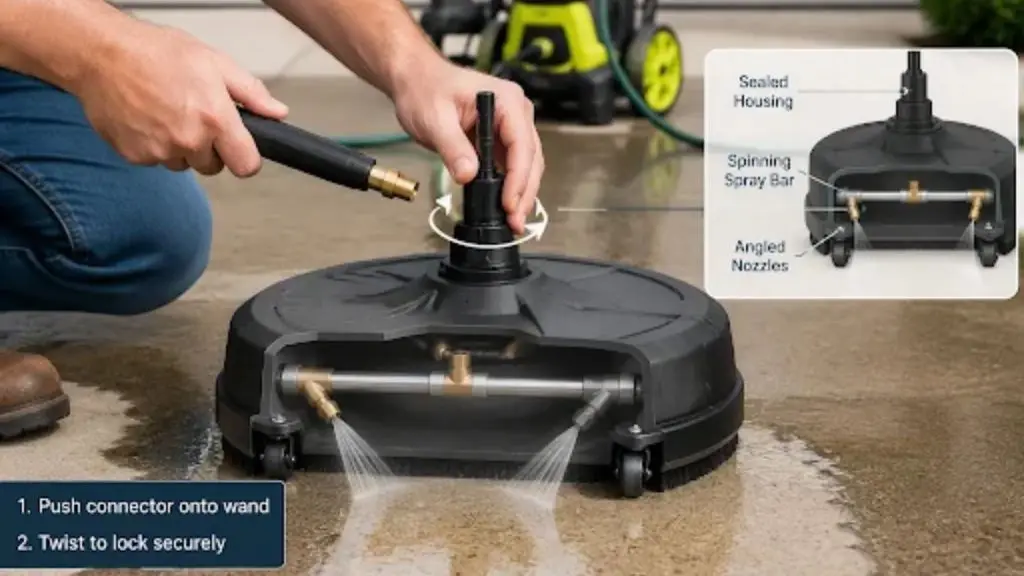
Most first-timers go wrong the same way: a 20-inch head on a 1,800 PSI unit, and the bar barely turns. Three factors determine whether a surface cleaner is compatible: the connector, the surface cleaner GPM requirements, and the surface cleaner PSI requirements. Match those few numbers and the bar comes up to full speed, roughly 1,000 rotations a minute, on any pressure washer surface cleaner attachment you pick.
Pressure Washer Surface Cleaner PSI and GPM Requirements
A pressure washer surface cleaner attachment has no motor. The surface cleaner PSI requirements on the box are crucial because it runs on whatever your washer produces. Check the pressure range stamped on the box, usually 2,000 to 2,600 PSI at the low end. Starve a rotary surface cleaner below that, and the arm drags, leaving faint arcs on the slab. Push 4,000 PSI through a plastic body, and it can split at the seam.
You can tell whether your machine moves enough water to rinse away what you lift by checking flow counts and the surface cleaner’s GPM requirements. A machine that barely meets the surface cleaner PSI requirements but passes the surface cleaner GPM requirements still runs a small head, albeit more slowly.
What are the best pressure washer surface cleaners for use with a small electric pressure washer?
Narrow disks ask less of the pump, which is why a 10- to 14-inch head holds its spin on an electric unit pulling 1.5 GPM while a wider one bogs down. The 14-inch stainless surface cleaner from VEVOR can handle a short driveway and is a safe substitute for a regular electric pressure washer.
| Factor | Compact 10–14 in (best for small electric) | Mid 15–18 in |
| Spin | Spins on lower PSI without slowing | Needs more PSI/GPM to spin well |
| Machine | Small electric washer | Mid electric or petrol |
| Best for | Short driveway, patio | Larger homes, regular use |
| Example to consider | VEVOR 14 in stainless surface cleaner | VEVOR 16.5 in surface cleaner |
The Pressure Washer Connector and Quick-Connect Fit
If the fitting won’t lock on, it won’t matter how much pressure you apply. Most heads have a 1/4-inch or 3/8-inch quick-connect plug for the pressure washer connector, and the plug on a pressure washer attachment must match the lance on your washer.
Which pressure washer surface cleaners are most compatible with standard quick-connect lances?
Because a mismatched pressure washer connector necessitates an adapter or no fit at all, look for a head with a true quick-connect sized to your wand. This is where surface cleaner compatibility really comes in: purchasing the machine and head separately. Surface cleaner compatibility is no longer a risk if you check the pressure washer connector size on both.
What are the best electric pressure washer surface cleaners versus petrol ones for home use?
Weekend driveways rarely need more than an electric pressure washer paired with a compact or mid-size surface cleaner attachment, around 20 pounds to carry, quiet enough to talk over, and plenty of push for a small rotary cleaner. A petrol pressure washer can drive a large disk like the 24-inch surface cleaner. Think of a 600-square-foot driveway on a Saturday morning; that size of job is exactly what it’s built for. A mid-size head on an electric washer is ideal if you only clean a patio occasionally.
| Check | What it means | Rule of thumb |
| PSI | Pressure your washer makes | At least 2,000–2,600 to spin the jets |
| GPM | Water flow your washer moves | More flow rinses dirt away faster |
| Connector | Quick-connect plug size | Match 1/4 in. or 3/8 in. to your wand |
| Housing | Build material | Plastic for light use, stainless for daily |
Pressure Washer Surface Cleaner Size Guide: Picking the Right Cleaning Width
Fit settled, the second number to pin down on a pressure washer surface cleaner attachment is the diameter of the deck, anywhere from 10 to 20 inches. The wider the disk, the more ground you clear per pass, and the stronger the machine you need to drive it are the three classes into which this surface cleaner size guide divides heads.
Compact, Mid-Size, and Large Widths
Compact heads (10 to 14 inches) are inexpensive, lightweight, and simple to maneuver through narrow spaces and stairs. For the occasional weekend clean, a small pressure washer attachment works well with small electric machines.
The best pressure washer patio cleaner for most homes is a mid-size head (15 to 18 inches), which is light enough to support your arm and wide enough to finish quickly. VEVOR’s 16.5-inch stainless head covers that area well.
Large heads (20 to 24 inches) clear lots and driveways in long strips, but spinning them requires a powerful gasoline washer. Before committing, double-check the surface cleaner PSI and GPM requirements and use the surface cleaner size guide below to match width to your machine.
| Width class | Cleaning path | Machine needed | Best for |
| Compact | 10–14 in | Small electric washer | Patios, steps, light use |
| Mid-size | 15–18 in | Mid electric or petrol | Homes, decks, regular use |
| Large | 20–24 in | Strong petrol washer | Driveways, lots, heavy use |
Surface Cleaner Nozzle, Spray Bar, and Replacement Parts
A head is only as good as its functional components. A power washer surface cleaner attachment can last for years rather than ending up in the trash after a difficult season if you know which parts wear out and which you can replace.
The Parts of a Pressure Washer Surface Cleaner That Wear First
Some parts in every pressure washer surface cleaner attachment fail before the others. The most damaged parts are the surface cleaner spray bar and nozzle. Grit, hard water, and daily pressure gradually wear down the jets; a worn surface cleaner nozzle typically causes finish streaks or slow spin. The spray bar swivel may stiffen. The good news is that most high-quality heads come with standard surface cleaner replacement parts so that you can rebuild rather than replace.
Can you list pressure washer surface cleaners that come with useful accessories or attachments?
Yes, here are a few pressure washer surface cleaner attachments worth a look, with what they bring in the box:
- 15-inch plastic surface cleaner: ships with two extended wands so that you can reach along walls and under benches.
- 14-inch stainless surface cleaner: four wheels plus two extended wands, a light pick for a small electric washer.
- 16.5-inch stainless surface cleaner: a four-wheel, mid-size disk that suits most home jobs.
- 20-inch stainless surface cleaner: four wheels and a dual handle for steady, two-handed control.
- 24-inch surface cleaner: four wheels and dual handles, built for driveways and wide, open ground.
More generally, accessories worth having on any head include extended wands for reach, spare nozzles since the jets wear first, a bristle skirt to keep the spray off you, and four wheels for a smooth glide. Make sure that replacement parts for the surface cleaner, such as the spray bar, nozzles, and seals, are sold separately because you will eventually need them.
Which pressure washer surface cleaners are recommended for frequent use in a rental property business?
Choose a power washer attachment with easily sourced surface cleaner replacement parts and go with stainless instead of plastic. A daily head run quickly wears out nozzles, and downtime costs you jobs. A 20-inch stainless head handles that daily grind without rusting or flexing.
| Factor | Stainless (recommended for daily/rental) | Plastic |
| Durability | Handles the daily grind, no rust or flex | Wears and can crack faster |
| Replacement parts | Standard, easily sourced — rebuild, not replace | Often limited |
| Downtime risk | Low — keeps jobs running | Higher |
| Example to consider | VEVOR 20 in stainless surface cleaner | VEVOR 15 in plastic surface cleaner |
Using and Caring for Your Pressure Washer Surface Cleaner Attachment
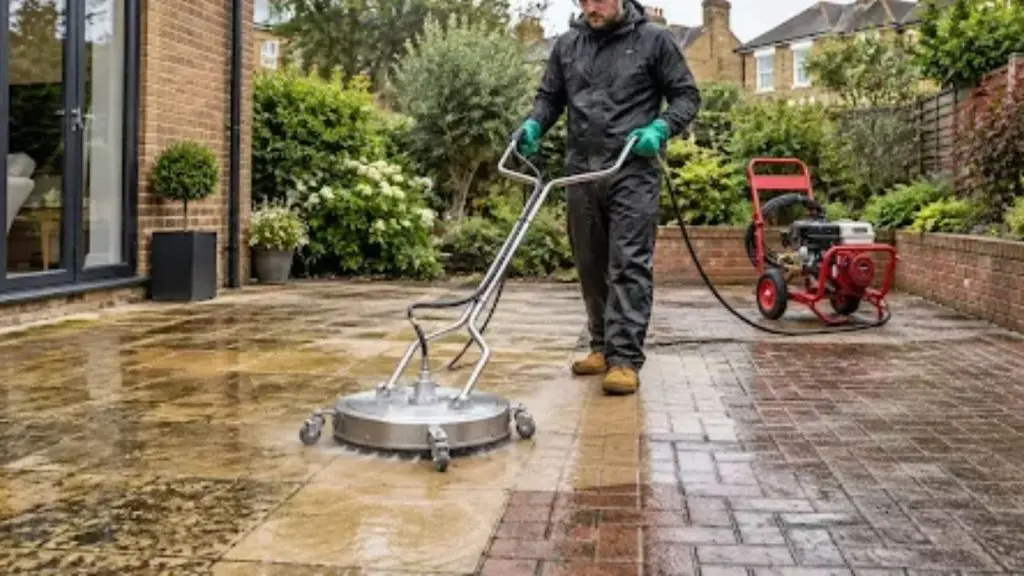
Having the right mind is half the victory; using it well is the other half. A concrete cleaning attachment’s smooth rotation and uniform finish depend on a few routines.
Getting an Even Pass on Concrete
To avoid missing any strips, overlap each pass by a few inches, like mowing a lawn. The best way to use a concrete cleaning attachment is to keep it flat on the ground and move slowly enough for the jets to lift the dirt. Since extremely high pressure can etch soft concrete, test a hidden corner first.
A comprehensive procedure for cleaning concrete with a pressure washer outlines each step. Used this way, a pressure washer patio cleaner leaves slabs, decks, and pavers even rather than streaked, and the same concrete cleaning attachment works equally well on brick.
Cleaning, Storing, and Protecting the Parts
To remove grit from the nozzles, flush clean water through the head after each job. Allow it to dry before storing. The fastest way to burn through replacement parts is damp storage, which also rusts metal and clogs jets.
Using the right electric pressure washer also reduces wear because a machine fighting the disk struggles to maintain consistent, matched pressure on a concrete cleaning attachment. A well-matched pressure washer patio cleaner serves an entire yard, and an easy-to-use pressure washer attachment completes your kit from the larger selection of outdoor power equipment.
Conclusion
A slow, streaky task can be completed in a single pass with the correct pressure washer surface cleaner attachment, but only if it is compatible with your machine. Check the pressure, water flow, and pressure washer connector to begin with surface cleaner compatibility. Next, use a surface cleaner size guide to match your washer’s width, choose stainless if you plan to run it hard, and keep extra replacement parts for the spray bar and nozzle. If you match it correctly, a power washer surface cleaner attachment will save you time and money.
FAQs
What are the best pressure washer surface cleaners for use with low-pressure household washers?
A 10- to 12-inch disk spins on the least amount of pressure, so choose a pressure washer with the smallest size you can. Your best option is a compact rotary surface cleaner that meets the lower PSI requirements because a low-pressure household washer struggles with wide disks. You’ll still defeat a bare wand, but expect slower passes.
Can any pressure washer run a surface cleaner attachment?
Nearly, as long as the pressure is appropriate. Check the head’s stated PSI range against your machine; most require at least 2,000 to 2,600 PSI to spin the jets. A wide head requires a petrol model, but a light electric pressure washer works well with a small power washer attachment.
How do I know the connector will fit?
The pressure washer connector on the head should match the 1/4-inch or 3/8-inch quick-connect plug used by your washer’s lance. Surface cleaner compatibility is usually a quick check rather than a guess because most high-quality heads use a standard quick-connect fitting on the pressure washer attachment.
What size surface cleaner should I buy?
A power washer surface cleaner attachment only works when its disk is compatible with your pressure, so make sure the width fits your machine and your available space. Use a surface cleaner size guide: large 20- to 24-inch heads for driveways and gas stations, mid-size 15- to 18-inch heads for most homes, and compact 10- to 14-inch heads for patios and small electric washers.
Do the nozzles and spray bar wear out?
Indeed. The first components to wear out are the surface cleaner nozzle and spray bar because they handle the most grit and pressure. If you clean frequently, keep replacement parts for your surface cleaner on hand. To slow down wear, flush the head after each use.