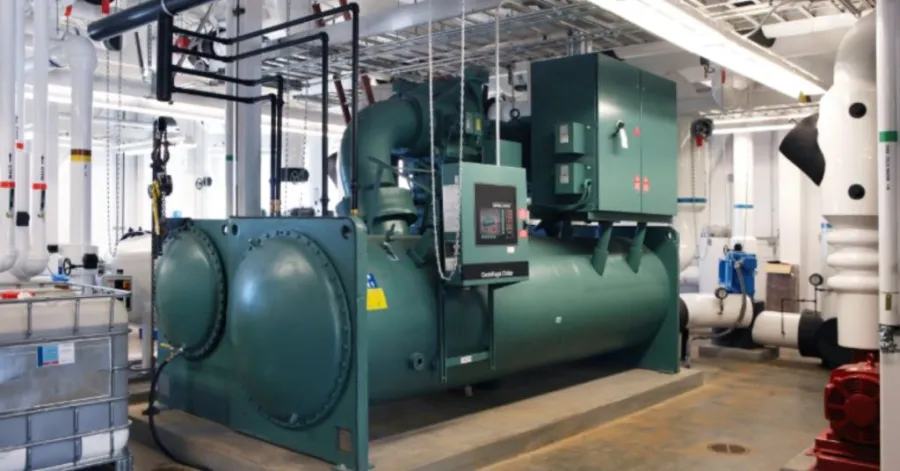
Industrial chiller systems are important for maintaining stable temperatures in the manufacturing and processing industries. It eliminates excess heat from equipment and process fluids to facilitate smooth, safe operations. Understanding how an industrial chiller system operates is significant for selecting the right system, improving performance, and minimizing energy expenditures. These systems are commonly applied in plastics, food processing, pharmaceuticals, and many other areas. This guide will explain the working principle, types, efficiency factors, and sizing methods. This knowledge is useful for selecting the most appropriate solution to enhance productivity, reliability, and long-term operational efficiency in industrial settings.
How Industrial Chiller Systems Work
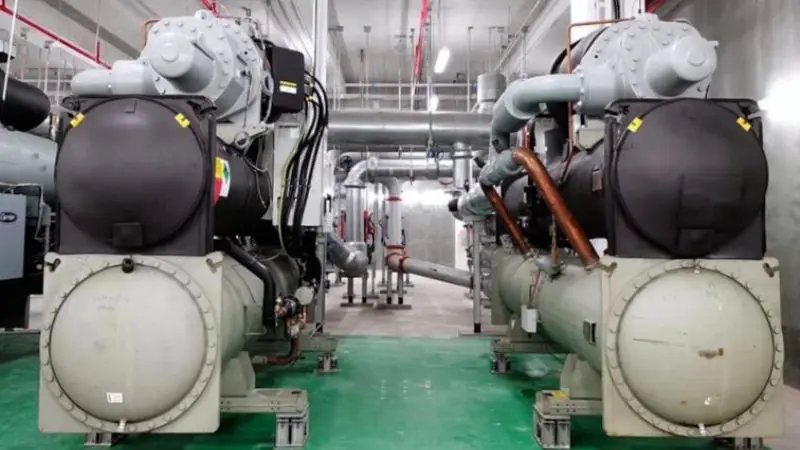
Most manufacturing and processing industries have a significant segment of industrial cooling. In the absence of adequate cooling, machines and processes are likely to overheat and become less efficient. To make sense of this system, it is worth having a first glance at its fundamental functioning. This section gives the general concept of the cooling technology and how it maintains the temperatures of various industrial settings.
Before getting into the details, it is helpful to recognize that any cooling system operates on a controlled cycle. This cycle is aimed at the transfer of heat from one location to another in a continuous cycle. Now we shall deconstruct how the system works in simple steps and components.
Basic Working Principle of a Chiller System
The industrial chiller system operates under a simple refrigeration cycle to extract the heat from water or process fluid and pump it out. You may be asking yourself how an industrial chiller system works, and you have the answer in continuous heat exchange. The system captures the heat of process water by an evaporator and transfers the heat to the refrigerant. The refrigerant then transforms into gas and liquid and vice versa, to enable the transfer of heat to occur effectively.
The principle of operation of the industrial chiller system is based on the changes in pressure and temperature. Compression causes the refrigerant to heat up and discharge heat in the condenser. After which, it is expanded and cooled, and then it takes in heat again. This is a cyclical process that ensures that the industrial processes are always kept cool and the equipment and production systems are always kept at the same temperatures.
Key Components of an Industrial Chiller
An industrial chiller consists of some key components that combine to ensure cooling efficiency. The compressor is tasked with the role of raising refrigerant pressure and temperature in order to release heat. The heat in the process water is transferred to the evaporator, where it is cooled before being returned to the system.
The condenser is important as it removes the heat that has been absorbed into the adjacent air or water, based on the type of system. The expansion valve regulates the flow of refrigerant and decreases its pressure, ready to enter the next cooling cycle. All these parts are synchronized to guarantee a smooth and continuous cooling process in a chiller system in the industry.
Step-by-Step Working Process
The industrial chiller works as follows: warm process water enters the evaporator, and the process continues. In this case, the refrigerant absorbs heat and cools the water, and it is ready to be pumped back into the refrigerant. This is necessary to ensure a stable temperature in the industrial processes.
The refrigerant bearing the absorbed heat then flows to the compressor, where it gains a lot of pressure and temperature. Once that is compressed, it is then passed to the condenser, where the heat is expelled to the surrounding environment. Lastly, the refrigerant flows through the expansion valve, which decreases its pressure and temperature, and then it moves back to the evaporator. This repeats and repeats, and provides effective and consistent cooling in the system.
Types of Industrial Chiller Systems
There are industrial cooling systems that are designed to suit the different operational requirements and capabilities. The two types are designed to meet specific temperature-regulation requirements in industries such as plastics, food processing, pharmaceuticals, and manufacturing. By learning about these variations, one is able to select the appropriate system to use for performance and efficiency.
The types of industrial chiller systems primarily vary based on how heat is rejected and the size of the cooling load. Others are suited to small to medium applications, and others are suited to heavy industrial use. Simple types and their working behavior are to be examined in a few words.
Air-Cooled Chillers
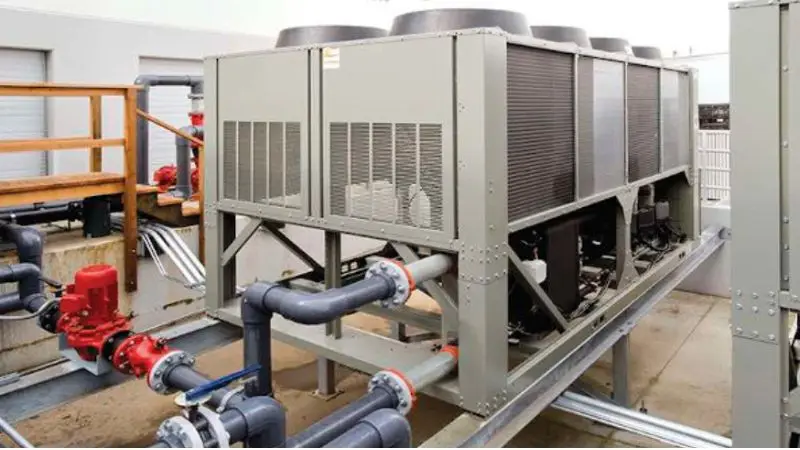
An air-cooled chiller operates on the principle of cooling the refrigerant with the help of air around it. Air is blown by fans over the condenser coils, which aid in heat release to the environment. This renders it an easier system since it does not need a cooling tower or elaborate water piping system. It is usually installed in areas where there is limited water or where installation is required to be simple.
Easy installation and reduced initial cost are the primary benefits of this system. Nevertheless, it may be influenced by high ambient temperatures. Air-cooled vs. water-cooled chiller difference: Air-cooled is typically less efficient but is more suitable in a small to medium industrial environment. They are also commonly used in a situation where maximum efficiency is not valuable compared to simplicity and reduced maintenance.
Water-Cooled Chillers
Water-cooled chillers have a medium of heat removal as water and are therefore more efficient compared to air-cooled systems. The refrigerant heats water, which is cooled in a cooling tower. This is a continuous cycle that enables efficient and stable control of temperature, particularly in large industrial operations.
Cooling tower dependency is a major consideration in this system, and it needs good water circulation and maintenance. Air-cooled vs. water-cooled chillers differ.ce When comparing tair-cooled and water-cooled chillers, the water-cooled systems normally present high efficiency and high performance in large-scale industries. Industrial chillers can be more energy efficient in water-cooled systems since water conducts heat more efficiently than air, and therefore, the total energy usage in long-term operation is lower.
Centrifugal Chillers
Centrifugal chillers are engineered for large capacity industrial processes that demand a lot of cooling. They compress refrigerant by using a high-speed rotating impeller and are therefore applicable in factories, large commercial buildings, and process industries that have high cooling needs.
Among the key benefits of this system is its high energy efficiency in industrial chillers, particularly under full-load conditions. These systems are suited to large, stable, and consistent environments with no fluctuations in cooling requirements. Their initial cost is greater, but their efficiency and reliability in the long run make them a more preferred option in industrial cooling applications with heavy loads that demand constant and strong operation.
Screw and Scroll Chillers
Medium capacity cooling is typically done with screw and scroll chillers. Screw chillers have two rotating screws to compress refrigerant, whereas scroll chillers have spiral-shaped compressors that make operation smoother. The two are both made to perform effectively in moderate industrial settings.
These systems provide an excellent compromise in terms of efficiency and cost and can be used in most industries. They are commonly selected in the context when speaking about the size of an industrial chiller system since they can be easily integrated into the middle-range applications. They are stable in performance, offer consistent cooling, and have lower maintenance requirements. They also, in most cases, lead to enhanced energy efficiency in industrial chillers due to optimized compressor design and reduced energy loss during operation.
Air-Cooled vs Water-Cooled Chiller Difference
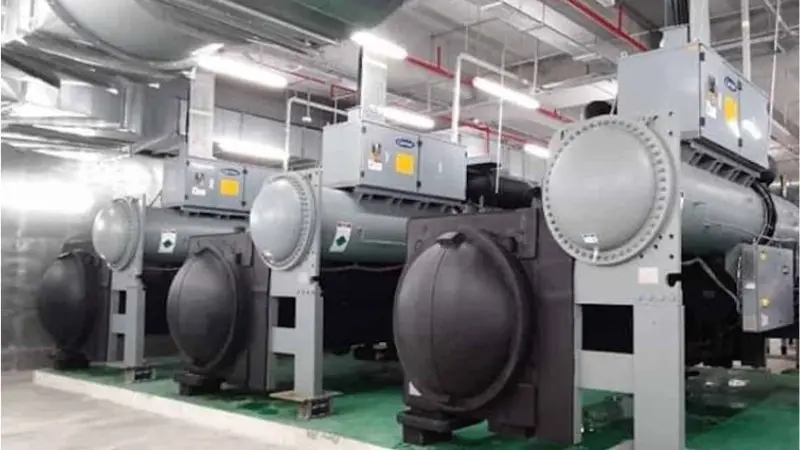
Selecting the appropriate cooling technology is a major decision in any industrial installation. Both water-cooled and air-cooled systems are in common usage, yet they work extremely differently and provide various performance rates. Knowledge of such differences assists industries in choosing the most appropriate based on the cost, environment, and efficiency requirements.
In the air-cooled vs water-cooled difference between the chillers, one should consider the way each system manages the heat rejection, energy consumption, and maintenance in the long term. These are directly related to performance, operating cost, and reliability of the system in a real-life application.
Cooling Method Comparison
The primary distinction between water-cooled and air-cooled chillers is in the way they reject heat. Air-cooled systems operate with fans that blow ambient air across condenser coils to enable heat to be dissipated into the immediate environment. This renders the process easy and closed without the need to add to the water systems.
Water-cooled systems, in contrast, pass the heat of the refrigerant on to water that is circulated to a cooling tower, where the heat is dissipated. This process permits the removal of heat more steadily and enhances control of temperatures. In investigating how an industrial chiller system works, this variation in the way heat is rejected is one of the most critical factors to consider in the general design and operation of the system.
@ryrybigboy Protect your investment! #waterchiller#laserengraver#laserengraving#chillervevor@vevor shop #spotlightfinds #tiktokshoplastchance #tiktokshopholidayhaul #tiktokshopnewyearnewaura#investment
♬ original sound – Ben Slater
Efficiency and Energy Consumption
Water-cooled chillers tend to be more efficient than air-cooled systems owing to the fact that water is a better heat transfer medium than air. This enables the system to better remove heat using less energy. This has made the water-cooled systems mostly favored in large industrial plants where continuous operation and high cooling loads are needed.
Air-cooled systems are easier to install, but generally use more energy during heavy load conditions. This has a direct impact on the energy efficiency of industrial chillers, which makes water-cooled chillers more economical over the long term, but more complex to install. In the long run, industries usually discover that water-cooled systems provide a higher level of performance stability and reduce the cost of operation.
Installation and Maintenance Differences
Air-cooled chillers have less installation space since they do not have cooling towers and large water piping systems. This makes them appropriate when there is little space in the facility or when fast installation is required. Their size and design are also compact, which makes their initial installation less complex.
Water-cooled systems, however, need extra facilities like cooling towers and water circulation systems. This adds space demands and installation work. Water treatment requirements and other components also complicate maintenance. As part of the industrial chiller maintenance tips, water-cooled systems need to be monitored more frequently to avoid scaling, corrosion, and time loss in terms of efficiency.
Energy Efficiency in Industrial Chillers
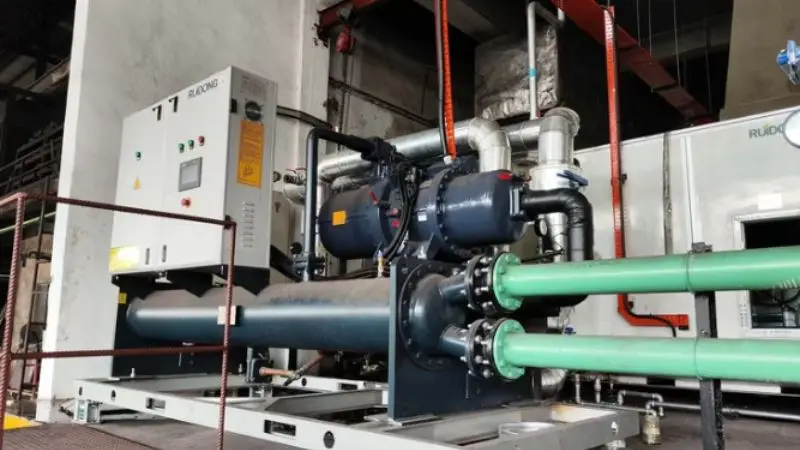
The industrial cooling system is heavily dependent on energy consumption during its planning and operation. An effective system is designed not only to stabilize temperatures but also to save on electricity and enhance performance in the long term. This makes efficiency an important factor in almost every industrial setup.
Energy efficiency in industrial chillers hinges on the design of the system, system operation, and its maintenance. Even minor enhancements in these aspects can result in observable savings and enhanced cooling performance in the long run.
What Affects Chiller Energy Efficiency
There are a number of things that can directly interfere with the efficiency of an industrial chiller system. Load variation, or change in the cooling demand with operation,n, is one of the largest. The loading of the system should change every time the load changes, and this can decrease efficiency. The temperature of the surroundings is also a factor in performance, as the higher the external temperature, the less effective heat release is possible. System design, such as the type of compressor, quality of heat exchanger, and control of refrigerant flow, is also another important consideration. All these factors contribute to the smooth, efficient way the cooling cycle works when it comes to understanding the working principle of the industrial chiller system.
Simple Ways to Improve Chiller Efficiency
System performance and energy consumption can be enhanced in a number of practical ways. Variable speed drives (VSD) are one of the best techniques to use, and the compressor speed is modified according to the cooling demand. This will prevent unwarranted power usage by the system and will enhance efficiency.
It is also important to ensure that the system works smoothly by performing regular maintenance. Proper refrigerant levels, clean components, and proper system checks will guarantee improved performance in the long term. Energy loss is further minimized by proper insulation of equipment and pipes. These enhancements contribute to more efficient energy use in industrial chillers and to the long life of the systems at reduced operating costs.
How to Size an Industrial Chiller System
One of the greatest steps in industrial planning is to choose the right size of a cooling system. When the system is too small, it will not be able to sustain proper temperatures. It will be a waste of energy and raise operating expenses if it is too large. Adequate sizing is a guarantee of consistent performance and efficiency in the long term.
Understanding the sizing method for an industrial chiller system can help industries achieve balanced cooling operation. It also enhances reliability, minimizes the risk of breakdown, and helps in better management of energy in various industrial processes.
How Cooling Load is Calculated
The total heat that has to be removed by a process or a system is known as the cooling load. This is normally computed using equipment heat output, process needs, and environmental conditions. Basic heat load computation is a simple procedure of determining the amount of heat produced and the rate at which it should be eliminated to keep the operating temperatures safe.
In the process of understanding how an industrial chiller system works, it is understood that proper heat load calculation is vital to the proper functioning of the system. When the cooling load is miscalculated, the system might not be able to maintain the temperature. In case it is overestimated, energy will be wasted because of unwarranted system capacity.
Main Factors That Decide Chiller Size
There are several key factors to consider when choosing the appropriate chiller size. The kind of industrial process is significant, as various processes produce varying degrees of heat. As an example, heavy manufacturing will demand higher cooling capacity than the light industry.
Another important parameter is the flow rate, which calculates the amount of fluid that should be cooled in a given period of time. Performance is also influenced by ambient conditions since high temperatures around the structure result in greater cooling needs. All these can be closely tied to the working principle of industrial chiller systems, where the ability to maintain a steady heat removal relies on appropriate system balance and choice of design.
Common Mistakes in Chiller Sizing
One of the most common mistakes in system design is oversizing the chiller. It might appear to be safer to pick a bigger unit, yet it can result in increased energy consumption and inappropriate functioning. Large systems can also switch on and off every now and then, decreasing their overall effectiveness and life cycle.
Conversely, undersizing may lead to severe performance problems, as the system will not be capable of meeting peak cooling loads. It causes overheating and possible damage to equipment. To prevent these issues and achieve stable, cost-effective, and efficient cooling operation, it is important to understand properly how to size an industrial chiller system.
Wrap Up
Conclusively, an industrial chiller system is critical for effective temperature control in contemporary industries. Based on the knowledge of the types of industrial chiller systems and the knowledge of how to size an industrial chiller system, all these factors are crucial in the performance of the system. The appropriate choice enhances the efficiency of energy, minimizes downtime, and ensures stable working. When comparing air-cooled vs water-cooled chillers, the details of each option affect long-term outcomes. Through effective design, maintenance, and efficiency practices, industries can ensure cooling performance. Not only does a well-optimized system save energy, but it also helps prolong equipment life and ensure production quality remains consistent.
FAQ
What do we mean by an industrial chiller system?
Industrial chiller A cooling system is a cooling system that cools process water or equipment through a refrigeration cycle, maintaining consistent temperature in industrial use as well as enhancing the efficiency of operations and safety of equipment.
How does an industrial chiller system work?
It operates by pumping refrigerant into evaporation, compression, condensation, and expansion. This cycle captures the heat of water and removes it from the system, ensuring the continuity of coolness in the systems of industrial processes and equipment.
What are the key chiller system types of industries?
These are mainly air-cooled, water-cooled, centrifugal, screw, and scroll chillers. All the types have different capacities, efficiency levels, and industrial cooling needs depending on the application needs.
What is the difference between air-cooled and water-cooled chillers?
Air-cooled chillers rely on air and fans to cool down the heat, whereas water-cooled chillers rely on water and cooling towers. Water-cooled systems are typically more efficient but more troublesome to install and maintain.
What is the size of an industrial chiller system?
It is dimensioned depending on the cooling load, type of process, flow, and ambient conditions. Proper sizing will reduce the waste of energy and the overloading, and also reduce the wastage of energy or inadequate cooling capabilities in operations.