You may ask how much electricity a well pump uses. Most home well pumps use between 700 and 800 watts. This means a 1 HP pump uses about 1.6 kWh each hour. The monthly cost can range from $25 to $240, depending on how much water you use and the size of your pump. If you know how much electricity a well pump uses, you can control costs effectively. You can also make smart choices about electricity. How much electricity does a deep well pump use? Understanding your pump’s energy consumption can help you estimate operating costs and find ways to reduce unnecessary power use.
Whether you have a small residential well or a larger system, knowing how your pump works makes it easier to manage electricity expenses. In this guide, you’ll learn the average electricity usage of well pumps, the factors that affect energy consumption, how to calculate operating costs, and practical tips to improve efficiency and save money on your electric bill.
How Much Electricity Does a Well Pump Use on Average?
The amount of electricity a well pump consumes is determined by the following: the pump’s power in watts, the time the pump operates, and the amount of water pumped. The majority of residential well pumps are rated at 700-800 watts, and a typical 1 HP pump will use between 1.5-3.0 kWh per day, depending on how long the pump runs. To estimate the monthly and yearly electric consumption, multiply the daily consumption by the control, and reduce energy consumption and costs.
Average Wattage of a Well Pump
If you’re asking how much power a 1-hp well pump consumes, you’ll need to consider the pump’s power requirements. The typical home pump requires 700-800 watts. To determine the required wattage for a well pump, refer to the pump’s label or manual. If you have a larger or smaller pump, then the wattage requirement may differ. Always choose the correct pump size for the water requirements. This will prevent electricity wastage. Larger pumps generally require more power, and smaller pumps less power. There is an additional power requirement for a couple of seconds during a pump’s initial operation. This is known as “starting wattage” and is often 2-3 times the normal running wattage. Record the number of watts your pump needs. This number will be required to determine your electric consumption in the later steps.
Average Daily Electricity Usage
The question that may arise is just how much electricity a well pump requires daily. Average power consumption is 1.6 kWh/hr with a typical 1 HP pump. Most pumps are not in operation 24 hours per day. Only they turn on when you use water. How much does it cost to run a well pump? When your pump operates for 2 hours per day, your electricity use is approximately 3.2 kWh per day. This amount may increase with additional water use and well depth. Well pumps are not used for continuous pumping. They turn on only when water is required, such as when someone is taking a shower, washing dishes, doing laundry, or watering the garden. This means daily electricity consumption will vary depending on the frequency and volume of pump use and household water consumption. If a family uses more water, they will typically have a longer-running pump and consume more electricity.
Monthly and Yearly Electricity Consumption
How much electricity, how many kWh, does a well pump use per month? If you use the device every day, you can multiply the daily usage by 30 to determine the month’s usage or 365 to determine the year’s usage. For instance, a pump that consumes 3 kWh per day consumes approximately 90 kWh per month. This would mean that you would use approximately 1,095 kWh of energy every year. This will depend upon your local electricity tariff. A well pump doesn’t pump all the time. It only turns on when your house needs water, such as when you are showering, cooking, doing the laundry, washing dishes, or watering the lawn. To reduce energy use, be mindful of water use and inspect the pump for leaks. This will help you save on your electricity bills and reduce your electricity usage.
What Affects a Well Pump’s Electricity Usage?
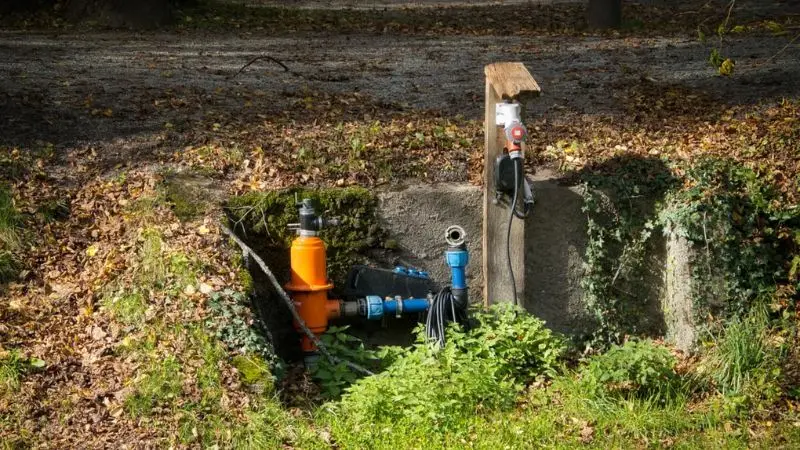
The amount of electricity used by a well pump depends on pump horsepower, well depth, family water use, pressure tank size, pump efficiency, and water table elevation. Larger, older, or less efficient pumps consume more electricity, and deeper wells and greater water use require more operating time. Selecting the appropriately sized pump and performing regular maintenance can help increase efficiency and reduce electricity use.
Pump Horsepower (HP)
Your pump’s horsepower determines its power requirements. A pump with more HP will pump more water but will require more watts. If you select a pump that is larger than your house, you’ll notice higher electricity use. How much electricity does a shallow well pump use? Match the pump size to the required water flow. An increase in a well pump’s horsepower increases the amount of water pumped or the water head it can overcome. Residential well pumps typically range from ½ HP to 2 HP, depending on the house size, well depth, and daily water requirements. A ½ HP or ¾ HP pump might be adequate for a small home or a 2-person residence. Water requirements for a larger home with more bathrooms, outdoor irrigation, or heavy daily use can be met with a 1 HP, 1½ HP, or 2 HP pump. Check the label on your pump to determine its horsepower. This will help you to understand its power consumption.
Well Depth
The harder the pump has to work, the deeper the well is. How much electricity does a deep well pump use? The deeper the well, the further the pump has to pump the water. This leads to higher power usage and electricity consumption. Shallow well pumps will require less energy. Another way to estimate electricity costs is to use well depth as a factor. Deeper wells often have to pump water higher into the air than shallower wells and thus consume more energy. Knowing the depth of your well, you can make better estimates of the amount of electricity your pump uses daily, monthly, and yearly. This will give you a better idea of how to budget your household expenses and how your bills are structured. A deep well pump may require higher power consumption, particularly at startup.
Household Water Consumption
Your water consumption alters how much electricity your pump consumes. The more water you use in your shower, washing machine, or for gardening, the more often your pump will be activated. The longer the run, the more the electric meter will charge. There are different water requirements for each home. A well pump requires 1 hp. How much power is required for this? A dwelling unit with 1 or 2 persons typically consumes less water than one with 4 or more persons, which has multiple bathrooms, frequent laundry, and lawn watering. Houses with swimming pools, livestock, or extensive gardens may also consume much more water. Water usage information for your household will give you insight into why your well pump is operating so frequently. Knowing how water is used in your home will help you better estimate monthly and annual electricity costs and make better financial decisions about your home.
Pressure Tank Size
The bigger the pressure tank, the more water it will hold. This will result in your pump working less frequently. Reduce the number of start/stop cycles to reduce power consumption. The smaller the tank, the more frequently the pump will run, resulting in more energy usage. The water delivered to your home for you to use comes from the pressure tank first. The water you use at home, such as for washing your hands, showering, or flushing a toilet, starts in the pressure tank. The pressure in the tank will decrease as the water level falls. When the pressure reaches a predetermined value, the well pump automatically starts pumping to fill the tank. The right-sized pressure tank will make the pump run less frequently, helping save energy and reduce pump wear.
Pump Efficiency and Age
Older pumps or low-efficiency pumps consume more electricity. Newer models are more efficient at performing the same task. Consider replacing your pump if it is old to save energy. An efficient pump expends less energy in performing its task. Begins filling the pressure tank more quickly and shuts off earlier to minimize runtime. How much does it cost to run a well pump? A less efficient pump would have to run longer to deliver the same amount of water. The additional electricity consumption may be minimal daily but may increase over months and years, resulting in increased electricity bills. It helps people recognize that old age does not necessarily mean inefficiency. If your pump is properly maintained, it can serve you well for a long time.
Water Table Level
The water table is the depth below ground where groundwater is present. When water levels fall, your pump will have to work harder to move water. How much does it cost to run a well pump? This increases electricity consumption and electricity bills. The water table is not constant year-round. It can increase during heavy rain or snowmelt or decrease during hot, dry weather or heavy water use. Water levels may fluctuate, and so can the work your well pump has to perform. If water levels are near the surface, it generally consumes less power because there’s less water to be pumped. As the water table lowers, the pump must push more energy to get the water, thus consuming more electricity. If you maintain your pump regularly, you will ensure it operates efficiently, and you won’t rack up high electricity bills.
How to Calculate Well Pump Electricity Usage
To calculate the electricity consumption of your well pump, determine the pump’s power in watts and the hours it operates daily, then multiply them to get the daily kWh. You can then estimate the monthly electricity cost by multiplying your daily electricity use by your electricity rate. By monitoring these values, you can track your energy usage and pinpoint areas of high consumption, helping you lower your electricity bills.
Find the Pump’s Wattage
Knowing the power of your well pump is necessary to estimate its energy use. Find out how much it costs to run a well pump by checking the pump or the instructions. Typically, the number of watts is indicated on the label. The power range of most household pumps is 700-800 watts. Record this number. You’re going to be using it in your calculations. The pump’s wattage is typically listed on the motor’s nameplate, in the owner’s manual, or in the manufacturer’s product information. It can appear on the power supplied, either in watts (W) or, in some cases, in horsepower (HP). If only the horsepower is given, it can be converted to watts using the approximation that 1 horsepower equals about 746 watts.
Measure Daily Running Time
Next, you’ll want to determine how long your pump runs per day. Observe the pump for a couple of days. Record the number of minutes or hours it takes to run. A timer can also be installed to track the runtime, or a smart plug can be used. The more water pumped, the longer the pump will run. This will help you learn how much electricity you use every day. A well pump electricity usage calculator indicates that the well pump is not pumping water all day. Turns on automatically when water pressure drops and turns off when the pressure tank refills. The pump can run briefly each time someone showers, washes dishes, flushes a toilet, or waters the garden. All these operating periods can be added together to find the total operating time of the pump for a day.
Calculate Kilowatt-Hours (kWh)
The Calculate Kilowatt-Hours (kWh) feature helps users understand how much electricity their well pump consumes. Many homeowners are aware that their pump consumes energy, but are not sure how. Now, you can find out how much electricity you use every day! Electric companies measure electricity in units called kilowatt-hours (kWh). It is used to demonstrate the amount of energy an appliance consumes over time.
Apply this same formula:
Daily kWh = (Pump Watts × Hours Used) ÷ 1,000
- For example, if your pump uses 750 watts and runs for 2 hours, the calculation is: (750 × 2) ÷ 1,000 = 1.5 kWh per day.
This is the amount of energy that you use each day. Use it to get an idea of your monthly or annual expenses.
Estimate Monthly Electricity Cost
To determine the cost of your pump on your electric bill, multiply your daily kWh by 30. Next, multiply this number by the electricity rate for your area ($/kWh). A well pump doesn’t pump 24 hours a day. It only activates when you need water in your home, for example, when you take a shower, wash dishes, flush a toilet, or use a washing machine. The monthly electricity cost for a well pump may vary depending on the pump’s operating periods throughout the day. This feature allows users to estimate the cost based on their pump’s energy consumption and the local electricity price.
To assist you, here are some simple tips:
- The cost to pump your well for 30 days at 1.5 kWh/day at $0.15/kWh will be approximately $6.75 per month.
- If your well pump consumes 3.0 kWh per day and you are charged $0.20 per kWh, your estimated monthly cost will be $18.00.
Average Electricity Cost to Run a Well Pump
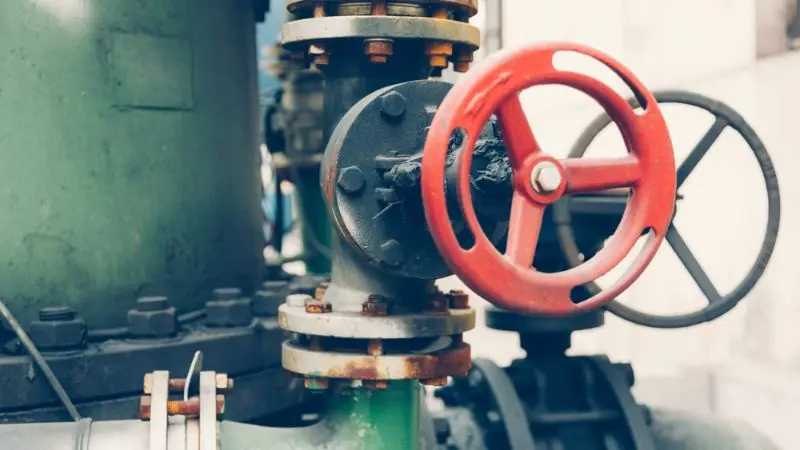
The energy a well pump consumes daily and the local electricity price will determine the average cost of electricity. Simple calculations based on kWh consumption can be used to estimate daily, monthly, and annual operating costs. If you know how to track energy, water, and pump usage, you can reduce your electricity costs.
Cost Per Day
Using one’s daily energy use and local electricity rates, one can determine the cost of operating a well pump per day. For instance, a pump consuming 2 kWh per day at 0.15 USD/kWh costs 0.3 USD per day. This number will give you an idea of the cost savings you make from using the pump, in addition to electricity costs. Two of the things you need are the numbers to estimate the cost per day. The first step is to determine how much electricity the pump uses each day.
A simple formula to do this is:
The daily cost equals the daily kWh usage multiplied by the electricity rate.
Cost Per Month
Monthly expenditures provide a clearer view of your expenditures. Calculate the cost for January by multiplying the daily cost by 30. With a daily charge of $0.30, your monthly charge is a whopping $9.00. Some homes have higher water consumption, which can result in higher bills. Be aware of your usage at all times to avoid unpleasant surprises. How many kWh does a well pump use per month? For example, if your well pump runs $0.30 per day, you would expect to pay $9.00 for the month. If the pump is priced at $0.80 a day, the monthly pump fee will be approximately $24.00.
Use a table to compare the different scenarios:
- If the cost of running your well pump is $0.30 per day, the estimated monthly cost for 30 days is $9.00.
- For a well pump that costs $0.80 per day to run, you can estimate the monthly cost at $24.00.
Cost Per Year
The yearly costs tell you how much you spend over the year. Calculate the monthly cost, then multiply by 12. At $9 per month, you will pay $108 a year. This will help you budget for your needs and understand how your well pump affects your electric bill. How much electricity does a deep well pump use? At $9.00 per month, your well pump can be expected to cost approximately $108.00 annually. When monthly operating costs are $24.00, the annual operating cost is approximately $288.00. Simple estimates can help homeowners realize that little can add up to much. This feature also helps users compare their water-use practices with those of others. The more water your family uses, the more your pump will turn on, and your annual electric bill will go up.
Example Cost Calculations
This feature is designed to help homeowners understand how much electricity a well pump uses and provides simple examples of how to calculate electricity costs. Calculations of energy use can be confusing for many, particularly if they are not familiar with the term kilowatt-hour (kWh) or with electricity prices. The well pump electricity usage calculator is used to calculate the electricity costs. Cost reduction can be achieved either by conserving water or by increasing pump efficiency. Keep track of your energy use to control your bill.
Let’s take an actual case in point. If your well pump consumes 3 kWh of electricity daily and the cost of electricity is $0.20 per kWh:
- Daily cost: 3 × $0.20 = $0.60
- Monthly costs: $0.60 × 30 = $18
- Yearly costs: $18 × 12 = $216
How Much Electricity Does a 1 HP Well Pump Use?

Power Consumption of a 1 HP Pump
Many people ask themselves, how much does a 1 HP well pump consume? Most 1 HP pumps need about 750 watts to run. This is the number of units of energy the pump consumes while operating. The exact number is listed on your pump’s label. Power consumption will vary with the pump’s daily operating time. If your pump runs for two hours, it will use about 1.5 kilowatt-hours (kWh) of electricity. This is because 750 watts for 2 hours equals 1,500 watt-hours, or 1.5 kWh. This feature helps users realize that it is not about the number of watts the motor consumes daily, but about the motor’s power. Record the duration of your pump’s operation over a couple of days. This will help you become aware of your actual electricity consumption.
Estimated Monthly Operating Cost
There is a simple formula to estimate monthly costs. Know how many kWh your pump consumes per day. Now, multiply that number by 30 to find the total for a month. Then multiply by your local electric cost. How many kWh does a well pump use per month? For instance, if you have a pump that consumes 3 kWh per day at $0.15 per kWh, the monthly expense is $13.50. You can see that costs vary with your water consumption and electricity rates.
- If you are pumping water from a well at 1.5 kWh/day and electricity costs $0.15/kWh, you can estimate the electricity cost at about $6.75/month.
- You have a well pump that consumes 3.0 kWh per day, and electricity costs $0.15 per kWh. Your monthly electricity estimate is approximately $13.50.
Is a 1 HP Pump Right for Your Home?
To use the correct well pump for the house. A 1 HP pump is suitable for most homes with average water needs. If you have a deep well or use a lot of water, you may need a stronger pump. Consider a smaller pump if your home is small or you don’t use much water. When using a pump, be sure to match the size to the need to avoid expensive pumps. A 1 HP well pump will have a fairly large capacity with a relatively high electrical usage. It is frequently found in homes that have multiple people. It is found in medium- to large-sized homes where multiple people use water all day. This feature helps users compare their daily water requirements with the pump’s capacities. A small house with one or two people may not require a 1 HP pump, for instance.
Does a Well Pump Use Electricity All the Time?
The well pump does not run continuously; it runs only when water is needed to fill the pressure tank. The pump’s operating time will vary with the amount of water used and the pressure tank’s capacity; repeated cycling may indicate leaks or other system problems. Regular pump inspections, maintenance, and efficient water use help reduce electricity consumption and keep the well pump running efficiently.
When the Pump Turns On
Your well pump doesn’t run all the time. The pump only activates when water is needed. It may be observed that the pump operates when a tap is opened, a toilet is flushed, and/or washing machines are operated. The pump pressurizes the water in the pressure tank. When the pressure in the tank is proper, the pump turns off. How many kWh does a well pump consume in a month? No need to be concerned about the pump running all day. This automatic feature will only consume electricity when the pump operates. When no one is using water, the pump remains off, saving energy. This is more energy-efficient than many realize, as the wells are more effective at capturing and using energy. This feature can also help you detect issues early. If the pump sounds like it runs even when no one is using water, for instance, you might leak your plumbing.
Normal Pump Run Time
The vast majority of well pumps are used for brief periods. How much electricity does a deep well pump use? The pump might run for a few minutes each time water is used. The total runtime will depend on your water consumption and the size of your pressure tank. The more water is used, the more often the pump will be on. The larger the tank, the fewer times the pump needs to operate. The pump’s runtime can be determined using the pressure gauge or a timer.
Below is a basic table for typical run times:
- Low water use: The well pump runs about 5-10 minutes a day.
- High water use: The well pump typically operates for 15–30 minutes a day.
Signs Your Pump Is Running Too Often
Be on the lookout for symptoms of excessive pump use. If the pump starts each time you use water or runs many times an hour, there could be a problem. Typically, it occurs when there is a leak, a small water tank, or a drop in the water table. How much does it cost to operate a well pump? Excessive runtime will lead to higher electricity consumption and higher bills. Now you can estimate your well pump’s electricity consumption and manage costs. Regularly inspect and troubleshoot your pump. Monitor your daily usage to determine your pump’s contribution to your bills. Here are some smart habits and regular maintenance that can help to reduce costs: Use water effectively and replace outdated equipment to save money on your bill. Even seemingly insignificant adjustments will make a significant impact on your bill.
- Look for water leaks in pipes or faucets.
- Ensure you have the correct-size pressure tank.
- If you notice changes in the pump behavior, ask a professional for help.
Wrap Up
One of the most vital components of a home’s water system is a well pump, but many homeowners are unable to determine how much electricity this pump consumes. If you know how much energy your pump consumes, you can use this information to make a rough estimate of the pump’s operating expenses. Typically, residential well pumps have a power rating of 700 to 800 watts, though this varies with pump size and usage time. Knowing how your well pump works can help you to reduce your family’s energy bills and make your system more efficient. This guide describes the typical electricity use of well pumps and a quick method for determining the cost of running a well pump each day, month, and year. You will also understand which factors contribute to increased electricity consumption and how much it costs to run a 1 HP well pump. These simple calculations and cost-saving tips will allow you to make the right decisions and ensure your well pump runs efficiently.
FAQ
What are the signs and symptoms of high electricity usage by a well pump?
You may find that electric bills are higher, or you may hear the pump operating frequently. Inspect for leaks and/or short cycling. Your pump could be consuming excessive electricity if you observe these symptoms.
Are you able to lower your well pump’s power consumption?
Yes. Leaks can be patched, water-efficient fixtures can be installed, and an efficient pump can be installed. Regular maintenance also reduces electricity consumption.
Is there a need for a dedicated circuit for a well pump?
Yes. A separate circuit is recommended for safety. This will prevent overloading and safeguard your home’s electrical system.
How big a generator is required for a well pump?
Check your pump’s wattage. Typically, the generator used for a house pump requires 2,000 or more starting watts. When selecting a generator, always consider your pump’s power requirements.