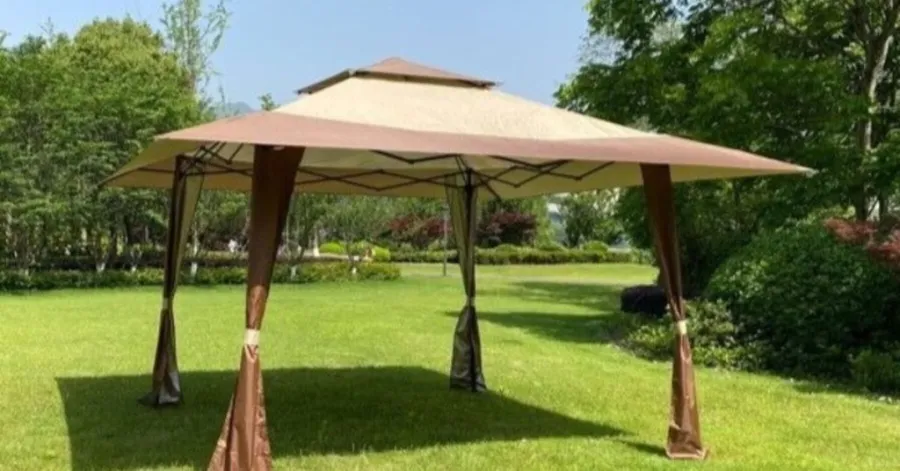
Just got your new folding canopy out of the box. The weather seems fine. Suddenly, there comes a breeze. There goes your drink all over. Next thing you know, you are struggling to keep control of a giant kite. Wind is the top cause of canopies falling apart, flying away or causing harm. That sounds pretty scary, but you have got it under control. All you need is knowledge.
In this guide, you will find ten valuable pointers. You will be able to tell what kind of canopy to get. You will know how to set it up in the proper location. You will understand how to secure it properly. Plus, you will know when to take it down. Planning and making smart decisions in the wind can keep you safe.
Table of Contents
Tips for Setting Up a Folding Canopy in Windy Conditions
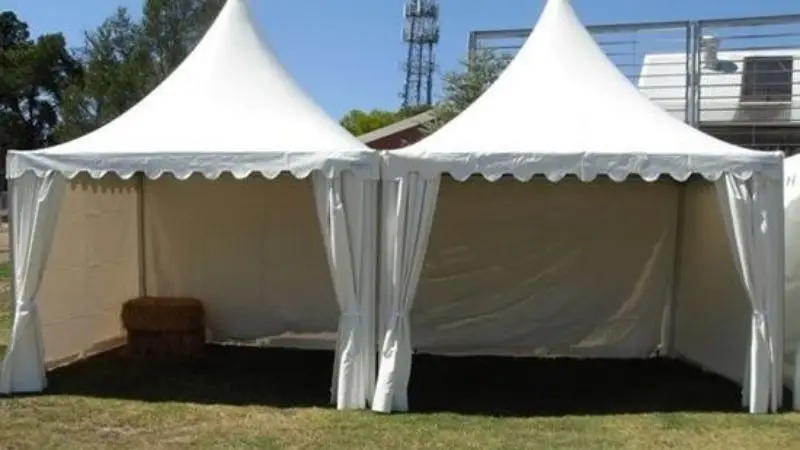
Check the Weather Before Setting Up Your Folding Canopy
Before leaving your house, check what the weather may be like. Check wind speeds and any chance of wind gusts. A calm day can quickly become stormy in the afternoon. Watch out especially for 30 to 40 mph wind gust warnings. Such winds will carry away your folding canopy like a tumbleweed.
With such windy forecasts, there are only two options for you. Either choose a better day or go out prepared with additional equipment to help set up a canopy. Don’t assume your canopy tent can withstand strong winds just because the day is sunny. Windy conditions tend to be unpredictable.
Recommended For Your Project
Choose a Safe Location for Your Folding Canopy
As important as anchoring your canopy is, so is where you place it. Always begin with natural windbreaks first. Buildings, bushes, and cars can provide wind shelter. Position yourself downwind from the windbreak. This simple method helps reduce the force on your canopy.
Do not camp in wide-open spaces and on the top of hills. These places attract all kinds of harsh weather conditions. Moreover, do not camp near trees with dead branches. A falling branch might injure you and your canopy. Proper canopy placement means choosing the right ground for positioning. For soft ground, stake your canopy, but use canopy weights for hard surfaces such as asphalt and concrete.
Add Heavy-Duty Canopy Anchors or Weights
Weighted anchors help keep your folding canopy stable, even in windy conditions. For staking canopies in grassy areas, soil, or any other soft surface, choose sturdy canopy stakes. If you are setting up your canopy on a hard surface such as concrete or asphalt where stakes cannot be used, use sturdy canopy weights on each leg. Ensure the anchors or weights are properly connected to the canopy frame and evenly distributed.
If your canopy supports guy lines, you can also use them with canopy stakes to improve stability. Check the anchoring points frequently in windy conditions to ensure the canopy doesn’t get blown away. Note that anchors or weights alone do not make a canopy safe in windy conditions.
Common Mistakes to Avoid When Setting Up a Folding Canopy in Wind
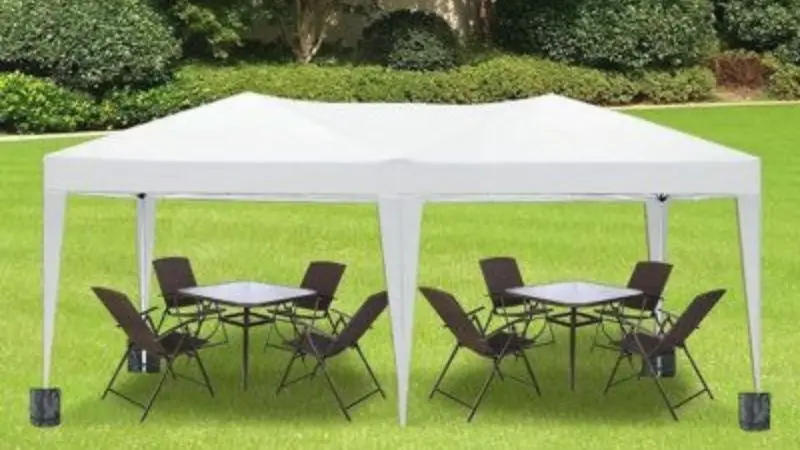
Using Too Few Anchors
You may consider the provided stakes sufficient. But they won’t be. Just one breeze will tear them away. Anchor your canopy firmly from all sides. Focus on each leg. Such action will save you from a catastrophe. The best way to anchor a folding canopy depends on your surface.
Soft ground requires stake anchors at each leg. In addition, use heavy-duty canopy anchors. Hard ground requires anchors and weights. Water barrels and sandbags can help with concrete ground. Eight anchor points will make an effectively anchored canopy. Place four in the corners and four on the legs.
Efficient anchoring methods combine several techniques. Use ropes at a 45-degree angle from each leg. Stakes will keep such ropes anchored. Moreover, additional weights must be placed on each leg. Please do not attempt to anchor the canopy tent with only one way. Anchor it using all available means. Anchor your canopy from all sides. Crisscross your ropes to increase the tension. Your goal is to keep your canopy from blowing away. Anchor your canopy the same way you anchor your gear, because it’s necessary.
To anchor a canopy tent safely in wind, each leg must be anchored in two ways. One anchor is vertical, and the other is diagonal. This will help prevent both lifting and slipping. Extra time is about five minutes. But it saves you from chasing your canopy tent across the parking lot if the wind picks up.
Ignoring Wind Forecasts
Another major mistake people make is ignoring the weather forecast. People go to their designated area. The atmosphere feels quiet. They assume the weather won’t change. Then, an hour later, a gust comes in. At this point, you begin running to secure everything. This mistake can be totally avoided.
Wind forecasts give you all the information you need. A 15 mph gust means that it is quiet outside. However, that gust may get even higher. Your canopy should be prepared for it. If the wind is 25 mph or more, you should reconsider. That wind can destroy the canopy.
People should have emergency take-down procedures in mind. Practice these procedures until they are ready and quick. Remove the roof first. Second, take out the sidewalls. Lastly, remove the legs one by one. Collapse the frame quickly. This protects both your equipment and everyone around you.
Failing to heed the weather forecast deprives you of an opportunity to protect the best folding canopy tent from flying away. Preparation takes only five minutes. Panicking during the disassembly process takes more time and may hurt you. Check the wind speed before you leave. Check it once more while setting up the canopy. Keep monitoring the wind speed throughout the day. Nature needs your respect. The wind does not consider your schedule. You should be concerned about it.
Conclusion
Four principles: preparation, positioning, anchoring, and vigilance – they have been mentioned. You already know everything about those principles. However, one more piece of advice matters above all else. It is understanding your limitations. You should treat the wind with respect. If the wind is too strong, disassemble the canopy immediately. There is nothing more important than safety.
That is the only thing that keeps you, your equipment, and surrounding people safe. Before working under strong winds, try assembling and disassembling the canopy in calm conditions. Build your skills, and when it is windy outside, you will know how to manage a folding canopy.
FAQs
What are the lightest weight tents that provide good wind resistance for camp sites where the tent will be exposed to the elements?
The MSR Hubba Hubba LT and Big Agnes Copper Spur HV UL2 are both lightweight models. The MSR has a low profile and strong poles, while the Copper Spur has more room.
What three-season tents are good for windy coast camping, and what is their stability?
The MSR Hubba Hubba LT and Big Agnes Copper Spur HV UL2 are good three-season tents. The MSR focuses on stability and a low profile, while the Copper Spur has a high volume.
What are the best pop-up tents that provide instant setup, and what are their durability ratings?
The Gazelle T4 Hub and Coleman instant tents are both fast-setup options for car camping. Pop-up tents are fast, but their durability depends on fabric strength and other factors.