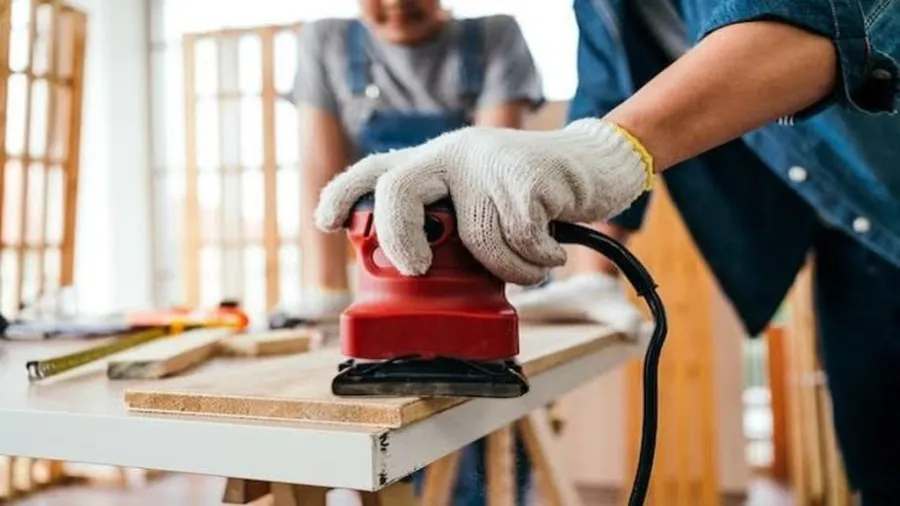
The seams were taped up, the material was spread out, and it was left to dry overnight. Then light from the morning hits the wall and shows every line, just where the paint will go. A good electric drywall sander will smooth that out, and a good power drywall sander will make that job easy with one quick pass. Compact handhelds, pole models, and powered workhorses are all types of drywall sanders that were made for this. For more information on how to sand drywall like a pro, check out our guide.
4 Types of Electric Drywall Sanders
Find the right body style for your walls before you compare prices. Four main types of electric drywall sanders exist, and each is best for a different job. This is how they broke up.
Corded Electric Drywall Sander for Whole-Room Work
Corded electric drywall sanders are best when you need to sand a whole room and don’t want to stop. The disk never fades mid-pass because it stays powered from the wall. The 600 to 1,150 watts range for most corded units. This is more than enough power for an 800W brushless electric drywall sander to smooth out new joint compound or finish remodeling the whole basement.
Cordless Drywall Sander for Outlet-Free Rooms
Not a nearby outlet? A cordless electric sander for drywall that runs on lithium batteries is very helpful in rooms that have been gutted, added on to, or anywhere else the power isn’t yet connected. A 450-watt cordless drywall sander with vacuum dust collection can finish a medium-sized room on a single charge. If you wear an extra battery on your belt, you won’t even notice that the cord is gone. It’s also lighter up there.
Long-Reach Pole Drywall Sander for Ceilings
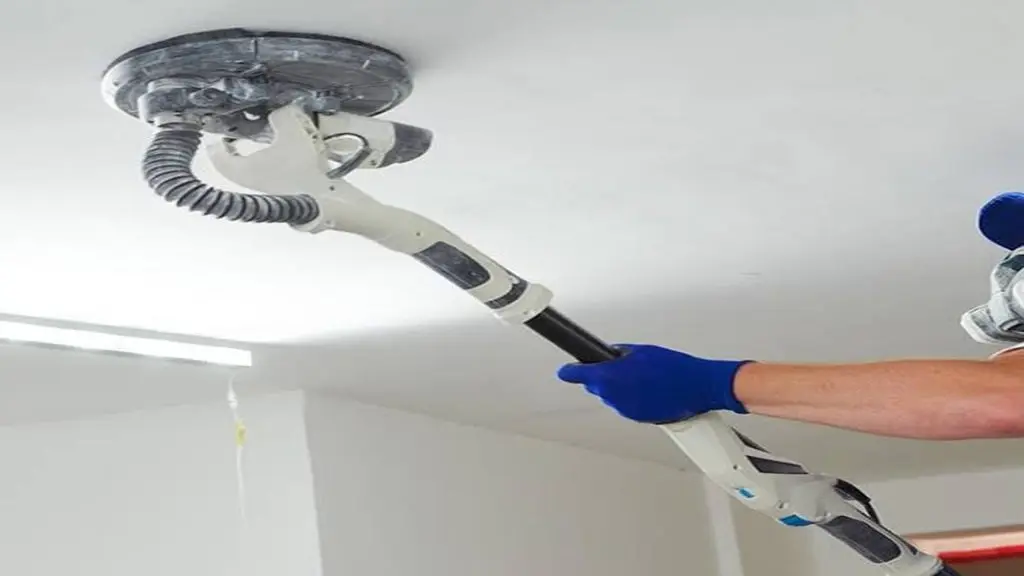
This is the expert on ceilings and stairs. Powered drywall sanders that look like giraffes have a sanding head on a telescoping handle, letting you work on high walls and ceilings from the floor. Don’t move the ladders or the platforms. They often fold up into a wall tool as well, so if you buy one from this range of electric drywall sanders, it will work at both heights.
Compact Handheld Sander for Corners and Patches
A small handle works best for small jobs like patches, nail pops, and the narrow strip next to a door. You can feather a repair into the wall without over-sanding because it gives you a direct feel. They are categorized as drywall hand sanders, but they are not replacements for bigger tools.
| Type | Best For | Typical Power | Reach | Key Trait |
|---|---|---|---|---|
| Corded electric | Whole-room, all-day sanding | 600–1,150W | Wall; pole-ready | Steady power, no recharge |
| Cordless | Rooms with no live outlet | ~450W / 20V | Wall + ceiling | Portable; carry a spare battery |
| Long-reach pole | High walls and ceilings | 750–950W | Floor to ~10 ft | Telescoping, no ladder |
| Compact handheld | Corners, patches, detail | Small/manual | Arm’s length | Precise, more effort |
| VEVOR example | Foldable finishing on walls | 850W, 800–1,750 RPM | Telescoping handle | 9-inch sander with LED strip light and vacuum bag |
How to Choose an Electric Drywall Sander?
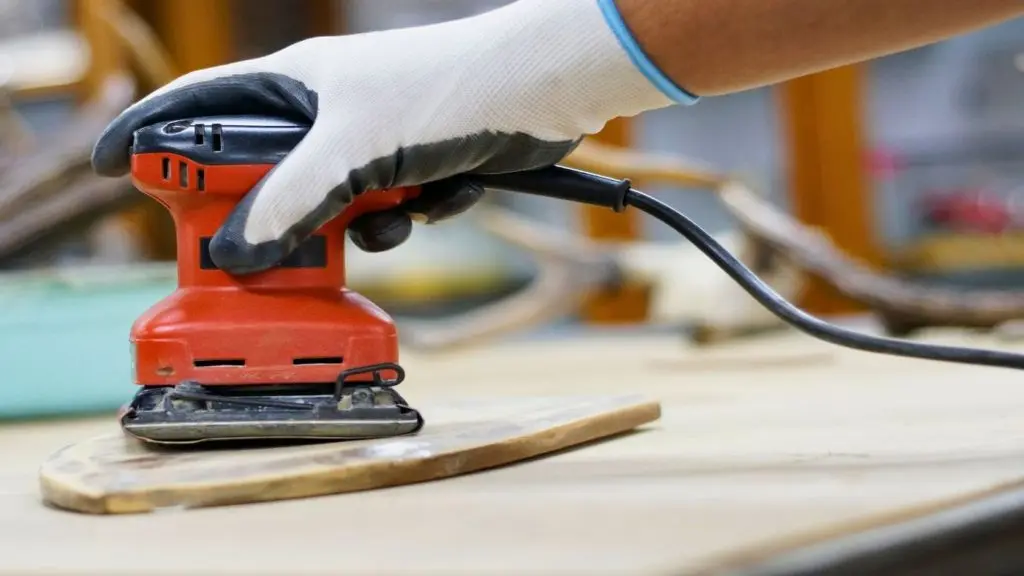
Choose the right tool by being honest about your space, your reach, and how long you plan to use it. Match those to the specs, and the choice becomes easy. Our guide to drywall sanding tools has more information, but these are the main ones.
What should I consider when choosing a drywall sander for home renovation?
When remodeling your home, consider four things: how easy it is to get power, how far you need to reach, how much dust you can handle, and how much weight you can lift overhead. Having built-in collection is worth the money because it keeps the rest of your drywall products clean while you work. Also, make sure the grip is good before a long day. Balance matters as much as power, especially if you’ll be sanding a drywall patch up high.
How does a variable speed drywall sander improve the sanding process?
This type of drywall sander lets you adjust the disk speed to your needs instead of using a single setting. Turn the RPM up to quickly remove thick joint compound. Then turn it down to smooth out the edges and skim coats without damaging the paper face. This range runs from about 800 to 2,300 RPM on most dials.
Motor Power: A Quick Drywall Sander Wattage Guide
The wattage of an electric drywall sander tells you how hard it can work before it slows down. Just 450 to 600 watts is enough for small patches. For a quick drywall sander wattage guide: 450W cordless is good for portability, 600–750W is good for occasional jobs, 800–1,000W is good for daily use, and 1,000W or more is good for big remodels.
The two main drywall sander motor types are also important. A brushed motor is less expensive and works fine for light work. A brushless motor, on the other hand, runs cooler, lasts longer, and weighs less, so it pays for itself if you sand a lot. Don’t go with the biggest number on the box; match the right wattage to how you go sanding drywall with a power sander.
This is the part that really wears people down. Can you recommend lightweight drywall sanders for extended use? Yes, and for long overhead sessions, put these first:
- The body can be folded up, and the head is balanced so that the weight doesn’t hang off your wrists.
- A brushless motor that cuts down on weight without low power
- A telescoping pole that lets you carry things from the ceiling to your shoulders
- For details, a small hand-held tool as a backup, so you don’t have to swing the big tool all day.
That kind of light pick should be in every finisher’s drywall tool kit.
Choosing Best Electric Drywall Sanders for Your Job
It’s easy to tell which electric drywall sander specs are best: look at what it was made for. Here are some clear picks for each task, along with a quick table that lets you compare them right away. Look through the full drywall sander range to see how these compare to real ones.
What are the best drywall sanders for smooth finishing?
For a smooth finish, the best drywall sanders are electric models with a round head, variable speed, and a rotatable pad. These should be run at low RPM and with fine grit. This mix smooths out ridges without leaving swirl marks. A 9-inch, 850W sander with an LED strip light helps because it shows you every flaw as you work.
That question has a close relative that you should answer right away. What are the best drywall sanders for achieving a smooth finish before painting in the US? Use the same fine-finish grit (150 to 220) at a slow speed with good dust collection, so no loose grit gets into the new paint. On that last pass, don’t hit any aggressive discs.
| Finishing Job | Grit Range | Speed Setting | Head/Pad | What It Does |
|---|---|---|---|---|
| Final skim before paint | 150–220 | Low–medium RPM | Round pivoting pad | Even, swirl-free finish |
| Knocking down compound | 80–120 | Medium–high RPM | Round disc | Fast stock removal |
| Edges, corners, patches | 120–150 | Hand control | Detail/hand pad | Blends repairs in |
| VEVOR example | 150–220 for finish | 800–1,750 RPM dial | Pivoting round head | 850W variable-speed sander with LED strip light |
What are the top-rated pole drywall sanders for reaching high ceilings without scaffolding in the US?
Pole drywall sanders with a rotating head and built-in dust collection are the best for high ceilings. These models let you stay on the floor and keep the pad flat overhead. The good ones have reach, balance, and a flex head. A 900W collapsible wall sander with a telescopic grip works on both walls and ceilings.
Weight is the silent killer up high. A heavy head gets painful after twenty minutes, so a balanced, foldable body is worth the money. Our guide to drywall pole sanders explains pads and how to use them. The table tells you what to put first.
| Pole Sander Feature | Why It Matters | What to Look For |
|---|---|---|
| Telescoping handle | Reach ceilings without scaffolding | ~59–118 in extension |
| Pivoting sanding head | Stays flat on ceilings | Ball-joint or flex head |
| Weight and balance | Less arm fatigue overhead | Foldable, balanced body |
| Dust capture | Less fallout in your face | Vacuum tube or bag |
| VEVOR example | Ceiling-to-wall in one tool | 900W collapsible sander with telescopic grip and 3 vacuum tubes |
What are the top-rated drywall sanders with built-in dust collection available in the US?
The best drywall sanders with built-in dust collection have onboard dust bags, vacuum ports that connect to a shop vacuum, or a motor-driven fan that pulls dust away from the machine. An 800W drywall sander with automatic vacuum dust collection is in the middle.
Lessening dust isn’t just about not making a mess. This is one electric drywall sander feature you shouldn’t skimp on because fine gypsum is hard on the lungs. If you want to know the pros and cons, check out our best vacuum drywall sander breakdown.
The table tells you everything.
| Dust System | How It Works | Best For |
|---|---|---|
| Onboard dust bag | Pad holes pull dust into an attached bag | Small jobs, grab-and-go |
| Vacuum-port + shop vac | Hose draws dust continuously | Whole rooms, pros |
| Self-suction + bag | Built-in fan pulls dust in | Clean results, simple setup |
| VEVOR example | Motor-driven auto vacuum with bag | 800W sander with automatic vacuum dust collection and double LED |
Recommended For Your Project
What are the best drywall sanders for DIY homeowners on a budget in the US?
The best drywall sanders for do-it-yourselfers on a budget are corded models with a mid-wattage motor, a foldable handle, variable speed, and an included vacuum bag. Most home jobs can be done with a foldable 850W drywall sander with a vacuum bag and a pack of disks.
If it comes with a telescoping handle, you can use that kind of cheap electric sheetrock sander for ceilings, patches, and remodeling a single room. Get disks in a range of grits, and you’ll be good to go. The sander sits in the wider building materials aisle with the tape and compound. The table shows where to spend and save money.
| DIY Need | What to Prioritize | What to Skip |
|---|---|---|
| One-room project | Foldable body, vacuum bag, variable speed | Brushless, extra-high wattage |
| Occasional patches | Compact handheld or 6-pad kit | Long-reach pole |
| Ceilings and walls | Telescoping handle included | Pro dust-extraction rig |
| VEVOR example | Value finishing kit | 850W foldable sander with telescope handle, vacuum bag, 6 pads |
Conclusion
The right electric drywall sander is not so much about how much power it has as how well it fits your needs. It should reach your ceilings, keep dust out of your lungs, and be light enough to hold all afternoon. Getting those three right leads to a great finish. Choose the right type for the job, the right wattage for how often you sand, and the right dust system for the room. Check out the different VEVOR electric drywall sanders to get the right one for your next job.
FAQs
What grit should I use to finish drywall before paint?
Start with 100 to 120 grit to smooth the compound. Next, use 150 to 220 grit to make the surface ready for paint. If the grit is too fine, it can clog the disk. Use light, even pressure.
Do I really need dust collection for a small job?
A hand sander and a mask might be enough for this small area. For bigger jobs, built-in dust collection is a good idea because gypsum dust is fine, gets into the lungs easily, and is very harmful. A vacuum port makes the floor and air much cleaner.
Can an electric drywall sander damage the wall?
Yes, if you run or push too hard. You may see the paint through if you sand the paper face too much. Don’t lean in; instead, change the speed, keep the pad flat, and let the disk do the work.
How long does a sanding disc last?
Disks wear out faster than most people think, but it depends on the grit and how much compound you’re removing. As soon as it stops cutting well or starts to glaze, you should switch it out. A worn disk doesn’t sand the wall; it burnishes it, which hurts the finish.
Is a cordless drywall sander powerful enough for a whole house?
For a whole house, a corded model is safer because it stays powered on and has no runtime limit. For small to medium-sized rooms and portability, cordless units shine. However, on a big job, you’ll have to change the batteries a lot. If you go cordless, make sure your extras are charged.