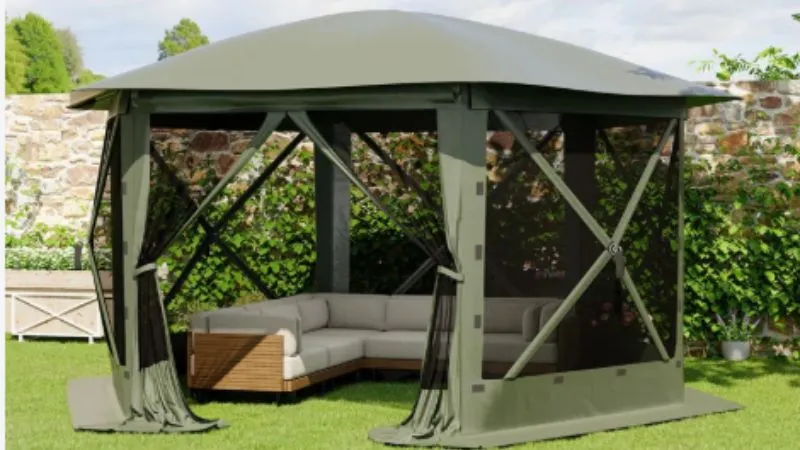
A camping canopy is a temporary shelter made of fabric and supported by poles in a roof shape. Other advantages include protection from light rain, sun coverage, and the ability to create a warm enclosure around a picnic table, tent, or cooking area. Its portable design makes it a great addition to many outdoor activities, including camping.
In this article, we will discuss what a canopy is and how it may provide shade and protection for outdoor activities. We will cover its advantages, uses, and key features for camping, picnics, and outdoor exploration.
Table of Contents
How Does a Camping Canopy Work?
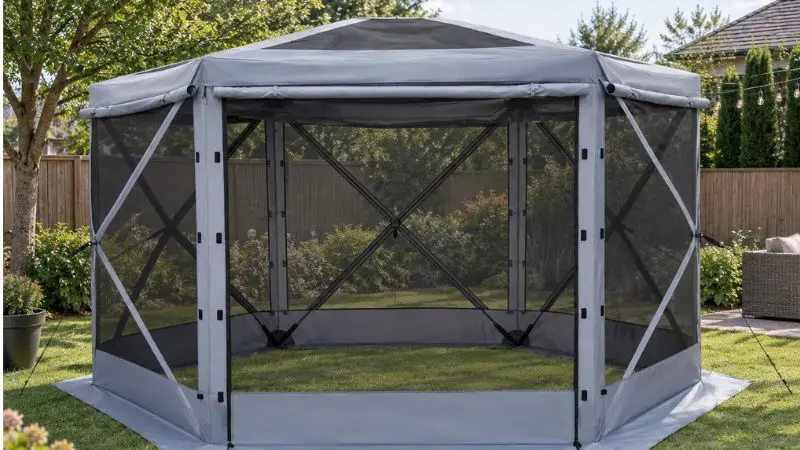
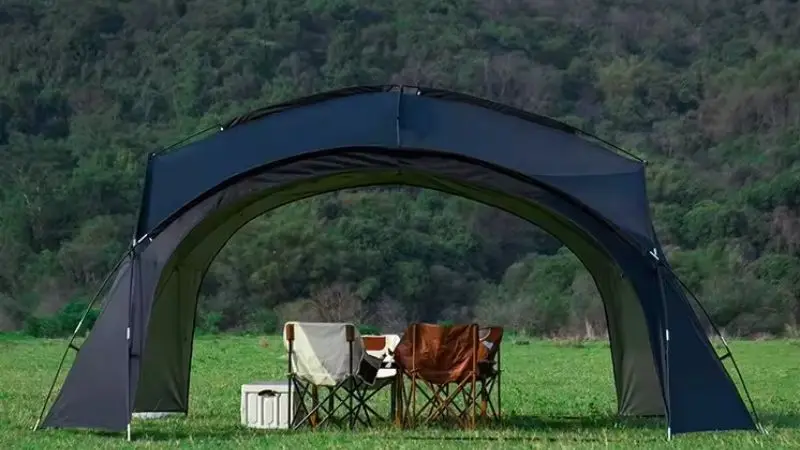
A canopy is a stand-alone shelter with a cloth roof supported by a metal or plastic frame. You can use it over a picnic table, tent, or cooking area to provide shade and block light rain. It’s usually open on all sides and has no floor or walls (like a tent). Variations include removable side walls for added privacy and wind protection.
Recommended For Your Project
The fabric is kept taut and secure in the frame. The roof is for shade and cooling. Most canopies are also easy to pack up and take with you. Pop-up models fold into a carrying bag and often require no tools, making them handy for campers, tailgates, beach trips, and other outdoor events. The best camping canopy for rain has adequate coverage.
How Does a Camping Canopy Provide Shade and Rain Protection?
The best camping canopy for sun protection is a fabric roof that shades you from the sun. The fabric blocks the light from underneath. Light colours help dissipate heat, while dark colours trap it. The bottom is silver-platedfor better heat reflection. Best camping umbrella for sun protection. The design keeps your gathering comfortable.
Two things keep the rain out. The roof cloth is treated to be water-resistant, so water beads up on the surface and rolls off. Second, the roof has a hip in the middle. Water runs down the slope to the borders. Flat roofs collect water and can sag. Pointed roofs drain quickly. In a gentle shower, you don’t get wet.
What Are the Main Parts of a Camping Canopy?
A canopy is a strong outdoor shelter made of a few key parts. You will need a roof, structure and poles, legs, connectors, sidewalls, and an anchoring mechanism. Knowing what each part does can help you choose and use the best camping canopy for wind.
Canopy Roof
Most of the canopy protection comes from the roof. It provides shade underneath and keeps the rain off. Common materials include polyester, polyethene, and nylon. Some roofs include waterproofing or reflective layers to reduce heat gain and protect against changing weather conditions.
Frame and Poles
The frame supports the roof and gives the canopy its shape. Steel poles last longer and are stronger, while aluminium poles are lighter and easier to transport. The poles connect to form the main structure, ensuring the best camping canopy for outdoor cooking stays secure when fully stretched and fastened.
Adjustable Legs
The legs support the frame and set the best camping canopy for summer height. Most versions have telescopic legs that you can set to different heights. On uneven campgrounds, this is convenient because you can adjust individual legs to keep the canopy level and stable.
Connectors
Connectors connect the poles with the frame sections. They’re often used at the corners and other critical points of the build. Strong connectors make setup and folding easy while holding the frame together. Always make sure that each connector is properly locked before utilising the canopy.
Sidewalls
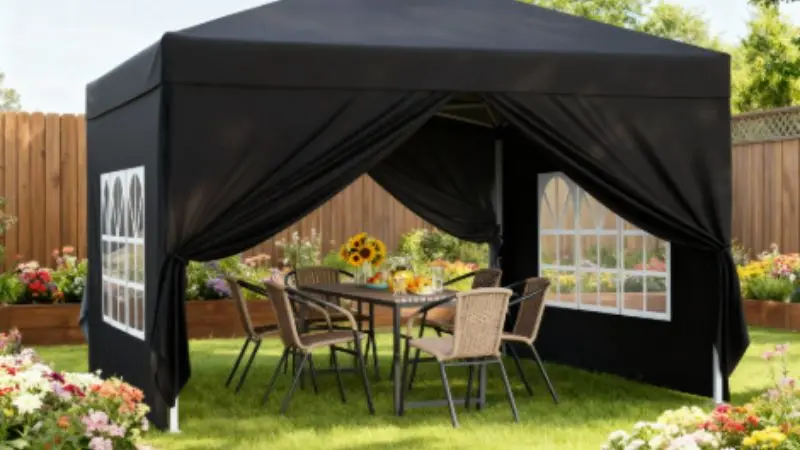
Some of the best camping canopy for rain have detachable sidewalls. These panels add privacy and block wind, rain, or direct light from the sides. You can add them if the weather turns and remove them if you want more airflow around the shelter.
Anchoring System
The best camping canopy for outdoor cooking is held down with stakes, ropes, and weight bags. Weight sacks work on concrete. Stakes work on grass or soil. An anchoring system ties down the canopy so it doesn’t blow over in the wind.
What Are the Different Types of Camping Canopies?
Camping canopies come in a variety of designs, each made for specific outdoor activities. Three good types for regular camping are pop-up canopies, screen canopies, and canopy tents with sidewalls.
Pop-Up Canopies
Pop-up canopies are the best camping canopy for families, designed to be extremely simple and quick to set up. After you open the frame, you extend the legs and secure the roof. Most versions feature a cloth roof and a steel or aluminium frame. They suit activities such as camping, tailgating, beach vacations, and backyard fun. They fold and are easy to transport and store in a carry bag.
Screen Canopies
Screen canopies are constructed around the shelter with a perimeter of mesh walls. Air can pass freely through the mesh, but insects cannot. This is a great place to eat, rest, and camp outside in locations where mosquitoes and other insects are present. Other types feature removable walls, so you can open the sides for increased airflow and/or use the mesh to keep insects out.
Canopy Tents With Sidewalls
Sidewall canopy tents offer far more protection than open canopy tents. The walls not only give you additional solitude, but they also protect you from the elements, including the wind, the rain, and the intense sunlight. They’re also a great option for longer camping trips or unpredictable weather. In many cases, you can remove the walls to create a more open, airy shelter.
Which one to choose? Select a pop-up canopy for instant shade, a screen canopy for bug protection or a canopy with sidewalls for added weather protection and privacy.
What Is a Camping Canopy Used For?
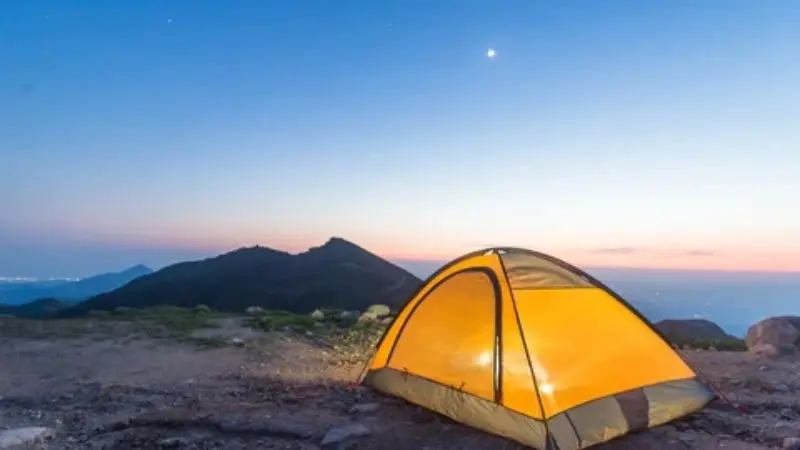
A canopy gives you a covered outdoor spot to eat, cook, relax and store goods. Its open design allows you to do a lot of activities without feeling like you’re in a tent.
Camping and Outdoor Meals
You can turn a picnic table into a cosy dining area by covering it with the best camping canopy for wind and placing it over the table. The roof will not only provide shade, but will also help keep your food and seating area dry if it rains a little. It also gives your group a handy place to sit between outdoor activities when the weather doesn’t cooperate.
Cooking and Beach Trips
The best camping canopy for sun protection can cover a camping kitchen, protecting it from sun, light rain, and wind, and providing shade from the surroundings. You may also want to bring one to the beach so you have a place to relax in the shade and store your baggage, cooler, and other equipment. This will make you more comfortable when you are there.
Insect Protection and Events
When mesh walls are included in a screen house, they not only prevent insects like mosquitoes and flies but also promote fresh air circulation throughout the building. Canopies are also useful for gatherings such as tailgates, backyard parties, barbecues, and other activities that require extra shade and covered space. You can use canopies for these types of gatherings.
The best camping canopy for outdoor cooking depends on how you plan to use the shelter. Before choosing a canopy, consider the location, weather, group size, and space you need.
How Do You Set Up a Camping Canopy?
With the right steps, setting up a canopy is usually straightforward. Use these steps to build a shelter that is both secure and comfortable.
1. Choose a Suitable Campsite
When choosing a spot, make sure it is open, level, and free of rocks, roots, or other sharp features. As a result of the fact that there is a risk that rainfall will pool in low regions, you should steer clear of those areas. If possible, choose a location with some natural wind shelter and adequate space around the canopy.
2. Unfold the Frame
After removing the best camping canopy for families from its carrying bag, organise the primary components logically. Before unfolding or assembling the frame, follow the directions exactly as written. Before moving on to the next component, make sure each leg and connector is properly positioned and secured.
3. Attach the Roof
Using the provided clips, straps, or fasteners, secure the fabric roof as soon as you position it over the frame. Do this immediately after positioning it over the frame. To keep the ceiling tight, pull the material in evenly. By taking the necessary precautions to ensure the roof is erected correctly, you can prevent water from pooling on the premises.
4. Adjust and Secure the Canopy
After stretching the legs to the correct height, check that they are level. To secure the best camping canopy for summer, you can use sandbags, ropes, or poles. You may use any of these options. Before using the shelter, verify that all connections and anchors are secure and ready to use. This is especially important if the forecast calls for wind.
Tip: Never leave a canopy unsecured. Proper anchoring helps keep it stable and reduces the risk of tipping.
Conclusion:
A camping canopy is a portable outdoor shade and shelter. It consists of a frame with a fabric top. It blocks the sun, sheds rain, and provides a great spot to eat, cook, or relax. You can use it at campgrounds, beaches, tailgates and other outdoor places. When shopping for an outdoor canopy, consider portability, durability, size, and ease of setup. If you’re concerned about wind, look for a canopy with a substantial structure and a sturdy anchoring system. The right size and features can make outdoor activities more enjoyable and easier.
FAQ
Can a camping canopy handle strong wind?
A basic outdoor canopy handles light breezes well. Strong gusts can lift the roof like a sail. Anchor every leg with stakes or weight bags. Choose a sheltered spot behind trees or a vehicle. Take the shelter down when storms approach. No canopy survives severe weather safely.
How long does setup take?
Most pop-up models open in two to five minutes. You unfold the frame, lock the legs, and attach the roof. A canopy tent with sidewalls takes a bit longer. Practice at home once. Your second setup goes much faster at the campsite.
Do I need a canopy if my tent already has a rainfly?
A rainfly protects your sleeping tent. An outdoor canopy covers a different zone. You place it over your picnic table or cooking area. The best outdoor canopy also shades your gear from harsh sun. A screen house keeps bugs away from your meals. Each shelter serves its own purpose.
Can I use a camping canopy on concrete or pavement?
Yes. Weight bags replace stakes on hard surfaces. Fill each bag with sand or water. Place one bag on each leg. The weight holds the canopy tent steady. Never leave the shelter unattended in gusty conditions, even with weights attached.
What size canopy fits a family of four?
A 10-by-10-foot outdoor canopy seats four people at a picnic table. A 12-by-12-foot model gives extra room for chairs and a cooler. Measure your table and gear first. A screen house in the same size range works well for buggy locations.