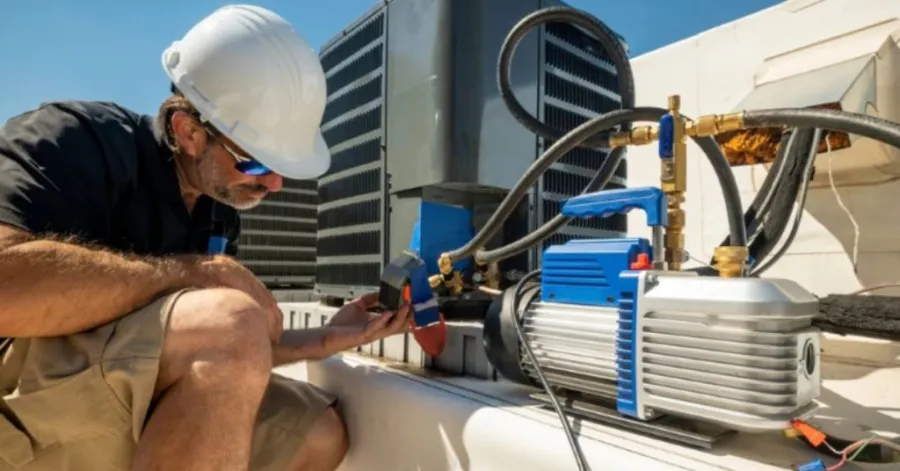
AC vacuum pump is a vital piece of equipment used in the installation, repair, and maintenance of air conditioning systems. It eliminates traps, moisture, and contaminants in refrigerant lines prior to system charging and helps prevent damage and enhance cooling efficiency. You are either looking for how to use a vacuum pump with an AC or the best AC vacuum pump for your HVAC projects; it is important to know what this type of vacuum pump is all about. The guide will detail the operation of an AC vacuum pump, the reasons for vacuuming, the duration to vacuum an AC system, and the selection of an appropriate vacuum pump to ensure reliable, efficient operation.
Table of Contents
What Is an AC Vacuum Pump?
One of the most significant tools in the HVAC servicing and installation process is an AC vacuum pump. It removes unwanted air, moisture, and non-condensable gases from the air conditioning system, and then refrigerant is added. The process will help safeguard internal components, enhance cooling efficiency, and prolong the system’s life cycle.
This knowledge of how an AC vacuum pump works will also assist you with proper maintenance procedures and help prevent expensive repairs. Be it servicing a residential air conditioner or the installation of a vacuum pump into a mini split, the appropriate procedure used will help in making sure that the system is well prepared to operate reliably.
Recommended For Your Project
Simple Definition of an AC Vacuum Pump
An AC vacuum pump is an apparatus that is used to clear air, moisture, and contaminants from an air conditioning or HVAC system. It makes a strong vacuum within the refrigerant lines, and gases and water vapor trapped can be removed, and the system can be charged. This is necessary because moisture, in any form, can reduce performance and damage delicate components over time.
The correct use of an AC vacuum pump can ensure your system is clean and ready to have refrigerant. You enhance cooling performance, decrease the chances of corrosion, and contribute to the efficient work of the HVAC system by eliminating unwanted particles prior to charging and supporting efficient operation over the years.
Why Is an AC Vacuum Pump Used in Air Conditioning Systems?
It is important to ensure that an air conditioning system is totally air-free and moisture-free before refrigerant is added. This is the reason why vacuum pumping of refrigerant prior to an AC pump is a vital aspect of all installations and repairs. The expansion device can freeze up, and trapped air can raise operating pressure and decrease cooling efficiency.
A good vacuum also prevents corrosion, protects the compressor, and enhances system performance. Have you ever thought about how long it should take to vacuum an AC system? The length depends on the system size and the vacuum level achieved, but when done properly, this step will help ensure reliable, long-term service.
Main Parts of an AC Vacuum Pump
All AC vacuum pumps have key components that work together to produce a deep, effective vacuum. Knowledge of these components simplifies the use and service of the equipment, ensuring long-term performance. You need the best AC vacuum pump or the best vacuum pump to use in HVAC. Understanding the functionality of each component will make you select and use the appropriate one.
The key elements are:
-
- Motor: Provides the power needed to operate the vacuum pump.
-
- Pump Chamber: Creates a vacuum by removing air and moisture from the system.
-
- Inlet Port: This is where the pump connects to the HVAC or air-conditioning system.
-
- Exhaust Port: Venting extracted air and contaminants safely.
-
- Oil Reservoir: Holds oil for the vacuum pump to lubricate internal components, lessen wear, and keep it running efficiently.
These components need to be checked and maintained regularly to ensure that the pump provides a consistent vacuum pressure. Maintaining clean oil, keeping hose connections clean, and replacing worn-out parts as needed can enhance efficiency and extend the life of the equipment. A properly maintained vacuum pump also gives superior evacuation and makes sure that the air conditioning system is fully charged with refrigerant.
How Does an AC Vacuum Pump Work?
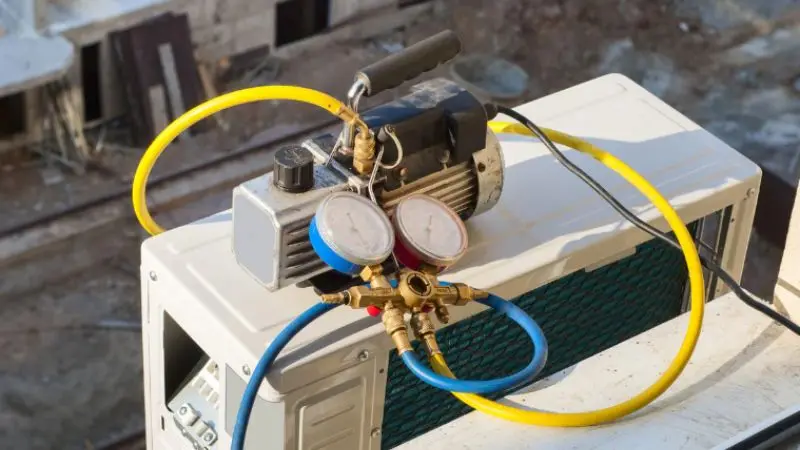
Another necessary aspect of installing or maintaining an air conditioning system is using an AC vacuum pump. The pump eliminates trapped air, moisture, and contaminants that can impair cooling efficiency and damage internal components. A proper vacuum also guarantees that the refrigerant works as it was designed after the system is charged.
When you are learning to operate an AC vacuum pump, it is important to take every step, step by step, to avoid damaging your HVAC system and extend its lifespan. It is a simple procedure that involves careful attention to detail to achieve a deep, airtight vacuum.
Step 1: Connect the Vacuum Pump to the AC System
The first is connecting the AC vacuum pump to the air conditioning system with the correct manifold gauge set and vacuum-rated hoses. Seal off the inlet port of the pump using the service and seal off all the connections to prevent air leakage. Note: Make sure the air conditioner is turned off when installing the pump. Place the pump on a hard, flat surface and make sure to turn it on.
Effective evacuation is founded on an appropriate connection. Even the smallest leakage will prevent the system from achieving the required level of vacuum, and the entire process will be less effective. Before proceeding to the next step, make sure all fittings are checked.
Step 2: Remove Air and Moisture from the System
Once connected, turn on the AC vacuum pump and let it run to evacuate air, moisture, and non-condensable gases from the refrigerant lines. Watch the vacuum gauge as the pressure gradually drops. This means that the pump is effectively evacuating the system.
The removal of moisture is particularly important, as water vapor may freeze in the expansion valve, cause internal corrosion, and reduce cooling efficiency. This step will ensure the system is clean and dry, and then refrigerant is added, which will help the HVAC equipment run reliably and efficiently.
Step 3: Create a Deep Vacuum
Continue using the pump until the system is at the appropriate vacuum level, as suggested by the manufacturer. The reason behind this vacuuming is to eliminate moisture that could not be seen otherwise in the tubing and other components. The question of the duration of running an AC system on vacuum is a matter of the size of the machine, the state of the hose, and the functionality of the pump, and not a time constraint.
Continue monitoring the vacuum gauge at this stage and make sure that the pressure remains the same. Constant reading will make sure there are no significant leakages and that the evacuation is in the appropriate direction. One of the most important system preparation steps for refrigerant is vacuuming to a deep degree.
Step 4: Prepare the System for Refrigerant Charging
When the required vacuum is attained, switch off the pump and seal the manifold valves to maintain the vacuum in the system. Allow a few minutes, then check the gauge to ensure the vacuum remains constant. When the pressure increases, examine the connections, fix any leaks, and continue.
It is important to use an AC vacuum pump before adding refrigerant, as this ensures there is no air or moisture in the system. Once the vacuum has stabilized, unhook the pump and start filling the system with refrigerant as per the manufacturer’s requirements. This final process provides effective cooling, safeguards the compressor, and extends the overall life of the air conditioning system.
Why You Should Vacuum an AC System Before Adding Refrigerant
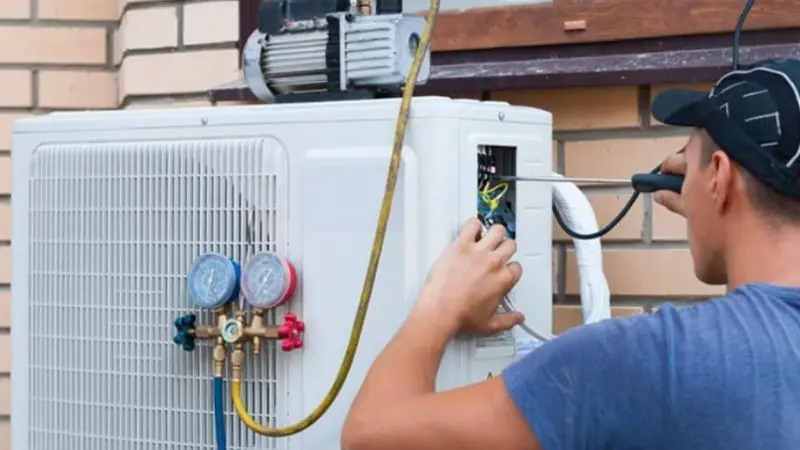
One of the most crucial steps before charging an air conditioning system with refrigerant is to vacuum it. This action eliminates moisture, air bubbles, and other contaminants that may lower efficiency and destroy internal parts. Failure to do so may result in low cooling efficiency, increased energy costs, and expensive maintenance.
Regardless of whether you are repairing a home air conditioner or installing a vacuum pump to work with mini splits, to make the refrigerant circulate properly to keep the HVAC system working reliably over the years, you have to create a proper vacuum.
Remove Moisture to Prevent System Damage
Water contained in an air conditioning system can lead to severe issues in the long run. It is able to interact with refrigerant and compressor oil to produce corrosive acids that rust internal parts. The refrigerant lines may also be frozen in the expansion valve or inside the water,r which limits the amount of refrigerant flow and lowers cooling performance.
Moisture is removed by using an AC vacuum pump to prevent corrosion, the formation of ice,e and premature wear of the system due to exposure to moisture. This is an easy measure that will keep the refrigerant circuit clean, enhance reliability, and minimize future costly repairs.
Improve Cooling Efficiency
A refrigerant in the closed lines is optimal in an air conditioning system. Non-condensable gases such as air occupy valuable space within the system, thus compelling the compressor to operate more aggressively and lowering cooling efficiency. This may cause temperature imbalances and increased utility payments.
The correct usage of an AC vacuum pump eliminates any form of undesired air and contaminants and then charges the system. With a properly evacuated system, the refrigerant is free to circulate, achieves higher heat transfer, and provides faster, more uniform cooling with lower energy consumption.
Protect the AC Compressor
A compressor is the core of an air conditioning system, and its protection is crucial to its successful operation. Excessive heat and strain on the compressor can be caused by moisture, dirt, and trapped air that can raise operating pressure. In the long term, these conditions can result in mechanical breakdown and expensive repairs.
Selecting the most appropriate vacuum pump for HVAC, along with proper application, can ensure that a deep vacuum is established to eliminate harmful contaminants before the refrigerant enters the system. This enables the compressor to perform under optimal conditions, extending its service life and performance.
Extend the Life of Your Air Conditioning System
A well-evacuated system has less internal wear because moisture and contaminants have been removed before the addition of refrigerant. Clean refrigerant lines will minimize corrosion and blockages and make all of the components more efficient. This makes the overall HVAC system more cost-effective in terms of repairs and better performance over time.
This is a minor process of using an AC vacuum pump prior to refrigerant, which has long-term returns. Regardless of whether you are installing a new unit or servicing an old one, building a good vacuum is the best way to maximize efficiency, reduce maintenance expenses, and extend the lifetime of your air conditioning system.
Wrap Up
One of the most crucial measures in the maintenance of your air conditioning system is to use an AC vacuum pump properly. Proper vacuuming removes moisture, air, and contaminants that can reduce efficiency or destroy costly parts. Starting with knowledge of how to operate an AC vacuum pump and the choice of the most suitable vacuum pump to operate in HVAC, each step will result in a more efficient cooling process and an increased system life. Whether you are working on a central air conditioner or a vacuum pump for a mini-split installation, you should always create a good vacuum before charging the refrigerant to ensure reliable performance, reduced maintenance expenses, and prolonged HVAC operation.
FAQ
What does an HVAC vacuum pump do?
You apply an HVAC vacuum pump to clear your air conditioning of air, moisture, and dirt. This tool is useful in enabling your system to perform better and last longer.
How frequently do you vacuum your HVAC system?
Whenever you open your HVAC system for repairs or maintenance, have it vacuumed. This maintains the system’s cleanliness and prepares it for refrigerant.
Is it possible to use an HVAC vacuum pump with other systems?
Refrigeration systems and heat pumps can be refrigerated using an HVAC vacuum pump. The pump is suitable for all systems that require a clean, dry environment.
What would be the consequences of not vacuuming your HVAC system?
You can forget vacuuming, and your HVAC system might not cool properly. Humidity and air can cause damage and result in costly repairs.
Is there anything special that you require to connect an HVAC vacuum pump?
You should have HVAC system hoses and fittings. These will help create a tight-fitting seal and prevent leaks during the vacuum process.