You would ask whether straw for chicken coop bedding is the best to use for your flock. Straw is also a choice among chicken keepers due to its ability to keep the coop warm and its softness when walked on. It is easy to propagate, easy to substitute, and decomposes rapidly, making it handy for composting in the future. Also cheap and readily accessible in most places is straw. Nevertheless, it must be checked regularly to ensure its safety. Wet areas, mould, or pests will develop when not addressed. Once you learn to use straw in a chicken coop, you are able to ensure the comfort, cleanliness, and healthy living of your chickens throughout the year.
What Is Straw and Why Is It Used in a Chicken Coop?
Bedding is a crucial factor in designing a comfortable home for your chickens. Most novices tend to question what a straw is and why everybody uses it. Knowing this will enable you to make sound decisions regarding the health and cleanliness of your flock.
Put simply, the popularity of straw as the bedding material in chicken coops is due to the dryness, lightness, and ease of handling. It forms a soft layer that makes the chickens comfortable and helps maintain the coop hygienically.
Difference Between Straw and Hay
Straw and hay are not the same, as many people confuse them. The stalks that are left behind after grains such as wheat or barley are harvested are used to make straw. Hay, on the other hand, is produced from dried grasses and is normally used as animal feed because it contains some nutrients.
Straw is more suitable in coops than hay when comparing the two in the case of straw vs hay regarding their use as chicken bedding. It is not seed- or pest-friendly, nor does it promote mould. The hay might become wet and dense within a short time, leading to poor health in the coop. Straw remains light and removable, making daily care more convenient for chicken keepers.
Key Characteristics of Straw Bedding
The structure of straw is unique and thus applicable in a chicken coop. The hollow stalks make it light and airy, hence enabling it to form a soft and comfortable surface on which the chickens walk and rest. This allows it to be used as a safe straw by the chickens to sleep on, especially when the nights are colder.
It is able to hold a considerable amount of moisture, therefore keeping the floor dry. One should also make sure that it is regularly checked, since excess moisture may cause bad odors and ammonia. Through correct usage, however, it may also serve as a biodegradable bedding in chicken coops, such that it can be easily composted once used. This renders it convenient and environmentally friendly to keep poultry in the backyard.
Why Chicken Keepers Prefer Straw
The reason why chicken keepers prefer straw is that it is easy and cheap to use, and it is readily available. Generally, obtaining chicken coop straw at the lowest price per unit in a wide range of places demands minimal effort, thus it can be an inexpensive choice that can be utilized by amateur and professional keepers alike.
The other reason is the way it is flexible. Most individuals get to know how to use a straw in a chicken coop to find ways to nest, such as deep litter, whereby the bedding accumulates over time and forms natural warmth. Straw can also be replenished easily and decomposes in the compost, and less waste is created. Due to such advantages, it is still among the most reliable types of bedding used to keep the chicken healthy and comfortable.
Benefits of Using Straw for Chicken Coop Bedding
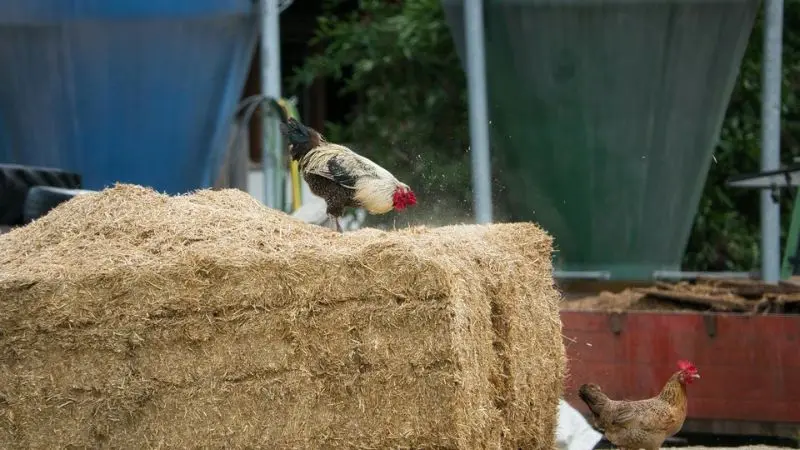
Selecting the right bedding has a tremendous impact on your chickens’ comfort and health. The utilization of straw has a long history behind it, as it provides convenient and easy returns in the routine upkeep of coops.
Collaborating with the knowledge of its functionality, you will be able to tell why the straw of chicken coop constructions is so widely used by novices and seasoned keepers.
Excellent Insulation for All Seasons
Straw has one of the best thermal characteristics. The hollow stalks contain air, and the air acts as a natural insulation against the cold weather. This can keep the coop warmer and more comfortable in the winter for your chickens.
Even in warmer weather, straw can assist in keeping the environment even, but the airflow in the coop is also a concern. Comparing straw to hay as a bedding option for chickens, straw proves to be a stable product since it does not nest easily like hay. This enables improved flow of air and ease. In general, it forms a more comfortable environment under which chickens can sleep without having to feel too cold or too hot.
@frankbrooks8 Replying to @Apphole a coop is anything you make it that’s enclosed 🤷🏻♂️#chickens #chickencoop #chickenrun #vevor #tiktokshopblackfriday
♬ original sound – FrankzFindz 🗝️
Absorbs Moisture and Reduces Odor
It is highly important to keep the coop dry in order to keep your flock healthy. Straw is capable of absorbing certain moisture, and this moisture keeps the floor wet and dirty. It particularly comes in handy in tracts where droppings accumulate fast.
Straw is also beneficial when properly used to reduce the smell of ammonia, which makes the coop cleaner and cheaper to handle. Nevertheless, it should be checked frequently. Wet or dirty straw must be taken off to prevent molds and strong smells. When well cared for, it may even be used as biodegradable bedding for a chicken pen, making cleanup easier and friendlier to the environment. Straw offers the benefit of an easy-to-dispose and moisture-controlled bed.
Comfortable Nesting Material for Chickens
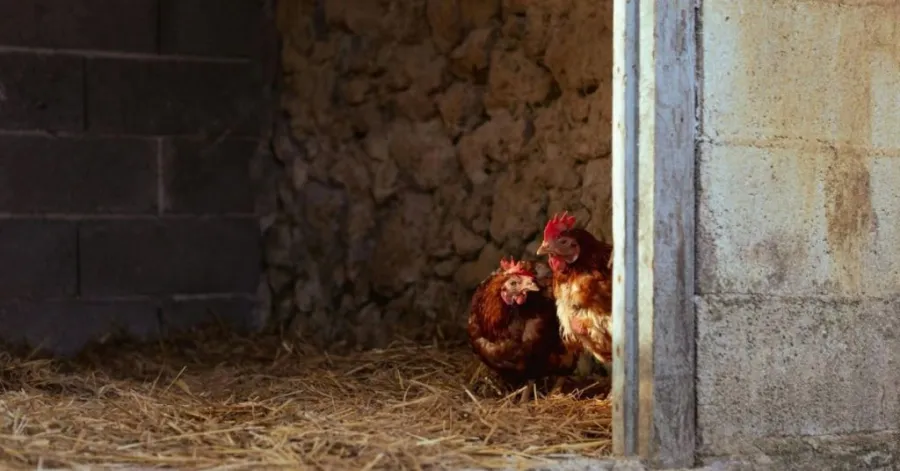
Birds prefer to find a cozy and safe nest to sleep and hatch eggs. Straw gives them a cushiony surface that is comfortable on their feet and bodies. This makes it a safe chicken dream straw, particularly when well distributed either between the coop noticeably or nesting boxes.
It also promotes the natural behavior of chickens. Straw allows chickens to scratch and dig upwards, leading to them being busy most of the time and eliminating boredom. Its application in nesting grounds also protects the eggs from breaking by providing a cushioned bottom. Due to this comfort and versatility, many keepers use straw to provide a habitat for their flock, making it tranquil and relaxing.
Affordable and Widely Available Option
The other reason why so many people use straw is that it is cheap and readily available to a lot of people. The cheapest chicken coop straw is readily looted in most places. This renders it a good choice in case one plans to run their coop without spending a lot of money.
It is also easy to clean and change, thus saving time during the daily cleaning routines. Lots of chicken owners find out how to equip a chicken coop with straw and various constructions, such as deep litter, in which a litter gradually accumulates and creates a warm environment over time. Due to its cost, versatility, and convenience, straw is one of the most feasible options of bedding straws available in the chicken coop.
Potential Downsides of Straw in Chicken Coops
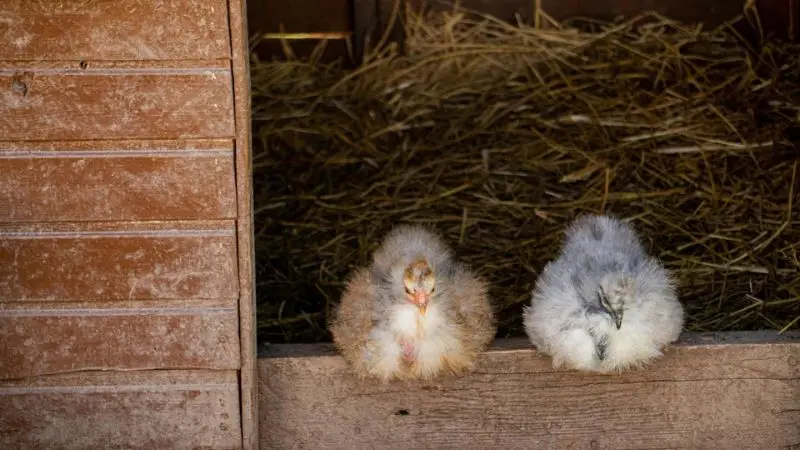
Although straw is a favorite form of bedding, it is not an ideal one. There are some typical issues you must know, so that you can command them correctly and keep your chicken healthy.
The good and the bad give you the knowledge on how to use the straw safely to bed the chicken coop to avoid any trouble in the long run, however.
Risk of Mold and Dust
The first issue with straw is whether it is susceptible to getting wet. Straw could begin to grow mold when it becomes wet due to the droppings or spilled water. This may make your chicken environment unhealthy unless this is done on time.
Stone, even broken, straw can also generate dust, and this dust may have implications for the breathing of the chickens. That is why constant inspection is extremely significant. In case of musty smell or wet spots, then change the bedding as soon as you notice that. Although straw may be a safe rest and sleep material for chickens, it remains safe only when it is clean and dry. Proper ventilation and frequent cleaning contribute largely to the prevention of such issues.
Can Harbor Mites and Pests
Sometimes, mites can hide in straw and other minute pests as well. These are small insects that may be inhabiting the bedding and emerge to feed on your chickens, particularly at night. Unless managed, they may overpopulate rapidly and have an impact on the health of your flock.
Itchy, wimpy, and uneasy chickens can be seen having mites. You may even see tiny vermin in their feathers. In the process of teaching about how to use straw in a chicken coop, one of the things that should be done is to look into the bedding and the chickens themselves regularly. Hygienic coop hygiene and clean bedding can be used to check the accumulation of pests. Simple issues, when reflected upon swiftly, can be prevented from escalating into serious infestations.
Requires Regular Maintenance
Straw bedding requires higher care than some others. It is able to disintegrate, shrink, and lose its freshness with time. This implies that you should swivel it regularly and change it when the need arises to ensure the coop is clean.
In systems such as deep litter, even better attention is needed. Shifting the bedding around will help keep the bedding loose, dry, and allow air to move. This is also important because it makes it a potential biodegradable bedding for chicken coops, as the used ones can be composted back into the ground. Even though some individuals use it as the least expensive straw to build chicken homes, its cost should not be considered light when it comes to maintaining such homes. Even with frequent maintenance, you will be able to turn straw into a good and cozy choice for your chickens.
How to Properly Use Straw in a Chicken Coop
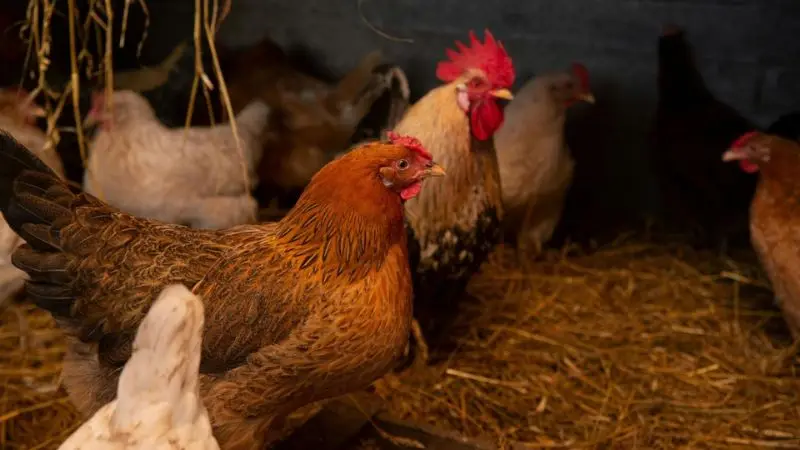
Straw properly used can go a long way in ensuring that your chicken house is clean and comfortable. It is used by many, although it does not have a clear approach, and this may cause inconveniences such as mess, reaction, or shattered eggs.
You may be able to evade some of these pitfalls by knowing how to utilize straw in a chicken house to provide a healthier environment for your chickens.
Best Areas to Use Straw (Nesting Boxes vs Floor)
Straw can be adopted in the coop in various sections, but it is not equally effective everywhere. In the coop floor, it is much more helpful since chickens can walk, scratch, and spread it naturally. It is then a good option for general bedding.
Nevertheless, in nesting boxes, straw may not be as effective. Chickens are prone to rolling it around, leaving eggs exposed to hard surfaces. This is the reason why you must ensure that the layer is thick and does not accumulate in case you choose to apply it to that area. Once choosing between straw as a bedding or as the bedding has been given to the chicken, straw is still better since it does not encourage so much moisture or mold, although laying it in the coop is still more effective in explaining good performance.
How Deep Should Straw Bedding Be?
Straw thickness is significant for comfort and sanitation. The layer of coop floor appears to be good at 3 to 6 inches. This provides chickens with the necessary space to scratch and move about, as well as being able to control moisture.
When you have the deep litter method, you may use a somewhat thick layer and then increase gradually. This brings warmth when the bedding gradually deteriorates. A case in nesting boxes is where a thin layer of about 2 to 3 inches is sufficient to pad out eggs. This, when conveyed in the right way, forms a safe straw where the chickens will sleep and rest without hard surfaces beneath them.
How Often Should You Replace Straw?
Straw bedding should be attended to regularly to ensure that it remains clean and working. It should be inspected on a daily basis, and the dirty or wet spots should be removed as soon as they are noticed. This will ensure that no bad smell is produced and keep the coop fresh.
It may require a complete replacement approximately once a week, of course, depending on the number of chickens and the level of moisture. It might require more frequent changes in wet weather. Due to its easy disintegration, this can be easily used as a biodegradable bedding in chicken cages, so that you can be able to compost the material used after cleaning. Frequent changing to keep your chickens alive and the coop maintained.
Tips for Keeping Straw Dry and Clean
One of the most significant aspects of the correct use of straw is to keep it dry. Wet bedding can easily develop molding, pests, and intense odors; thus, proper care should be taken. The moisture development is also minimized by good airflow in the coop.
Rotating the straw usually ensures that it does not become compact, and one can breathe through it. It is natural to have chickens scratching the bedding to make it loose. When you are thinking of chicken coops made of the cheapest straw, the maintenance is even more crucial to keeping not only quality, but also being a good one. When straw is used as the chicken coop bedding, it can remain clean, comfortable, and safe for your flock, with constant care.
Straw vs Other Chicken Coop Bedding Options
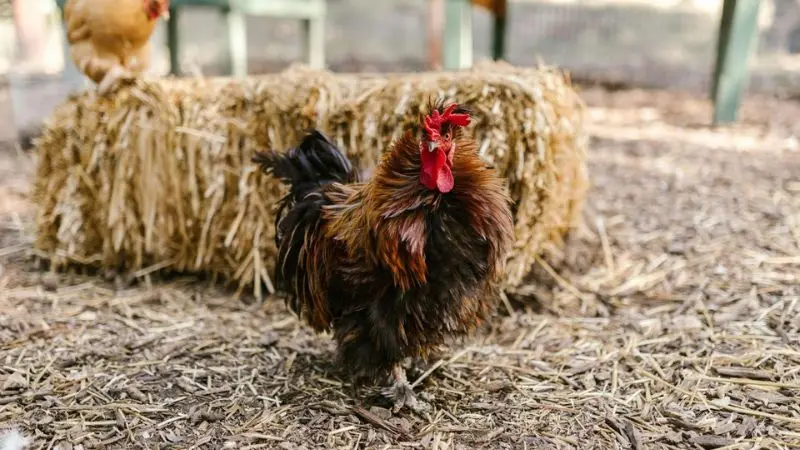
It is not always easy to decide on the appropriate bedding as each one has advantages and disadvantages. The best thing is usually determined by your weather, coop configuration, and the amount of time you can dedicate to maintenance.
A common starting point for comparing various materials is straw vs. hay as a bedding material for chickens, but it is also productive to look at other popular bedding materials, such as pine shavings, sand, and hemp.
Straw vs Pine Shavings
Both pine and straw shavings are commonly used, but neither picks up well or works well in day-to-day coop maintenance. The pine shavings are also known to have an advantageous property for moisture absorption, helping them control dampness and reduce odor. This renders them cleaner than coops with fast-accumulating moisture.
Straw, on the contrary, is more readily available in most places, and it is ideal in deep litter systems. It offers a less rough and natural surface that chickens scratch on and rest. Although pine shavings can create dust, straw needs a close check in order to avoid the problem of mold. When kept in good condition by frequent replacement, it can also be a good choice when used as straw in the chicken coop.
Straw vs Sand
The conditions in a chicken coop are quite different between the sand and the straw. Sand is a great choice for keeping the floor dry since it absorbs moisture rapidly. It is also useful in minimizing pests and can even be cooler in warmer climates. It is, however, thick and may be more difficult to wash and maintain in the long run.
Straw is lighter and less cumbersome. Chickens like to move it around, and this will keep them in motion. It also gives superior insulation in the colder seasons. Nonetheless, it does not absorb water like sand, and it should be cleaned on a routine basis. Some owners prefer straw, where a simple and compostable material is desired, particularly a biodegradable bedding material in chicken houses, which may be reused in the garden.
Straw vs Hemp Bedding
Hemp bedding is gaining popularity due to its ability to absorb moisture. It is able to hold a lot more liquid than a straw, thus allowing the coop to remain drier over time. This implies reduced cleaning, and the overall environment is fresher.
Straw is cheaper and more accessible, however, particularly in case the customer needs the cheapest material to use in chicken coops. As much as hemp might be more expensive initially, it can be used over a longer time and cut on maintenance labor. Straw is still a viable alternative, as the component allows people to maintain a straightforward installation and have the bedding decompose after use naturally.
Which Bedding Is Best for Your Coop?
The optimal bedding would be determined by your needs. Straw may also be used as a source of warmth and comfort in case you live in a colder region. Sand or hemp may be a better option in warmer or more humid climates since they are able to take in and give out moisture more easily.
The budget affordability, the ease of obtaining materials, and the time available to devote to cleaning are also something to consider. A lot of keepers of chickens prefer straw due to the fact that they know how to apply straw in a chicken house and can easily handle it. It is also a safe straw they could sleep on, which could be comfortable when well used, yet cheap and convenient at the same time.
How to Choose High-Quality Straw for Your Chicken Coop
It is equally important to choose the right straw as well as to use it properly. Straw of bad quality may also cause health issues, whereas bad straw keeps your coop clean and comfortable.
By using straw in the chicken coop construction, you need to concentrate on some simple hints, which enable you to settle on the safest and most efficient solution.
Signs of Good Straw (Color, Smell, Texture)
When one has the right quality of straw, it is not difficult to find it. The fresh straw is normally of bright yellow or gold color, indicating it is clean and newly harvested. When the straw appears gray, dark, or dull, then this can be an indication that it is old or it is getting rotten.
Another significant sign is its smell. Good straw must possess a light and fresh odor. In case there is a musty or sour odor, it might be due to mould and should be avoided. The texture is also important. Straw is always dry and crisper than wet or sticky. A suitable selection will allow you to choose a safe straw for the chicken to sleep on, protecting their health and comfort.
Where to Buy Straw for Chickens
Straw is not hard to come by, and it depends on where you live. Local markets and farm supply stores are also in the game, and they do have fresh and affordable straw. Garden centers can also package smaller and less dirty bundles, which are easy to manage.
Others can purchase it online as it is more convenient than purchasing when they are in need of a particular kind of straw, such as chopped or compressed. This will save you the hassle of visiting different stores to compare prices and get the cheapest chicken coops through straw. Whatever the place of purchase, it is important to first examine the quality before using it in your coop to save trouble in the future.
Straw Organic vs Non-Organic
Organic and non-organic choices can also be made when selecting straw. Organic straw does not use chemicals or pesticides to cultivate it, and would be a cleaner and safer option for your chickens.
Small amounts of chemicals can be found in non-organic straw, though this does not imply that it can be used well in the long term. Organic straw should be considered in case you want to have a healthier and more natural setting. It is also eco-friendly, particularly when it is deployed as biodegradable bedding in chicken coops, which can make a subsequent use as compost. Although a slightly higher cost can be charged, numerous chicken keepers still like it because of the security and peace of mind it gives.
Wrap-Up
The right bedding is a key to ensuring your chickens are healthy and comfortable. Straw is a simple and practical choice since it is cheap, readily obtainable, and suitable in most coop designs. This is a great thing because when you know how to incorporate straw in a chicken house, you are able to prevent common problems that may arise, such as moisture and pests. Never use dirty or damp straw; keep it clean and dry and renew it. Well-maintained, straw can make your flock completely comfortable, safe, and provide natural comfort throughout the year in chicken coop bedding.
FAQ
Do you have the ability to compost the used bedding of your chicken coop?
Yes, it is possible to compost used straw bedding. Straw decomposes fast and contributes carbon to your compost pile. Nitrogen is contributed by chicken droppings. Blend and make healthy garden soil.
What is the secret of keeping straw bedding dry?
You must be sure to stir up the straw frequently and get wet places dry. Good ventilation ensures that the bedding remains dry. Look out for musty odors or dark corners. Repulse damp straw at the first finding.
Should baby chicks be fed on straw?
Baby chicks can be exposed to the danger of straw. Chicks can consume long pieces and be impacted by the crop. The first few weeks should be done on chopped straw or paper towels. Return to normal straw as chicks become bigger.
What is the minimum amount of straw required to make a typical chicken coop?
You should have sufficient straw to fill the place up to a depth of 3 to 6 inches or so. One bale tends to work with a small coop. Add additional ones when you find some bare areas or when the bedding is flattened.