You’ve got a huge pile of mulch sitting in your driveway, and it needs to get to another corner of your backyard. While your trusted wheelbarrow has served you well for these years, after three trips, your arms start shaking, and your back reminds you that you’re only getting older. Relatable? Well, you’re not alone in wondering if there’s a better way to handle these heavy hauling tasks around the yard. Fortunately, garden trailer dump carts are just the solution for you!
But choosing between a garden dump cart and a traditional wheelbarrow isn’t just about convenience. It’s also about matching the right tool to your specific needs. Both have their strengths, and understanding when to use each can help transform your tasks from exhausting to manageable in no time. This blog will discuss everything you need to know about making the right choice between the two.
Garden Dump Carts vs Wheelbarrows: Differences
Before you can decide which tool belongs in your shed, you need to understand what sets these two apart. While they both move stuff from one point to another, that’s pretty much where the similarities end.
What is a WheelBarrow?
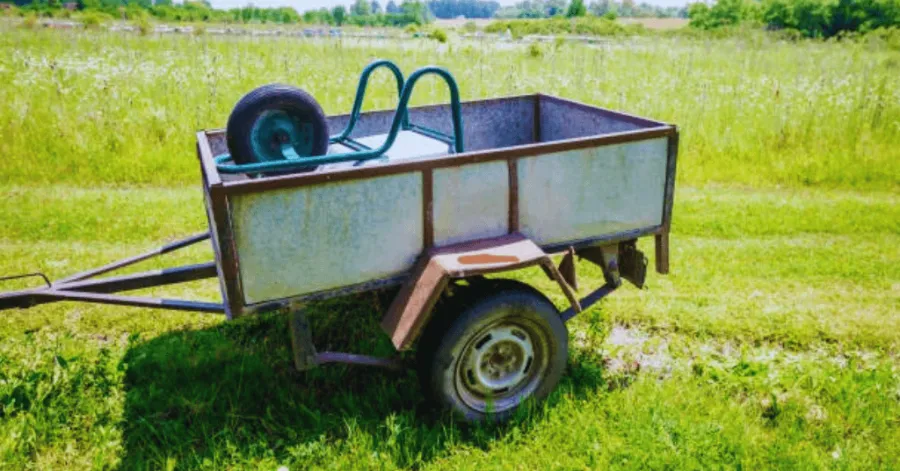
A wheelbarrow features a single wheel positioned at the front with two handles that you can grip from behind. The design consists of a sloped, deep basin that’s perfect for loose materials like soil, gravel, and concrete. Once you have loaded the material, you can push it forward while balancing the weight over the front wheel.
The single-wheel design, while inconvenient for some, provides incredible maneuverability. You can pivot on a dime, squeeze through narrow garden rows, and navigate tight spaces that a wider cart cannot access. The moment you want to dump the loads, just lift the handles up and gravity will do the rest. This entire process seems intuitive once you get the hang of balancing.
When it comes to weight capacity, most wheelbarrows can hold between three and six cubic feet of material. The six cubic foot model is the most popular owing to the fact that it strikes a decent balance between capacity and control. If you load it up too much beyond that, you’ll be fighting to keep it upright.
How Garden Trailer Dump Carts Work?
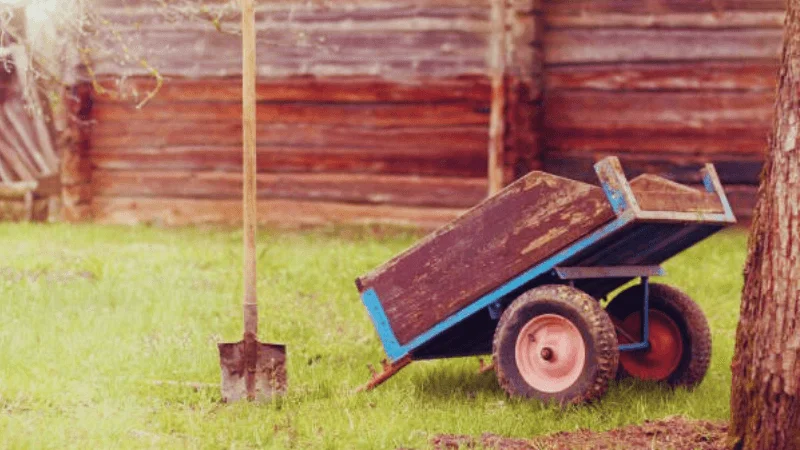
A garden trailer cart takes a completely different approach. With 4 wheels, some models with only 2, arranged under a flat or shallow bed that you can pull using a wagon or manually, a garden cart can be the perfect solution for your backyard. The wheels help spread the weight evenly, which creates a stable platform that’s nearly impossible to tip over accidentally.
Garden trailer dump carts come with a quick-release mechanism, which allows you to empty the entire bed in seconds. You only pull a lever, and the entire bed tilts backward, thus removing all the load. No heavy lifting is required here, which eases the work. This pulling motion is generally safer and easier than pushing, especially when you are dealing with uneven terrains or are going uphill.
Dump carts typically range from four to fifteen cubic feet in capacity, with weight limits that lie anywhere between 600 and 1200 lbs or more. That’s more hauling power than most wheelbarrows can simply manage. Some models come with a convertible handle, which can be used to pull the trailer by hand, and also haul the trailer using a lawn tractor for heavier jobs.
Real World Impact of these Design Differences
The maneuverability of wheelbarrows comes at a cost, which is stability. If you load it wrong, hit a hump, or lean too far to a side, the wheelbarrow can trip, and the load may fall down. Anyone who has gardened for more than one season knows the trouble.
Garden dump carts, on the other hand, sacrifice that nimbleness for rock-solid stability. You can load them unevenly, a little up and down the maximum limit, and still pull safely. Multi-wheel garden trailer design means you’re not struggling to balance the load. For people fighting joint pain and back issues, or those who are elderly, pulling the cart would be more convenient than pushing and balancing.
But there’s a trade-off. Garden trailer dump carts need a little more clearance. They won’t fit through that narrow gate or between those closely planted greens. Also, since the turning radius is wide, you’ll need to plan your route more carefully. But for open yards and heavy-duty projects, these limitations fade into the backdrop.
When to choose a Wheelbarrow?
Despite all the benefits that modern dump carts offer, wheelbarrows have remained popular for centuries for a reason. There are some specific situations where nothing else compares. Here’s more information:
Navigating between Tight Spaces
If your garden has narrow rows between raised beds, having a standard wheelbarrow becomes necessary. The front wheel acts like a rudder, allowing you to steer through paths just two feet wide. Garden carts, even the smaller ones, usually require at least three feet of space to move easily.
Bigger gardens with mature plants often create organic, winding pathways. You need something that can easily move around your prized rosebush, slip past the tomato stakes, and avoid the garden gnome your mother-in-law insisted you needed. A wheelbarrow deals with these challenges effortlessly.
The same idea applies to side yards, narrow gates, and those tight corners around your house. Measure your narrowest passage before deciding on a larger cart. If it won’t fit, all that extra space becomes useless.
Precision Dumping and Controlled Pouring
Wheelbarrows are great for placing materials precisely. You can tip them slowly, letting out just the right amount of material exactly where you want it. This makes them perfect for mixing and pouring concrete, spreading soil amendments in specific garden beds, or filling planting holes.
The deep basin design holds materials securely during transport and gives you excellent control when dumping. You can even use a wheelbarrow as a mixing container for concrete or soil blends, which is something most garden carts can’t do.
Quick Jobs and Lighter Load Applications
Not every garden task needs heavy-duty hauling. Sometimes, you only need to move a few bags of mulch, collect garden debris, or transport hand tools from your shed to the garden. A wheelbarrow is quicker to grab for these lighter jobs.
They are usually cheaper than dump carts. Basic steel or poly wheelbarrows start at about $60 to $100, while quality dump carts typically start around $150 and go up from there. If you’re on a tight budget and have modest needs, a wheelbarrow offers good value.
When is a Garden Trailer Dump Cart an ideal choice?
Let’s talk about situations where a garden dump cart isn’t just better- it’s in an altogether different league than a wheelbarrow.
Transporting Heavy Load Over a Distance
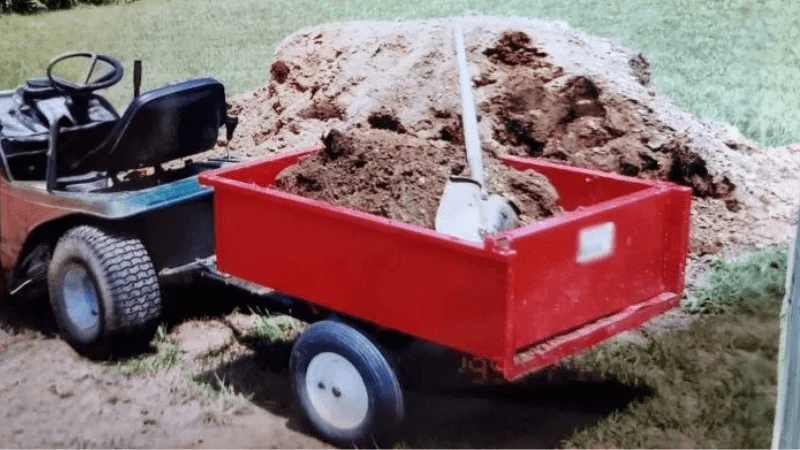
If you are planning to move a ton of gravel from your driveway to the backyard patio project, a dump cart can save your back. It can help cut your trips in half, or even more. Garden Trailer dump carts have a higher load capacity, often double or triple that of a wheelbarrow. This, along with the easier pulling, allows you to move more material with less fatigue.
In addition, the stability from four wheels means you can load these carts to their rated capacity without worrying about spills. If you try to load a wheelbarrow to its maximum weight, you’ll quickly see why most people only fill them halfway. With a dump cart, you can confidently pile on a full load and pull it safely to your destination.
For properties larger than a quarter acre, this difference is significant. Your weekend project will finish in only a few hours instead of taking all day, and you won’t feel completely exhausted by Monday morning.
Uneven Terrains and Slopes
Here’s a secret that wheelbarrow manufacturers don’t advertise: going uphill with a heavy load is tough. You’re pushing, balancing, and battling gravity all at once. Going downhill has its own problems as the load tends to pull away from you.
Dump carts manage slopes much better. Pulling uphill feels more natural than pushing, using your larger leg muscles instead of straining your arms and shoulders. The four-wheel design keeps everything stable, even on side slopes that would tip a wheelbarrow quickly.
The larger pneumatic tires found on dump carts roll more smoothly over rough ground. Roots, rocks, and ruts that would stop a wheelbarrow barely slow down a well-designed cart. If your property has anything other than a flat, manicured lawn, this becomes very important.
Bulk Loads and Ongoing Landscaping Projects
Projects like installing a patio, building a new garden bed, or planning a major landscaping renovation can generate continuous hauling needs. Wheelbarrows in such situations can be inefficient, in the sense that they cannot haul heavier loads and materials.
A garden trailer dump cart, on the other hand, helps handle everything smoothly. From removing old sod to delivering new topsoil or hauling away debris and bringing in decorative stone, a dump cart trailer can handle everything.
The quick-release dump mechanism, in addition, saves countless hours of shoveling compared to unloading a wheelbarrow by hand. Many contractors and landscaping professionals depend on garden dump cart trailers for this reason. When you move dozens of loads over several days or weeks, these time savings really add up. Investing in a good cart pays for itself through lower labor costs and quicker project completion.
Key Features to Consider When Making a Choice
Once you have arrived at your decision, you’ll discover that not all wheelbarrows and garden trailer dump carts are created equal. Understanding the key features will help you select a model that will serve you well for years to come.
Tire Type and Size
Air-filled tires provide the smoothest ride over rough terrain. They can absorb bumps and roll easily over obstacles. However, they can go flat easily if punctured.
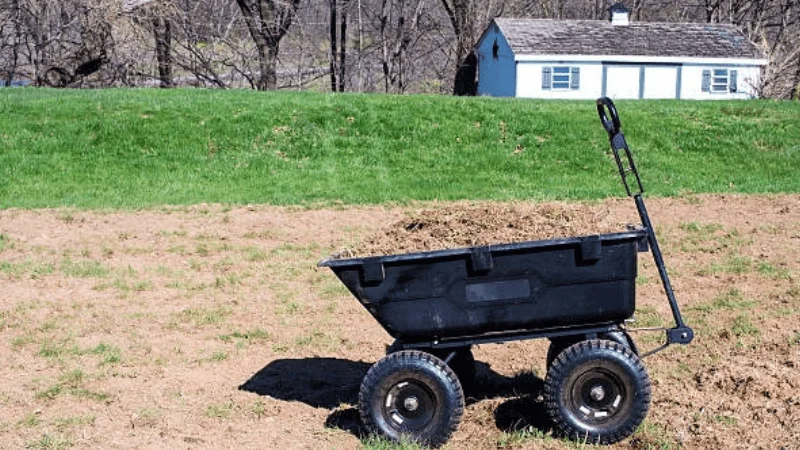
A convenient alternative is solid or foam-filled tires, which help eliminate this problem. They also require minimal maintenance and can last for years. The trade-off, however, is a slightly rougher ride when it comes to operating on uneven ground. For most homeowners, this is an acceptable compromise, and many professionals swear by flat-free tires.
Finally, tire size also matters. Larger tires can roll on most surfaces easily and provide better ground clearance. Smaller tires work fine on smooth surfaces but struggle on soft surfaces. So, when shopping for heavy-load applications, make sure you don’t cheap out on wheels.
Material of Construction
Carts made using traditional steel material offer maximum durability and can handle serious abuse. Steel frames and beds are common on commercial-grade equipment, but the downside is weight and the constant battle against rust.
Polyethylene construction has become increasingly popular and for good reason. Modern poly beds won’t rust, are easy to clean, and weigh considerably less than steel. They’re also gentler on plants if you’re looking to transport potted specimens. Quality polyethylene material can handle heavy loads without cracking or warping.
Many higher-end models of garden trailer dump carts combine steel frames for structural strength with poly beds for durability and ease of use. This hybrid approach delivers the best of both worlds. Companies like Vevor have embraced this design philosophy, offering carts that balance strength, longevity, and practical functionality.
Weight Capacity
Manufacturers list capacity ratings in both cubic feet and weight limits. Therefore, when shopping for your specific application, pay attention to both numbers. A trailer cart with a generous bed size can have a lower weight limit than what’s needed.
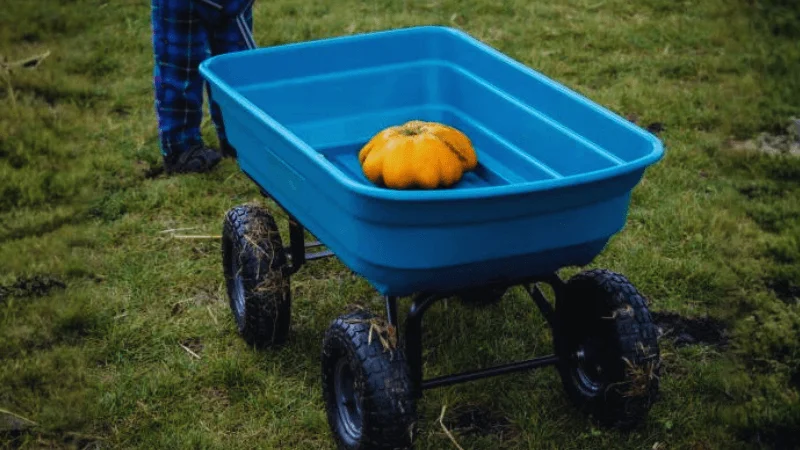
Also, the actual usable capacity is often less than the stated maximum. Loading the cart to its maximum weight limit will make it harder to maneuver and can put stress on the frame and the wheels. You can plan to regularly use about 70-80% of the stated capacity for comfortable operation.
For most homeowners, a four to six cubic feet capacity can handle typical yard work perfectly. Going larger will only make sense if you have an extensive property or need help completing major projects. Smaller capacities work just fine for modest gardens and lighter materials.
FAQs
Can I use a garden dump cart on steep hills safely?
Yes, you can always use a garden dump cart on steep hills, but with caution. Pulling a cart uphill is easier compared to doing the same for a wheelbarrow. The stability that you get with a two/four wheel design can help tremendously. When you are going downhill with very heavy loads, the weight can push you faster than comfortably. Consider making multiple trips with lighter loads.
Are expensive garden carts really worth the extra money?
Variants that are priced higher offer better materials, improved dumping mechanisms, larger capacity, and longer warranties. If you use your cart frequently or for demanding tasks, the investment makes sense.
For occasional light use, mid-range options offer good value. The worst investment is cheap equipment that breaks quickly, and you’ll end up spending more on replacements than buying quality initially.
Can I convert my wheelbarrow into a dump cart or vice versa?
Wheelbarrow designs are different from garden trailer dump carts. However, you can consider owning both if your needs warrant it. Many gardeners and property owners find that having both tools available makes them more efficient.
The Final Word
The choice between a garden trailer dump cart and a wheelbarrow ultimately comes down to understanding your specific needs and being honest about your physical capabilities as well. Wheelbarrows excel in tight spaces and precision applications, where maneuverability matters the most. They are time-tested tools that work beautifully within their design limitations.
Garden trailer dump carts, on the other hand, help make heavy hauling jobs easier and more manageable. The combination of higher capacity, superior stability, and easier pulling makes them an invaluable tool for your needs.
While neither option is universally superior, the final choice depends upon your specific needs. Take the time to assess how you’re going to use the tool and not just how you imagine using it. Quality equipment from a trusted manufacturer like Vevor offers durability and features that make yard work more efficient and less physically demanding. Whether you choose a traditional wheelbarrow or go with the modern dump cart, investing in well-designed, properly constructed equipment will pay dividends through years of reliable service.