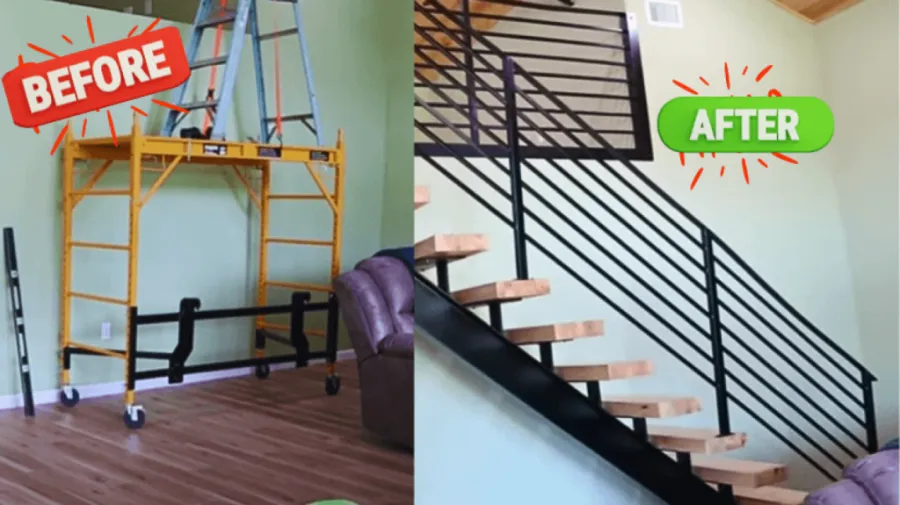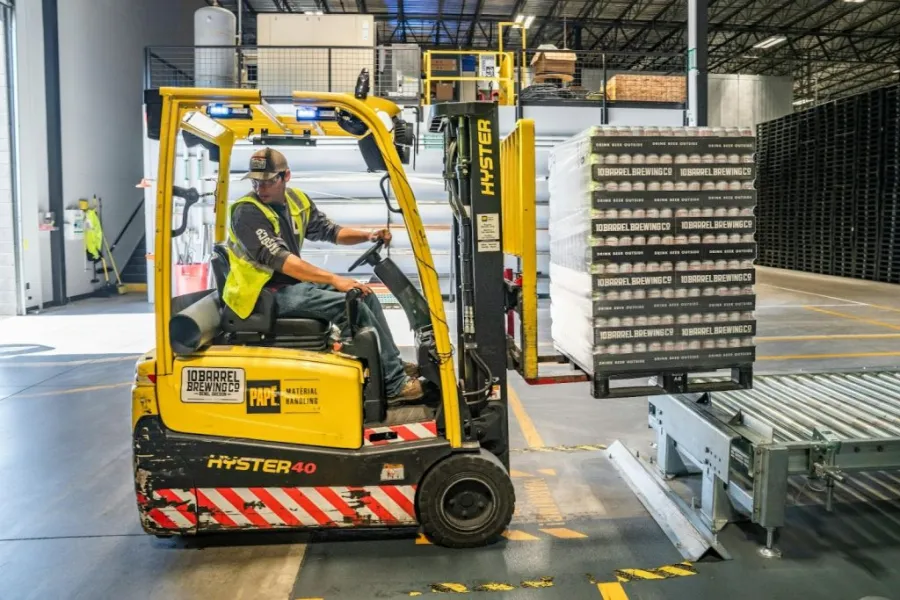
You have experienced that time when a teammate of yours gets up a wobbly ladder and everybody in the audience is thinking silently that he/she is going to fall? Yeah… we’ve all been there. A forklift safety cage spares you such an uproar. It provides a good, firm base; therefore, working at height does not seem like a balancing act.
The right cage will make stressful jobs simple and safe, whether you are changing lights, stacking inventory, or making quick repairs.
What is a forklift safety cage?
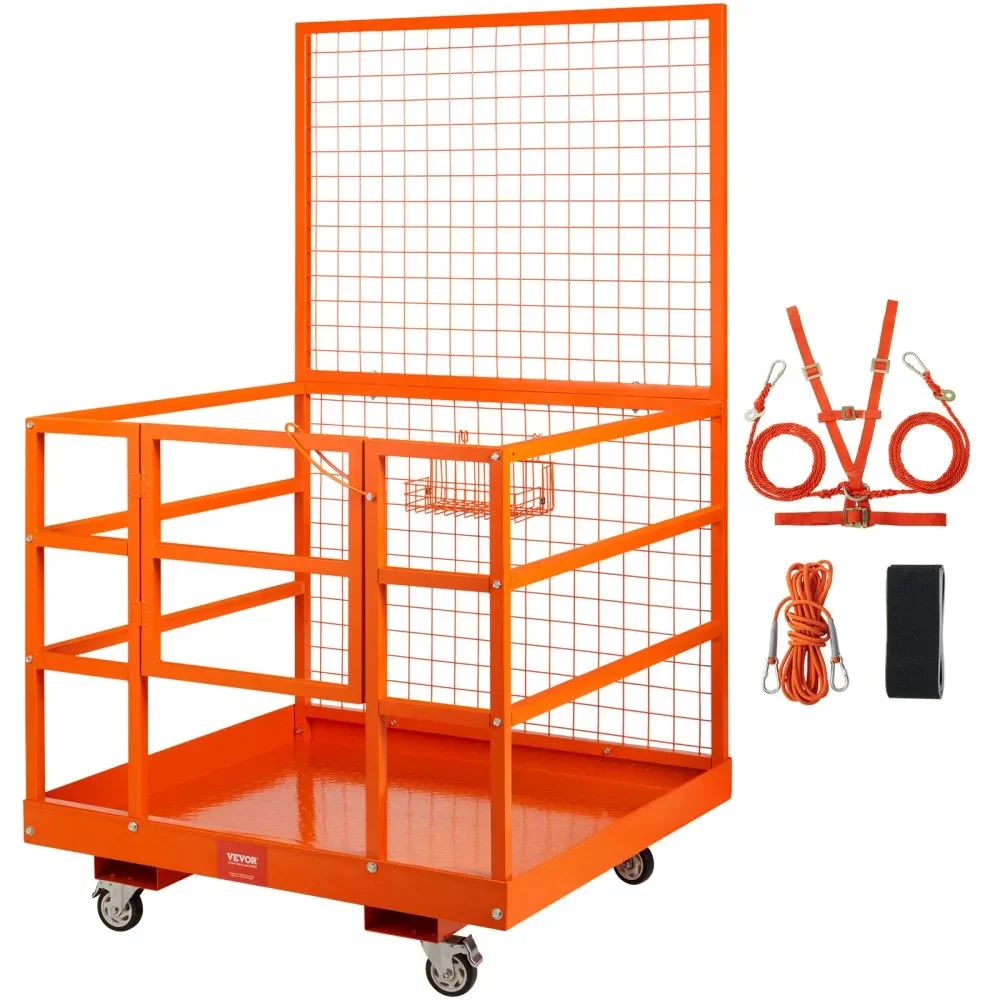
A forklift safety cage is a strong stand that fits on your forklift and provides you with a secure place to stand when working at height.
The cage provides you with rails, flooring, and a stable lift instead of using wobbly ladders or balancing on pallets to get up there, so you can concentrate on the job, not on the risk of falling.
It is among the easiest methods of making work less stressful and safer.
Why do you need a forklift safety cage?
If you ever work above ground level, a safety cage makes the whole process safer, calmer, and way less nerve-wracking.
- Helps prevent falls during elevated tasks.
- Gives workers a stable surface instead of ladders.
- Makes training easier when paired with a forklift safety training video.
- Keeps you aligned with OSHA forklift safety training standards.
- Perfect for teams needing reliable, free forklift safety training support tools.
Key features of a reliable forklift safety cage
A forklift safety cage must be solid, steady, and free of worry. Working at height is not stressful when the design is right. Here’s what really matters:
Strong construction and weight capacity
The initial desire is strength. The cage must be made of heavy-duty steel and must have sufficient weight to hold you and your tools.
A good building implies there is no rattling, no bending, no moments of this is safe. Coupled with an excellent forklift operator safety training, a powerful cage will provide you with complete confidence when performing high-rise operations.
Secure locking mechanisms
The cage is as safe as the cage is locked. There are secure pins, clamps, or chains that ensure that everything is firmly attached to the forklift so that there is no wobble.
You need not guess whether it is locked on the right side; the gearing must be easy and imbecile-proof.
Non-slip flooring and protective rails
Non-slip flooring will ensure that your feet are firmly in place even when you are transporting tools or handling dust.
Protective rails are rails that provide a barrier that prevents you from stepping too near the edge. They both make high work stable and predictable.
You can also get an idea of how to use such features by watching a short video on forklift safety training.
Easy entry and exit points
In and out of the climbing should not be like exercise. A good cage must be open with ample steps and space to move freely.
With easy entry and exit, you remain on task as opposed to a clumsy footing. It is one of those little details that count a lot in real-life business.
How to choose the right forklift safety cage
Picking the right forklift safety cage makes a huge difference in how safe and comfortable elevated work feels. A good choice keeps you steady, protects your team, and makes every task easier.
Matching the cage size to your forklift
The cage should fit your forklift perfectly, no overhang, no wobble, no “this looks too big” moment. Always check the weight limits and fork pocket size so everything aligns properly.
A good fit means smoother lifting, safer positioning, and fewer surprises. If you’ve gone through forklift operator safety training, you’ll know how much size and compatibility matter for real workplace safety.
Checking certification and safety standards
A reliable cage should meet proper safety certifications. Look for designs that follow OSHA forklift safety training guidelines or equivalent standards.
This ensures the cage is built to handle real-world stress instead of just looking strong. Certified equipment gives you peace of mind, because you know the rails, locks, and flooring aren’t just “good enough,” they’re professionally approved for safe elevated work.
Considering floor type and work environment
Where you’re using the cage matters. Smooth indoor floors, rough outdoor ground, and narrow aisles each affect how stable the lift feels.
Choose a cage that suits your environment so you’re not fighting balance issues. Think about your tasks too: repairs, inventory work, inspections.
Pairing the right cage with the right space makes the whole job safer, especially when supported by a quick forklift safety training video or refresher.
Safe practices when using a forklift safety cage
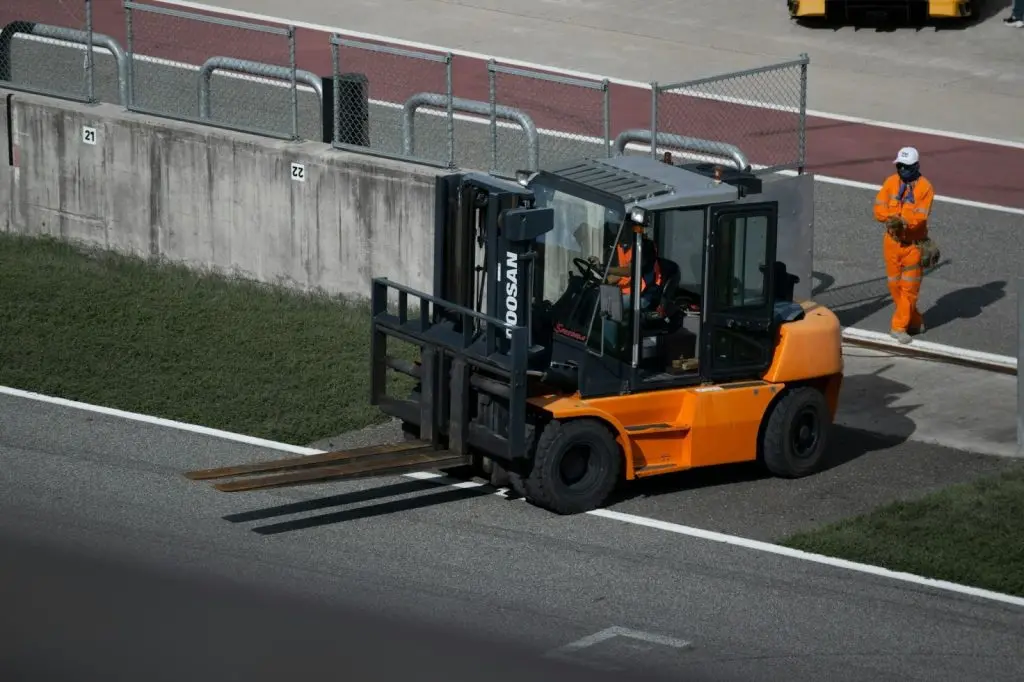
A forklift safety cage is comfortable to use when you are familiar with the principles, yet some habits will make you truly safe. Such simple measures can avoid major issues in the future.
Pre-use checks and cage inspection
Look at the cage before entering it, but do not lie. Inspect the rails, floors, locks, and fork pockets to see whether they are loose or damaged.
Ensure that the cage is firmly attached to the forks and does not slide when it is pushed lightly. You can be reminded of what to check by simply having a quick review of a forklift safety training video or past notes.
These small checks provide you with a sense of security and ensure your safety throughout the time you are in the air.
Proper operator–worker communication
The individual in the cage and the one at the forklift must be in total coordination. Uncomplicated signals, eye contact, and consistent communication avoid abrupt actions or misinterpretations.
Both roles are taught on how to work as a team through training, particularly the safety training of the forklift operators.
Communication will be easy, and the lift will be controlled, calm, and predictable, rather than being nerve-racking. There are no surprises, no stress; it is merely teamwork.
Positioning, stabilizing, and lifting safely
The forklift should be on flat, steady ground before lifting anyone. The operator should raise the cage slowly, avoid sudden turns, and keep movements predictable.
The worker inside should stand centered and still until the lift stops completely.
These slow, steady motions are exactly what forklift safety training emphasizes because they prevent falls, slips, or sudden shifts. Safe lifting is all about patience, not speed.
What to avoid during elevated tasks
Never lean over the rails, climb the edges, or try to reach something way outside your zone. Don’t reposition items while the cage is moving, and never allow someone to ride in the cage while it’s traveling horizontally. If something feels unstable or risky, stop and reset.
These are the small rules you often hear in free forklift safety training, and they matter because avoiding shortcuts is what keeps you safe up there.
FAQs
Is a forklift safety cage legal for lifting workers?
It is legal, yes, provided the cage is safe as required by the law and the person operating the forklift is taking the required OSHA forklift safety training. It is also one of the safest elevated-work alternatives when used properly.
How many people can stand in a forklift safety cage?
The majority of the cages are made to accommodate one or two individuals. Never exceed the weight limit and always do as your forklift operator safety training advises to use safely.
Do workers need harnesses when using a safety cage?
In many workplaces, yes. Harness will provide additional security, particularly in higher lifts. It is also highlighted in the majority of forklift safety training video manuals.
Can any forklift use a safety cage?
Forklifts are not compatible with all. The cage should be in accordance with the fork size, capacity, and stability requirements of the forklift. You can make a safe choice with the help of proper training or free forklift safety training materials.
How often should a forklift safety cage be inspected?
It is advisable to check it before each use, and check it more thoroughly in a few weeks. Early detection of loose rails or damaged flooring helps to keep your forklift safety cage safe and stable.
Conclusion
Being at height does not necessarily have to be a risky and stressful experience. Having the right habits, effective communication, and a good forklift safety cage, it is easy to perform elevated tasks, steady and fully controlled.
By having good equipment and proper training, you are ensuring your team, your workspace, and your peace of mind. Safety is not so much about rules but about confidence.
And when you require long-lasting and trustworthy equipment to help in safer working days, you can always rely on VEVOR.