It is really not so hard to cut a concrete board as long as you know the right steps. Therefore, if you do know how to cut concrete board, it can be swift, clean, and rather easy. Start by marking your cut line clearly, then choose the right tool for the job: a utility knife for light scoring or a circular saw, masonry saw, angle grinder, or oscillating tool for thicker panels. Protect yourself with goggles, gloves, and a dust mask, and move with steady, controlled pressure. With the right approach, you’ll get smooth, accurate cuts every single time.
- Tools You’ll Need to Cut Concrete Board Safely
- How to Cut Concrete Board: Three Proven Methods
- How to Cut Cement Board Around Outlets, Pipes, and Corners
- Common Mistakes to Avoid When Cutting Cement and Concrete Board
- How to Reduce Dust While Cutting Concrete Board
- Best Practices for Installing Cement Board After Cutting
Tools You’ll Need to Cut Concrete Board Safely
It can be helpful to understand what types of tools work best with cement and fiber boards, prior to cutting. Concrete board is tougher than standard drywall, and using the proper cutting tools makes the job easier and safer. When you use the right setup to cut concrete board, you end up with clean edges, fewer headaches, and fewer chances of hurting yourself. The tools mentioned below range from small home DIY tasks to remodeling jobs.
Essential Hand Tools for Cutting Concrete Board
Small cuts, minor trims, or adjustments around outlets and corners can often be managed with basic hand tools. A sharp scoring knife is perfect for lightly scoring a straight line on the surface. After scoring with a utility knife, you can snap the board cleanly using this method. This technique is effective for learning how to cut cement board for tile in smaller areas, such as backsplashes and patch repairs. It is important to keep sharp blades, as dull edges will drag through the item, causing rough, crumbly cuts that will be tough to work with later.
Power Tools for Faster Concrete Board Cuts
For bigger projects or thicker panels, power tools offer faster and more consistent results. A circular saw with the right blade for a concrete board can make long cuts in a whole sheet. An angle grinder can be used to create curves and notches. It’s also good for detailed shaping around pipes and fixtures. For even more cutting power, a masonry saw can help handle dense or extended sections with ease.
When you are figuring out how to cut concrete board for shower walls on these jobs, you get a lot more precision openings and repeated cuts. Since power tools create more dust, you want to work in a space outdoors or well-ventilated. Keep your movements slow and steady for a clean and controlled finish.
Safety Gear for Cutting Concrete Board
The cutting tools are as important as the safety gear. Concrete and fibre boards invariably give off fine dust and a few chips. Thus, it is important to wear eye protection, gloves, and respiratory protection.
When wearing safety glasses, your eyes are protected against debris; your gloves will prevent cuts. It is essential to wear a quality dust mask or respirator when learning how to cut Hardie board with minimal dust. Doing so will help minimize the particles you breathe in. Wearing long sleeves and tough pants keeps your skin safe from scrapes. If you use the right tools and safety equipment, it will be a safer and easier cutting task.
How to Cut Concrete Board: Three Proven Methods
Knowing how to cut concrete board accurately ensures that everything else in the project will be easier and more accurate. Different tools, board thicknesses, and cut shapes require different methods to be effective. Choosing the right technique reduces chipping and dust while leaving the board strong where it counts. The three methods below will cover almost all remodeling and tiling situations, including straight cuts and more complex cuts.
Method 1: Scoring and snapping the concrete board
The scoring and snapping technique works well for small and straight cuts. Also, it is perfect for beginning woodworkers who don’t want to use power tools. Use a pencil to mark your cut line clearly, then set your straightedge along it. Drag a scoring knife or utility knife firmly with a steady hand several times along the line to deepen the groove. You want to place the board along the edge of your workstation once it has a deep score and press down to snap it. This method is advantageous when you apply it to cut cement board for tile and implementation in tighter areas, such as backsplashes, niches, or repair patches requiring neat, clean cut edges.
Method 2: Cutting Concrete Board with a Masonry Saw
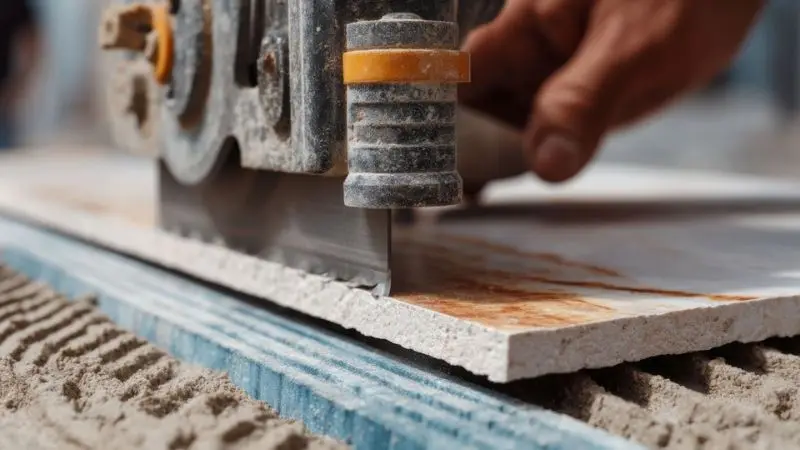
When you need to cut large sheets or take long cuts across the board, a masonry saw is best. Mark your cut line and tape down the panel on a flat surface so it does not move while you work. Use the best concrete board cutting blade. Generally, this is a carbide-tipped fibre-cement blade. Less frequently, a fibre-board blade. As you push the saw along the line, do not push the saw; but allow the cutting blade to cut. This method can be especially useful when planning cuts for concrete board for shower walls, tub surrounds, or large tile backer installations that call for repeated, precise cuts across full sheets.
Method 3: Cutting Concrete Board with an Angle Grinder
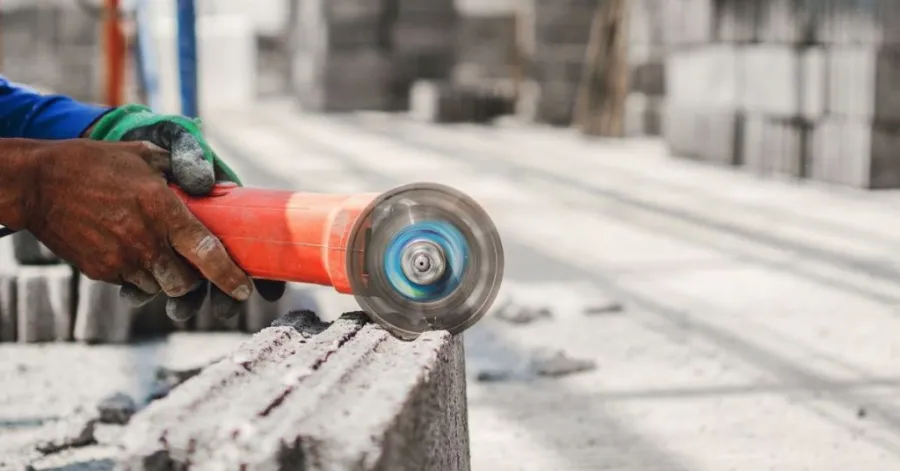
You can use the angle grinder to make intricate cuts, curves, and openings around pipes, valves, and other fixtures. Outline the needed shape on the surface. Then, fit the grinder with a diamond or carbide blade suitable for the surface. With both hands, hold the tool firmly and follow the line smoothly and under control, allowing the blade to reach full depth gradually. This technique can help when you need precision shaping or are working in a tight space. A shorter pass and lighter pressure will not only help manage the cut quality, but also the amount of dust created. Additionally, having better control over the cutter helps manage dust.
How to Cut Cement Board Around Outlets, Pipes, and Corners
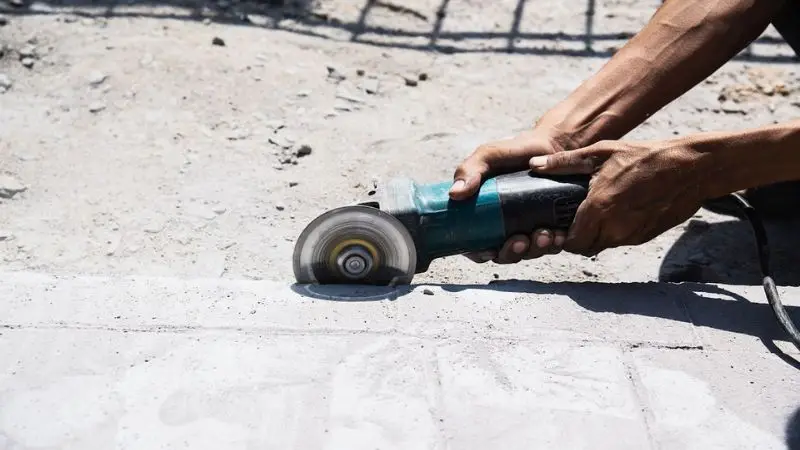
Chances are, you think cutting cement board around outlets, pipes, and corners has to be complicated. But with the right steps, it’s pretty easy! When you plan carefully, the fixtures will be aligned correctly, and your tile or finish material will sit flat. When you know how to cut concrete board in these detailed areas, the complete installation looks tidier and performs better over time.
Cutting Holes with a Jigsaw or Drill
One of the most common tasks when working with cement board is cutting openings for electrical outlets, light switches, and plumbing lines. To get started, measure carefully and note those measurements on your board with a sharp pencil so the marks are easy to see. When learning how to cut cement board for tile, precision in this step will keep your tile layout on point and prevent gaps.
Drill a starter hole in the marked shape, then slowly guide a jigsaw with a carbide-grit blade along the line until the opening is complete. To finish, check that the outlet box or pipe slides through without forcing it.
Making L-Shaped and U-Shaped Cuts
To fit around corners, tub edges, and other difficult areas in your project, create L-shaped and U-shaped cuts. First, outline the shape of the area to be removed, making sure to check each measurement so that the board fits tightly when installed. You’ll find this technique particularly handy when planning the cuts in the concrete board for your shower walls, where straight lines are interrupted by valves and niches. Cut along your marks with a jigsaw or oscillating tool, breaking off small pieces slowly until the final shape fits your layout perfectly. Taking your time here will produce cleaner joints that better support the tile.
Tips for Clean, Crack-Free Edges
When the edges of the stone are clean and crack-free, they are easier to install, and you are more likely to finish the surface with a professional look. Always position the board close to the cut line so it does not flex or break unexpectedly while you work. The right blade for cutting concrete board helps in reducing chipping and glides through the material instead of tearing through it. If you’re worrying about how to cut Hardie board with the least amount of dust, you can do so by making shallow passes, using dust control where possible, and lightly sanding any rough edges once the cuts are made to keep seams tight. If you are careful in the finishing, so the problems are not faced after the tiles are laid.
Common Mistakes to Avoid When Cutting Cement and Concrete Board
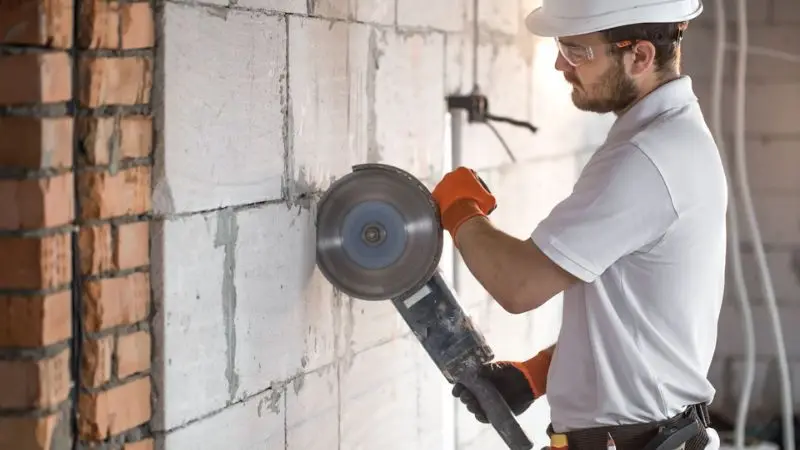
Before cutting a cement or concrete board, it would be useful to know the mistakes that often cause cracks in the cement or concrete board, or the edges to be rough, or create unsafe conditions. Try avoiding these mistakes, as they will most likely occur when the wrong tool or process is used or when the work is rushed. By understanding these issues, you can apply improved techniques and generate consistent and reliable results each time. The information provided helps you as you learn how to cut concrete board with ease.
Using the Wrong Blade When Cutting Cement Board
Concrete board is durable, and one of the fastest ways to destroy it is by using the wrong blade. Blades that aren’t sharp won’t cut as well. Instead, they drag across the surface and chip it. Your edges will become uneven. Selecting a carbide-tipped or diamond blade will yield smoother, cleaner cuts because these blades are made specifically for dense materials. Using a masonry saw with the proper blade can further improve cutting accuracy, especially when cutting a concrete board for shower walls, helping maintain the accuracy of straight lines while preserving the strength around the edges. Having a good blade makes the saw operate efficiently, so the blade does not get strained during use.
Safety Precautions for Cutting Concrete Board Correctly
Cutting a cement board can create dangerous dust and debris, which may hurt you if you aren’t careful. Always use goggles, gloves, and a dust mask to protect your eyes, hands, and lungs while working. It is particularly important to learn how to cut cement board for tile projects that are cut indoors. Removing tools from the work area prevents slipping and mishaps. When you make safety a priority, you increase your chances of injury and will certainly make the cut smoother, allowing you to work longer and more comfortably.
Avoiding Excess Pressure When Scoring Cement Board
Scoring cement board makes it easy to cut the board for a straight, simple cut. Don’t press too hard, or the board may crack or break in the wrong place. It is cleaner to make several light passes with the knife while letting the blade gradually deepen the score. This technique will cause less or more damage and a more predictable snap. When practicing to cut Hardie board without dust. Less pressure also gives off fewer airborne particles, which keep the environment clean. Careful scoring preserves the structure of the board, giving you sharper, more accurate cuts.
How to Reduce Dust While Cutting Concrete Board
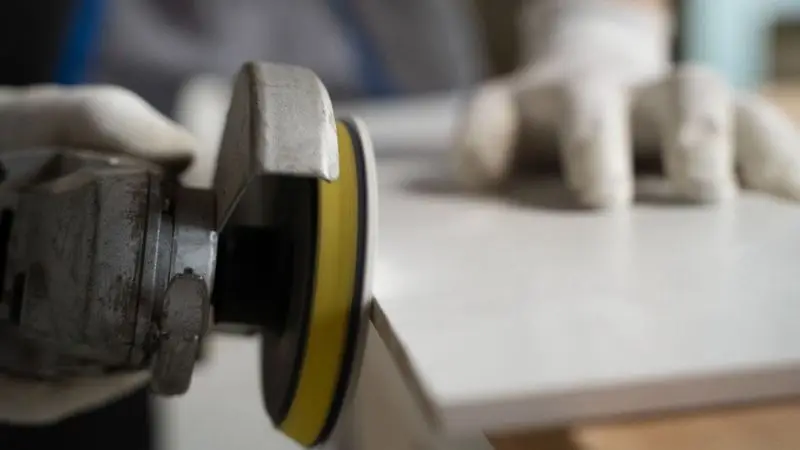
Dealing with dust is one of the most important elements when working with concrete board. If you breathe in too much cement dust, your lungs may feel it. Your eyes may get cloudy from all the dust. Dust can cover your workspace pretty quickly. When you are in control of the material, it can cut better and keep your project from getting messy. No matter what tools you choose to use, learning how to reduce dust will make your work environment easier and healthier. Using these methods can help obtain better results and practices in how to cut concrete boards.
Wet Cutting vs Dry Cutting for Cleaner Cement Board Cuts
Using the hydro-cutting technique to reduce air activity helps trap more moving particles, so air can remain clean. Lightly spraying the board or using water-feed attached tools on the cutter will keep the cutting line cleaner and help follow. This technique is excellent, particularly for planning concrete board cuts for shower walls. In this kind of application, precise cuts matter. While dry cutting remains a viable choice, it creates significantly more dust. Additionally, it demands strong ventilation. No matter the process used, constant movement of the tool will go a long way in maintaining accuracy and increasing the quality of each cut.
Choosing Dust-Reducing Blades for Cutting Concrete Board
Dust-reducing blades allow air to pass through the vents and grooves on the blades. These blades are also cooler, which makes for smoother cuts. Learning how to cut cement board for tile uses a blade that allows dust control, which makes for more effortless, longer, and faster cuts. These blades for circular saws and angle grinders are made for eliminating the debris they produce. A good knife makes for a neater cut and workspace.
Proper Ways to Enhance Indoor Air Quality When Cutting Cement Board
This aids in protecting your lungs while clearing any debris from your cut. It is best to cut the cement board outdoors. However, windows and fans can make it possible to do so indoors. It is essential that you have some airflow set up when cutting the cement board indoors. If you can find ways to direct air away from you, it will prevent dust from settling on surfaces and floating back into your breathing zone. Adding a shop vac close by helps collect dust as you cut the Hardie board, if you are concerned about dust. Any workspace should have adequate ventilation for worker safety.
Best Practices for Installing Cement Board After Cutting
Cutting cement board and the way it is installed will set the tone for tiling, painting, or other surfaces. When it is installed right, it won’t shift, crack, or get damaged by moisture. After you have cut your parts, check placement and conditions on the surface for a few more moments to allow the project to flow smoothly. The last steps take the accurate cutting of the concrete board into perspective by controlling the cut.
Checking Fit and Alignment Before Installing Cement Board
Before fastening any pieces, you should place each piece within its installation area to determine that the edges line up properly and any openings match up to plumbing or electrical fixtures. It is essential that waterproof surfaces fit perfectly together before tiling, particularly when learning how to cut concrete board for shower walls. If the board feels tight or uneven, remove a little wood for proper alignment. Making sure it fits properly now means that you won’t have to worry about adjusting it later, which might impact the designs around it.
Sealing Seams to Prevent Moisture Damage in Cement Board
Areas that come into direct contact with water or steam should be moisture-controlled. After putting in the panels, tape, and applying the waterproofing agent to all seams and joins. This strengthens the board and stops moisture from getting underneath. It is important in any process that involves cutting cement board for tiles, since the sealed substrate blocks mold that would cause swelling and deterioration later. Properly sealing seams will help prolong the life of your tile or finish.
Preparing Cement Board for Tile, Paint, or Finishing
It’s important to clean the cement board before tiling it or applying another finish to make sure dust doesn’t come in the way or interfere with the bonding of the adhesives. The process of smoothing rough edges and checking for any uneven spots will create a stable surface. Apply a high-quality thin-set mortar if you’re going to tile. Use a primer expressly designed for cement board for paint or other finishes. These steps improve the look and durability of the surface after finishing it, especially after using careful methods like how to cut Hardie board with little dust for the preparation.
Wrap Up
Learning how to cut concrete board properly helps with any building or remodeling project. It makes things safer and more accurate. If you have the correct tools, clean techniques, and proper dust control, you can create strong and well-fitted panels for tile, paint, or finish. A few things to consider when trying to best cut concrete board for your shower walls (including making precise openings), and to choosing the right blade for cutting concrete board all improve your final installation quality. When you cut cement board, Hardie board, or a similar building material, doing it properly is a safe and satisfying experience. Further, with a little planning, it’s easy to get professional-quality results.
FAQ
What can you do to stop concrete board cracking when you cut it?
Always score the board deeply before snapping. Support the board on both sides. Use gentle, steady pressure. Avoid rushing the process. This helps prevent cracks and keeps your edges clean.
What is the best blade for cutting concrete board?
You should use a carbide-tipped or diamond blade. These blades cut through the concrete board smoothly. Avoid wood blades. They dull quickly and leave rough edges.
Can you cut a concrete board with a regular utility knife?
You can cut thin concrete board with a sharp utility knife. Score the surface several times. Snap the board along the line. For thick boards, use a saw or grinder.
Do you need to seal the concrete board before tiling?
Make sure to seal all seams and screw holes to stop water intrusion, prevent cracking from mesh tape, and help your tile installation last much longer.