Have you ever asked yourself about the use of a power strip vs extension cord? Both look alike; however, incorrect use of one can cause overheating or even fire. This guide summarizes the major differences, safety regulations, and their most effective applications.
Know how to make the correct choice when powering your home, office, or workshop, and be safe once you’ve read our blog!
What is a power strip?
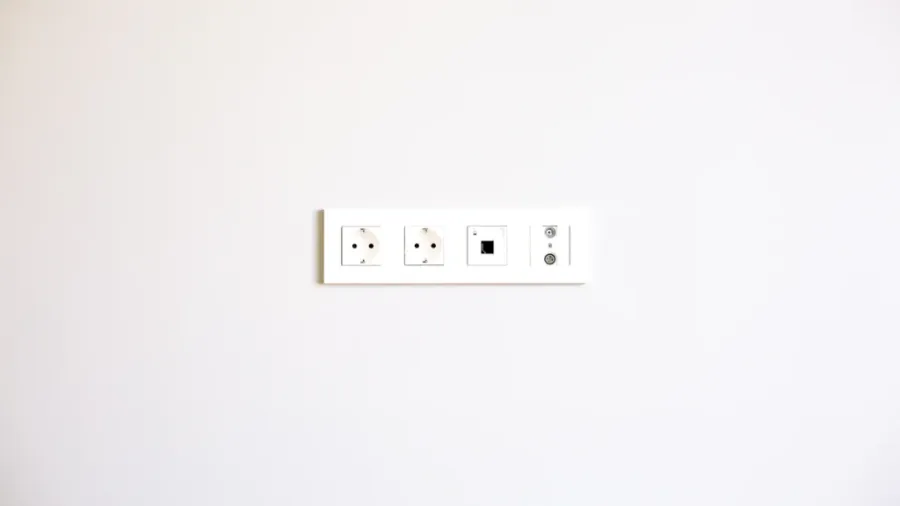
Power strips are found in a variety of places. They’re hidden under desks, in workplaces, and in hotel rooms. A power strip will allow you to have a large number of electronics plugged in at the same time. You ‘use’ it when you have to have more outlets around.
This can be used in a home office or when you go away. Makers advise putting power strips where you would like to energize a large number of devices without hazard. You can apply them to computers, lamps, and chargers.
However, it should always have safety indications on the label, such as UL or CSA. These marks indicate that the power strip is compliant with the strict safety rules.
What is an extension cord?
Extension cords are easy to find. You use them when outlets are far away. An extension cord reel is a flexible cable. It has a plug on one end. The other end has a socket. You use it to power things like lamps and fans. You can also use it for power tools.
You can grab an extension cord to vacuum a room. You also use it for a drill outside. Only use extension cords for short times. They are not for permanent wiring.
Tip: Pick the right affordable extension cord reel for your job. Thick cords, like 12-gauge, are best for big jobs. These can handle 15 to 20 amps. Use them for large tools or appliances. Thin cords work for small things like lamps.
Power strip vs extension cord: Main differences
Primary function
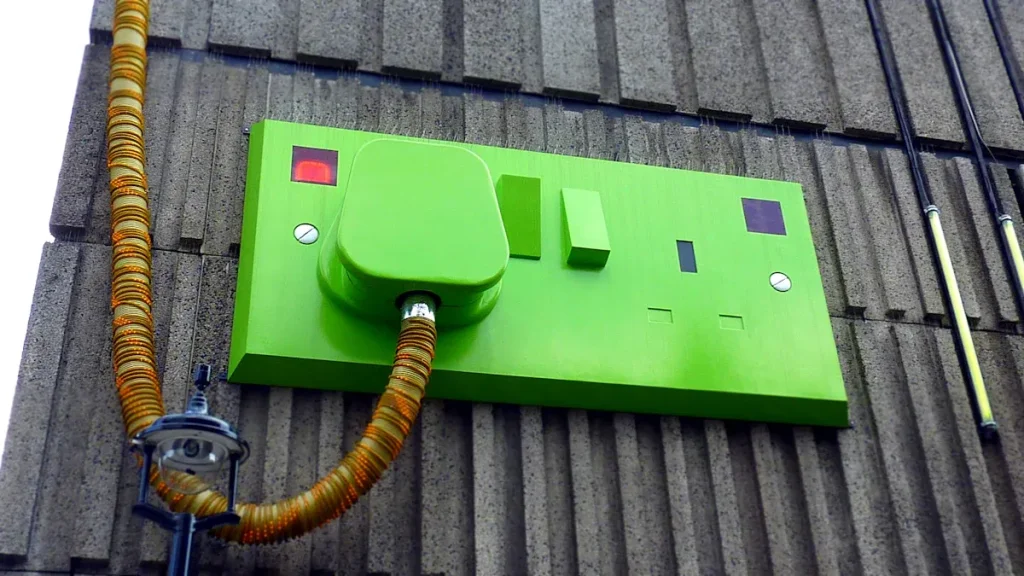
An extension cord and a power strip can be confused with each other, but are used in different ways.
The primary purpose of a power strip is to give you several sockets where only one wall socket is available, enabling you to have many devices running at the same time.
An extension cord, on the other hand, merely adds the length of one electrical connection to another far-flung point. Power strips are best applied to desks, entertainment apparatus, or offices, whereas extension cords are best applied to temporary installations or outdoors.
Safety
Power strips tend to provide more protection than extension cords when it comes to safety. Most have built-in surge protectors that provide protection to your electronics against spikes in voltage or lightning.
Extension cords, however, are not commonly constructed with surge protection and may become hot and potentially dangerous when overloaded.
When cords are unraveled, it reduces the risk of fire or short circuiting with the right cord gauge. In valuable electronics, power strips tend to be the safest in general.
Numbers of outlets
One of the major variations is the number of outlets available. Many power strips have more than four sockets, with some having as many as twelve sockets.
This allows them to be used in systems that have numerous devices, such as computers, television sets, or gaming consoles.
Extension cords usually have no more than one or two outlets, and they are usually used to extend power, not distribute power. A power strip is much more convenient when you have to use multiple devices simultaneously.
Lifetime
Power strips do not last as long as heavy-duty extension cords, particularly when those are equipped with a surge protector. Internal circuitry may become worn out due to repeated surges or high electrical loads.
The durable copper wires and insulation that make up extension cords can be expected to last longer when maintained.
They both however, need replacement in case you see burnt wires, frayed wires or loose plugs. It is safe and efficient when used over long periods and regularly inspected.
Distance from outlets
Extension cords are more efficient in the number of feet they can reach up to as many as sixty to fifty feet. They will suit outdoor equipment or power requirements that are not close to an electrical power source.
Power strips, on the other hand, are designed to be used over a short distance, not more than two to six feet, and are best used close to desks or entertainment hubs.
Adding another extension cord reel to a power strip is not advisable because it makes the use of the power strip more hazardous and minimizes safety.
Type of devices
Power strips are most appropriate with a low or medium power supply, like computers, telephone chargers, a television set, and lamps. They balance electricity and protect sensitive electronics against a surge.
Depending on the rating of the cord, extension cords can be used with temporary or heavy-duty equipment such as drills, vacuum cleaners, or lawn equipment.
To prevent electrical overload and damage, always verify the amount of watts and current needed by your devices and then use the two options depending on the requirements.
Choosing the right option: Power strip vs extension cord
Device type
Think about what you want to plug in. If you have a computer, printer, and lamp close together, use a power strip. It lets you plug in many things at once. Your desk will look neat.
If your device is far from the wall, use an extension cord. This helps you reach things like a fan or a vacuum. For outdoor tools, pick a heavy-duty extension cord. These cords are strong and safe for big jobs.
Here’s a simple guide to help you:
- Use a power strip for lots of devices nearby.
- Use an extension cord reel for things far from outlets.
- Pick heavy-duty extension cords for outdoor tools.
Extension cords are only for short use. Do not use them all the time. They can get too hot and cause problems.
Safety tips when using power strips and extension cords
Where you use your cord matters. Indoors, regular extension cords work for quick jobs. Outdoors, you need strong cords that can handle rain and rough ground. Always check your cord or strip for damage before using it. Make sure it fits your job.
| Safety Consideration | Indoor Use | Outdoor Use |
| Type of Cord | Regular extension cords are fine | Heavy-duty cords are best |
| Inspection for Damage | Check for wear and fraying often | Look for damage from weather |
| Overloading | Do not plug in too many things | Make sure the cord can handle power |
| Environmental Suitability | Indoor cords are not for outside | Outdoor cords must be rated for use |
Do not connect cords or strips together. Always use the right plug for your outlet. If you run cords along walls, keep them flat and safe. Long cords can get hot, especially if they are coiled. Always use products with safety labels like UL.
Pick a power strip or extension cord based on your devices and where you use them. Choose the safest one for your needs.
FAQ
Can a power strip vs extension cord be used together?
Do not put an extension cord in a power strip. This could cause things to get overheated and result in a fire. AfterwardAfterwards, be sure to always insert your power strip directly into a wall outlet.
What is the difference between a multi-plug adapter and a power strip?
A power strip provides additional points on which you can plug out devices. To ensure that things are fine, it is usually surge-protected. A multi-plug adapter will just provide additional outlets. Compared to adapters, power strips have increased safety features.
Can a surge protector be an improvement over a power strip or extension cord?
A surge protector will provide protection against voltage spikes to your devices. To be safe, choose a surge protector. It is superior to an ordinary power strip or extension cord.
Conclusion
Both power strips and extension cords are helpful in life, but only to the extent they are applied properly. Note: power strips are used to serve several of your appliances near an outlet, and extension cords are required to serve temporary and distant power requirements.
Check out VEVOR to use safe, heavy-duty, and certified electrical tools. VEVOR provides quality low-cost solutions, including industrial-grade power strips and tough extension cords, to keep your workspace powered and secured. Go there and make electrical safety easy and dependable.