What Are The 10 Rules Of Pickleball?
Step 1: Learn where to stand
If you’re learning how to play pickleball for beginners, your stance is all-important. Begin with your feet shoulder-width apart, knees bent slightly, and remain low (not rigid).
Bounce on the balls of your feet quickly and remain light on your feet so you can move in any direction that’s needed. Clever footwork within pickleball aids in quicker reaction, increased winning of rallies, and feeling totally confident on court.
Here are a few additional tips:
- Keep your paddle in front of you and held up, and at chest level, with you prepared for any reaction. Don’t allow it to drop down by your side.
- Stand facing the net with your arms squared. This allows you to clearly see the ball and have control over it.
- Take small, quick little steps rather than large lunges in order to be balanced and not overcommit.
- Reset your stance following each shot so you are prepared for the next.
Step 2: Learn basic pickleball shots
When you are learning how to play pickleball, becoming familiar with a couple of major shots is going to be of significant help. Each shot has a purpose, and once you know how to use them, the game becomes way more enjoyable.
- Dinks are soft shots that land in the kitchen, right near the net. They’re great for slowing the game down and forcing your opponent to move forward.
- Drives are fast, low shots you hit with some power. Aim for your opponent’s feet to make returns tricky.
- Lobs are high shots that go over your opponent’s head. They’re perfect for changing the pace or buying yourself a little breathing room.
Spend some time practicing these, and you’ll start to feel more confident. Understanding these basic moves is a big part of learning how to play pickleball the right way.
Step 3: Practice serving the ball
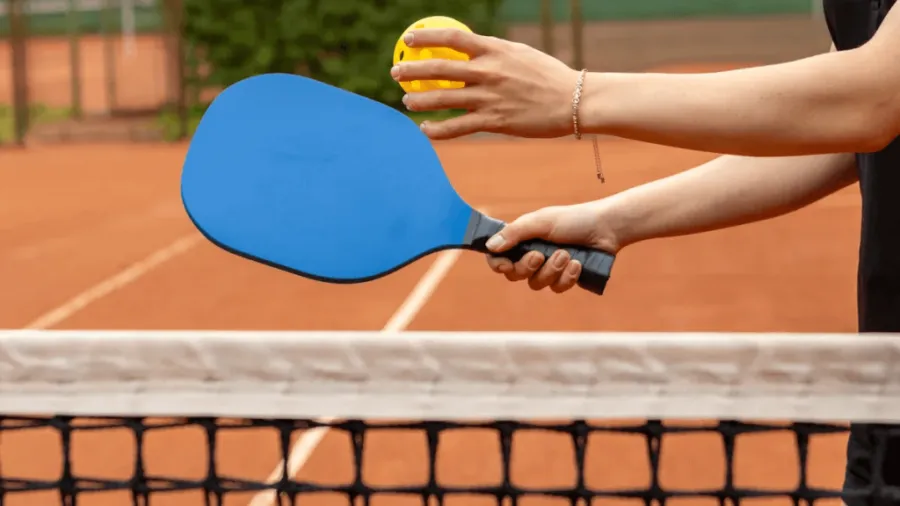
Serving is how every rally begins, and it’s one of the first pickleball rules beginners should learn. All of your serves must be underhand, with the paddle swinging below the waist.
A great option for beginners is the drop serve—just drop the ball and hit it after it bounces. Aim diagonally across the pickleball court, making sure the ball lands deep in your opponent’s service area.
Use your whole body for a smooth, controlled motion. With regular practice, serving becomes second nature and sets the tone for a strong game.
Step 4: Avoid illegal moves
When you’re figuring out how to play pickleball, knowing what not to do is just as important as learning the actual rules. A few slip-ups can cost you points or even the game.
Try to avoid hitting the ball out of bounds, volleying while you’re in the kitchen, or skipping the double bounce rule. Yep, the ball has to bounce once on each side after the serve. These little details might seem tricky at first, but once you get the hang of them, your games will feel smoother, fairer, and way more fun.
Step 5: Learn the double bounce rule
The double bounce rule is very important in pickleball. Following this rule helps you play smoother rallies and understand pickleball better. Here’s what that means:
- The ball must bounce once on each side after a serve.
- This stops players from rushing the net too soon.
Step 6: Understand the kitchen (non-volley zone)
If you’re learning how to play pickleball, the kitchen is one spot you definitely need to know. It’s the area right by the net, and it comes with some pretty unique rules. You can’t hit the ball out of the air while standing in the kitchen, or even if you step into it after a volley.
But if the ball bounces first, go ahead and step in to return it. Mastering the kitchen rules helps you keep the game under control and adds a fun layer of strategy to your play.
Step 7: Learn how to score
Scoring in pickleball is simple but needs focus. Knowing the scoring system makes games more fun and competitive. Here’s how it works:
- Only the serving team can score points.
- Games go to 11 points, and you must win by 2.
- Always call out the score before serving, starting with the server’s score.
Step 8: Practice strokes and volleys
It’s crucial to practice strokes and volleys if you want to significantly raise your game. Start with the fundamentals: steady forehand and backhand motions that allow you to direct the trajectory of the ball. Next, fast practice volleys forceful strokes close to the net. Unless the ball bounces, avoid the kitchen.
Remember to use soft shots like drop shots and dinks. You may slow down the game and make your opponent move by using them. You will become more self-assured and well-rounded on the court the more you practice these shots.
Step 9: Play practice games with friends
Once you’ve learned the basics, it’s time to put your skills to the test. The best way to learn how to play pickleball is by actually playing! Grab a few friends and jump into a casual game.
You’ll get to apply what you’ve practiced, spot areas to improve, and build confidence on the court. Plus, it’s a fun way to stay active and enjoy the game as you grow.
Step 10: Join a pickleball group or club
Did you know that in 2025, 92% of beginners in clubs kept playing pickleball regularly. Joining a club is a great way to improve and enjoy the pickleball community. Joining a group gives you a chance to play with people of all skill levels. You can also make new friends who keep motivating you to keep playing!

Basic Rules of Playing Pickleball
When you’re just starting out with learning how to play pickleball, understanding the rules can feel overwhelming. But don’t worry! Once you know the basics, you’ll feel more confident on the court. Let’s break down the essential rules of pickleball so you can play like a pro in no time.
Serving rules and techniques
Serving is how every rally begins, so it’s important to get it right. Here are the key serving rules:
- Always serve underhand. The paddle must make contact with the ball below your waist.
- Serve diagonally across the court, aiming for the opposite service box.
- Keep both feet behind the baseline until after the ball is hit.
Pro Tip: Practice your serves regularly to improve accuracy and avoid common serving faults, like stepping over the baseline or hitting the ball into the net.
Scoring system
Many beginners struggle with scoring because they forget to call the score or misunderstand the server rotation. Pickleball scoring can be tricky for beginners, but it’s simple once you get the hang of it:
- Only the serving team can score points.
- Games are played to 11 points, and you must win by 2.
- Always call out the score before serving, starting with your team’s score, followed by your opponent’s, and then your server number (e.g., “5-3-1”).
Keep practicing, and it’ll become second nature!
The double-bounce rule
Once the serve is made, the ball has to be able to make one bounce on both sides of the court before players are allowed to volley (hit the ball in mid-air). This keeps players from hurrying up the net too soon and adds a level of complexity to the game. It also promotes fair play and keeps the game exciting!
The kitchen (non-volley zone) rules
The kitchen, or non-volley zone, is the rectangular area close to the net. Here’s what you need to know:
- You can’t volley the ball while standing in the kitchen.
- You can step into the kitchen to hit a ball that has bounced.
Mastering kitchen rules helps you control the pace of the game and avoid unnecessary faults.
Faults and how to avoid them
Faults are rule violations that can cost you points or possession of the serve. Here’s a quick overview:
| Type of Fault | Description | Consequence |
| Serving Faults | Includes foot faults, serving out of bounds, or serving into the net. | May cause a side out or a turn for the second server. |
| Gameplay Faults | Involves hitting the ball out of bounds, volleying in the kitchen, etc. | Results in a point awarded to the serving team if the receiving team faults. |
Remember, the basic rules of pickleball are designed to make the game fair and fun for everyone. Take your time to learn them, and you’ll be rallying like a champ in no time!
Difference Between Tennis vs Pickleball
You might have heard people say pickleball is like tennis. But how are they different? Let’s look at why pickleball is loved by beginners and experienced players.
Court size and layout differences
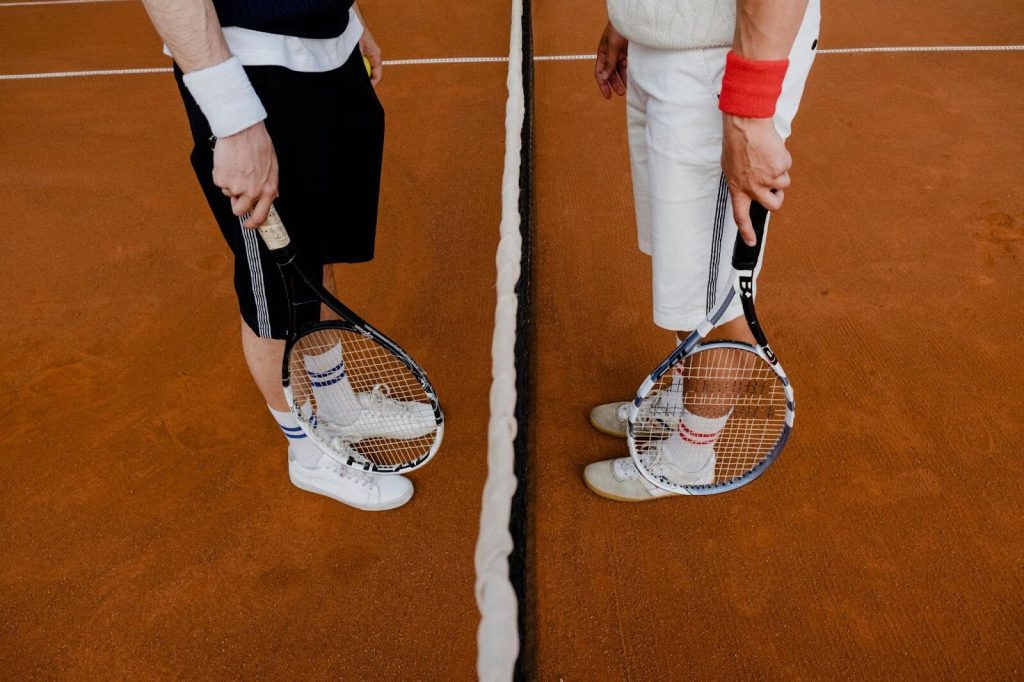
Pickleball courts are smaller than tennis courts. Here’s the main difference between the two court sizes:
| Pickleball | Tennis |
| 20 ft x 44 ft | 78 ft x 36 ft |
Equipment
Pickleball uses paddles, not rackets. The ball is light plastic with holes, like a Wiffle ball. This gear is easier for beginners to use. Tennis rackets are bigger and heavier. Tennis balls are harder and require more strength to control.
Gameplay and scoring
Pickleball and tennis have different rules for scoring and playing. In pickleball:
- Only the serving team can score points.
- Games go to 11, 15, or 21 points.
In tennis, both players can score no matter who serves. Tennis scoring (15, 30, 40) is more complex and can confuse beginners.
| Aspect | Pickleball | Tennis |
| Scoring | Points only when serving; games to 11, 15, or 21 | Points: 15, 30, 40; no serving requirement to score |
| Serve | Underhand serve | Overhead serve |
| Game Dynamics | Focuses on strategy and placement | Adds suspense with tricky scoring |
Physical intensity
Pickleball is less tiring than tennis. It’s a good choice for a low-impact workout. Studies show pickleball games last longer (90 minutes vs. 81 minutes). But tennis players spend more time in intense activity.
Beginner friendliness
If you’re just starting out with racket sports, pickleball is perhaps the most accessible sport to get into. The court is smaller than a tennis court, so you run less and play faster games.
The paddle is also short and light, and the plastic ball travels more slowly than a tennis ball, so you have more time to respond. The rules are easy enough that most newbies can begin playing an actual game within a matter of hours.
And the light equipment is easier on your body, which reduces the risk of injury, although it’s still wise to keep an eye on your step to prevent slipping or spraining. Compared to games like tennis or squash, pickleball is considerably kinder to beginners.
FAQs
Is pickleball easy to learn?
Yes, pickleball is great for beginners! The court is smaller, the equipment is lighter, and the rules are simple. This makes it easier than sports like tennis. If you’ve played other racket sports, you’ll learn even faster.
Why is it called pickleball?
The name “pickleball” may come from a family dog named Pickles or from “pickle boat” in rowing, which refers to a crew made up of leftovers from other teams. Both stories are debated, but they add charm to the sport’s quirky name.
What is the hardest part of pickleball?
The most challenging aspect of pickleball is controlling and executing the kitchen rules and soft shots, both of which take control, patience, and strategy over power. It may take a while for players to fine-tune staying out of the kitchen on volleys and knowing how and when to attack or defend.
What 3 sports is pickleball most similar to?
Pickleball is closest in resemblance to tennis, badminton, and ping pong. It combines the volleys of tennis, badminton’s smaller court and net play, and the quick response and control of ping pong.
Conclusion
Playing pickleball is a fun exercise and social experience. Pickleball is enjoyable for anyone, be you new or bettering your skills. It may be puzzling, however, if you have not played.
This is your guide for all the basics in learning how to play pickleball for new players. Looking to get started the proper way? Take a look at Vevor for the highest quality pickleball equipment in order for your game to be the best of all.