Vertical Potato Dicer/Cutter









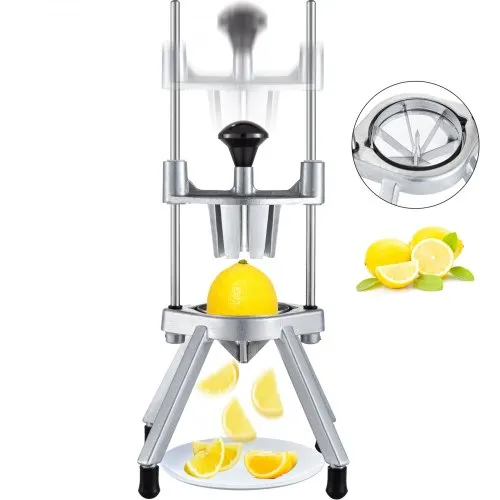
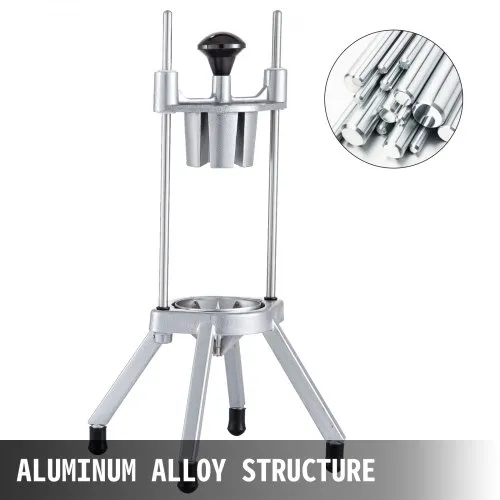
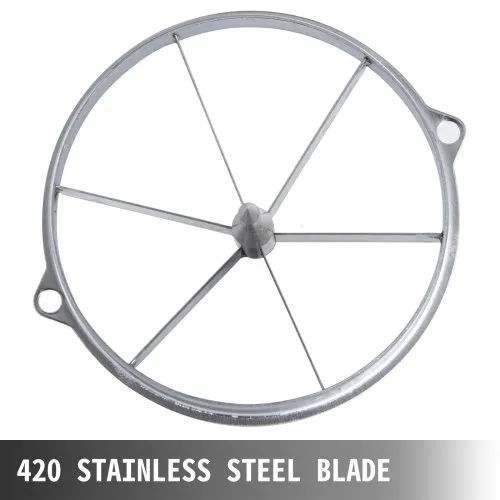


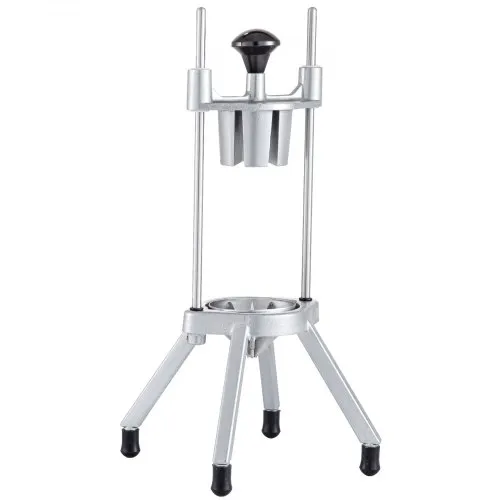


Results for Vertical Potato Dicer/Cutter
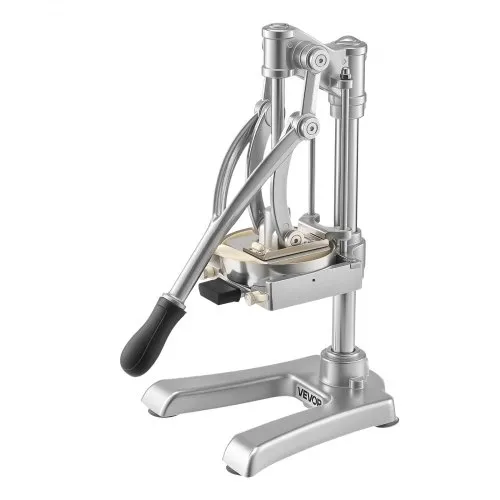
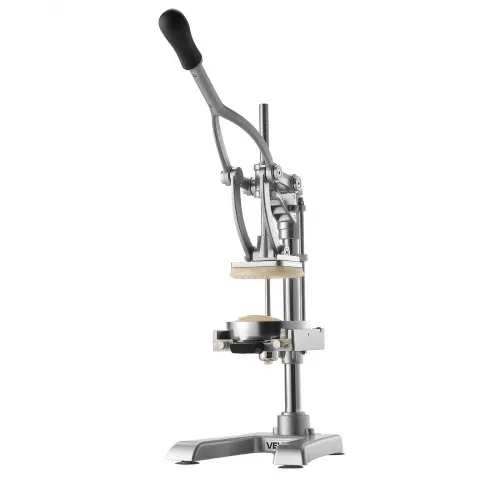
Do you need a vertical vegetable cutter that can handle large-scale meal preparation? For busy commercial kitchens, restaurants, cafeterias, and food trucks that need consistent, uniform cuts on demand, VEVOR offers a dependable dicing machine. Depending on the fitted blade set, each vegetable dicer machine can dice, slice, and even cut French fries. This eliminates the need for multiple kitchen tools. VEVOR's vertical vegetable dicer options reduce prep time without compromising consistency or safety, whether you're processing potatoes, onions, carrots, or peppers.
VEVOR Vertical Vegetable Dicers for Commercial Kitchens and Food Prep
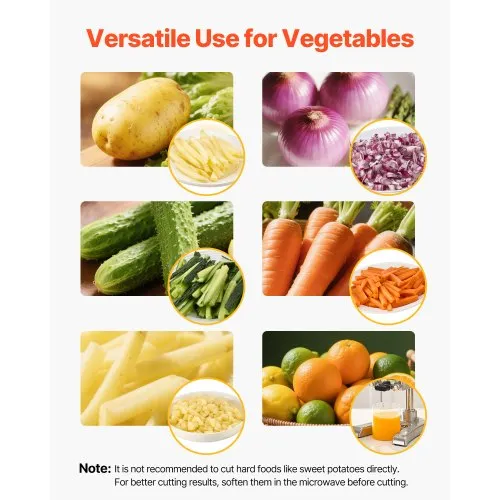
Are you sick of manually chopping veggies for hours to prepare large batches? A vertical vegetable dicer pushes produce through interchangeable blade grids, significantly speeding up the process and producing even, consistent cuts in seconds rather than minutes. VEVOR machines are reliable dicers for food service operations, handling everything from sliced cucumbers and cut fries to diced potatoes and onions. They help kitchens save labor time while maintaining consistent cut sizes in each batch.
Cutting Function and Power Type for Choosing the Right Vertical Vegetable Dicer
The machine's cutting ability and how it drives the cut are the two most important factors.
Manual vs Electric Dicing Machine Options
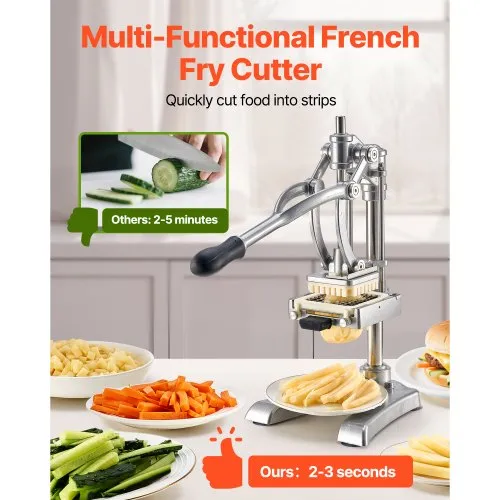
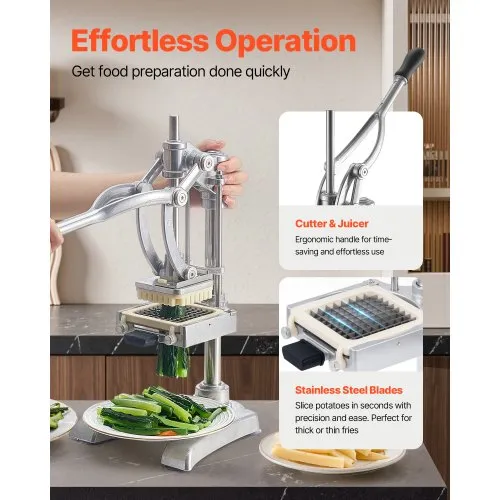
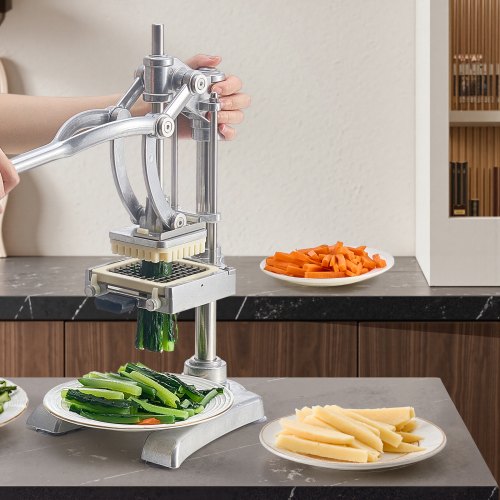
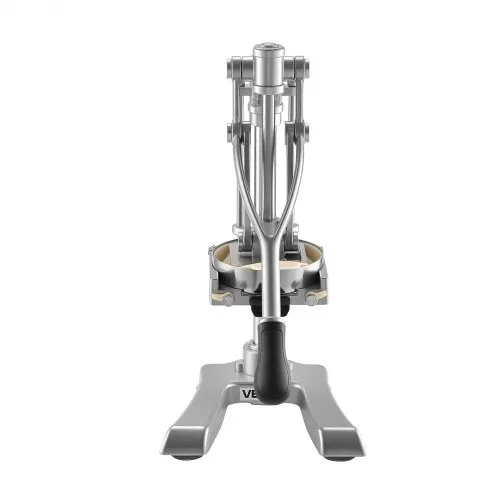
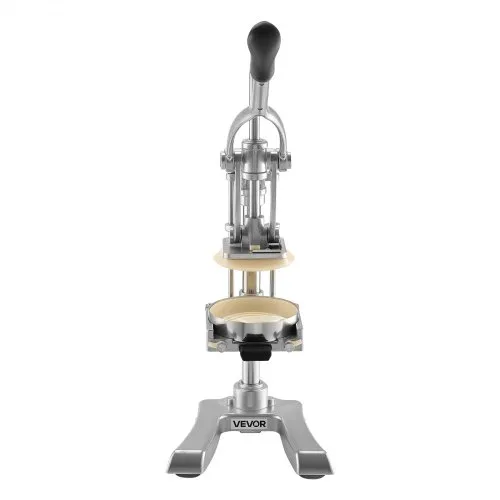
A manual vertical vegetable dicer is a hand operated lever that pushes produce through a grid of blades. It is a low-cost, low-maintenance dicing machine for small operations that requires no outlet and minimal upkeep. It’s the choice for food trucks, small delis, and home cooks who dice a few pounds a day, not a few hundred. Just push down, and you have onions, peppers, or potatoes in uniform cubes in less than 2 seconds per load.
For higher volume, an electric powered model does the pushing for you, cycling through produce continuously, rather than one batch at a time. This is especially true in catering operations and school cafeterias where prep windows are short, and staff is stretched thin. A good carrot dicer or fruit dicer attachment expands what a single machine can do; carrots, apples, mangoes, and firmer produce all run through the same base unit with a blade swap.
The trade-off is simple: manual units are cheaper and never fail electronically, but they require physical effort over a full shift. Electric units cost more to buy and require a power source, but they significantly reduce labor time. Choose the machine that fits your daily volume, not just your budget; buying too little for high volume work will cost you more in overtime than the machine will ever save.
Electric Potato Slicers and Dicer Machine Speed
An electric vertical vegetable dicer with slicing capability totally changes the maths when potatoes make up the bulk of your prep list. One unit can peel a case of potatoes by hand and cut them into uniform slices, dices, or fry-cut strips in the same time. This speed is what restaurants count on to keep the queue moving during service when they have daily potato specials, hash browns, home fries, gratins.
Speed is only useful if the cuts are even, and that is where blade quality separates a good dicer machine from a great one. Look for hardened steel grids that can last for hundreds of cycles without daily sharpening. A motor in the 370 to 550 W range can handle most commercial potato volumes and will not stall on denser vegetables such as sweet potatoes or beets.
Plus, electric models reduce the repetitive strain injuries that come with hours of manual pushing, which matters for kitchens running back-to-back shifts. The initial cost is higher than a manual press, but for any operation processing more than 50 lbs of potatoes a day, it pays for itself in labor hours within the first few months.
Stainless Steel Blades and Potato Slicers for Consistent Cuts
Blade material determines dicing longevity and how clean the cuts stay after months of daily use. This matters as much for potato slicers as it does for softer produce like tomatoes, because dull or corroded blades tear rather than cut.
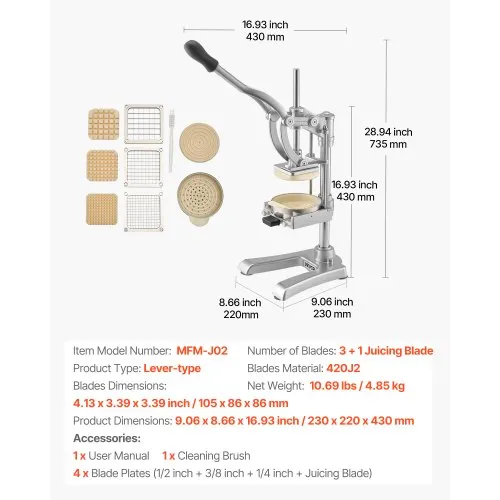
A good vertical vegetable dicer will feature multiple blade grids, letting you switch between fine dice, coarse dice, and slice settings without buying a second machine. Some VEVOR models act as a 3 in 1 food slicer dicer chopper in a single unit, doing the work of three different tools that would otherwise take up space on your counter, slicing, dicing, and rough chopping.
For kitchens that rotate menu items seasonally, this flexibility is worth more than speed. The quick-change blade unit handles potatoes, onions, cabbage, and peppers in one unit, cutting equipment costs and storage clutter. Sell replacement blades separately, because stainless steel dulls eventually and a fast swap keeps prep moving without downtime.
French Fry Cutter & Slicer and Dicer Attachments
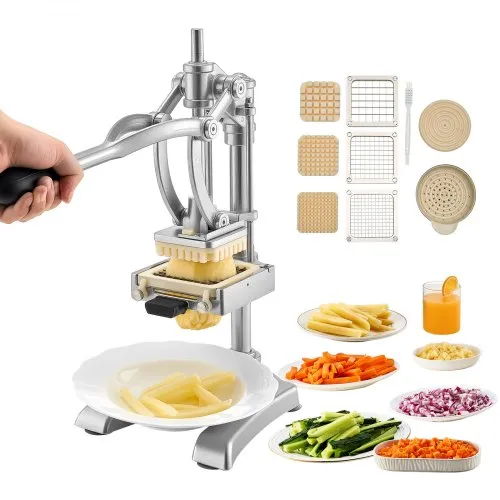
Dice cuts and potato cuts for fries differ, and a vertical vegetable dicer with a French fry cutter attachment can handle both without an extra appliance. Push a peeled potato through a fry-cut grid to prepare consistent strips for frying in a single move. With the correct attachment, a task that takes minutes by hand can be completed in seconds.
For most mid-size kitchens, the fry-cut grid and dice and slice choices transform a single base unit into a true vegetable slicer dicer combo, making it more cost effective than stocking individual single-purpose machines. Less counter space, fewer parts to clean, and one manual to consult rather than three are all consequences of less equipment.
Check blade sizing before purchasing spares, as attachment compatibility varies by model. An improperly seated grid will jam mid-push and hinder service rather than speed it up. You don't have to guess because VEVOR lists the compatible blades and grids on every product page. Make sure this attachment is included rather than sold separately, since it typically gets more use than the dice function itself if fries are a regular side.
Vertical Vegetable Dicer Build Quality Commercial Vegetables Dicer Applications
Blade type and material choice matter just as much, especially in commercial settings where health codes and daily volume raise the stakes.
Potato Slicer Structure and Durability Dicer Machine Stainless Steel
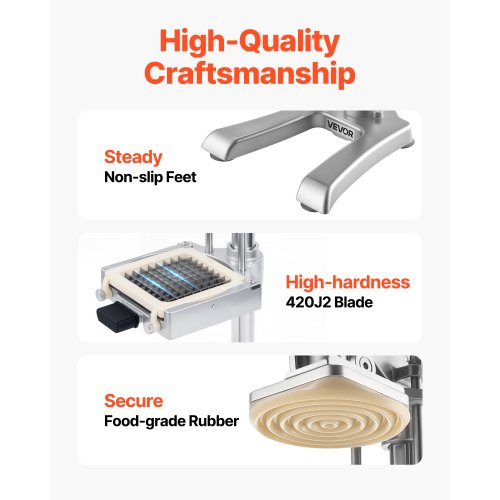
After years of industrial use, the stainless steel potato slicer body can withstand corrosion from frequent washdowns, moisture, and everyday contact with acidic produce, something that aluminum or coated steel housings cannot. A stainless steel structure is also preferred by health inspectors since it is non-porous and simpler to sanitize between shifts, which matters for any kitchen monitoring food safety compliance.
However, durability goes beyond the housing of any particular vertical vegetable dicer; for a commercial grade dicer machine, you want blade grids that lock in place rather than shifting during cutting, reinforced hinges, and a solid base that doesn't wobble under repeated pressure. A wobbly base is often the first sign a machine won't withstand the volume of a busy kitchen day after day. Cheaper models typically cut costs here first.
When used daily, even under heavy use, a commercial vegetable chopper made of stainless steel typically lasts years longer than versions with painted or plastic bodies for enterprises running a full-service line. The higher starting price reflects not just branding, but real differences in manufacturing and materials. Replacing a malfunctioning unit mid-shift isn't something you want in a commercial kitchen because it is far more expensive than investing in durability up front.
Uses of Kitchen Dicer: Commercial French Fry Cutters, Restaurants and Delis
Depending on what you’re up to, a vertical vegetable dicer, or kitchen dicer as it’s sometimes called, earns its counter space differently. In a full-service restaurant, it does mise en place for dozens of dishes at a time: onions for a sauce base, peppers for a stir-fry, potatoes for a side. In a deli or sandwich shop, it’s often running near-constant during lunch rush, chopping tomatoes and onions for toppings between orders.
Commercial French fry cutter setups are often the choice for quick service restaurants that rely on fries as a staple menu item, since fry prep is repetitive enough to merit its own grid, even if a general dicer is also available.
Catering operations, however, need to be portable and clean up quickly, more than they need raw speed, since equipment often moves from the kitchen to the event site. Buy the largest capacity model you can afford, then tailor the machine to how you'll use it day to day. A deli prepping 30 lbs a day needs a different throughput than a cafeteria prepping 300 lbs.
Why Choose VEVOR Vertical Vegetable Dicers?
With manual and electric options to fit kitchen capacity, this model handles slicing and French-fry cutting. Each device features sharp French fry cutting steel and is priced to deliver professional performance without the exorbitant cost of specialty restaurant equipment manufacturers, making it a true food slicer, dicer, and chopper solution. VEVOR offers a commercial vegetable chopper with the right size and power for every type of establishment, including food trucks, school cafeterias, and entire restaurant lines. Shop the entire collection now to save a ton of time on preparation.
FAQs
What is the difference between dicing, slicing, and French fry blade grids?
Dicing grids make uniform cubes by forcing through intersecting blades. Slicing blades cut flat rounds or ovals of a fixed thickness. French fry grids create long, even strips. Most models use all three as interchangeable inserts, so one machine can do all three jobs.
Should I buy a manual or electric vegetable dicer?
Manual models do the trick in lower-volume kitchens and don’t need a power hookup. Electric models automate the cutting force and maintain consistent output during long preparation periods. That will help you decide based on how many cases of produce your kitchen processes daily.
Is stainless steel construction necessary for commercial use?
Yep. Stainless steel resists corrosion from acidic produce and repeated chemical sanitization, complies with food safety standards, nd lasts longer than coated metals or plastics in daily commercial use. It’s the standard for food-contact prep equipment in any commercial kitchen.
What blade sizes are available for dicing?
Most commercial models have interchangeable grids in 3/8” to 1” cube sizes for fine dice for garnishes and salsas to larger chunks for soups, stews, and roasted vegetable dishes.
Do these machines work well with fruit as well as vegetables?
Yes. Fruits with a firmer texture, such as apples, process well through the blade grid. Soft fruits need a coarser grid and lighter push pressure; otherwise, you lose too much juice or crush the fruit too much.