

Network Cable Testers


Results for Network Cable Testers
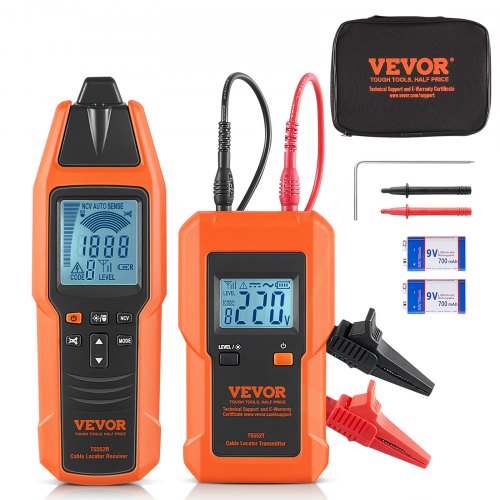
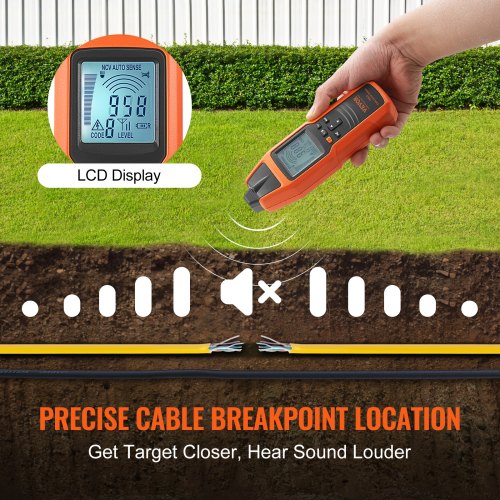
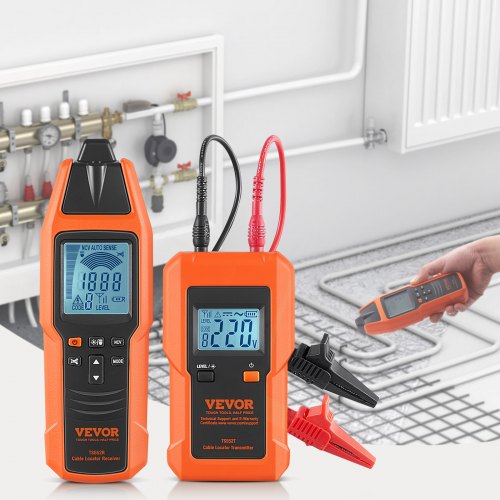
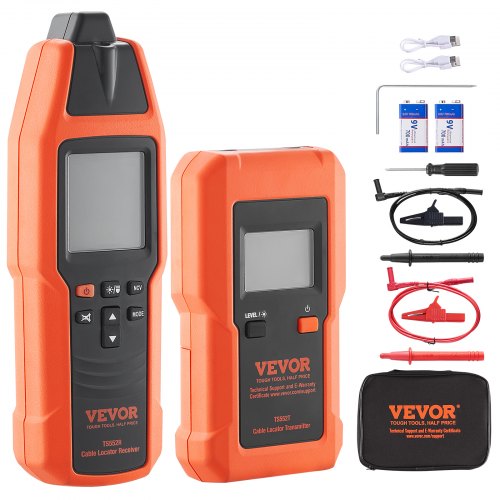
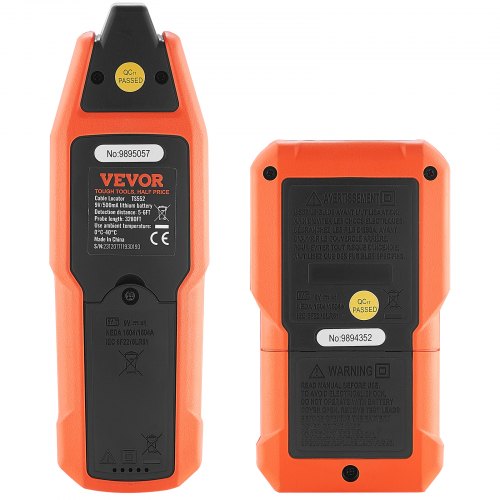
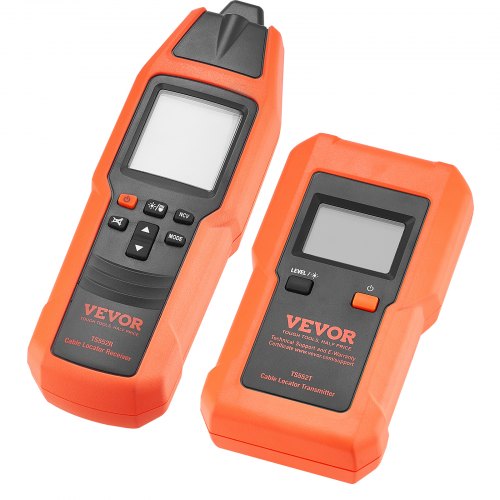
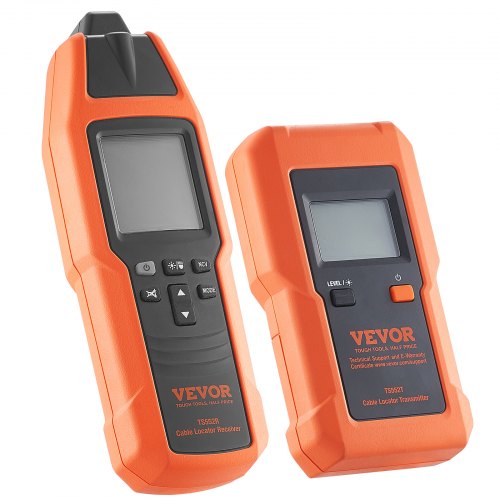
An electrical wire tracker is a handheld tool that follows the path of a hidden cable and pinpoints where it is damaged. A transmitter clipped to the wire sends a signal along it, and a receiver picks that signal up through soil, walls, or flooring, so you can walk the route without digging or opening surfaces. Where the signal drops off, the wire is broken or cut. This turns a guessing game into a direct search, letting you map buried and concealed lines, find faults quickly, and repair only the spot that needs it instead of tearing up a whole run.
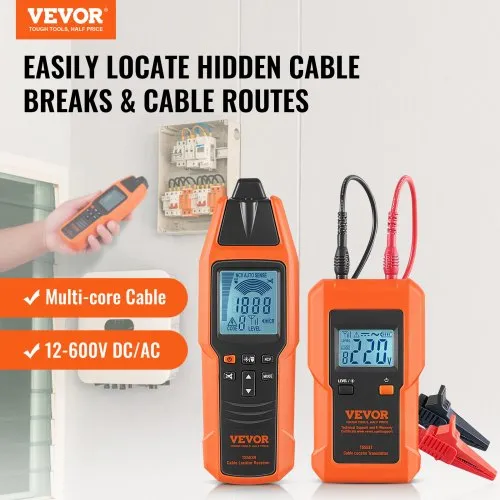
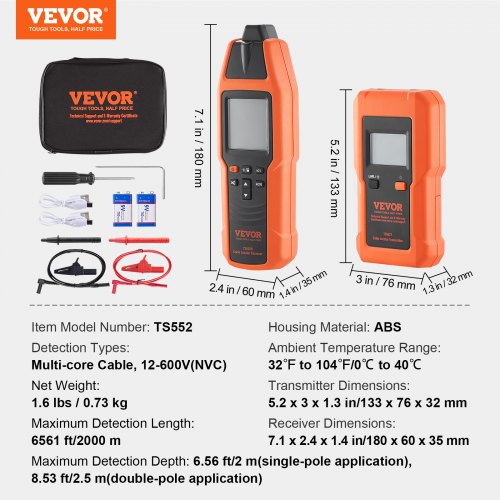
The electrical wire tracker range covers three working types, all drawn from VEVOR's underground cable locators. Standard signal-tracing locators follow cable up to 3 ft deep across runs of around 1,000 ft. The 6.5 ft deep-burial locator reaches deeper lines over runs up to 3,280 ft, while the 12 to 600 V wire tracker pairs break finding with voltage-range detection over runs up to 6,561 ft. For checks on live circuits, VEVOR's circuit testers complete the kit. Typical uses are repairing invisible dog fences, finding lost sprinkler valve wires, mapping landscape lighting cable, and tracing electrical lines on farms and job sites.
Four things decide what you need:
- Burial depth: a 3 ft tracer covers most fence, sprinkler, and lighting wire, but deeper-laid cable needs a 6.5 ft locator.
- Run length: match the tracing range to your longest line, from about 1,000 ft for a home yard to 6,561 ft for farms and perimeters.
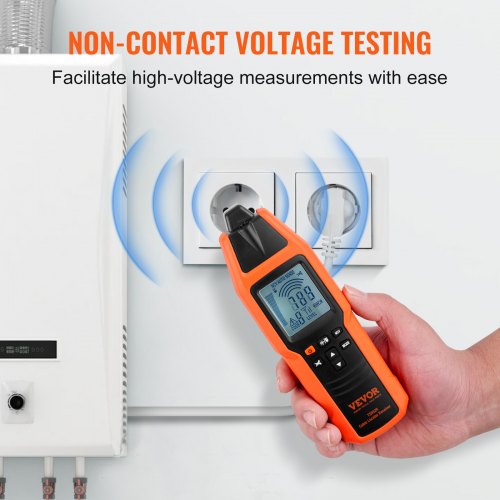
- Wire condition: signal tracing works on switched-off wire, so pick the voltage-range model if you also need to check for live 12 to 600 V lines.
- Cable type and route: shielded cable and metal conduit weaken the signal, so expect shorter reach there than on bare buried wire.
See every model in the full electrical wire tracker collection, or browse the wider cable locator range to match a tool to your wiring job.
Electrical Wire Tracker Types at a Glance
Wire trackers split by how they find a cable and how far down and along it they reach, and those two things decide which jobs each type handles well.
| Type / Sub-type | Working Method | Depth and Reach | Typical Wiring | Trade-off |
|---|---|---|---|---|
| Signal-tracing cable locator | Clip-on transmitter sends a signal the handheld receiver follows | Up to 3 ft deep, around 1,000 ft runs | Pet fence, sprinkler valve, and irrigation wire | Wire must be switched off and have an accessible end |
| Deep-burial wire locator | Stronger signal with a receiver set up for depth | Up to 6.5 ft deep, 3,280 ft runs | Deep-laid fence and landscape lighting cable | More reach than a shallow home yard ever needs |
| Voltage-range wire tracker | Signal tracing plus 12 to 600 V detection | Up to 3 ft deep, 6,561 ft runs | Electrical circuits, pipelines, long fence lines | More settings to learn before the first trace |
| In-wall wire tracing | Same transmitter and receiver run along walls | Shallow, inside wall cavities | Household circuits behind drywall | Circuit must be powered down before tracing |
VEVOR Electrical Wire Tracker Tools for Underground, Hidden & Buried Cable Detection
Are you looking for a reliable way to identify cable faults, find breaks, or locate underground wires? The electrical wire tracker devices in VEVOR's portfolio are designed for users who want precise detection in fields, yards, building sites, and home systems. These tools aid in accurately locating low-voltage wire, invisible dog fence cables, irrigation lines, and buried pet fences. VEVOR wire tracers, designed for portability, durability, and ease of use, help both novice and seasoned technicians troubleshoot more quickly, effectively, and cleanly.
Detection Range, Depth & Tracing Capabilities for Electrical Wire Tracker
How far, how deep, and how precisely an electrical wire tracker can trace cable pathways and breaks are typically key factors in its success. To provide consumers with dependable, practical performance both indoors and outdoors, VEVOR models are designed to handle long-distance signal tracing and a variety of soil conditions.
Extended Detection Range for Large Yards & Long Cable Runs
Many VEVOR tools offer long-range tracing; depending on the system, some versions can detect up to 1000 feet, while others can trace up to 3280 feet or even 6561 feet. Large residential lots, farms, sports fields, and commercial landscapes where cable systems span long distances are all good candidates for VEVOR wire tracers due to their wide detection range.
Users can sketch cable pathways beneath pavement, gravel, mulch, or soil thanks to the tools' extended reach, making them ideal for an underground cable locator. VEVOR devices deliver reliable detection over extended distances, whether you're locating underground lighting wires, diagnosing a pet containment system, or identifying a sprinkler valve wire.
Depth Capabilities for Buried, Hidden & Subsurface Cables
Another important consideration when choosing a professional-grade electrical wire tracker is detection depth. Depending on the instrument, VEVOR models can measure depths of 3 to 6.5 feet. Users may track wires beneath dirt, driveways, garden beds, landscaping, and shallow construction foundations with these detection depths.
VEVOR devices are useful as underground fence wire break locators because of their depth performance, allowing users to detect issues with invisible dog fence systems without unnecessary digging. Additionally, the depth range facilitates troubleshooting for sprinkler and irrigation systems, where wires may pass beneath edging or lawn structures.
Accurate Break Detection for Fast Troubleshooting
Finding the precise position of a wire break is one of the most difficult aspects of cable repair. By enhancing signal loss patterns and directing users to the exact failure area, VEVOR technologies streamline this procedure. It enables the device to operate efficiently as a general-purpose wire-break detector or as a pet-fence wire-break locator.
By distinguishing between strong and weak signal spots, the tools help operators navigate the cable path and locate the break. Time is saved, less needless excavation is done, and systems are swiftly restored. It can result in quicker containment restoration and fewer pet disruptions for buried dog fences.
Signal Stability, Soil Conditions & Detection Accuracy
VEVOR designs its tools to ensure reliable detection across a range of terrains, as environmental factors and soil type can affect how effectively an electrical wire tracker reads buried signals. Regardless of the type of ground, dry, compact, sandy, or lightly saturated, the apparatus adapts its sensitivity to provide unambiguous trace feedback. Because of its adaptability, each model can be relied upon as an underground cable locator, even in situations where cables pass through patchy soil, gravel, or mulch.
Improved signal filtering also lessens interference from other underground utilities or adjacent metal structures. Therefore, whether you're working with irrigation wiring, long perimeter cable runs, or a pet underground wire break locator, the gadget maintains precise path tracing and break detection. Because of its stability and versatility, users can troubleshoot with confidence in wide outdoor areas, gardens, and yards.
Setting Up a Trace for Common Wiring Jobs
Most failed traces come down to setup rather than the tool, so here is how to prepare for the jobs these trackers handle most and what tends to throw the signal off.
| Wiring Job | Setup Before Tracing | What Helps Most | What To Watch For |
|---|---|---|---|
| Broken invisible dog fence | Disconnect the fence transmitter, clip on at both ends | Earphone to hear the signal drop | Twisted splices can mimic a break, so check them first |
| Lost sprinkler valve wire | Clip onto the common and zone wire at the controller | Low sensitivity once you are close | Wires bundled in one trench can blur the signal |
| Hidden wire behind walls | Switch off the breaker for that circuit | Slow sweeps along the stud line | Live wiring will not trace and is a safety risk |
| Wire in conduit | Confirm conduit type before you start | Plastic conduit passes the signal | Metal conduit and shielding cut reach sharply |
| Shorted or grounded cable | De-energize and isolate the run | Follow the signal to where it fades | The signal ends at the short, not at the far end |
Features & Ease of Use for Electrical Wire Tracker
A good electrical wire tracker needs to be easy to use, intuitive, and effective and have clear detection limits. Each VEVOR model is designed with easy-to-use controls, clear indicators, and useful accessories to help users complete tasks confidently.
Multiple Modes, Sensitivity Adjustments & Audio Feedback
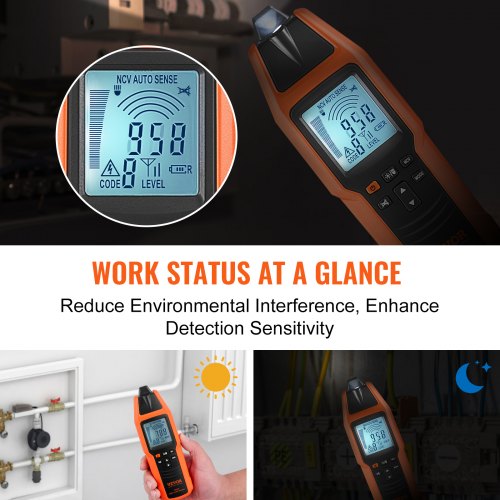
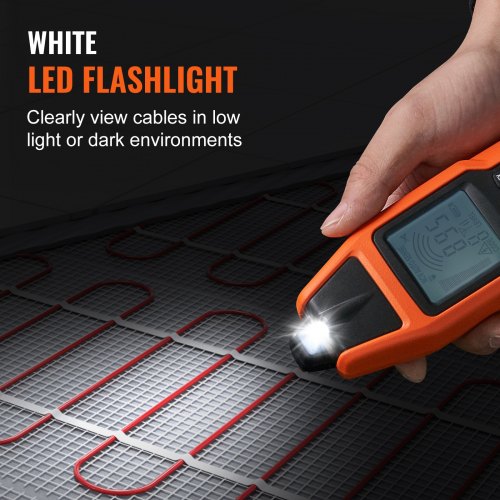
Adjustable sensitivity on VEVOR tracers lets users fine-tune detection for varying cable conditions, soil densities, and depths. It enables the tool to eliminate background interference and noise, resulting in more precise tracing. Even in bright outdoor settings, users may more easily follow subterranean wire lines thanks to audio feedback and distinct signal tones that guide them during detection. Whether you're mapping irrigation wire in a backyard or fixing a broken invisible dog fence, these capabilities let you perform accurate work.
Durable Construction, Weather-Friendly Use & Field Reliability
Since most cable-locating work is done outdoors, VEVOR uses durable materials suitable for field use when creating its electrical wire tracker portfolio. The tools are appropriate for homeowners, professionals, and landscaping crews who may need to operate in a variety of situations because the enclosures are resistant to moisture, dust, and damage. The gadgets are a good fit for users looking for an underground cable detector that can withstand practical use, as they can be used on lawns, in soil, on gravel, and even on light duty construction sites. Certain variants include earphones that enhance signal detection in loud environments.
Easy Setup, Clear Interface & Portable Design
VEVOR minimizes the need for training by designing its wire tracers with simple interfaces. Labeled components, easy-to-use buttons, and clear indicator lights enable users to start tracing right away. During large-area inspections, each tool's lightweight, compact design makes it easy to carry, and the supplied accessories help keep parts properly organized between activities. These characteristics allow the gadgets to be used by novices while still satisfying the needs of experts who depend on precise subterranean wire-break-finder performance.
Best-Seller Comparison
These three wire trackers are shown side by side on the figures that drive a purchase: how deep and how far each one traces, what it detects, and the wiring it is built for.
| Product | Max Depth | Max Tracing Length | Detection Functions | Wiring It Targets | Property Scale | Best For |
|---|---|---|---|---|---|---|
| 6.5 FT Wire Locator, 3280 FT Range | 6.5 ft | 3,280 ft | Cable path tracing, break finding | Hidden pet fences, sprinkler valves | Large yards and farms | Deepest reach here; deep-laid fence and valve wire |
| 3 FT Cable Locator, 1000 FT Range | 3 ft | 1,000 ft | Cable path tracing, break finding | Pet fences, sprinkler valves, irrigation | Typical home yards | Simplest, shortest-run kit for home fence and sprinkler fixes |
| 12-600V Wire Tracker, 6561 FT Range | 3 ft | 6,561 ft | Path tracing, line breaks, 12 to 600 V detection | Electrical circuits, pipelines, fencing | Long perimeter and site runs | Longest reach and the only voltage-range model |
Why Choose VEVOR Electrical Wire Tracker Tools?
VEVOR offers reliable, high-precision solutions for mapping subsurface electrical layouts, identifying wire breaks, and locating buried cables. Each electrical wire tracker facilitates effective troubleshooting for houses, farms, workshops, and landscaping projects, thanks to its wide detection range, deep probing capabilities, adjustable settings, and rugged, field-ready construction. For anyone in need of a precise underground cable locator, VEVOR offers outstanding value, backed by affordable prices and dependable post-purchase support. Choose the ideal model for your requirements by browsing the entire assortment now.
FAQs
What are the differences between various wire tracers on the market?
Wire tracers differ mainly in how deep and how far they read, and in what they detect. Basic signal tracers follow switched-off wire and find breaks, deep-burial models reach further underground, and voltage-range tracers also check live wiring. Match depth and run length to your job first.
How to choose the right wire tracer for electrical troubleshooting?
Start with the wire: how deep it sits, how long the run is, and whether it can be switched off. Then pick the matching depth and range, and add voltage detection if you work on electrical circuits. The electrical wire tracker range covers all three needs.
Can cable trackers help me find hidden wires behind walls?
Yes. The same transmitter and receiver that trace buried cable also follow wiring behind drywall, as VEVOR confirms for its 3 ft cable locator. Switch off the breaker for that circuit first, since signal tracing only works on de-energized wire.
Can wire tracers detect different types of wires and cables?
They trace most metallic conductors, including low-voltage fence wire, sprinkler wire, lighting cable, and household circuits. Unshielded wire gives the clearest signal. Shielded or armored cable absorbs part of the signal, so expect a shorter detection range and fainter tones on those runs.
What is the best wire tracer?
The best one is the model whose depth and range fit your wiring. A 3 ft, 1,000 ft locator suits home fence and sprinkler repairs, a 6.5 ft locator suits deep-laid cable, and a voltage-range tracker suits circuit work. Compare them in the cable locator category.
What is the difference between a cable tracer and a wire tracer?
In practice there is none: both names describe the same transmitter-and-receiver tool. "Cable tracer" tends to be used for buried or multi-core runs, and "wire tracer" for single conductors such as fence or sprinkler wire, but the working method is identical.
Can a wire tracker trace lines running through metal conduit?
Only poorly. Metal conduit shields the signal, so reach drops sharply and the trace can fade out completely. Plastic conduit lets the signal through, though VEVOR notes the workable depth is shallower there, around 30 cm. For metal conduit, trace from an exposed section where possible.
Can a wire tracer find broken or shorted wires?
Yes for both. On a broken wire the signal stops at the break, so you dig only there. On a shorted or grounded wire the signal weakens and ends at the short. The line must be de-energized, as with the 12 to 600 V wire tracker when signal tracing.
