Ask about this product by AI

VEVOR 5-in-1 Baby Walker, Folding Baby Activity Center on Wheels, Height Adjustable Rocker Bouncer Walker with Comfortable High-Back Seat, Anti-Rollover Toddler Walking Helper for 6-24 Month Boy Girls


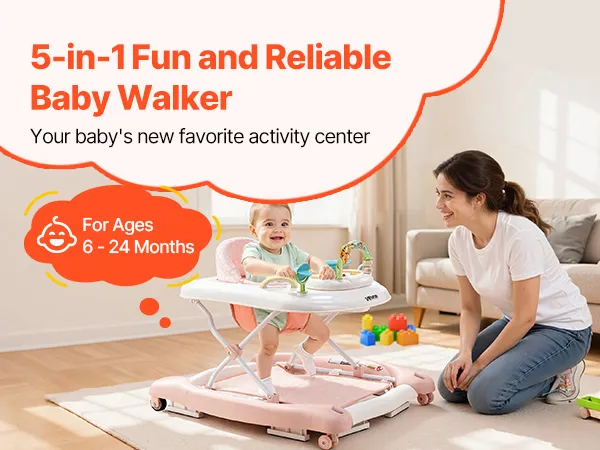
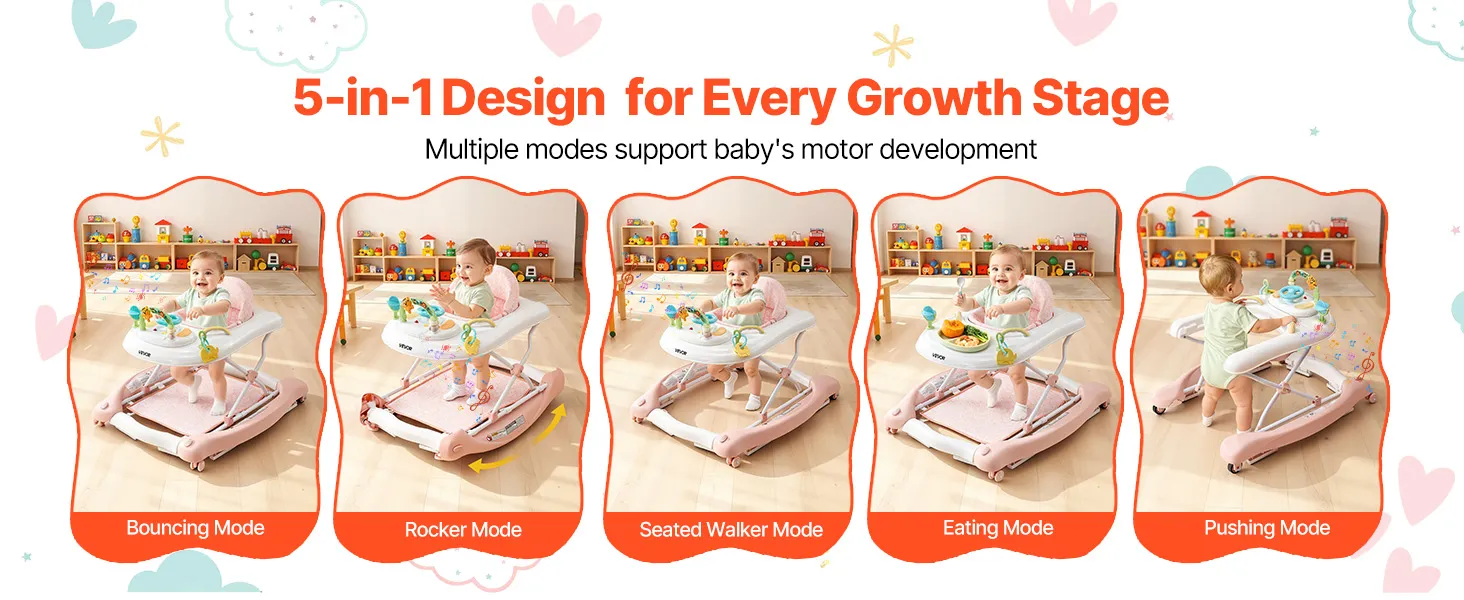
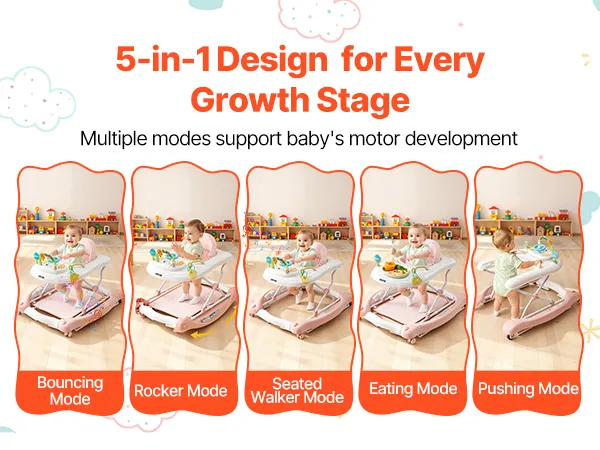
- Foster Baby's Growth: Let your little one explore more with this 5-in-1 baby walker! Easily converts into a sit-to-stand walker, push walker, rocker, bouncer, and feeding chair, helping them learn to walk, develop motor skills, balance, strength and coordination
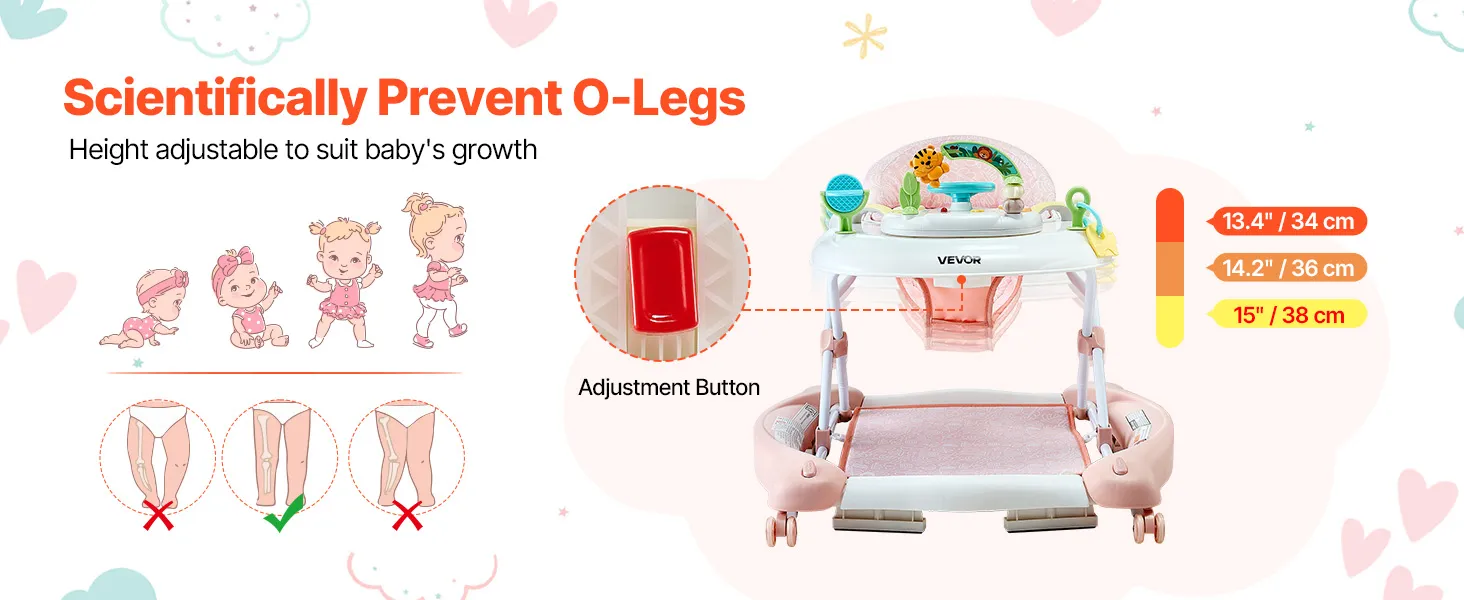
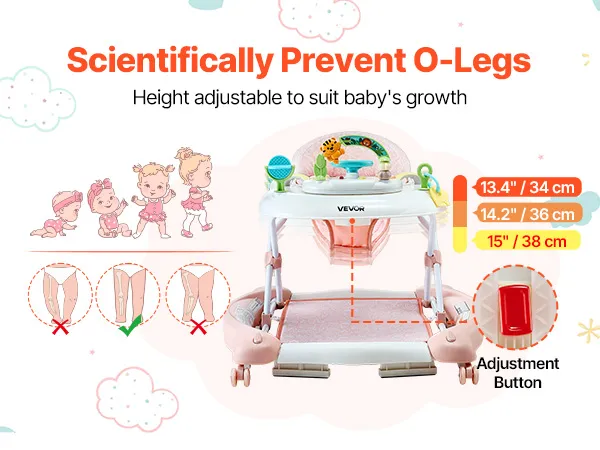
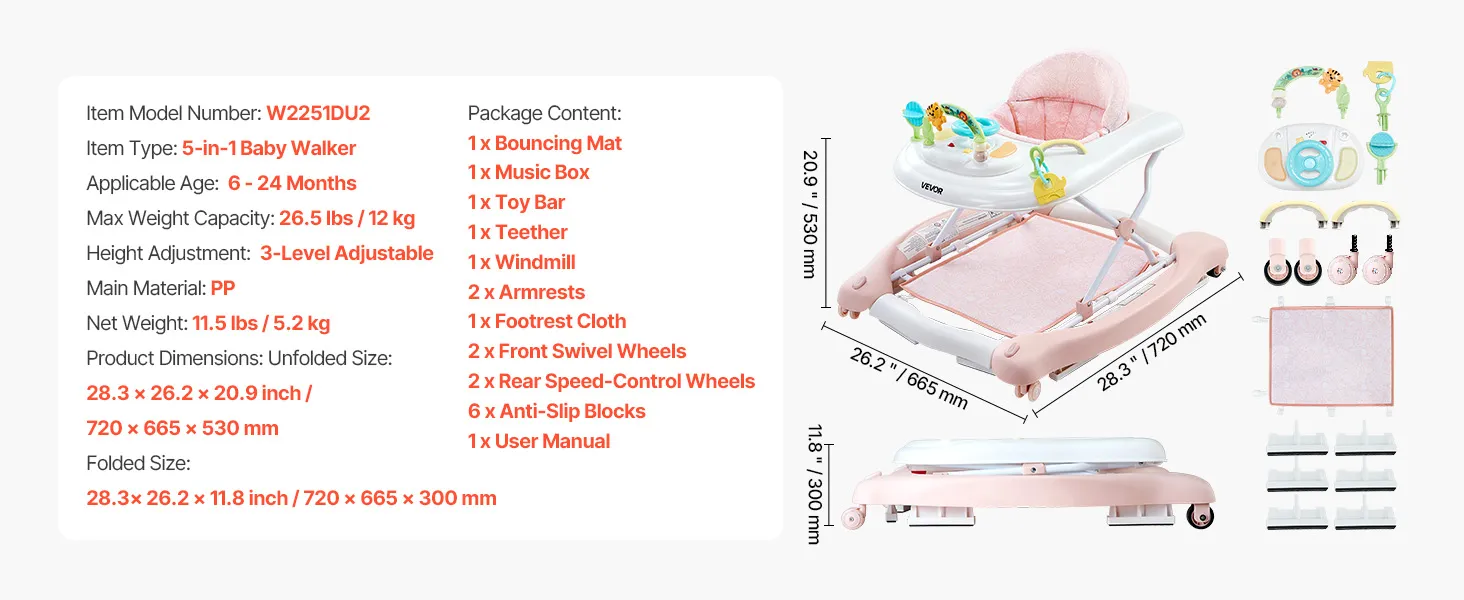
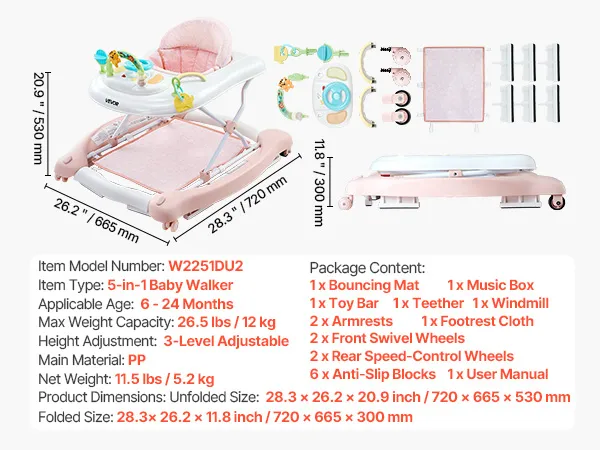
- 3-Level Adjustable Height: With 3 height options — 13.4", 14.2", and 15.0" — our folding baby walker and activity center adapts to your baby's growth needs, while scientifically preventing the O-shaped legs and maintaining proper posture during walks
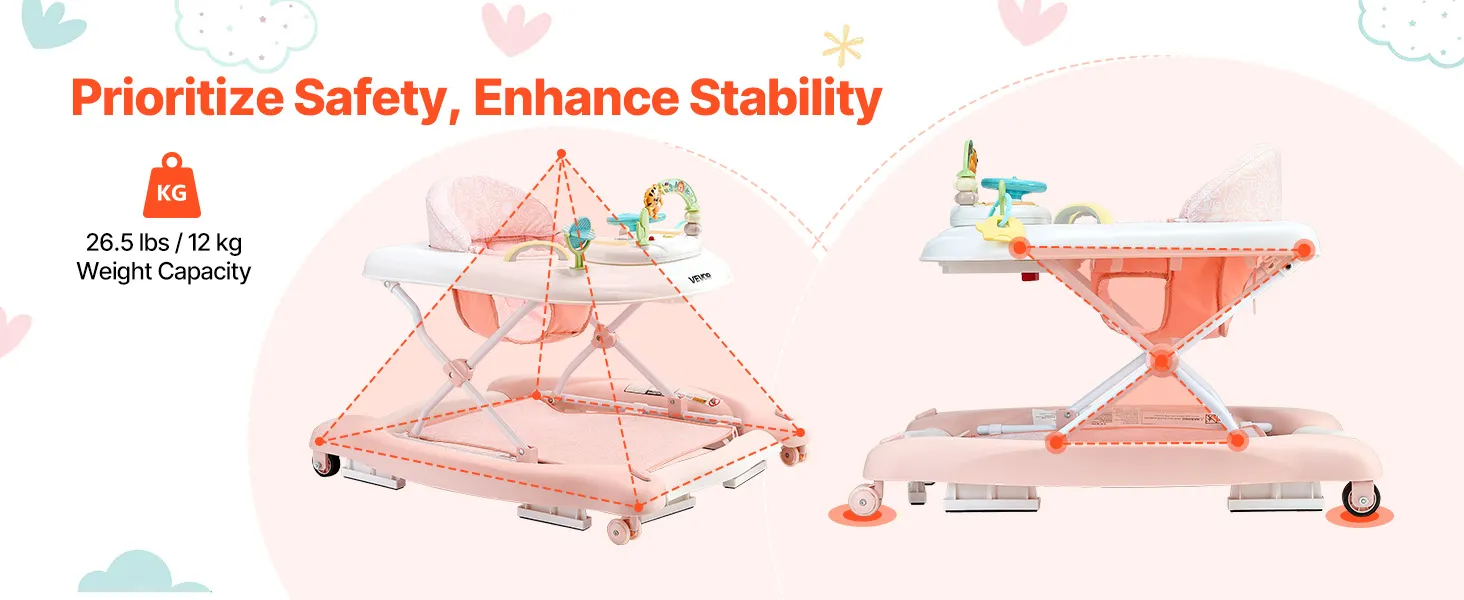
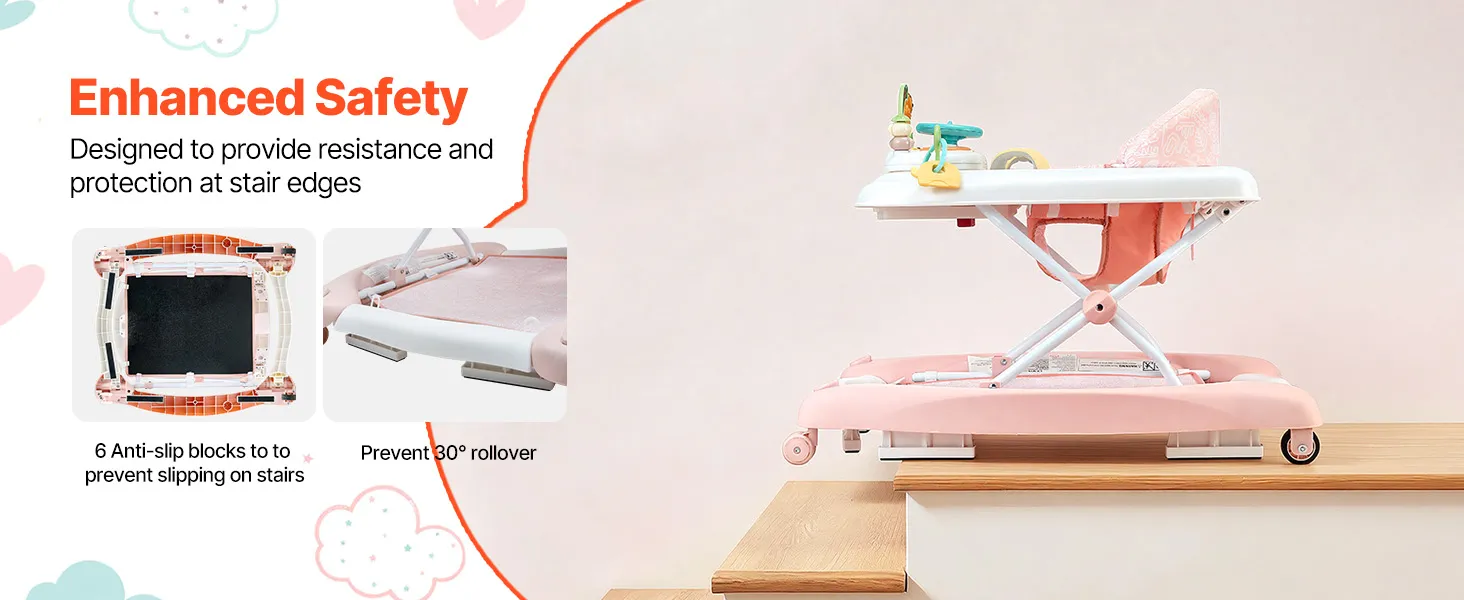
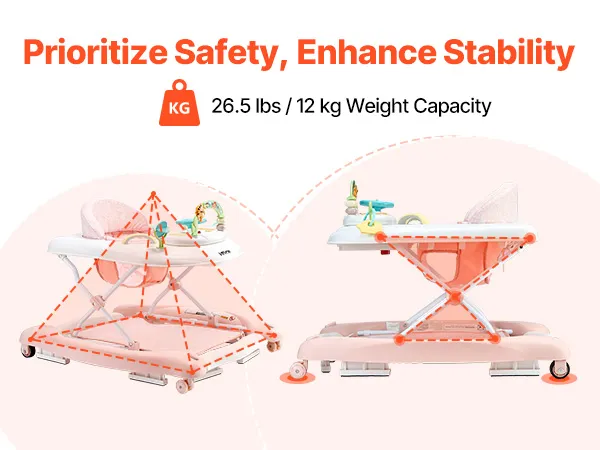
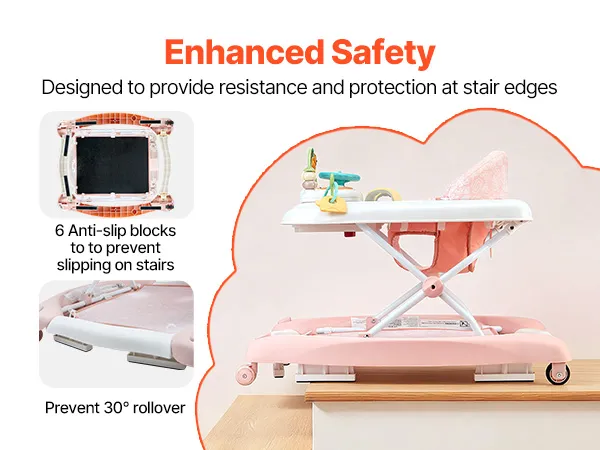
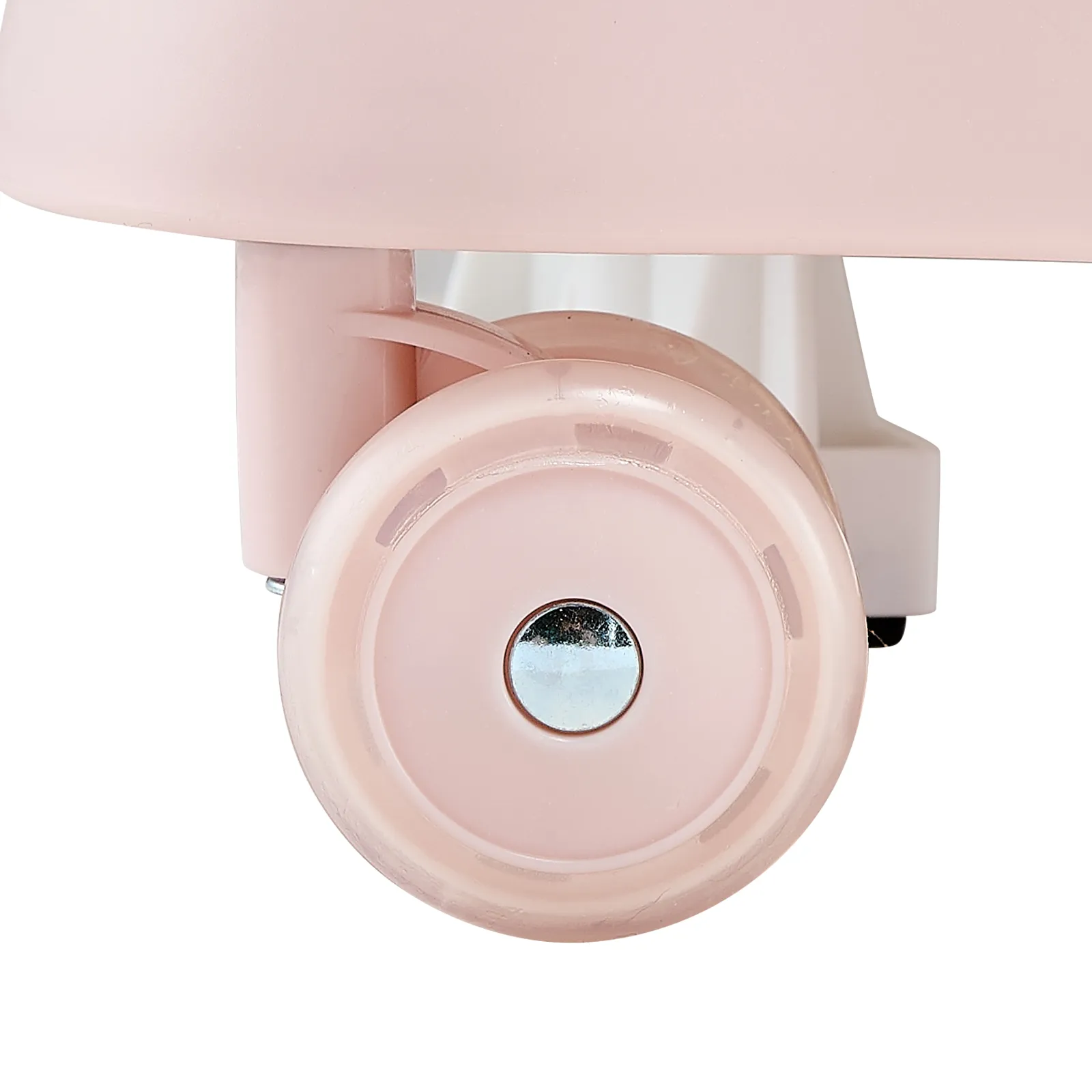
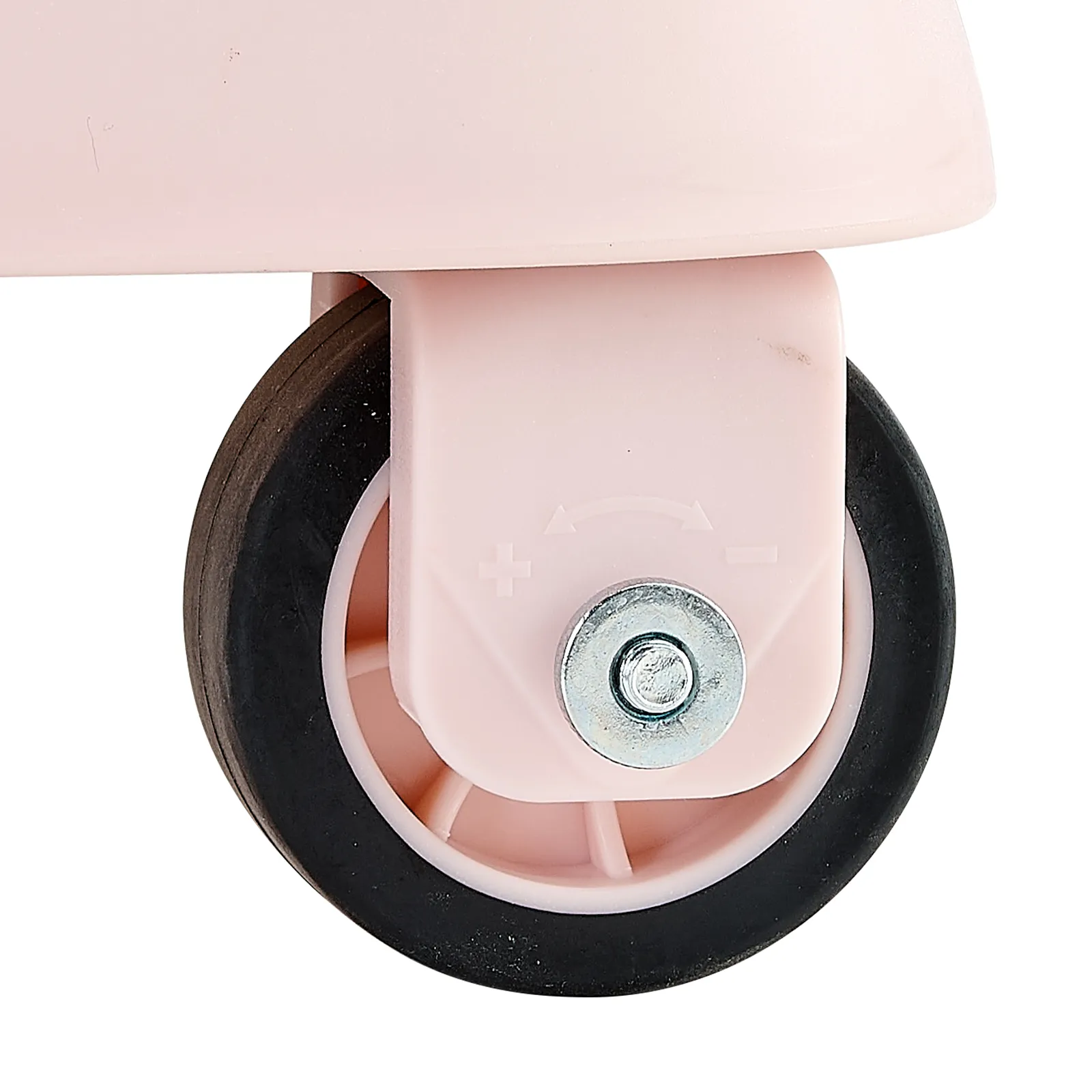
- Safe Steps for Little Explorers: Outfitted with 4 quiet, rubberized wheels (2pcs * 360° swivel + 2pcs * speed-adjustable), 6 anti-skid blocks, plus a widened base, this anti-rollover toddler walker ensures smooth movement and safe stopping, letting babies explore more confidently
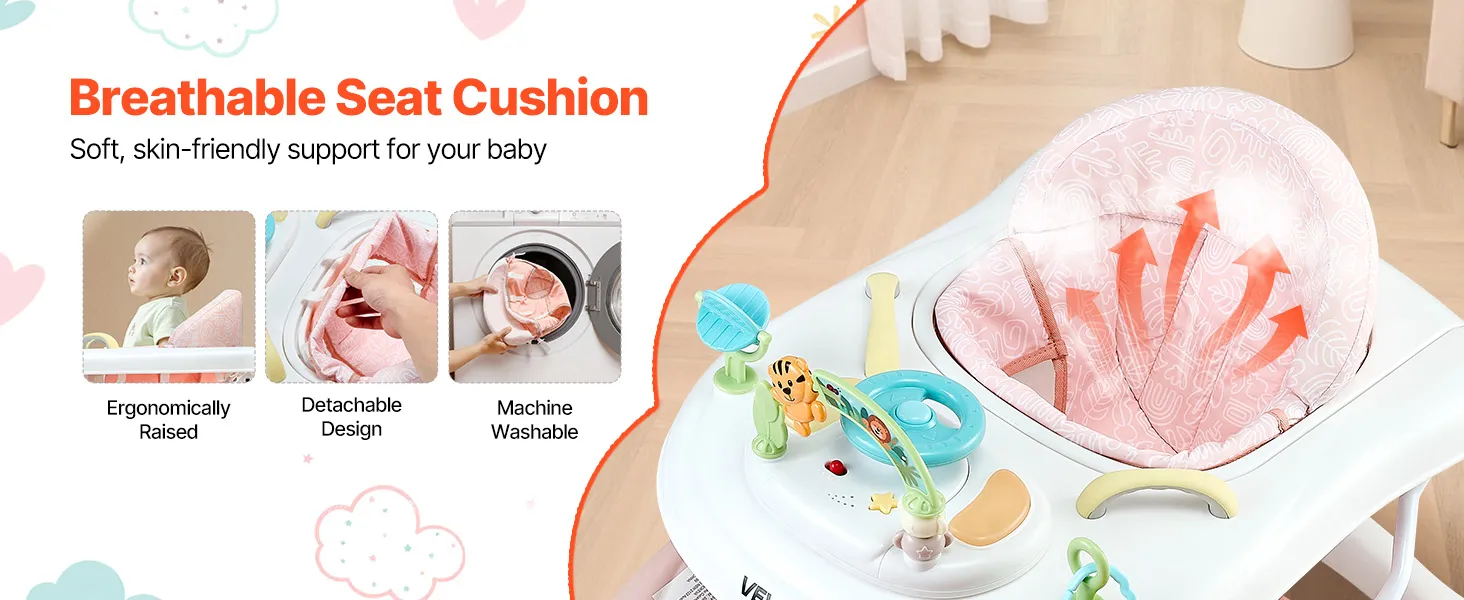
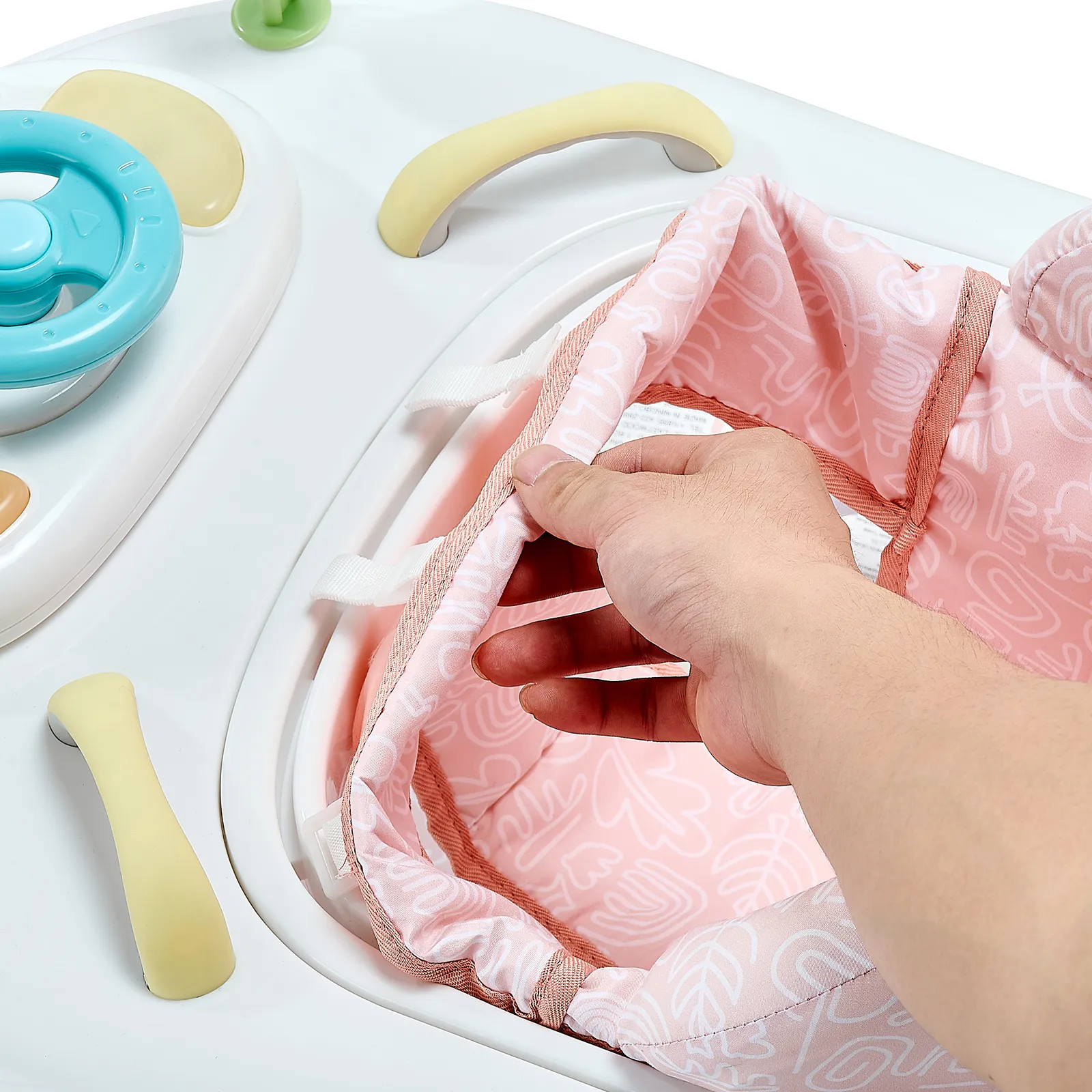
- Supportive & Comfortable: Designed with a soft, ergonomic high-back seat, this foldable baby walker provides comfortable support to protect your baby’s spine and maintain proper posture. Breathable fabric and thick padding offer long-lasting comfort
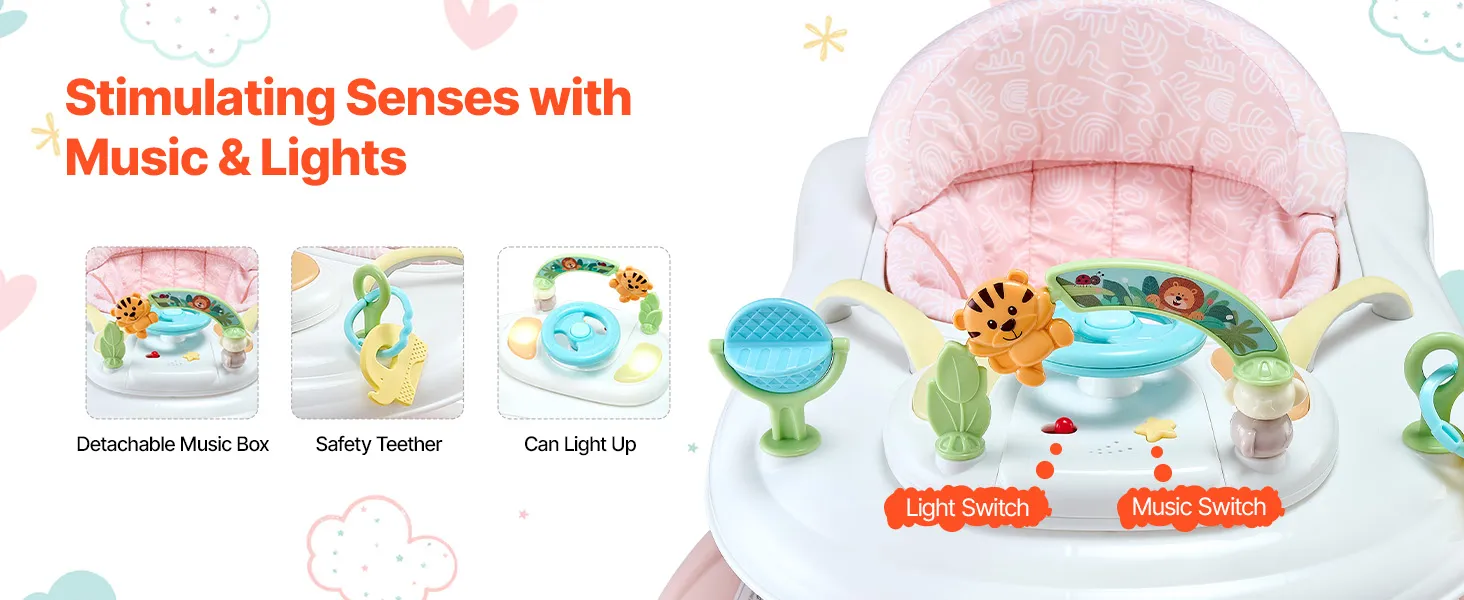
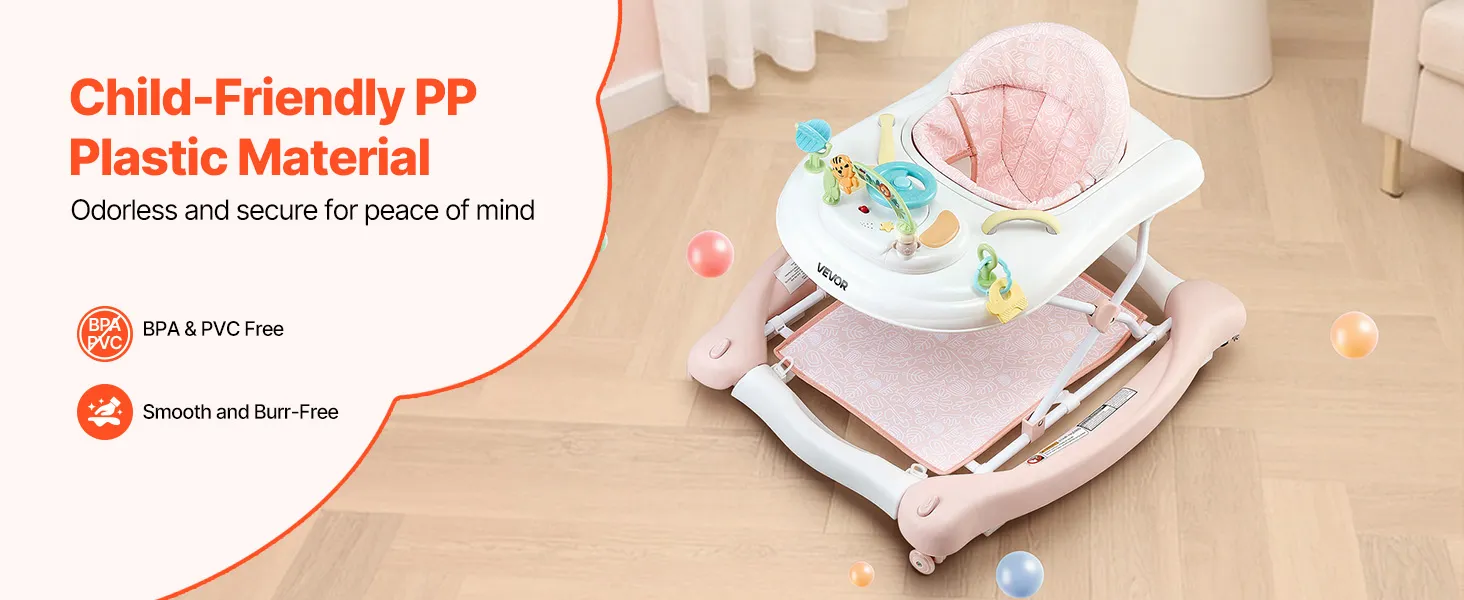
- Interactive Playful Toys: Not just a baby walker — it's also a fun activity center. Comes with a detachable music box that stimulates sensory development, and a windmill toy and teething toys that help build hand-eye coordination and strengthen oral muscles
Reviews summary
Al-generated from customer reviews
Frequently Bought Together
Reviews
- 100%
- 0%
- 0%
- 0%
- 0%
 cheryl maple Olivia Amanda Nelson Sherry
 About this item







5-in-1 Baby Walker with Wheels Converts to Rocker, Bouncer, Push Walker, and Feeding Chair
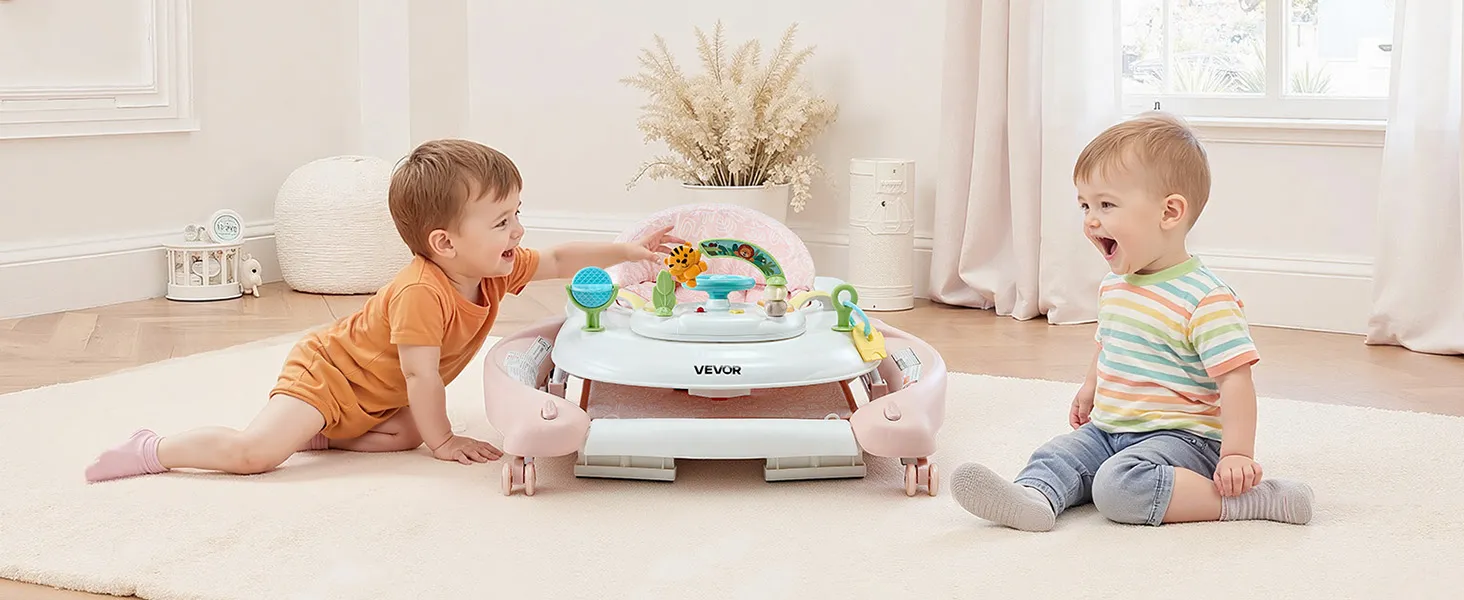
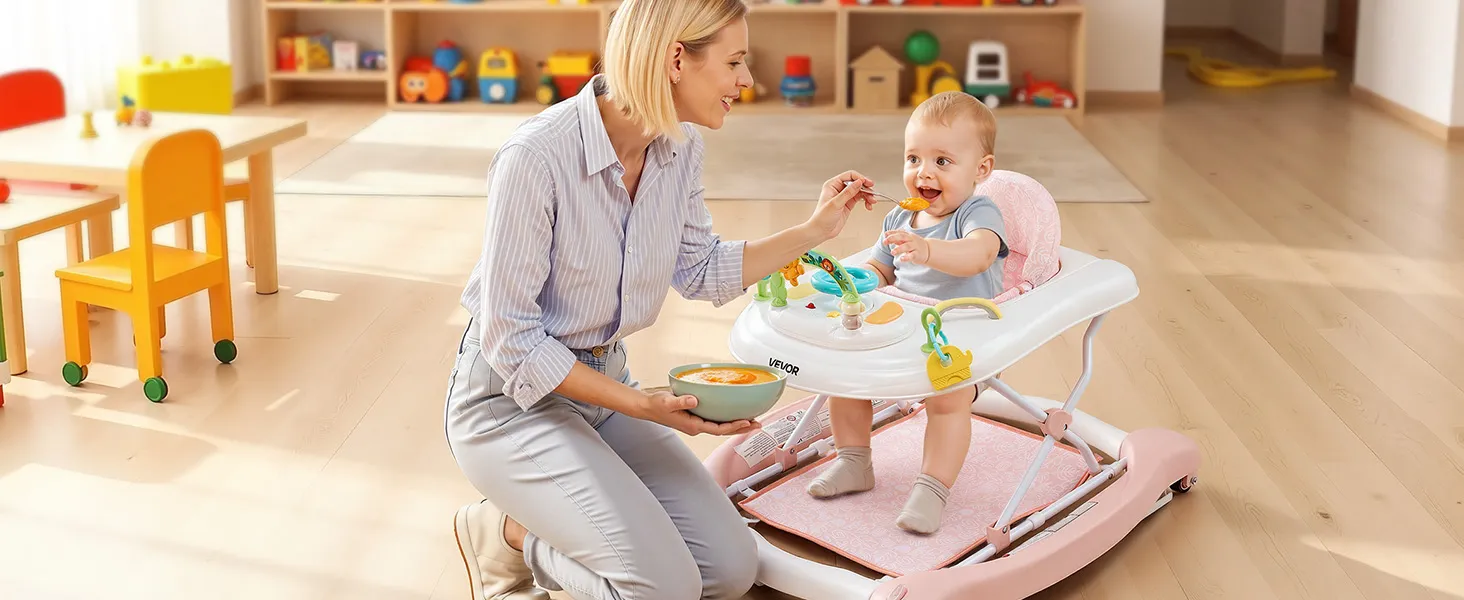
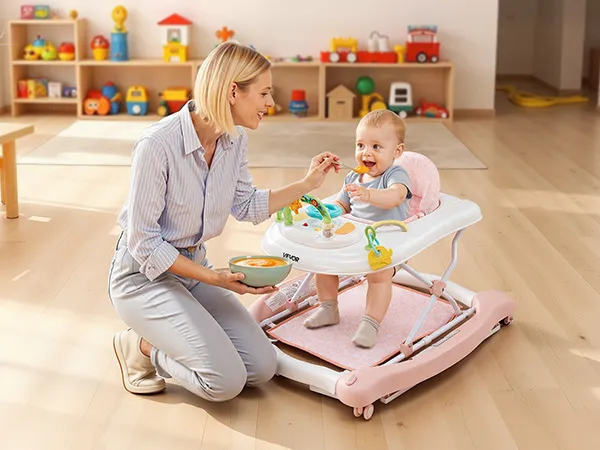
This configuration delivers this range in a single frame. This baby walker with wheels can be used in five different ways: as a sit-to-stand walker, a push walker, a rocker, a bouncer, and a feeding chair. It means you won't have to buy separate developmental equipment as your child grows from 6 to 24 months. It’s a structured growth tool that helps kids reach different motor milestones with each mode change.
The idea behind multi-mode design is based on sound developmental principles: babies need different postural challenges to improve their neuromuscular coordination. A static walker only teaches one way to move. This walker with wheels rotates through bouncing, rocking, pushing, and standing modes to work out different muscle groups and balance systems. It speeds up the transition from needing support to walking on your own.
4-Wheel Anti-Rollover System with 2 × 360° Swivel + 2 × Speed-Adjustable Rubberized Wheels
This baby walker's wheels are intentionally set up to be uneven. The two front wheels can spin 360 degrees, allowing you to turn and explore in any direction. The two rear wheels can change speed, adding rolling resistance and preventing you from speeding up without control, which is the main risk of rolling over in standard walker designs.
The stability structure is finished off with six anti-skid blocks and a wider base frame. These parts work together to create a platform with a low center of gravity, helping reduce tipping on hard floors or low-pile carpets. The speed-adjustment feature is very important for parents because it lets you set the resistance to match your child's current strength level. It keeps the walker from going too fast and causing falls when the baby is just starting to walk.
3-Level Height Adjustment at 13.4", 14.2", and 15.0" with Posture Corrective Walker Design
The three height settings, 13.4 inches, 14.2 inches, and 15.0 inches, are not random. They are set up to maintain a biomechanically correct hip-to-foot angle as the child grows. It is to avoid the O-shaped leg deformity that can occur when walkers hold infants too low or force unnatural hip abduction during the weight-bearing phase.
Most parents don't know how important it is to set the right height on a baby walker with wheels. Setting the walker too low can cause the child to put too much weight on the front foot and bend their hips too much, leading to less comfortable positioning. The 0.8-inch step between each level lets you fit it perfectly during the 6–24 month developmental window.
Baby Walker with Wheels Ergonomic High-Back Seat with Breathable Fabric and Thick Padding for Spinal Support
The design of the high-back seat fills in a structural gap in standard walker seating. Most entry-level walkers have shallow bucket seats that don't support the thorax. The VEVOR's high-back design supports the child's back, whether they're walking, bouncing, or eating.
The breathable fabric and thick padding keep the seat dry and comfortable while in use, which is important because babies in walkers usually use them for 20 to 30 minutes at a time. When seats don't have enough air flow, heat and moisture build up, which irritates the skin and makes people restless, cutting sessions short before they can get the developmental benefits.
Detachable Music Box Plus Windmill and Teething Toy: 3-Component Sensory Development Array
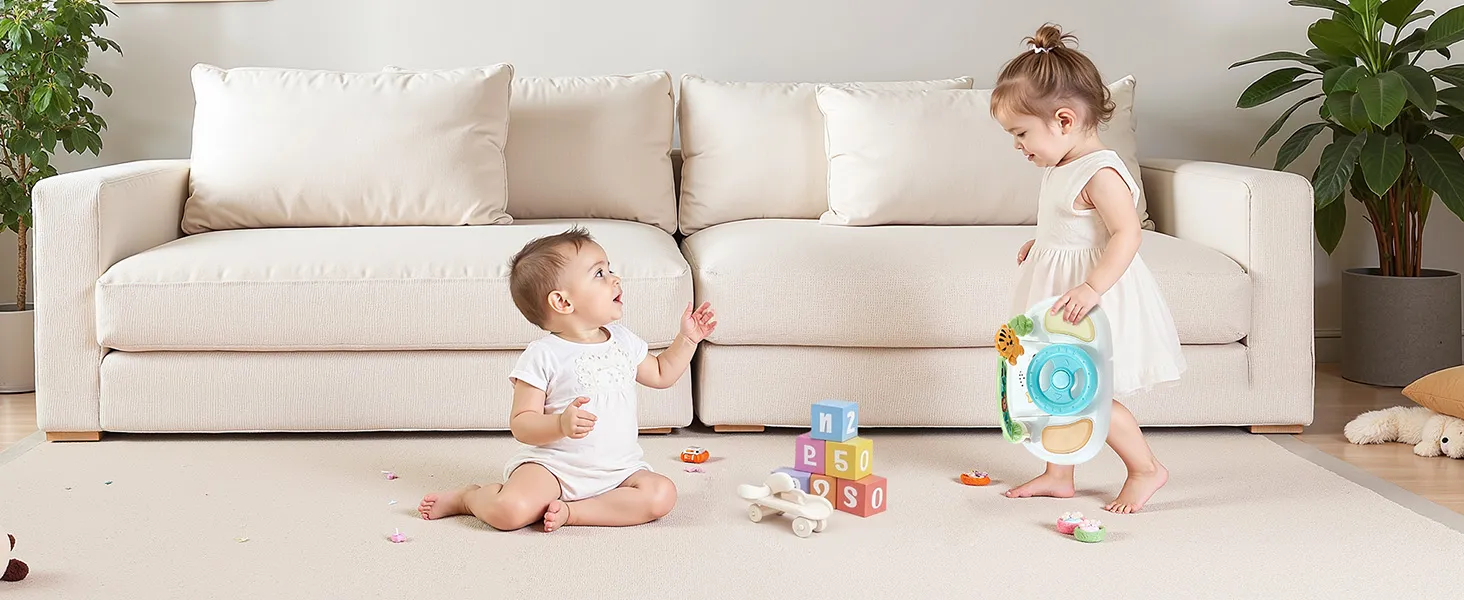
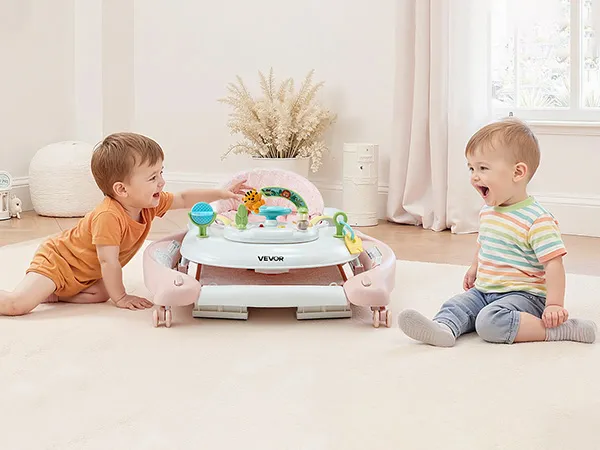
The way the interactive toy is set up on purpose makes it multi-sensory. The windmill toy helps kids learn how to follow things with their eyes and use both hands at the same time. The teething toys provide mouth-motor stimulation and oral sensory input during teething.
Detachability is a functional specification, not a feature that makes things easier. It stays attached while walking to keep you motivated, and is removed while feeding to prevent distraction. This modularity allows each part to be used in multiple ways, making the activity center a truly versatile way to keep babies busy.
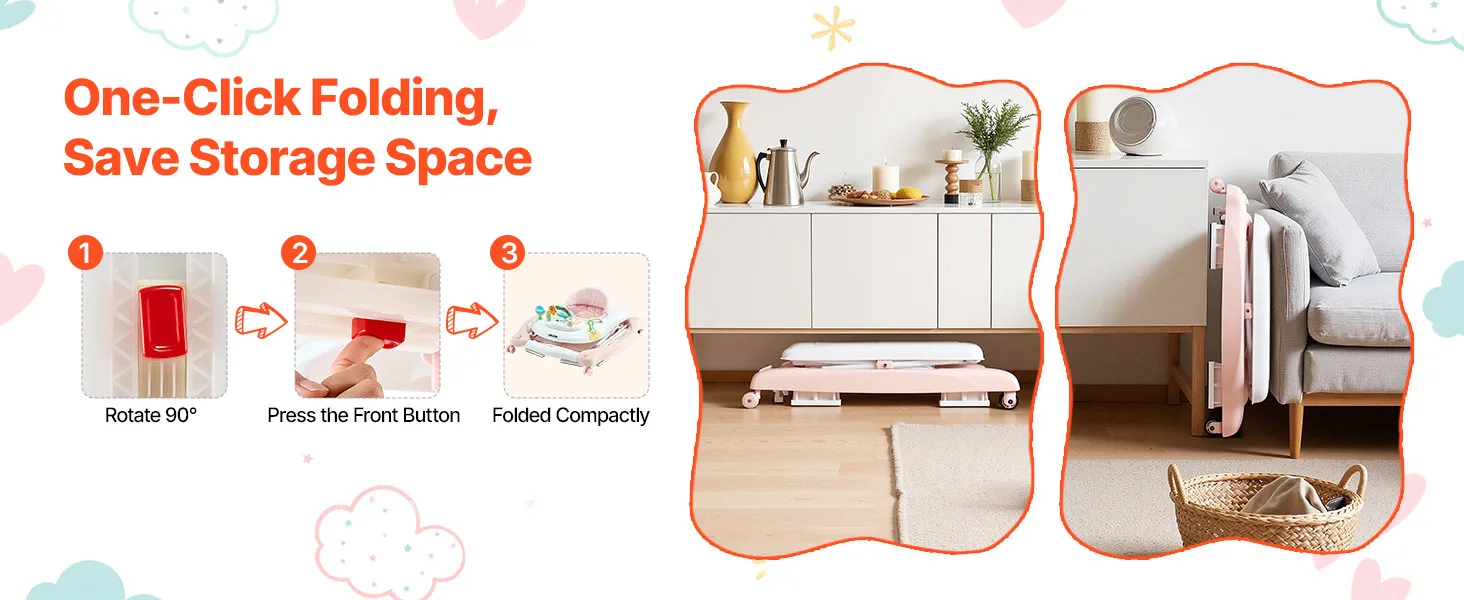
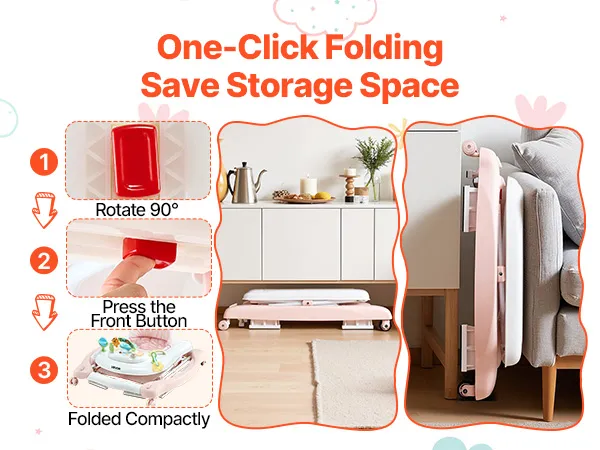
Folding Frame Design for Compact Storage: Full Walker Functionality in a Collapsible Structure
Most baby walker makers avoid making frames that can fold up for flat storage or travel because it is a structural engineering challenge. Instead, they make rigid frames. A foldable baby walker with wheels must remain stable when in use and fold easily for storage. It means that the hinges and frame geometry must be very precise.
For homes with little floor space, the fold function changes how and where this walker can be used. You can use it for a session, fold it flat, and then store it upright between uses. This design is less convenient with rigid-frame models. The collapsed profile fits into a standard car boot without disassembly, so the walker is always available on family trips without having to carry a bulky item.
Age Range 6–24 Months with Single-Product Coverage Across the Full Pre-Ambulatory Development Window
The 6–24-month age rating is the most versatile in the baby walker category. The baby uses the rocker and bouncer modes to help them develop their posture at 6 months old. When a child is 9 to 12 months old, the push walker and sit-to-stand modes start to work. From 12 to 24 months, the full walking and feeding chair functions help kids move around independently and switch between meals.
Placing a single product across this entire window has a direct impact on the budget. Parents who buy separate bouncers, push walkers, and feeding chairs for each stage of their child's development spend two to three times as much as this unit costs. The 5-in-1 design combines that cost into one frame, one safety standard, and one ergonomic environment that stays the same as the child grows.