







Download VEVOR App 

Get $5.00 Off $99.00+ Orders on Your First 3 App Orders
Scan the QR code to download
SKU: JZWZHDSTSGWC192VS001V0
Copy


+12
More


 Ask about this product by AI
What is the age range suitable for using this shopping cart?
What materials are used to construct the shopping cart and doll?
How much storage capacity does the shopping cart offer?
Ask something else
VEVOR Shopping Cart for Kids, Sturdy Metal Frame, Toy Shopping Cart with Baby Doll, 4 Rolling Wheels, Doll Seat Carrier, Grocery Pretend Play Toy Trolley, Folds for Easy Storage, for Toddlers Ages 3+
5 49 Reviews
$ 36 90
Earn at least 2% points on purchases or save up to 15%.
Each when you buy 0+.
Shop
Get -% off for new user
Get $5.00 Off $99.00+ Orders on Your First 3 App Orders.
Download Now

Features & Details
- Learn Through Play: Turn pretend shopping into a fun learning journey with this shopping cart. Kids ages 3+ explore colors and shapes while pushing the cart, improving hand-eye coordination, cognitive skills, and social interaction through engaging play
- Big Capacity, Bigger Fun: This shopping cart for kids features a roomy 7 L basket for toys, play food, and a 12-inch doll. Kids can fill it up and bring their doll along for imaginative shopping adventures full of fun and creativity
- Secure and Kid-Friendly: Designed for little shoppers, this toy shopping cart features smooth rounded edges, a sturdy rust-resistant metal frame, shock-absorbing 360-degree PP wheels, and a soft EVA handle for comfortable, stable pushing
- Double Storage, More Play: This toddler shopping cart features a 2-tier storage design with a top basket and bottom shelf. Kids can organize and load items just like in a real store, adding more fun and realistic playtime
- Foldable and Space-Saving: Weighing only 3.1 lbs, this kids grocery cart folds easily for quick storage and portability. Its lightweight design is ideal for small spaces, so kids can enjoy shopping and playing anytime, anywhere
Product specification
- Item Model Number FL9151-1
- Cart Tiers 2
- Capacity 7 L
- Color Pink
- Material Metal (Cart) + PVC (Doll) + PP (Wheels)
Reviews summary
5 49 Reviews
Customers say: The toy shopping cart is lightweight, sturdy, pre-assembled, fun for kids, and includes realistic accessories, but some users reported issues like loose handles, fragile parts, and poor performance on smooth floors.
Al-generated from customer reviews
Frequently Bought Together
Reviews
About this item
Questions and Answers
Explore
Reviews
No customer reviews
Be the first to rate this product. your feedback will helps others make informed decisions.
Write a Review
Customers say
The toy shopping cart is lightweight, sturdy, pre-assembled, fun for kids, and includes realistic accessories, but some users reported issues like loose handles, fragile parts, and poor performance on smooth floors.
Al-generated from customer reviews
Top Reviews
About this item
Product specification
- Item Model Number
- FL9151-1
- Cart Tiers
- 2
- Capacity
- 7 L
- Color
- Pink
- Material
- Metal (Cart) + PVC (Doll) + PP (Wheels)
Description


Pro-level performance without the pro-level cost
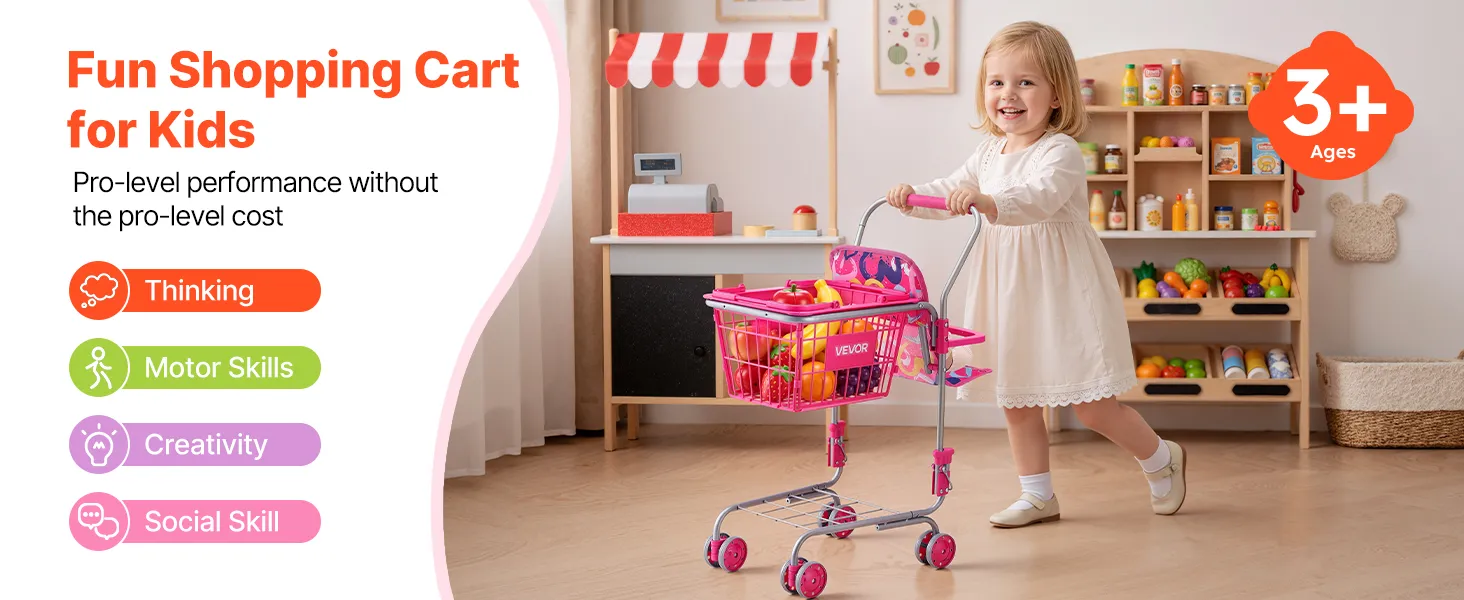
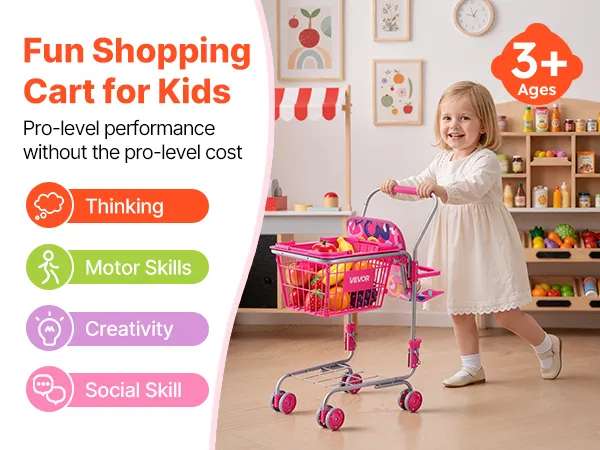
Let kids enjoy a realistic shopping experience with this kids shopping cart. Featuring a sturdy steel frame and smooth-rolling wheels, it also includes a cute doll for added imaginative play. It encourages imagination and hand-eye coordination while keeping kids engaged in hours of screen-free fun.
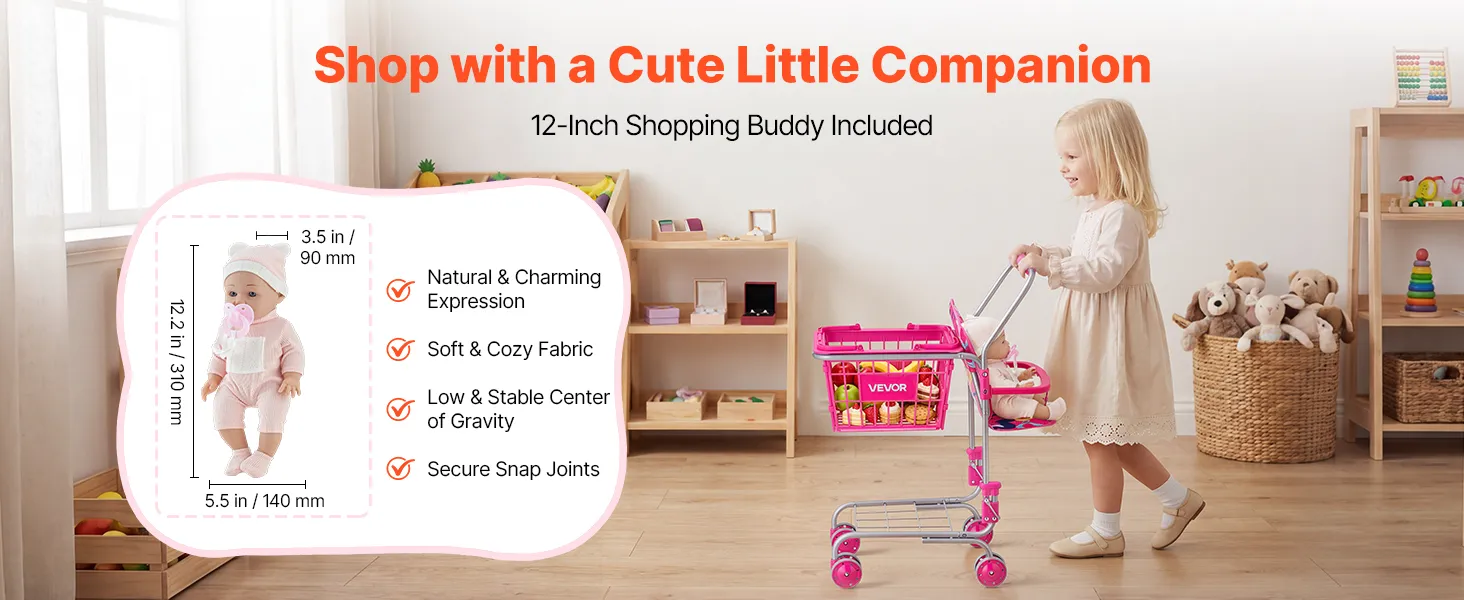
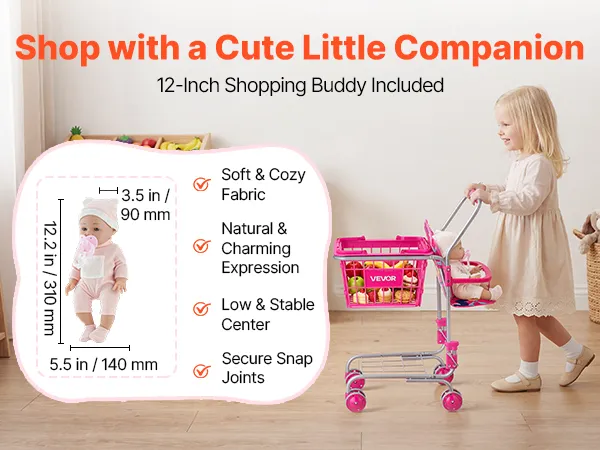
This shopping cart for kids comes with a 12-inch lifelike doll, letting kids bring a little companion on every shopping adventure. Encourages imagination, nurturing behavior and long-lasting screen-free playtime full of creativity and joy.
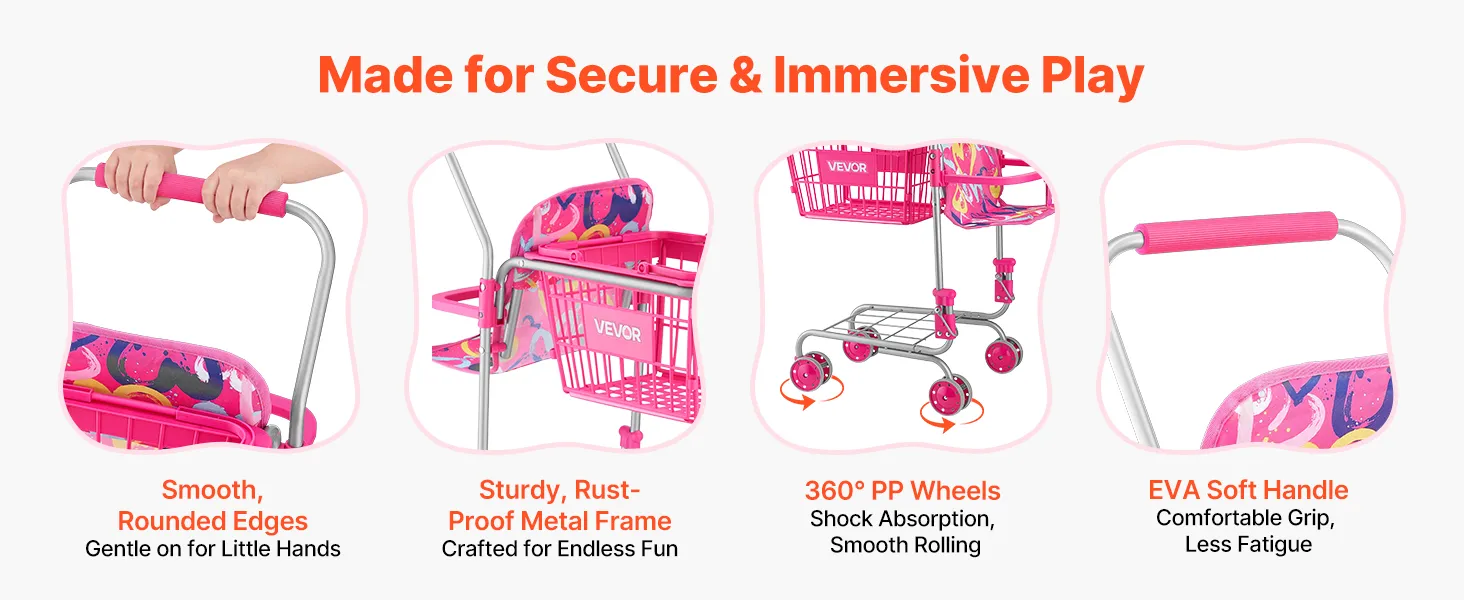
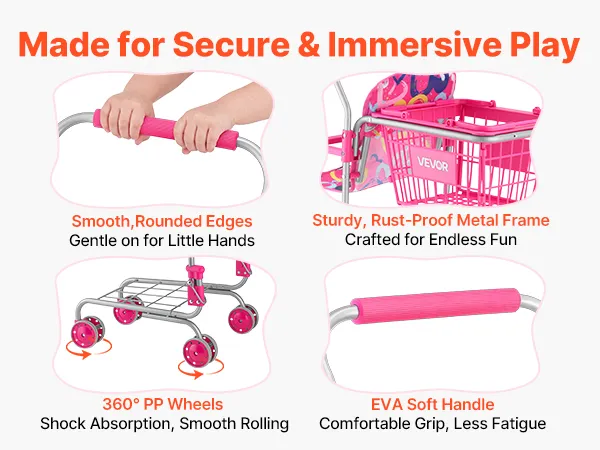
Designed with kids in mind, this toy shopping cart features smooth rounded edges, a strong rust-resistant metal frame, 360 degree shock-absorbing PP wheels, and a soft EVA handle for stable and comfortable play.
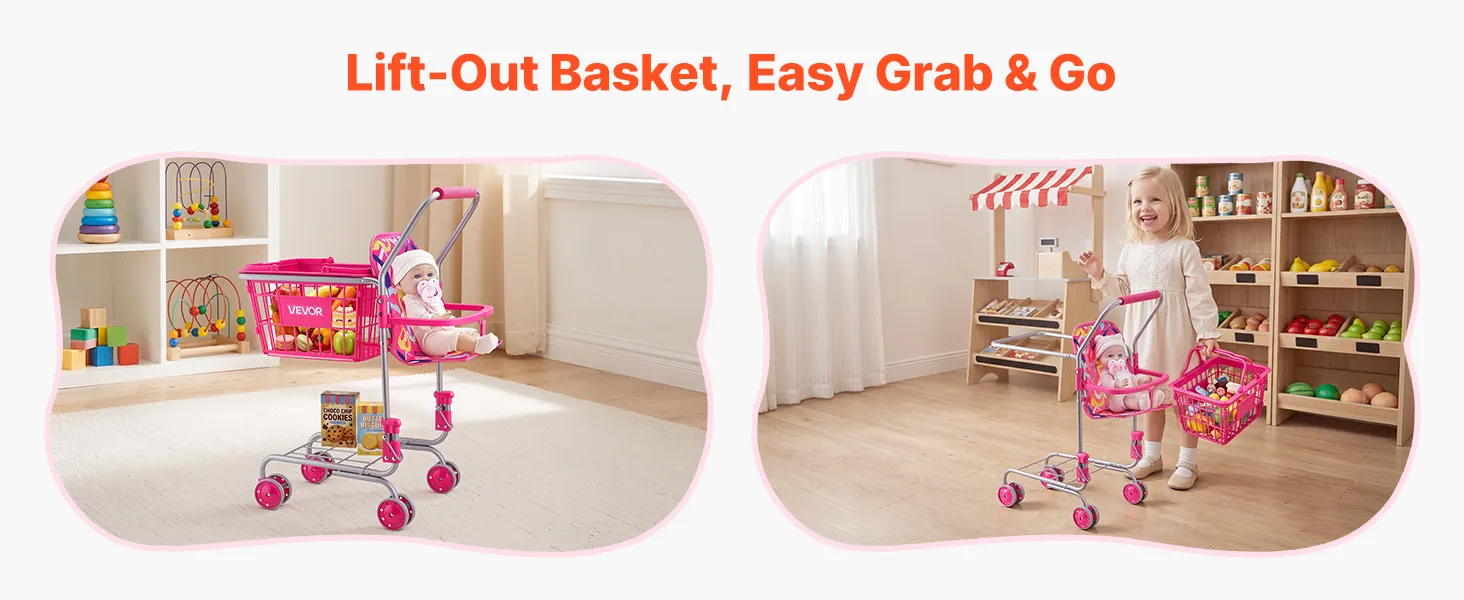
This toddler shopping cart provides a 2-tier storage design with a top basket and bottom storage to hold more toys and play food. Easily folds for compact storage after playtime, helping keep your space organized and ready for the next adventure.
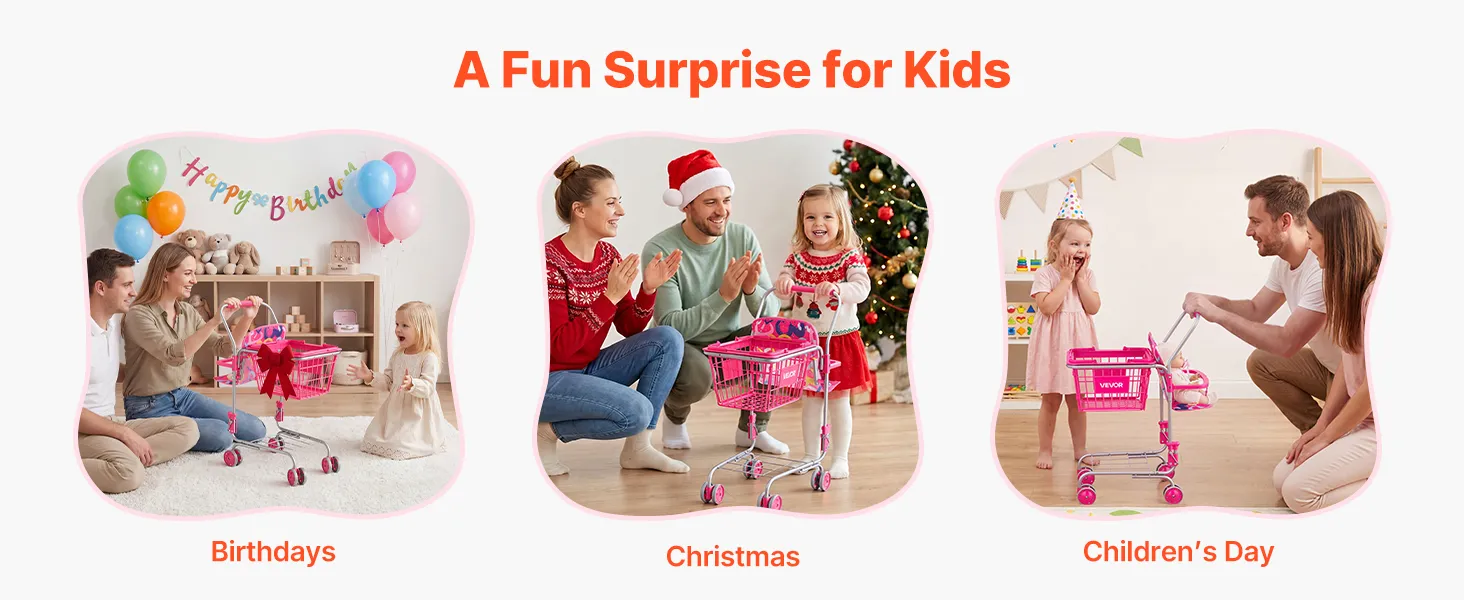
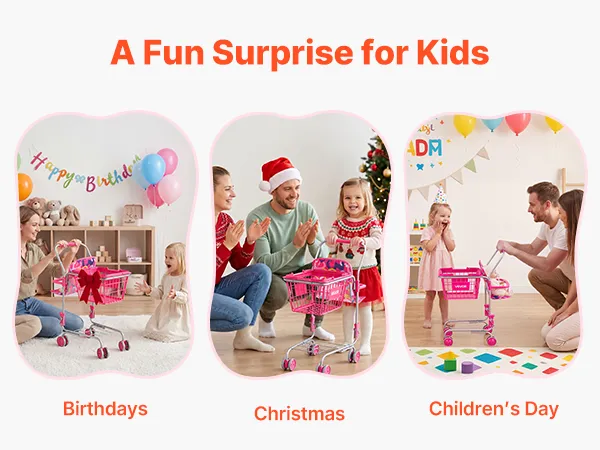
Ideal for birthdays and holidays, this kids grocery cart provides long-lasting imaginative play. It keeps kids engaged while encouraging creativity, learning, and interactive fun through everyday playtime experiences.
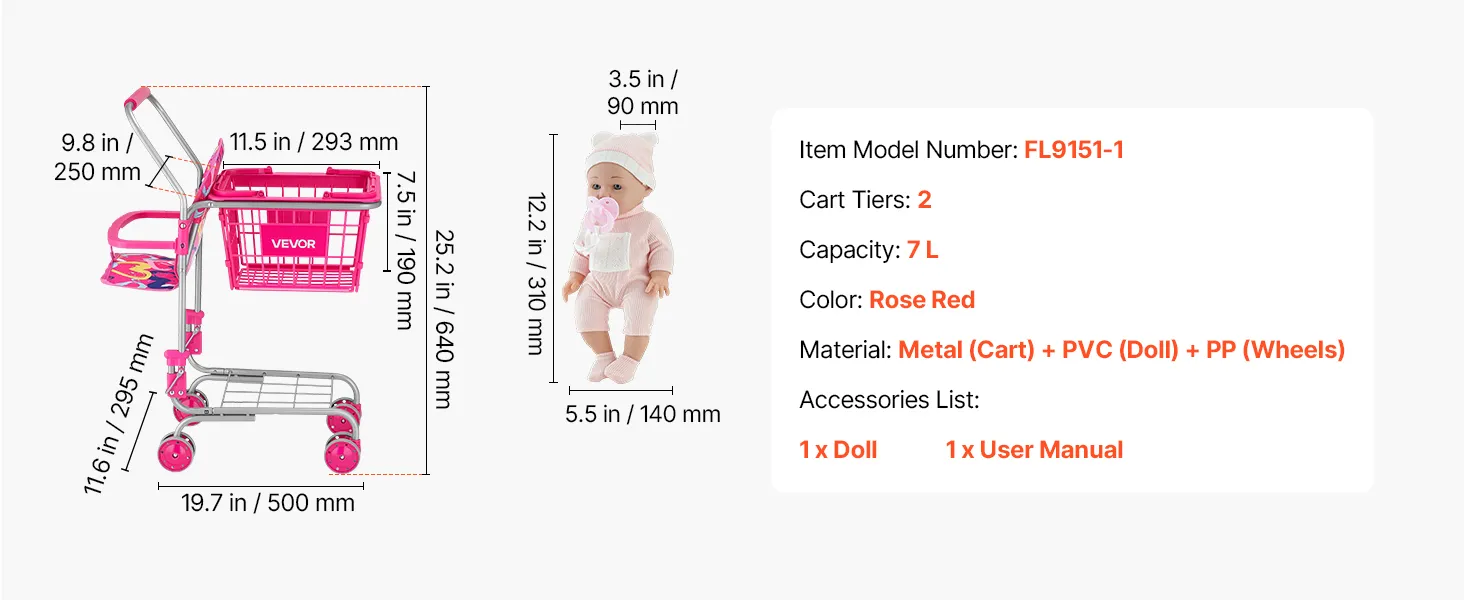
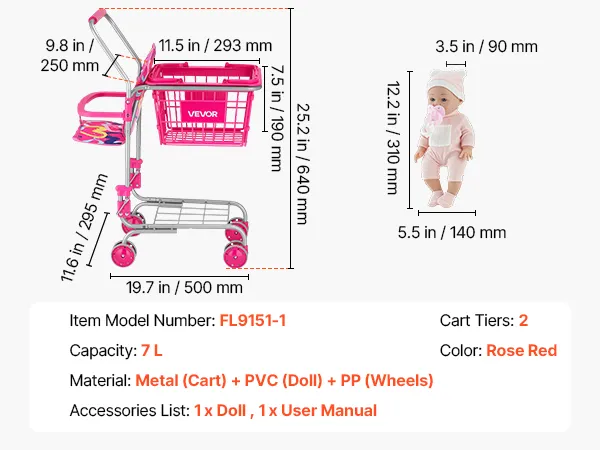
Metal Shopping Cart for Kids with Sturdy Rust Resistant Frame for Durable Daily Play
The sturdy, rust-resistant metal frame helps the VEVOR metal shopping cart for kids maintain its shape during everyday play by children ages 3 and up. The sturdy metal frame distributes weight evenly to help keep the cart stable while children push, pull, and load it.
The rust-resistant finish protects the metal surface from the humidity and moisture present in indoor play areas, kitchens, playrooms, and covered outdoor spaces. This keeps the surface from wearing away, which would otherwise cause rough spots to appear where it was smooth. This durability makes the cart a practical gift choice for birthdays and holidays, where parents expect a toy to withstand extended daily use over months of play rather than show wear within weeks of first use.
Included 12 Inch Lifelike Doll for Nurturing and Imaginative Role-Play Extension
The metal shopping cart for kids comes with a 12-inch lifelike doll with a PVC body that rides in the doll seat carrier at the front of the cart. This turns the play scenario from simple food shopping to caring for a child right away. When kids push the cart while caring for their doll, they can combine pretend grocery shopping with doll care. This makes for more varied pretend-play activities.
The 12-inch scale is sized proportionally to fit comfortably in the doll seat carrier without overbalancing the cart or obstructing the child's view of the basket while loading. With the included doll, toddlers who already have a favorite soft toy or doll have a play partner as soon as the cart is unpacked. Parents do not need to buy a separate companion doll to complete the setup before the first shopping trip.
7L Two Tier Storage Design with Top Basket and Bottom Shelf for Realistic Loading
There are two levels of storage on the cart: a 7L top basket for storing items and an extra shelf below for additional space. Toddlers can set up two separate storage areas for their pretend food, toys, and grocery store accessories. They can decide what goes where and practice the sorting and categorizing skills they see adults use on real shopping trips.
The 7L top basket provides space for pretend food, toys, and accessories. The bottom shelf gives you another place to store bigger or heavier things. It also gives kids an extra organizational challenge by making them choose which things go in the basket and which go on the lower shelf. This encourages children to organize items during pretend shopping.
360° Shock Absorbing PP Wheels and Soft EVA Handle for Comfortable Safe Pushing
The four 360-degree PP wheels on the cart make it easy to steer on carpet, hardwood, or tile floors. The child can easily change direction without lifting the cart. Toddlers can steer freely around furniture legs, doorways, and room corners, as well as the everyday household obstacles they might find at home, thanks to the full 360° rotation. This allows smoother movement around furniture and corners.
When the cart rolls over floor transitions, toy obstacles, and uneven surfaces during active play, the shock-absorbing PP wheels lessen the force that goes through the frame. The soft EVA handle is easy to hold and gentle on little hands during long pushing sessions. EVA foam is pleasant to the touch and does not conduct heat, so it is better than bare metal or rigid plastic handles, which are less comfortable for longer play sessions.
Metal Shopping Cart for Kids Weighing 3.1 lbs with Fold-Flat Design for Easy Storage
This metal shopping cart for kids weighs only 3.1 pounds, making it light enough for toddlers to use without adult help during setup, moving, or cleanup after play. The low weight makes the cart easy for toddlers to pull from a storage location and wheel to their preferred play area without struggling to maneuver it in confined spaces.
The cart's fold-flat design makes it easy to store between play sessions. It can slide into a toy cabinet shelf, stand in a corner, or fit in the trunk of a car for transport to other places without taking up as much space as a toy trolley that does not fold flat. This makes putting the cart away after each session a regular part of the kids' play routine.
Develops Hand-Eye Coordination, Cognitive Skills, and Social Interaction Through Play
To push and steer the cart while picking out items and placing them in the basket, you have to coordinate your hand movements, body positioning, and visual tracking. This encourages hand-eye coordination through pretend play. With each push, turn, and placement of an item in the shopping scenario, there is a repetitive coordination-practice loop that helps build these skills naturally through play rather than organized exercise.
The grocery store setting itself helps kids learn early cognitive skills, such as recognizing colors by sorting play food by type, counting by adding up the items in the basket, and understanding the order of items on a shopping list. Social interaction develops when the play scenario involves a second child or an adult acting as a shopkeeper or fellow customer, practicing turn-taking, communication, and cooperative play within the familiar shopping framework that the cart's realistic design effectively supports.
Product guides and documents
User manual-en (PDF) Review
Questions and Answers (0)
Typical questions asked about products: Is the product durable? ...
In Stock
Security & Privacy
FREE Returns
Professional Service
Compare with similar items
Similar Items You Might Like
People Who Bought This Item Also Bought
Best sellers in this category
People Who Viewed This Item Also Viewed
Your Browsing History