
Car Multichannel Amplifiers













































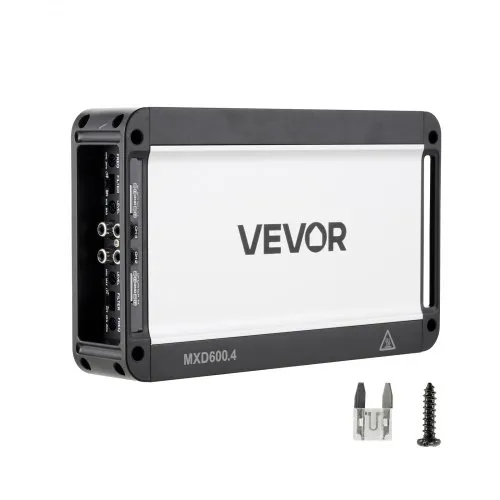






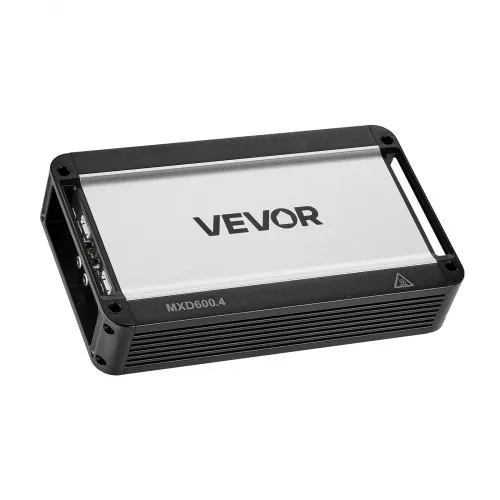
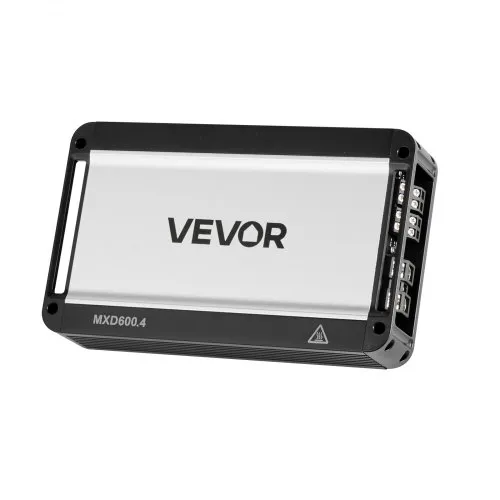
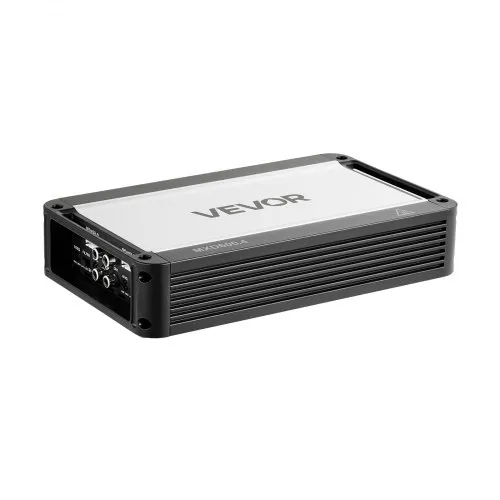

Results for Car Multichannel Amplifiers
A car multichannel amplifier is an audio device that takes the low-power signal from a car stereo and boosts it to drive several speakers at once, with each channel feeding its own speaker or speaker pair. Running on the vehicle's 12V electrical system, it delivers far more clean power than a head unit can, so music plays louder with less distortion. Channels can be used separately for front and rear speakers or combined, known as bridging, to send more power to a subwoofer. Built-in gain controls and crossover filters let the installer match the amplifier to the stereo and send the right frequencies to each speaker.
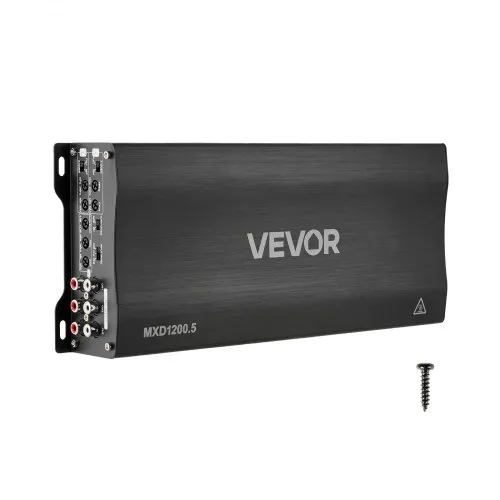
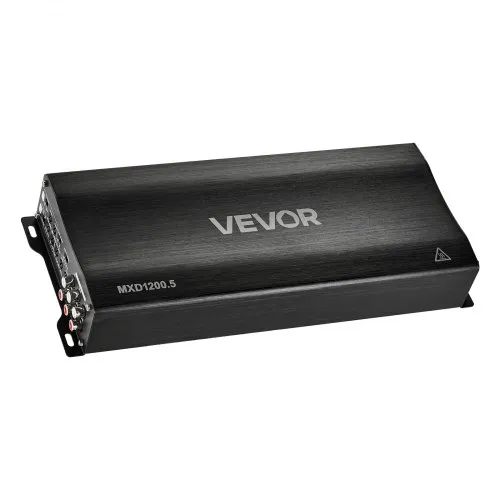
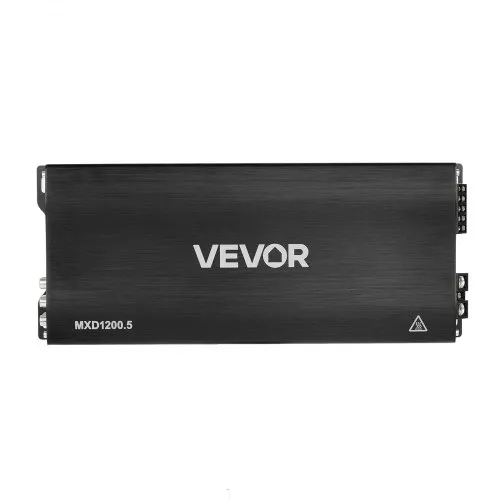
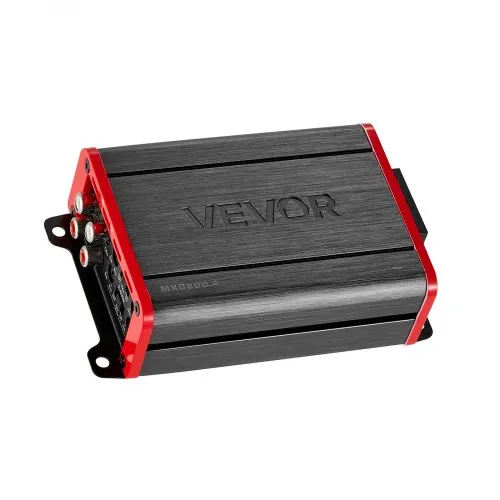
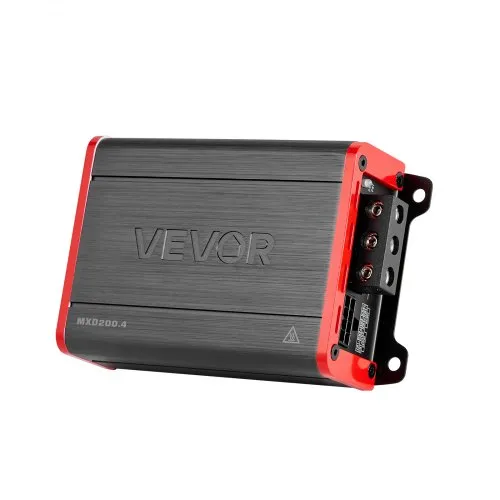
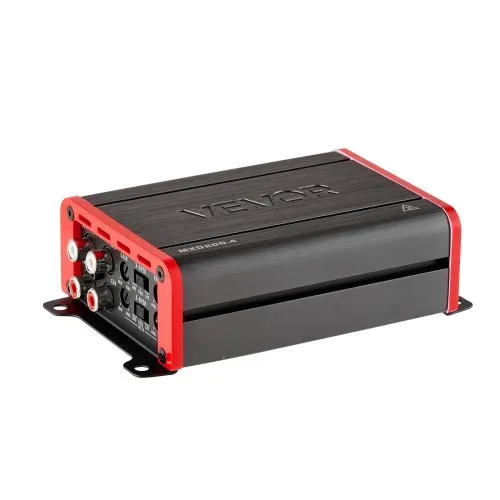
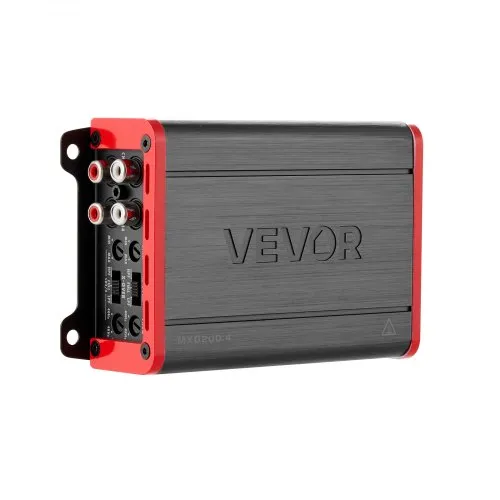
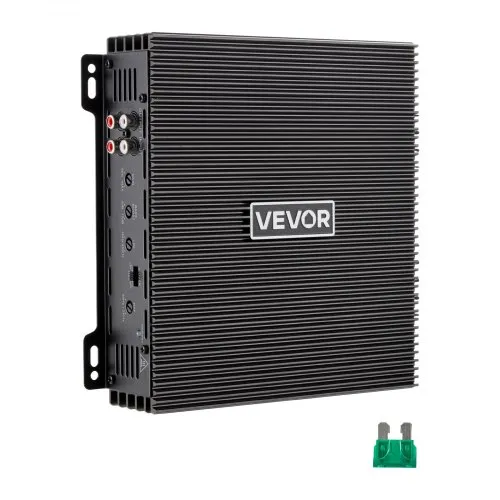
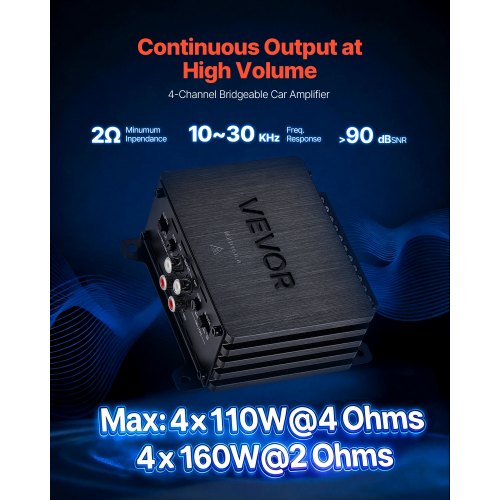
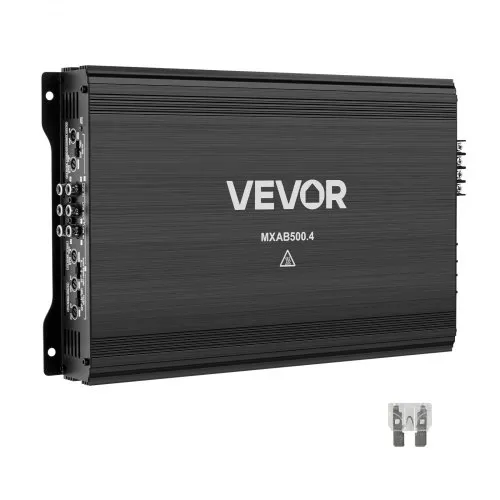
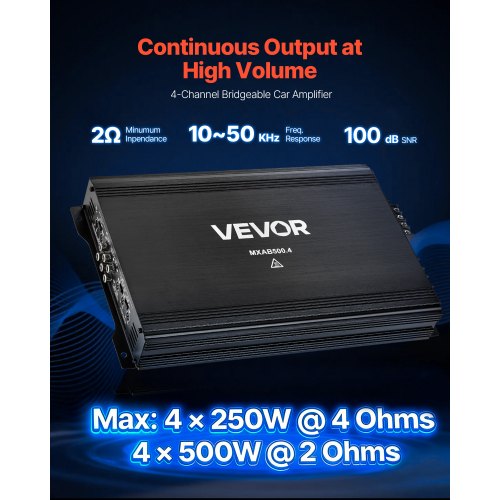
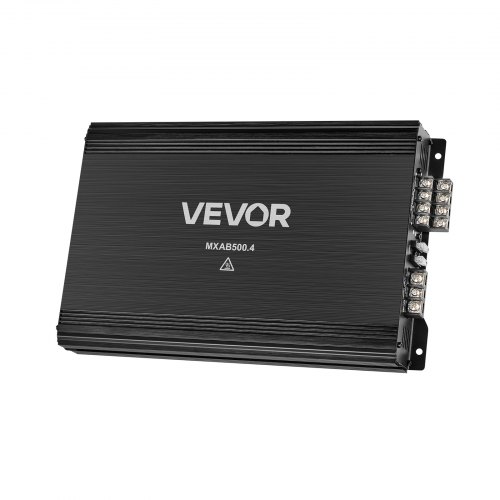
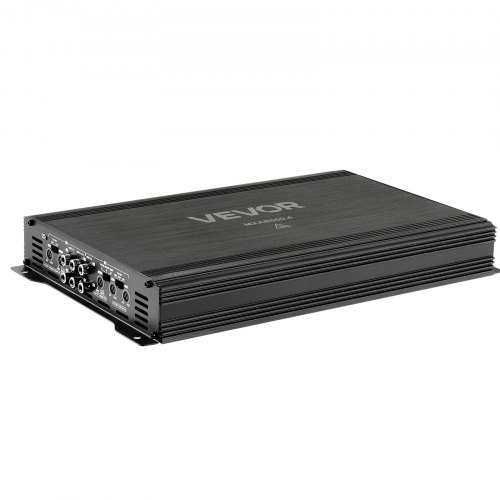
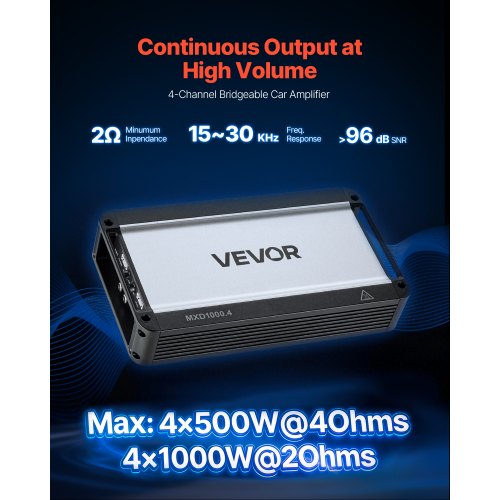
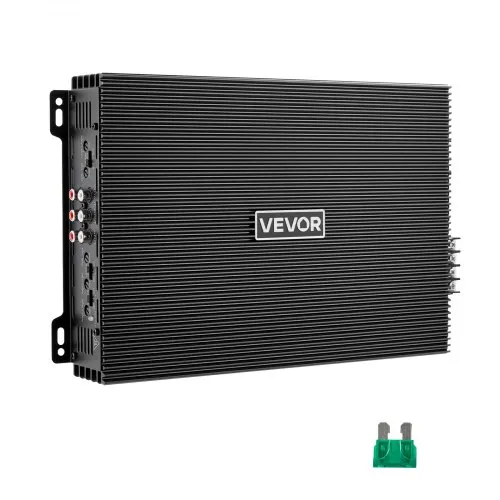
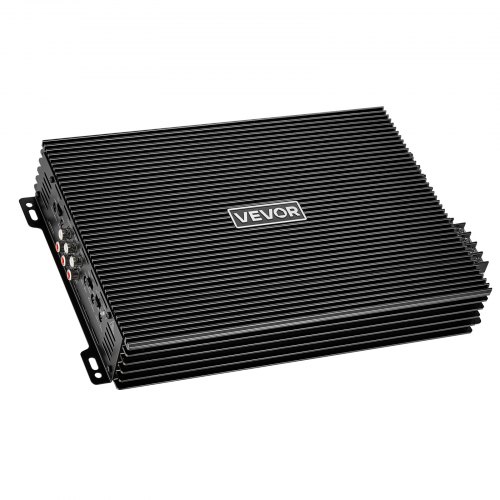
The range spans three channel layouts. A 2-channel Class A/B amplifier rated at 2 x 300W max at 4 ohms powers one speaker pair or bridges to drive a subwoofer. Four-channel models run front and rear speakers, from a compact 4 x 110W Class D amplifier to a high-output 4 x 500W Class D amplifier, with a 4 x 200W Class A/B option for warmer full-range sound. For a complete system on one amp, a 5-channel Class D amplifier with a dedicated subwoofer channel adds up to 1 x 1000W at 2 ohms for bass. Typical uses are upgrading factory stereos, powering aftermarket door speakers, adding a subwoofer, and building full sound systems in cars, SUVs, trucks, and off-road vehicles.
Five things decide what you need:
- Channel count: count your speakers and subwoofers; two, four, or five channels cover most layouts.
- Power match: pair the amplifier's output with your speakers' RMS rating to avoid clipping or overdriving them.
- Impedance: check your speakers' ohm rating; every amp here is 2 ohm stable, which unlocks more output.
- Amplifier class: Class A/B favors natural tone, while Class D runs cooler and draws less current.
- Mounting space: measure under the seat or in the trunk, since higher-output amps are usually larger.
Browse every model in the car multichannel amplifiers collection to compare channel layouts and output side by side.
Car Multichannel Amplifier Types at a Glance
Channel layout and amplifier class decide how many speakers an amp can drive, how it handles bass, and how much headroom each speaker gets.
| Type | Speakers Powered | Subwoofer Handling | Max Power per Channel at 4 Ohm | Trade-offs |
|---|---|---|---|---|
| 2-channel Class A/B | One speaker pair | Bridge both channels to mono for one sub | 300W | Simple install; cannot run speakers and a sub together |
| 4-channel Class A/B | Front and rear pairs | Bridge the rear pair for a sub | 200 to 250W | Natural, warm tone; runs hotter in tight spaces |
| 4-channel Class D | Front and rear pairs | Bridge one pair for a sub | 110 to 500W | Widest output choice; efficient and cooler running |
| 5-channel Class D | Four speakers plus a sub | Dedicated sub channel, 500W at 4 ohms | 100W | Whole system on one amp; less power per speaker |
VEVOR 2 and 4 Channel Car Audio Amplifiers for a Crystal-Clear Sound Experience
Are you sick of your original car stereo sounding flat and distorted? Are you ready for full-range, rich sound that fills your whole car? You can use VEVOR's car multichannel amplifiers to power your speakers with precise, authoritative control, whether you're upgrading your daily driver, building a custom audio installation, or aiming for competition-level sound quality on the road. They do all of this by providing cleaner signals, better clarity, a wider soundstage, more power, protection against heat, and reliable performance even on long drives.
Match Your Channel Configuration (2-Channel, 4-Channel)
When picking a multichannel amplifier for your car, the most important factor is choosing the right channel configuration. VEVOR's amplifiers come in all the major channel formats, so audiophiles, daily drivers, and professional operators can find the perfect match for their speaker layout, system complexity, and listening goals.
2 Channel Car Audio Amplifiers: Clean, Focused Power for Speakers and Subwoofers
A 2-channel car audio amplifier is the best way for drivers to improve the sound quality of their factory-installed head unit without building a complicated system with many parts. In stereo mode, a two-channel car audio amplifier powers two full-range speakers, which are usually front-door speakers or coaxial component sets. This makes the sound much clearer, louder, and more detailed than any stock amplifier can. VEVOR's two-channel car audio amplifiers are low-noise. Class AB circuitry minimizes distortion across the entire frequency range. This ensures that vocals, midrange instruments, and high-frequency detail are reproduced clearly at any speed.
It's possible to bridge a two-channel car audio amplifier into a mono configuration to drive a single subwoofer with twice the power. This makes it a truly flexible base that can grow with your system. VEVOR's two-channel models feature high-pass and low-pass crossover filters that let you precisely control frequencies and send the right audio signals to the right speakers without interference or cancellation. You can adjust the low-frequency response to your liking with the built-in bass boost controls. This lets you choose between a tight, musical bass and a room-filling sub-bass effect.
4 Channel Car Audio Amplifiers: Full-System Power for Front, Rear, and Subwoofer Configurations
A four-channel car audio amplifier is the core of a full-range, complete car audio system. It can power the front speakers, the back speakers, and, when two channels are bridged, the subwoofer all on their own. With this multi-channel architecture, moderate-output systems don't need separate mono amplifiers. This makes installation easier, saves space in the trunk or under the seats, and simplifies wiring runs throughout the car.
What a four-channel car audio amplifier can do goes far beyond its usual four-speaker setup. Advanced users can set up VEVOR's 4-channel version in a 3-way configuration, using two channels to power front speakers and the other two channels to power a subwoofer. This makes a full-range system that is surprisingly powerful from a single amplifier chassis. Each channel pair has variable crossover controls that let high-pass and low-pass filters work separately. This lets installers maintain full control over frequency distribution without using extra crossover parts.
Bridging Channels: How to Extract Maximum Power from Your Car Audio Amplifier
Bridging is one of the best techniques for car audio enthusiasts, and if you know how it works, you can get a lot more power out of your car's multichannel amplifiers without buying any extra gear. Stereo amplifiers can be configured into a single mono channel by connecting the outputs of the two channels. This lets the amplifier drive a single speaker load, usually a subwoofer, with power close to the sum of the two channels' outputs.
Bridging the back two channels of a VEVOR 4-channel car audio amplifier while running the front two channels in stereo is one of the most common and inexpensive ways to set up a full car audio system. This method uses clean stereo amplification to power front component speakers and a split output to power a subwoofer simultaneously. This creates a full, balanced sound system from a single amplifier installation. The VEVOR amplifier documentation specifies the minimum impedance requirement for bridged operation. This helps users set up their systems properly for optimal performance and long-term reliability.
Choosing Between Class AB and Class D: Amplifier Topology and Its Impact on Sound Quality
When it comes to different vehicle types and listening tastes, the internal amplifier topology (Class AB vs. Class D) is one of the most important factors affecting sound quality, thermal performance, and installation fit. Several VEVOR car multichannel amplifier models use Class AB amplifier stages, which partially bias the output transistors at all times. This makes the sound very smooth and linear, with low distortion levels that audiophiles and music purists always prefer.
Class D amplifiers in VEVOR's range of small car audio amplifiers use high-frequency switching technology to get much higher efficiency, usually 70 to 85 percent compared to 50 to 70 percent for Class AB, while using much less power from the car's electrical system and making a lot less heat. Class D is the best design for amplifying subwoofers and installing them in cars with small alternators or tight spaces under the seats because it is more efficient.
Planning an Amplifier Setup for Your System
Choosing the amp is half the job; the install checks and tuning steps below decide whether the system actually sounds clean.
| System Goal | Amp Setup | Install Check | Tuning Tip | Why It Works |
|---|---|---|---|---|
| Clearer sound from a factory stereo | Compact 4-channel Class D | Head unit outputs, RCA or speaker level | Set gain to the head unit, not to maximum | Clean volume gains without heavy wiring changes |
| Front speakers plus a subwoofer | 4-channel: fronts in stereo, rears bridged | Bridged load at or above the minimum impedance | High-pass the fronts, low-pass the sub | One amp covers speakers and bass without a second unit |
| Complete system on one amplifier | 5-channel Class D | Power and ground wire sized for total draw | Set the sub crossover first, then the fronts | One install, one fuse, and one set of power wiring |
| Upgraded front door speakers only | 2-channel Class A/B | Speaker RMS rating matches amp output | High-pass filter to protect small drivers | Focused power exactly where the factory stereo falls short |
| High-output truck or off-road build | High-power 4-channel Class D | Battery and alternator capacity | Fuse the power wire close to the battery | Class D efficiency draws less current at high volume |
Power Output & Features That Set VEVOR Car Multichannel Amplifiers Apart
Power output and built-in features turn a simple amplifier into a precise audio tool that works with any car audio system. VEVOR's car multichannel amplifiers feature clearly stated RMS power ratings and professional-grade settings that let installers and audio fans fine-tune sound quality.
Understanding RMS Power Ratings: Why Honest Wattage Matters in Car Audio Amplifiers
RMS power, which stands for "root mean square," is the only way to describe an amplifier's long-term output power correctly. This number indicates how loud and clear your car stereo amplifier will sound over time. RMS ratings show the steady delivery of power over a certain frequency range at a certain level of distortion, while peak power numbers show instantaneous maximums in a perfect lab setting. The RMS ratings for VEVOR's car multichannel amplifiers are conservative yet precise, reflecting real-world on-road performance. This ensures the power numbers you see in the product listing match the power your speakers deliver when you drive every day.
One of the most important parts of building a solid, great-sounding car audio system is ensuring that the amplifier's RMS output matches the power the speakers can handle. If you use an amplifier that doesn't have enough RMS output, it will clip, which makes harsh, distorted waveforms that damage tweeters and midrange drivers faster than clean, full-power signals ever would. RMS output ranges from 50 watts per channel for basic uses (good for upgrading factory speakers) to 150 watts per channel for high-end aftermarket component systems. VEVOR amplifies all kinds of car audio needs.
Built-In Controls and Protection Features That Define a Professional Car Audio Amplifier
A car audio amplifier's built-in controls and safety circuits determine how well you can tune your system and how reliably it performs in real-world driving situations. If you don't set up your car audio system correctly, background noise, hiss, and ground-loop interference can occur. VEVOR's multichannel amplifiers address this problem, providing gain controls on each channel. This lets you closely match the input sensitivity to the output voltage of your head unit. Installers can fine-tune the frequency distribution between speakers and subwoofers without using external signal processors because the high-pass and low-pass crossover controls have changeable slopes. This keeps the installation clean and the signal path short.
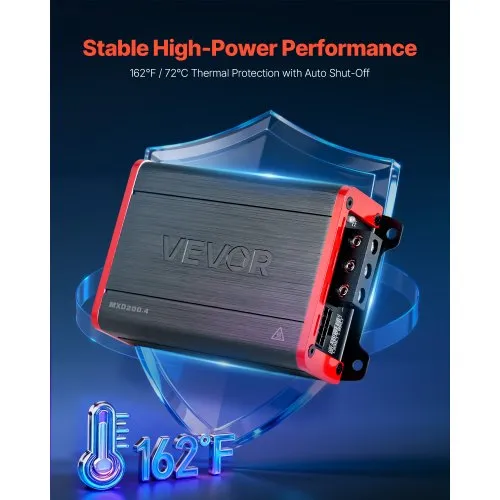
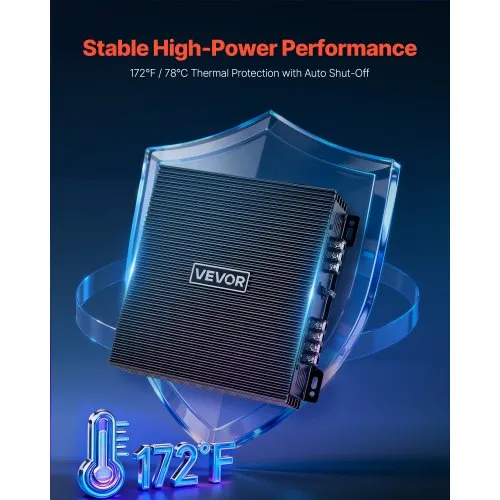
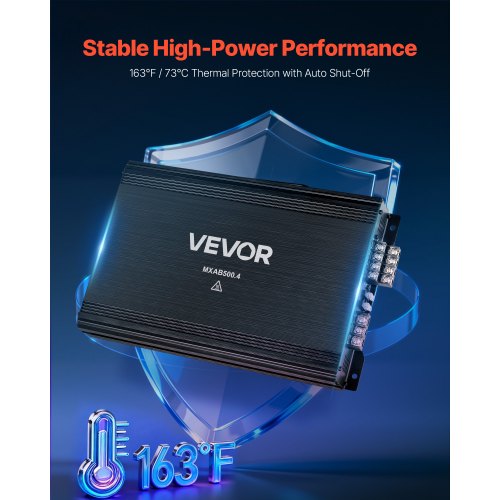
Any good car audio stereo amplifier needs protection circuits. VEVOR's models feature full protection, keeping the amplifier and connected speakers safe from common installation and operational risks. Thermal protection instantly reduces the amplifier's output or turns it off before heat damage occurs during long periods of high-volume listening in rooms with insufficient airflow. This feature helps prevent output transistor failure if the speaker wiring shorts out by accident during installation or car modifications.
Best-Seller Comparison
These five amps cover every layout in the range, so the real differences come down to channel count, class, output, and how each one handles bass.
| Product | Channels | Amp Class | Max Power at 4 Ohm | Max Power at 2 Ohm | Subwoofer Option | Best For |
|---|---|---|---|---|---|---|
| 5-Channel Amplifier, Class D | 5 | Class D | 4 x 100W + 1 x 500W | 4 x 200W + 1 x 1000W | Dedicated sub channel | Only amp here with a dedicated sub channel |
| 4-Channel Amplifier, 4 x 420W, Class D | 4 | Class D | 4 x 420W | 4 x 600W | Bridge two channels | Highest output in the five; loud full systems |
| 4-Channel Amplifier, 4 x 250W, Class A/B | 4 | Class A/B | 4 x 250W | 4 x 500W | Bridge two channels | Only Class A/B four-channel here; warm full-range tone |
| 4-Channel Amplifier, 4 x 120W, Class D | 4 | Class D | 4 x 120W | 4 x 200W | Bridge two channels | Lowest output here; factory stereo upgrades |
| 2-Channel Amplifier, 2 x 300W, Class A/B | 2 | Class A/B | 2 x 300W | 2 x 600W | Bridge both channels to mono | Only two-channel pick; one speaker pair or a sub |
Why Choose VEVOR Car Multichannel Amplifiers for Your Audio Upgrade?
Every channel configuration of VEVOR's car multichannel amplifiers has honest power ratings, professional-grade controls, and full safety circuits. These include flexible 2-channel car audio amplifiers and full-range 4-channel car audio amplifiers designed for full-system installations. VEVOR makes it easy and fun to upgrade your in-car audio with reasonable prices, a long-lasting build, and reliable customer service after the sale. Get VEVOR car multichannel amplifiers right now and hear the difference that real amps make.
FAQs
Can I bridge a VEVOR 4-channel car audio amplifier to power a subwoofer?
Yes. VEVOR 4-channel amplifiers support bridged mono operation on channel pairs, combining outputs to drive a subwoofer with significantly higher power. Always verify the minimum impedance requirement for bridged operation in the product specifications before connecting your subwoofer.
What is the difference between RMS and peak power in a car audio amplifier?
RMS power reflects continuous, real-world output capability during normal listening. Peak power indicates maximum instantaneous output under ideal conditions. Always compare amplifiers using RMS ratings; peak figures are marketing numbers that do not reflect sustained performance during actual driving.
Is a 2-channel or 4-channel amplifier better for a full car audio system?
A 4-channel car audio amplifier is better for full systems that power front and rear speakers simultaneously; a 2-channel car audio amplifier suits simpler setups or dedicated subwoofer applications when bridged. Your speaker layout determines the correct channel count.
What gauge power wire does a VEVOR car audio amplifier require?
Wire gauge depends on the amplifier's power draw and the cable run length. Higher-output amplifiers typically require 4 to 8 AWG power and ground wiring. Always consult the amplifier's installation manual for the recommended wire gauge to ensure safe, efficient power delivery.
Do VEVOR car multichannel amplifiers work with factory head units?
Yes. VEVOR amplifiers include variable-gain controls that adjust input sensitivity to match factory head-unit output levels. Some models also feature high-level speaker inputs, allowing direct connection to factory speaker outputs without requiring an aftermarket head unit replacement.
What are the best 4-channel car amplifiers for clear sound?
For clear sound, choose a 4-channel amp whose output matches your speakers' RMS rating and that is 2 ohm stable. Class A/B suits listeners who favor natural tone, such as a 4 x 250W Class A/B amplifier, while Class D suits tight spaces.
Can you recommend the best dual channel amplifiers for high-quality car audio?
A good dual channel amp delivers clean power to one speaker pair and can bridge to mono for a subwoofer. A 2-channel Class A/B amplifier is rated at 2 x 300W max at 4 ohms and 2 x 600W at 2 ohms, with a full-range design.
Can I install a car amplifier myself or should I get professional help?
You can install one yourself if you are comfortable running a fused power wire from the battery, grounding to bare metal, and connecting signal and speaker wires. Choose professional help for complex factory systems, unfamiliar wiring, or if the vehicle's warranty requires it.
What should I consider when choosing a car amplifier?
Consider channel count, RMS output against your speakers' rating, impedance stability, amplifier class, and mounting space. If you want speakers and a subwoofer on one amp, a 5-channel amplifier with a dedicated sub channel simplifies wiring and tuning.
What are the main differences between dual 4 channel amps and other types of car amplifiers?
Two-channel amps drive one speaker pair, four-channel amps drive front and rear pairs, and five-channel amps add a dedicated subwoofer channel. Mono amps power subwoofers only. See all layouts in the car multichannel amplifiers range.