

Tool Bags
















Results for Tool Bags
A tool bag is a soft-sided carrier that holds hand tools, power tools and small parts together in one portable unit. It is made from heavy woven fabric stretched over a stiffened or reinforced base, with pockets, loops and compartments that give each tool a fixed place. The bag lets a worker move a full kit between a vehicle, a workshop and a job site, then open it and reach the right tool without emptying everything out. Its structure shields tool edges from knocks, keeps fasteners separate from larger tools and spreads the carried weight through handles, straps or wheels.
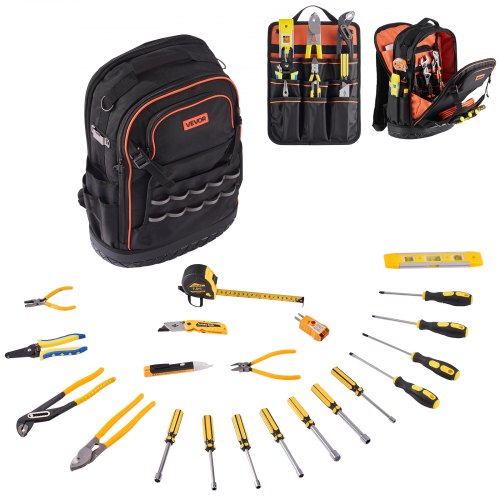
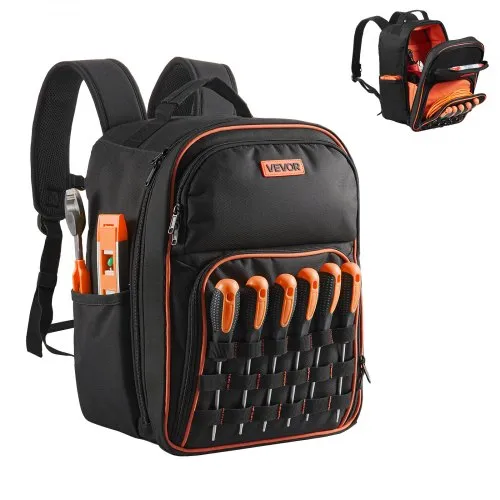
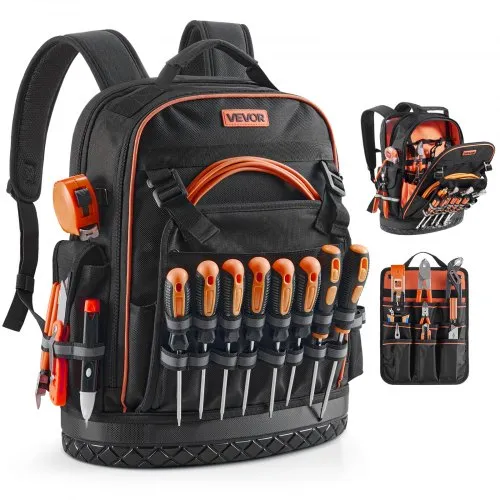
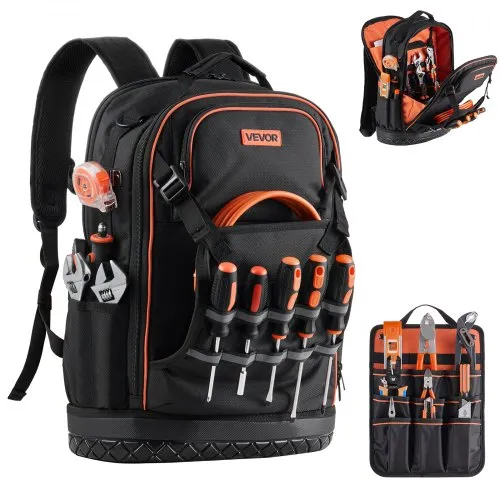
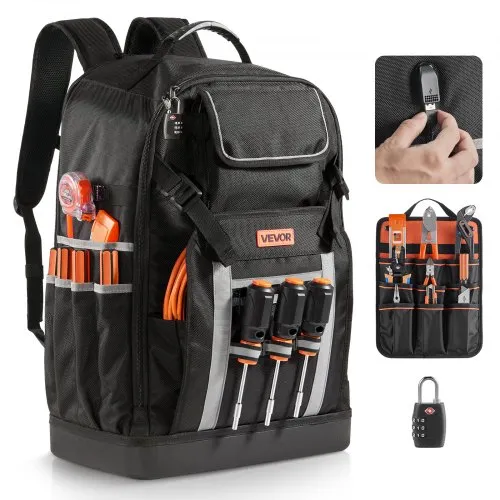
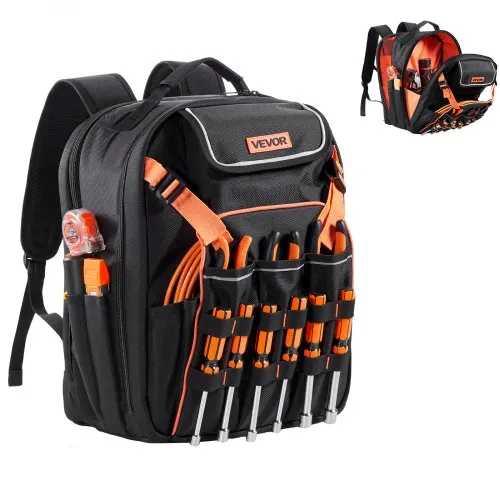
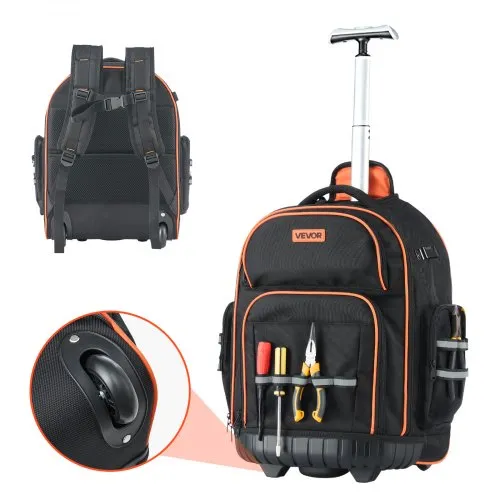
VEVOR handle tool bags come as 13 to 20 inch open-top totes and zippered bags with 33 to 45 pockets, built for electricians and DIY users who want quick access. Tool backpacks carry 45 to 65 pockets on padded straps for ladder and HVAC work, while rolling tool bags and rolling tool backpacks rated to 110 lbs move heavy kits across construction sites. A welding backpack adds a dedicated helmet compartment for field fabrication. Typical uses are electrical service calls, HVAC maintenance, plumbing repairs, construction jobsites, mechanic work and field welding.
Five things decide what you need:
- Carry route: stairs, ladders and scaffolding call for shoulder straps, while long flat walks suit wheels.
- Kit weight: hand-carried bags are rated around 50 lbs, so heavier power tool kits belong on wheels.
- Pocket count: count the tools you carry every day and leave a few spare loops for new ones.
- Base: a molded or hard plastic base keeps the bag upright and lifts it off wet floors.
- Access: an open top speeds up tool grabs, while a zipped top keeps everything inside during transport.
Explore the wider tool storage range to pair your bag with other storage, or browse all VEVOR tools to fill it.
Tool Bag Types at a Glance
Use this overview to match each tool bag type to the way you move around the job.
| Type | Carry Method | Access Style | Best Terrain | Trade-offs |
|---|---|---|---|---|
| Open-top tool tote | Grab handle, shoulder strap | Wide open mouth | Short walks, floor-level work | Fastest access; contents open to rain |
| Zippered tool bag | Soft handle, shoulder strap | Zip-closed main compartment | Truck to job, home storage | Tools stay secured; slower to dig through |
| Tool backpack | Two padded shoulder straps | Zipped compartments, laptop sleeve on some | Ladders, stairs, scaffolding | Hands free; whole load on your back |
| Rolling tool bag | Wheels, telescoping handle | Wide-mouth top opening | Concrete, tile, smooth floors | Highest load rating; awkward on stairs |
| Rolling tool backpack | Wheels or shoulder straps | Zipped backpack compartments | Flat floors plus stairwells | Two carry modes; wheel frame adds weight |
| Welding backpack | Padded shoulder and sternum straps | Main bay plus helmet bag | Field fabrication sites | Protects helmet; interior not heat-proof |
VEVOR Tool Bags Built for Every Job Site and Tool Organization Demand
Are you looking for a reliable tool bag that can hold many tools, has smart internal organization, and is built to last so it can handle the physical demands of daily professional use? The right tool bag keeps your tools safe, easy to get to, and well-organized. This saves you time that you'd otherwise spend looking through jumbled cases and lowers the chance that you'll damage your tools while moving them from one job to another. VEVOR offers a wide range of rolling tool backpacks, tactical backpacks, tactical tool bags, and welding backpacks to suit any job and carrying style. Their prices are low, and they offer reliable support after the sale at every step.
Choosing Tool Bags by Carrying Capacity & Mobility Features (Rolling, Backpack)
It's important to choose the right tool bag based on its size and ease of movement, whether you're a plumber taking hand tools between jobs, an electrician moving equipment around a construction site, or a welder bringing supplies to a job site. VEVOR's large catalog has a wide range of products, from small tactical tool bags and tool backpacks to large rolling tool bags and specialized welding backpacks. All of these products are high-quality and affordable.
Rolling Tool Bags for High-Capacity Transport Across Large Job Sites
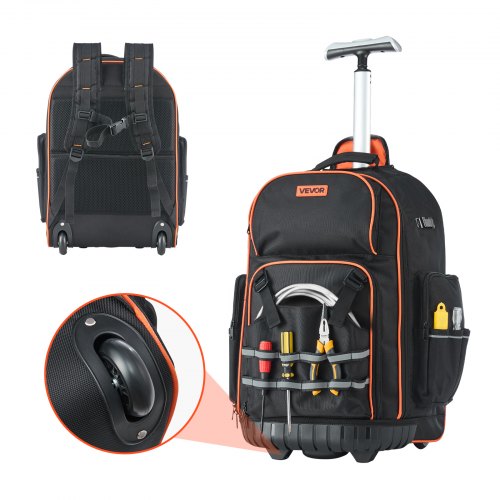
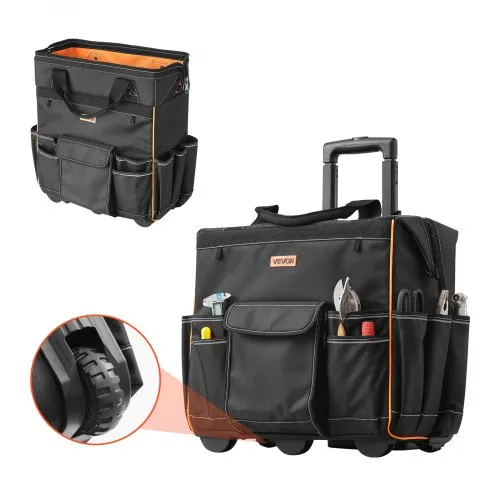
Tradespeople who regularly move large, heavy tool collections across big job sites or from their vehicles to work areas prefer to carry their gear in a rolling tool bag. Instead of putting all the weight on your shoulders or hands, rolling tool bags feature smooth inline skate wheels and retractable telescoping handles, making them easy to move over concrete, tile, and other hard surfaces. This makes getting to and from work every day much less tiring.
When VEVOR makes rolling tool bags, they use heavy-duty wheel assemblies, reinforced base panels, and wide-mouth openings that let you get to everything inside the bag right away without having to remove it first. VEVOR's rolling tool bags feature telescoping handles that lock securely at various heights. This means users of all heights can use them without bending over or overextending themselves while transporting them.
Tool Backpack and Rolling Tool Backpack for Hands-Free Carrying Versatility
A tool backpack is very different from regular open-top tool bags in how it distributes the weight of a full set of tools evenly across both shoulders and the wearer's back. This frees up both hands for moving around on job sites with ladders, scaffolding, stairs, and tight spaces where a rolling bag or hand-carried tote would not be practical or safe.
On smooth surfaces, a rolling tool backpack works like a regular rolling bag. But when you need to get up or down stairs, over rough ground, or through tight spaces, it switches to full backpack carry mode. You can quickly switch between VEVOR's rolling tool backpack models' retractable wheel assemblies and convertible wheel-and-carry configurations; you don't need any tools or to make any complicated changes.
Tactical Tool Bag and Tactical Backpacks for Heavy-Duty Field Applications
The design of a tactical tool bag is based on military gear. It uses tough materials, flexible attachment systems, and high-density organization to make professional tool carrying easier on the roughest job sites. When VEVOR makes tactical tool bags, they use heavy-duty nylon, reinforced stitching at all stress points, and MOLLE webbing systems that let you add extra pouches and specialized carriers on the outside, depending on the job.
VEVOR's tactical backpacks take this strong construction philosophy and apply it to a full backpack. They come with padded tablet sleeves, hydration bladder compatibility, and compression straps that keep a heavy bag stable on uneven ground. The modular organizational structure lets you carry more types of tools than traditional tool bags with fixed compartments. This makes them ideal for security guards, field service technicians, and tradespeople who need to carry a wide range of equipment in tough outdoor or industrial settings.
Welding Backpack for Organized, Protected Welding Equipment Transport
One of the most specific and difficult tasks in any trade is carrying welding helmets, gloves, electrodes, wire spools, chipping hammers, and protective clothing to field fabrication sites. A regular tool bag would not withstand the weight, sharp edges, and heat-exposed surfaces of welding equipment because of its limited space and lower material durability.
You can fit full sets of welding supplies, safety gear, hand tools, and measuring tools needed for layout and fit-up work in the large main pockets of VEVOR's welding backpacks before you start welding. When all the room inside is taken up, electrode holders, ground clamps, and cable coils can be attached to the outside using exterior attachment points.
Choosing a Tool Bag by Trade or Task
Your trade decides which single feature matters most, so check it before you compare pocket counts.
| Trade or Task | Recommended Bag | Feature to Check | Why It Fits |
|---|---|---|---|
| Electrical service calls | Open-top tool tote | Tape strap, meter pockets | Testers and pliers stand upright for quick one-hand grabs |
| HVAC and diagnostics | Tool backpack | Padded laptop sleeve | Laptop rides beside hand tools while both hands climb |
| Plumbing under sinks | Backpack or tote, molded base | Hard plastic base | Raised hard bottom stays dry when set in puddles |
| Construction and mechanic work | Rolling tool bag | Wheel size, handle height | Bigger wheels roll easier; tall handle avoids stooping |
| Multi-floor jobs | Rolling tool backpack | Convertible straps | Roll down corridors, then switch to straps for stairwells |
| Field welding | Welding backpack | Helmet compartment | Keeps the lens clear of sharp tools; never pack hot parts |
| Home DIY and gifting | Zippered tool bag | Full zip closure | Tools stay inside when stored in a closet or trunk |
How Material & Organization Define the Best Tool Bags
The two things that directly affect how well a tool bag works when used every day at work are the material it is made of and how well it is organized inside. Thin fabric, weak zippers, and a badly planned interior layout will make a tool bag look excellent in a product picture but quickly fail on the job site, leaving tools damaged or out of order. Material quality and organization are two of the most important things that VEVOR engineers put into every model of their tool bags.
Material Construction and Durability Standards Across VEVOR Tool Bags
The outer fabric or shell of a tool bag determines how well it withstands wear and tear, water, UV exposure, and the mechanical stress of being dragged, dropped, and loaded with heavy tools repeatedly throughout a tool bag’s service life. High-denier polyester and nylon are used to make VEVOR's tool bags, which can withstand tearing and abrasion on rough surfaces such as concrete, metal decking, and gravel commonly found on busy construction and industrial sites.
VEVOR's rolling tool bags, tool backpacks, and tactical tool bags all feature heavy-duty zippers from reputable manufacturers. These systems use oversized zipper pulls and reinforced tape construction to keep the bags from splitting, jamming, or delaminating after years of daily use. Many of VEVOR's higher-end tool bags use metal hardware rather than cheaper plastic, which can break when it gets cold or under heavy mechanical stress. This includes D-rings, buckles, and riveted connection points.
Interior Organization Systems That Keep Every Tool Accessible and Protected
How a tradesperson organizes their tools in their bag directly affects how quickly they can find and retrieve specific tools while working, which has a measurable effect on their daily output. Multi-zone interior layouts in VEVOR's tool bags separate tools by type in clearly defined storage areas. This makes it easier to find things without having to dig through jumbled compartments and keeps tools from rubbing against each other, which can damage edges and accelerate wear on precision instruments.
The interior tool panels have rows of elastic tool loops, slip pockets, and stiff holder inserts that keep screwdrivers, chisels, pliers, wrenches, and measuring tools securely in place and easy to see, rather than lying around at the bottom of the bag. Inside VEVOR's rolling tool backpack and tactical backpack models, zippered pockets keep small parts, fasteners, blades, and paperwork safe and separate from bigger tools that would otherwise get mixed up in the main compartment.
Best-Seller Comparison
These five best sellers, one from each carry style on the page, show how fabric, load rating and mobility differ in practice.
| Product | Mobility | Exterior Fabric | Rated Load | Pockets | Bag Weight | Base | Best For |
|---|---|---|---|---|---|---|---|
| 49-Pocket Tool Backpack, 600D | Padded straps, top handle | 600D polyester | 50 lbs | 49 pockets and loops | 2.93 lbs | Fabric, 4 plastic feet | Most pockets of the five; sorting many small tools |
| 16.1 in Open Top Tool Tote, 33 Pockets | Carry handle, adjustable strap | 1680D polyester | 50 lbs | 33 (12 in, 21 out) | 3.4 lbs | 4 plastic feet | Only open top here; quick grabs on electrical work |
| Rolling Tool Bag, 25 Pockets, 110 lbs | 4 in wheels, 40.2 in handle | 1680D polyester | 110 lbs | 25 (14 in, 11 out) | 10.47 lbs | PE base, wooden frame | Biggest wheels, tallest handle; long hauls on site |
| Rolling Tool Backpack, 45 Pockets, 110 lbs | 3 in wheels, 37.8 in handle, straps | 1680D polyester | 110 lbs | 45 | 5.56 lbs | PP base, bottom feet | Only one that rolls and carries; stair-heavy jobs |
| Welding Backpack with Helmet Bag, 600D | Padded straps, sternum strap | 600D polyester | 50+ lbs | 2 side, several inner | 3.7 lbs | Reinforced, anti-slip pads | Only helmet bag and cooler; full welding days |
Why Choose VEVOR Tool Bags for Your Trade and Job Site Needs?
VEVOR's catalog of tool bags has everything you need to take your tools, from heavy-duty rolling tool bags and versatile tool backpacks to tactical tool bags, tactical backpacks, rolling tool backpacks, welding backpacks, and work bags for tools made for every trade and field use. With long-lasting materials, smartly organized interiors, and reasonable prices across all models, VEVOR offers professional tool-carrying solutions for all tradespeople. Take a look at the whole collection right now to find the right tool bag for every job.
FAQs
What is the difference between a tool backpack and a rolling tool bag?
A tool backpack distributes weight across both shoulders for hands-free carrying, ideal for ladders and confined access points. A rolling tool bag uses wheels and a telescoping handle for effortless transport across flat surfaces. A rolling tool backpack combines both functions, switching between carry modes based on the terrain and access requirements.
Are VEVOR tactical tool bags suitable for professional trade use?
Yes. VEVOR's tactical tool bag models are constructed from heavy-duty nylon, reinforced stitching, and MOLLE webbing attachment systems, designed for demanding professional field environments. They are suitable for tradespeople, security professionals, field service technicians, and anyone requiring rugged, modular tool-carrying solutions in physically challenging job-site conditions.
What should I look for in a welding backpack?
Look for heat-resistant fabric panels, a dedicated helmet compartment with impact protection, large main capacity for consumables and protective gear, and padded shoulder straps for comfortable transport of heavy welding equipment. VEVOR's welding backpack models include these features specifically to meet the demanding carrying requirements of professional field welding applications.
How do I choose the right tool bag size for my tool collection?
Assess the total volume and weight of tools you carry daily. For comprehensive collections, including power tools and accessories, a large rolling tool bag or rolling tool backpack provides the best capacity. For lighter hand tool selections, a compact tactical tool bag or standard tool backpack offers sufficient organization with easier daily maneuverability.
Can VEVOR work bags for tools handle outdoor and wet weather conditions?
Yes. VEVOR's tool bags use water-resistant fabric coatings and reinforced base panels to protect contents during rain and wet job-site conditions. For maximum weather protection, select models with sealed seam construction and water-resistant zipper treatments. Always allow bags to dry fully before storing to prevent moisture buildup in the interior.
Are there durable tool pouches suitable for construction work?
Yes. Open-top pouches and totes with a hard plastic base, a riveted carry handle and water-resistant fabric stand up to daily site work. VEVOR's 13.2 inch 39-pocket open-top tool pouch suits compact kits, while the 16.1 inch tote uses 1680D polyester rated to 50 lbs.
What are the best tool bags for professional use?
The best professional tool bag matches how you move on the job. Backpacks with 45 to 65 pockets suit electricians and HVAC techs on ladders, rolling bags rated to 110 lbs suit heavy kits on large sites, and open-top totes suit quick floor-level work. Compare VEVOR jobsite tool backpacks first.
Can you recommend durable and lightweight tool bags for daily use?
Yes. A soft-sided handle bag stays light enough to carry every day while still giving 33 or more pockets. VEVOR's zippered and open-top tool bags run from 13.2 to 20 inches, with water-resistant fabric and plastic or water-resistant bases. Pick the smallest size that fits your daily kit.
Are there any durable and lightweight tool backpacks suitable for daily use?
Yes. Fabric-base tool backpacks are the lighter choice. VEVOR's 49-pocket tool backpack weighs 2.93 lbs empty, uses 600D water-resistant polyester and carries up to 50 lbs, with padded straps and a laptop sleeve. Choose a molded-base model if you often set the bag on wet floors.
What features should I look for in a heavy-duty tool bag?
Look for a high-denier shell (1680D on VEVOR's heavier models), a rigid plastic or molded base, riveted handles, a stated rated load and enough pockets for your kit. If your load passes 50 lbs, a rolling tool bag rated to 110 lbs takes the weight off your shoulders.
