Bead Seaters












Results for Bead Seaters
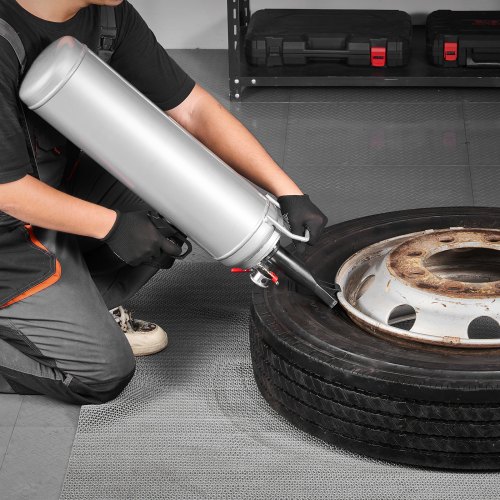
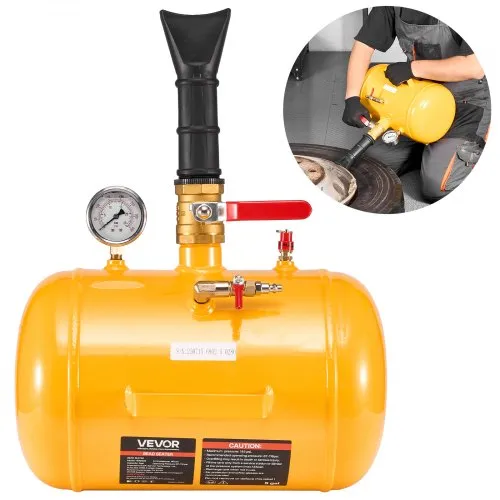
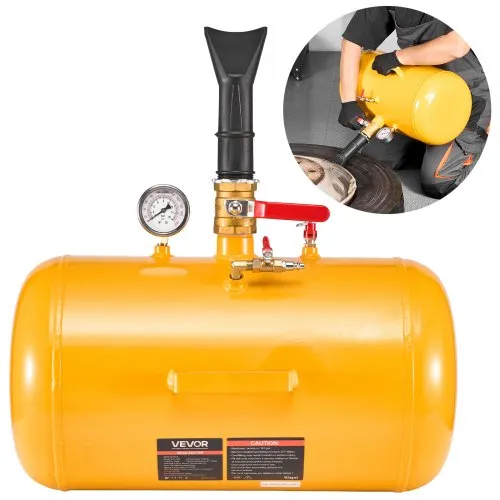
Having trouble using a conventional shop compressor to seat stubborn tire beads? VEVOR tire bead seaters save time and reduce the annoyance of repeated inflation attempts by rapidly snapping the bead into place with a sudden burst of stored air pressure. The range includes small 2.1-gallon tanks for infrequent home garage use and larger 10-gallon units for large tire stores. To handle everything from motorcycle tires to large truck and off-road tires, every air tire bead seater features a sturdy tank, dependable trigger control, and steady PSI output. VEVOR's tire bead seaters seat beads quickly and reliably, no matter your operation's volume.
VEVOR Tire Bead Seaters for Fast, Reliable Tire Mounting and Seating
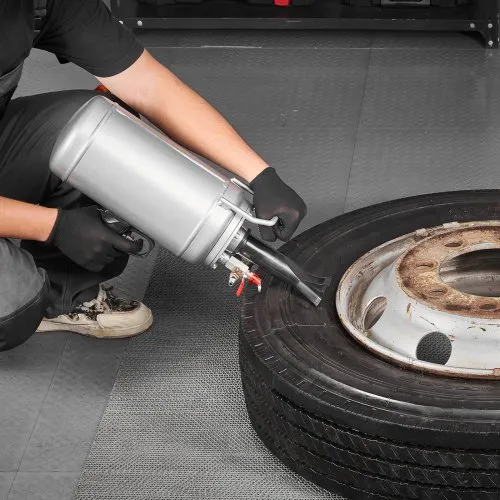
Are you fed up with a tire bead that, despite your best efforts to inflate it, won't pop into place? To create the quick burst needed to seat a resistant bead in seconds, tire bead seaters store compressed air in a tank and release it all at once through a trigger valve. VEVOR tire bead seaters are rated for consistent PSI output and range from small 2.1-gallon units for infrequent use to 10-gallon tanks designed for everyday shop activity.
Tank Capacity and PSI Rating: Sizing Your Tire Bead Seaters
A bead seater's performance depends on two specifications: the amount of air stored in the tank and the pressure released in a single burst.
Tank Capacity Explained: 2.1 to 3.2 Gallon Models for Everyday Use
The amount of stored air available for each burst depends on tank capacity, which directly affects how consistently a unit can seat a bead on the first attempt. With enough air to inflate most passenger tires and minimal storage space, a 2.1 gal tire bead setter is a useful starting point for residential garages and infrequent users.
Upgrading to a 2.4 gal air bead seater or a 2.6 gal portable bead seater provides a significant air reserve for slightly larger tires or back-to-back jobs, while still being small enough to move around a small shop or store on a shelf between uses. Independent mechanics who handle a variety of vehicle sizes frequently use these mid-size tanks.
With enough reserve air to handle SUV and light truck tires comfortably without having to wait for the compressor to replenish the tank in between efforts, a 3.2 gal air bead blaster for tires advances more into common shop territory. For stores that don't need the largest tanks on the market, this size balances portability and capacity. Choosing the right gallon capacity for 2.1 gal tire bead seaters in this narrower range depends mainly on tire size and how often you seat beads back-to-back.
Larger Tanks: 5 and 10 Gallon Air Bead Blasters for Shops
Larger tanks are useful in high-volume stores that handle dozens of tires every day, since they require much more stored air than a tiny unit can offer. A 5 gallon air bead blaster is a popular option for busy independent shops because it can handle several back-to-back jobs without waiting for the compressor to catch up.
A 10 gallon air bead blaster offers the deepest air reserve available, reducing downtime between uses, even during peak hours, for the highest-volume enterprises, such as tire shops, fleet maintenance shops, or dealerships handling large numbers of vehicles every day. Because a larger reserve doesn't drop as sharply with each release, the larger tank also tends to sustain pressure more steadily during repeated bursts.
With strengthened tank welds, robust wheeled bases for movement around the shop floor, and more durable trigger valves designed for daily use rather than infrequent maintenance, these larger machines are often built as heavy duty tire bead blasters tool. For industrial tire bead seaters, a tank larger than 5 gallons is typically the deciding factor for companies that employ several technicians to service tires simultaneously.
PSI Ratings and Why Air Pressure Matters for Bead Seating
Both matter for seating a bead reliably the first time. Tank capacity is how much air is available. The PSI rating is how violently the tire bead seater releases it. A 120 PSI air bead seater is good for most common passenger and light-vehicle tires. It provides a strong, sudden blast of air that is enough to snap the bead into place against the rim, without overdoing the pressure.
A 145 PSI inflation tank provides more energy to help overcome extra resistance during seating for harder jobs that require larger, stiffer sidewalls, or tires that have been sitting unused and have lost their shape. Generally, the higher the PSI rating, the fewer failed attempts on hard tires and less time spent repeating the procedure.
This 150 PSI handheld bead blaster is the top of the range for technicians who want powerful performance without the large fixed tank taking up floor space. Maximum force, portable design. Some options, like an 85-116 PSI tire bead tool seater, let the technician adjust the force to the tire type. Undersized compressors can take forever to refill tanks rated for higher PSI. Always compare your compressor's max output to the tank's rated fill pressure before you buy.
Matching Tank Size and PSI to Your Tire Volume
But you can’t just pick the biggest and baddest tire bead seaters for your shop;o you want one with a tank capacity and PSI rating that matches your actual daily tire volume. Equipment running all the time in a business bay needs more capacity than a basic tire beader used occasionally at home.
Shops that service larger trucks, SUVs, or off-road tires regularly benefit from a larger bead seater tank and higher PSI output to reliably overcome stiffer sidewalls. In contrast, shops that primarily service passenger vehicles can often get by with mid-size bead seating tools in the 2.4 to 3.2 gallon range at 120 PSI. If the tire beadblaster is too small, technician throughput will slow because of more and longer waits between operations.
A larger tank is slower to fill at the beginning, but more stable after that. So a slight oversizing is often safer than undersizing. Think about the number of tires you typically work on in a day, the types of cars you most often see, and what your business can reasonably expect for downtime between refills before you choose your final capacity and PSI combination.
Type of Trigger and Features That Differentiate Tire Bead Seaters
Build quality, trigger design, and tank and PSI specs can affect ease of daily use.
Seating Inflator Triggers & Hand Held Control
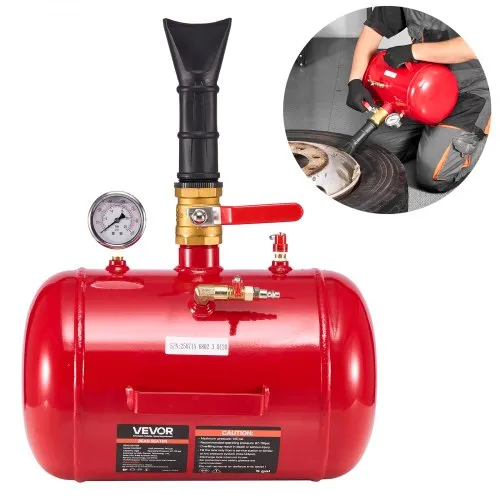
The pressure behind the air burst matters, as does how it is released. A trigger seating inflator lets the technician aim the nozzle directly at the bead gap, so they can control exactly when the release occurs instead of a free release from a fixed valve.
For tough tires, where the bead needs a blast aimed at a specific spot around the rim to seat evenly rather than a generic blast that can seat one side before the other, this direct control is very helpful. A well-designed trigger on an air tire bead seater cuts down on wasted air and the number of tries on tough tires.
For simple, high-volume operations where speed matters more than aim, some technicians still prefer a simpler bead blaster design. They use a tire blaster tank with no trigger, but with a quick-release valve at the base of the tank. Each approach has its place depending on the technician’s choice and the shop’s workflow. Valve-release designs are meant for speed and simplicity when changing a high volume of single tires, while trigger-style tread seaters usually offer more control when changing mixed tire types.
Other Features: Portability, Gauges, and Build Quality
A few small upgrades over the basic tank, PSI, and trigger characteristics make a world of difference in day-to-day usability. Built-in gauges make it easy for technicians to check tank pressure, so they don't have to try to seat a bead when there isnot enoughh air left in the tank.
Wheeled bases and built-in handles matter more than you might think for larger tire bead seaters that move from bay to bay or sit between uses. On paper, most techs don’t realize how a heavier, harder-to-move tank can affect a busy shop. Sturdy fittings and a dependable bead seater with a leak-resistant tank connection mean less time spent wrestling with air loss and more time seating tires.
Rubber-coated bases or non-marring wheels also protect shop floors from scuffs when you reposition frequently throughout a shift. When you compare bead seaters for tire side by side, looking at these additional factors in addition to tank capacity and PSI rating often reveals significant differences in day-to-day usability that raw specs don't fully capture.
Why Choose VEVOR Tire Bead Seaters?
VEVOR provides full tire bead seaters for every shop workflow. With tank sizes from 2.1 to 10 gallons, PSI ratings up to 150, trigger-controlled and valve-release designs. Each unit delivers solid, shop-grade bead-seating performance at a fraction of the cost of specialty tire equipment, offering commercial shops and home garages affordable, dependable tools. If you seat dozens of tires every day, or the occasional passenger tire, VEVOR has a bead seater sized and rated for the job. Shop the whole lineup today for quicker bead seating.
FAQs
How large of a tank do I need for a tire bead seater?
A 2.1- to 3.2-gallon tank is fine for occasional home use, but 5- to 10-gallon models are better suited for shops that deal with several tires every day, minimizing downtime from refilling between jobs.
What PSI is best for seating stubborn beads?
Standard tires will usually seat well at 120 PSI, but larger tires or stiffer sidewalls may need a 145–150 PSI blast to snap the bead into place on the first try.
Do I want a trigger or a valve-release design?
Valve-release designs focus on speed and simplicity for high-volume shops working on similar tire types day after day. Meanwhile, trigger models offer precise, pointed bursts for challenging or mismatched tires.
Will any air compressor work with a tire bead seater?
This depends on yourcompressor'ss maximum output versus the tank's rated fill pressure. If you’re getting a higher-PSI unit, tho, make sure your compressor can refill the tank in a reasonable amount of time.
Do big tanks mean a lot of movement around a shop?
Even 5- to 10-gallon units are portable. Most commercial-size units have wheeled bases and handles, making them easier to move between bays, but larger tanks can be heavy.