Air Compressors

















Results for Air Compressors
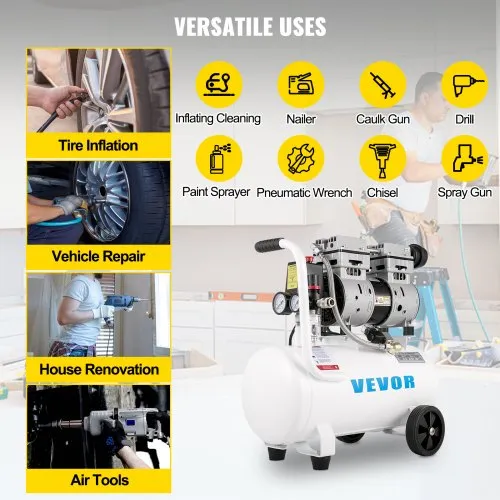
From filling up tires in the driveway to operating pneumatic instruments on a whole industrial floor, VEVOR's range of air compressors can handle any task. Explore specialty devices like PCP, paintball, and scuba tank compressors; stationary air compressors and twin-tank air compressors for shops that run all day; and portable air compressors for short jobsite work. VEVOR's air compressors feature reliable motors, long-lasting tanks, and consistent output, whether you need a gas-powered compressor for off-grid job sites or a silent, oil-free unit for the garage. You spend less time waiting and more time doing the task at a cost that doesn't penalize you for purchasing quality because each category here is designed to fit a certain use case.
VEVOR Air Compressors: Portable, Industrial, and Specialty Options for Every Task
Do you need a compressor that can run a whole shop all day or one that fits on a truck bed? VEVOR’s air compressor range spans from gas-powered compressors for when you are far from an outlet, to twin-tank and stationary workhorses kept in your shop 24/7, to oil-free compressors for noise-sensitive environments, to portable pancake and hot dog compressors for those quick jobs, to specialty PCP, paintball, and scuba tank compressors for jobs that a standard compressor can’t reach.
Compressor Type & Tank Configuration: Finding the Right Air Compressors for Your Job
The difference between an air compressor that keeps up with your workload and one that holds you back often comes down to tank size, configuration, and portability. Not all air compressors are built the same. VEVOR divides its air compressor selection by tank configuration and type.
Pancake, Hot Dog, and Twin-Tank Tank Configurations Explained
The tank shape affects how a compressor sits, moves, and refills under load, so it's more than just looks. Trim carpenters, roofers, and anyone moving between construction sites in one day love pancake units because they use a flat, low-profile tank that sits steady on uneven ground. Plus, its low center of gravity reduces the risk of tipping when working near ladders or scaffolding.
Named for their long cylindrical tank, hot dog compressors are easy to roll or carry and tend to recover air pressure faster than a comparable pancake. This is important when using an impact wrench or framing nailer in short bursts. They provide a good compromise between true air volume and grab-and-go ease.
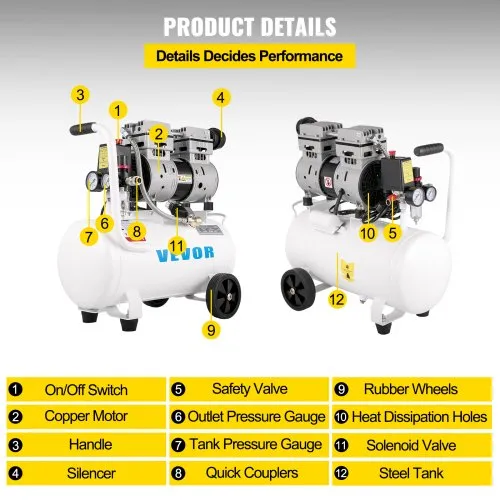
Models with twin tanks have twice as much storage, letting you run longer before the motor needs to restart. Shops using two tools at once or anyone sick of a compressor turning on and off every thirty seconds will find that helpful. Twin-tank models are worth the extra footprint if you use your air compressor for more than the occasional tire top-off. Tank fatigue isn't an issue because VEVOR uses steel tanks rated for frequent pressure cycling in all three types.
Vertical and Stationary Configurations for Heavy Use
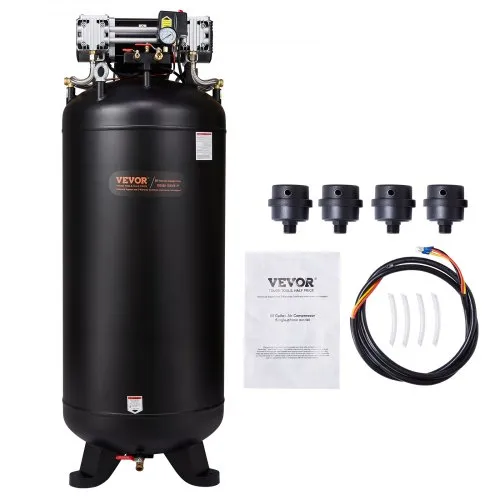
The next step up from anything designed to move around is a stationary compressor, which is bolted or rolled into a fixed location and designed to continually drive pneumatic tools, spray equipment, or the air lines of a complete auto shop. With motors sized to match actual industrial activity rather than sporadic use, these devices prioritize sustained output and duty cycle over portability.
Stationary and vertical air compressors are the first type to consider if your shop runs several air tools from a single line or if you're establishing a permanent workstation. The industrial-grade pumps used in VEVOR's stationary models are constructed for extended daily run times, so the motor doesn't have to work hard to meet demand. When floor space is limited, choose vertical; when total air volume and duty cycle are more important than moving the unit, choose stationary.
PCP, Paintball, and Scuba Tank Compressors for High-Pressure Needs
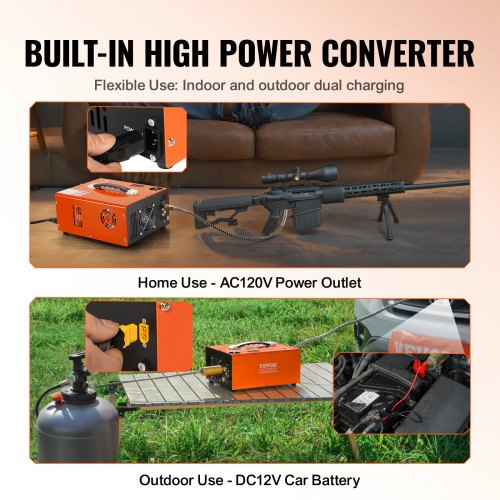
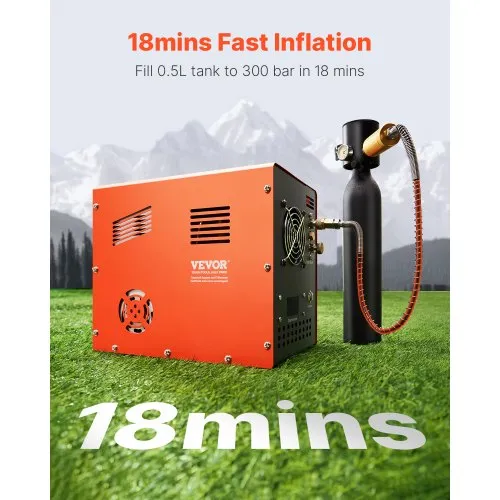
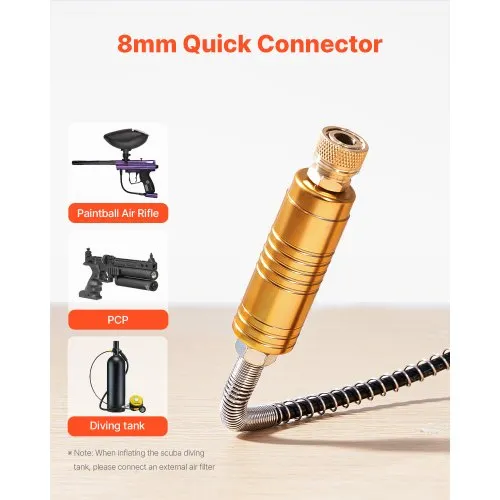
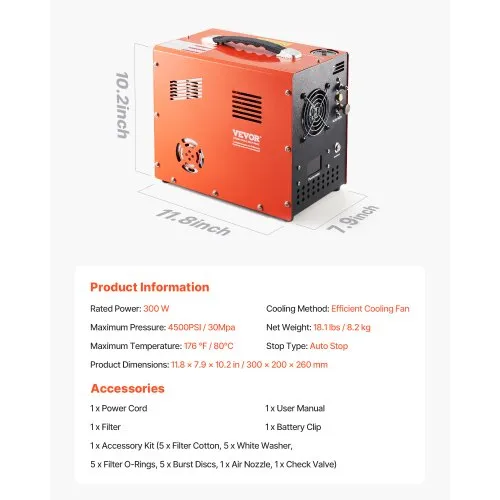
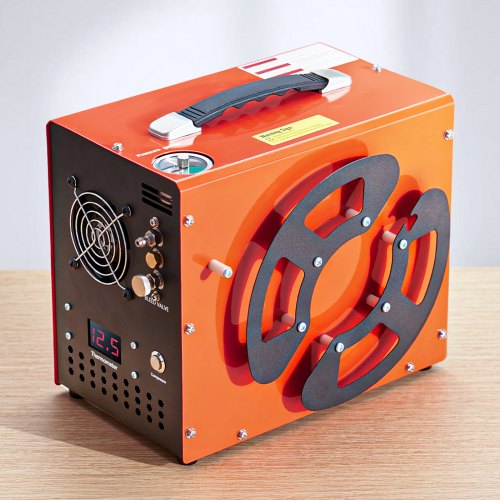
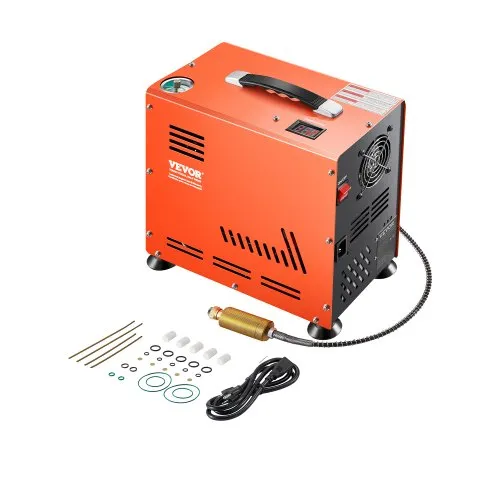
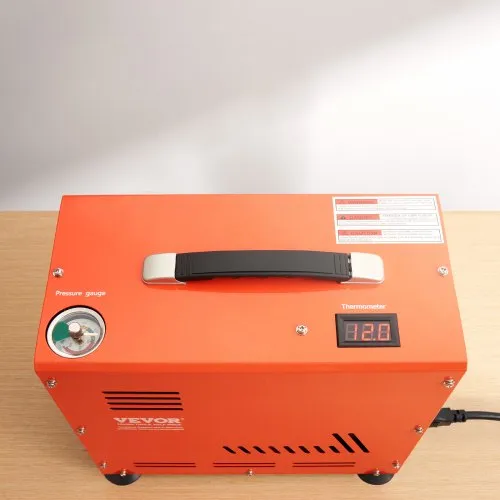
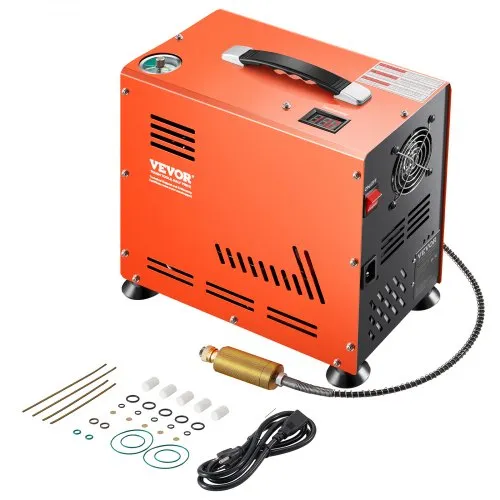
Certain jobs require higher pressure rather than more air. Standard shop units can't fill pre-charged pneumatic rifles to the high PSI required by PCP air compressors and PCP airgun compressors. A specialized high-pressure unit eliminates the expense and hassle of scuba tank refills at a specialty store if you regularly fire PCP airguns.
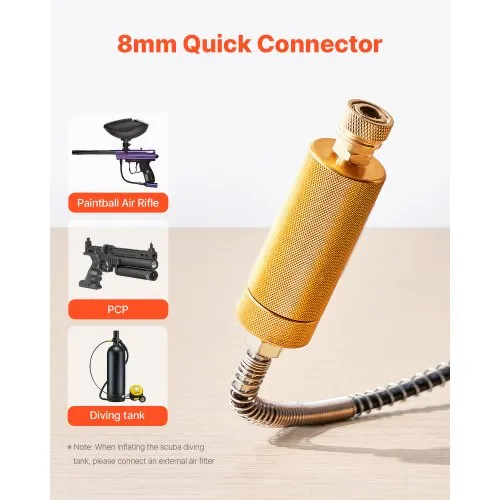
Paintball compressors pump HPA tanks to tournament-ready pressure without using tank exchanges, filling a comparable high-pressure need. Even more advanced are scuba tank compressors and diving compressors, designed to fill breathing-air cylinders to standards divers genuinely rely on. These are precision instruments, not normal shop equipment, and they have filtration stages that standard units do not.
You shouldn't expect one machine to perform both tasks because these specialty compressors fall into a completely different category than a garage unit. Buying equipment designed for your use case (airguns, paintball, or diving) avoids the compatibility issues that arise when you try to modify general-purpose air compressors for high-pressure fills.
Oil-Free vs. Oil-Lubricated Compressors
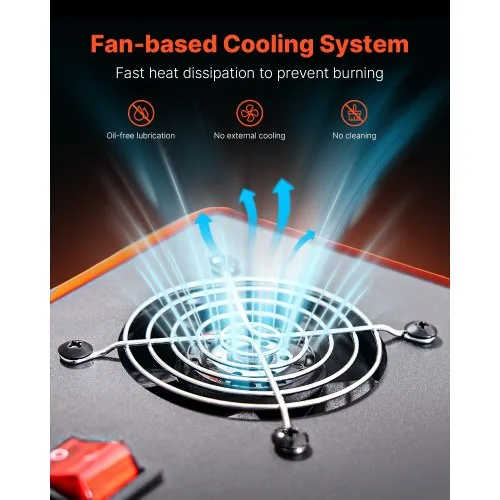
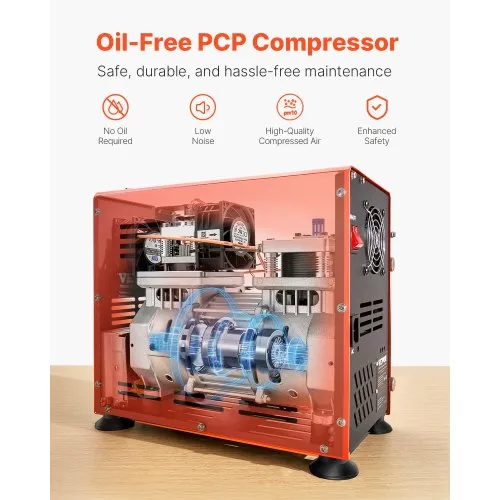
More than any other specification, this choice affects maintenance. Oil-free units are a great option for painting, working near food, or anyone who wants to skip a maintenance checklist because they feature self-lubricating components, which means no oil changes, no risk of oil contaminating your air line, and less mess overall. They also often weigh less, which matters for portable jobsite use.
For longer, quieter, smoother operation under high or continuous loads, oil-lubricated compressors trade that convenience for reliability. When a compressor runs for extended periods, oil reduces friction and heat in the pump, extending motor life. This is a considerable benefit in industrial or high-duty-cycle environments. The trade-off is scheduled oil changes and a little more maintenance.
Depending on how hard the compressor runs, neither choice is clearly superior. Daily heavy-duty use favors oil-lubricated; light use favors oil-free. Both are available in VEVOR's line of air compressors, so you can choose what best suits your workload without compromising.
Power Source & Application: Choosing Air Compressors That Match Your Environment
Tank size solves only half the problem; the other half depends on where and how you operate the compressor. A unit's suitability for your job site depends on its power source and noise level.
Gas-Powered Air Compressors for Off-Grid and Remote Work
When operating in areas without dependable electricity access, such as isolated outdoor projects, farms, or job sites, a gas air compressor is the best option. Gas air compressor units are useful for builders working on new construction before power is even connected because they operate independently, unlike electric air compressors that rely on an outlet. VEVOR's gas-powered air compressors make this mobility possible, delivering full-pressure output wherever the job takes you.
Because these machines use small combustion engines instead of silent electric motors, you trade noise and exhaust for power. Also, because of the engine housing, they are typically heavier, so expect less portability than a battery- or corded model. However, a reliable gas air compressor keeps pneumatic tools running when you need them. For anyone who works off-grid regularly, it eliminates the need for generators or extension cords spread across a site.
Specialty Air Compressors for Paintball, PCP Airguns and Diving
Not all air compressors are designed to power nail guns. PCP air compressors and PCP airgun compressors eliminate the hassle of transporting tanks to a fill station and are designed expressly to fill high-pressure air rifles to the precise PSI shooters want. Similarly, paintball compressors let players replenish CO2 or HPA tanks at home instead of relying on professional shops. Although smaller than a typical shop compressor, these devices are designed to reach significantly higher pressures.
Going one step further, scuba tank compressors and diving compressors are designed to safely fill breathing-air tanks to the exacting pressure and purity requirements needed for diving. For safety-critical applications like diving, VEVOR's range in this area is purpose-built, not repurposed. The practical end of the spectrum includes low-noise air compressors and hot dog air compressors, which have a horizontal, portable tank design and are preferred for light-duty household and vehicle applications where quiet operation matters.
Why Choose VEVOR Air Compressors?
VEVOR covers almost every application without the extra markup other brands demand, from pancake and vertical tanks to specialty diving and PCP airgun compressors. Every purchase comes with reasonable pricing and reliable after-sales service, whether you need a heavy-duty industrial machine that runs all day or a portable device for sporadic tasks. Stop choosing the wrong power source or tank size. Find the right gear for your shop by browsing VEVOR's selection of air compressors.
FAQs
What distinguishes a pancake air compressor from a vertical one?
For more air storage in less floor space, vertical models have a taller tank and stand upright. Pancake compressors prioritize stability and portability over overall capacity by sitting flat and low.
Is it possible to use a gas-powered air compressor indoors?
No. Use gas-powered compressors only outside or in well-ventilated areas, since they emit exhaust fumes. For inside garages, workshops, or other enclosed areas, use electric models.
Is it safe to fill diving tanks using PCP air compressors?
No, PCP air compressors are not designed for breathing-air standards, but rather for airgun pressures. Always use a diving compressor or scuba tank specifically made to meet air purity regulations.
For pneumatic tools, how much CFM do I need?
Depending on the tool, yes. While grinders and sanders sometimes require 8–10 CFM, light jobs like nailing require less than 3 CFM. Before selecting a compressor, check your tool's rating.