Air Blow Guns








Results for Air Blow Guns
VEVOR offers a wide selection of corded leaf blowers that are ideal for home yards, businesses, and professional landscaping jobs. Our collection offers a range of power ratings, airflow capacities, and functional alternatives to help you address garden management problems year-round. VEVOR offers reliable electric performance at a low cost, whether you need light units for small patios or powerful machines for large properties. We examine each product's quality with extreme care to ensure it delivers consistent power, is built to last, and performs well even in tough outdoor conditions.
VEVOR High Performance Car Cleaning Air Guns for Precision Automotive Detailing
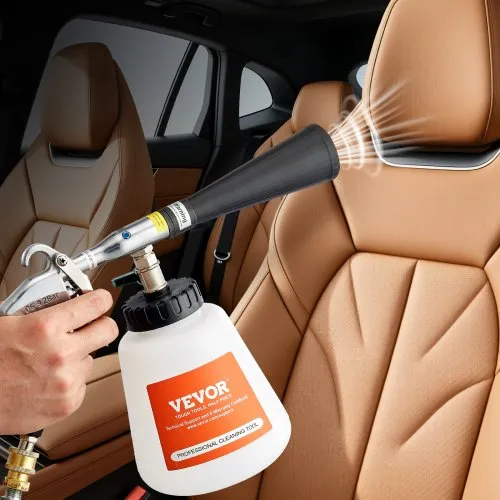
Are you trying to get rid of water, dirt, and trash that stick to hard to reach areas where clothes and brushes cannot reach? Car cleaning air guns are the best choice for both professionals and amateurs who need strong, controlled air blasts. These guns can remove moisture from door jambs, emblems, grilles, and specific gaps in body panels. This feature is true whether you are meticulously detailing high end cars, preparing surfaces for ceramic coating, or keeping fleet vehicles in good condition.
Pressure Rating & Nozzle Types, Optimizing Your Cleaning Performance
To ensure efficient cleaning without wasting compressed air or harming delicate vehicle components, choosing the best car cleaning air guns involves knowledge of air pressure parameters, CFM requirements, and nozzle types.
Understanding Air Pressure Requirements and CFM Ratings
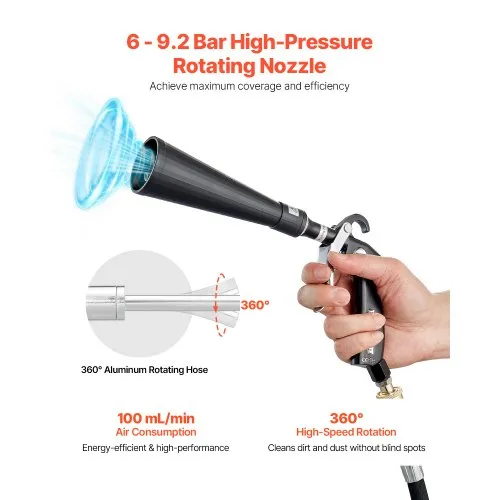
How well your compressed air blow gun cleans and how well it works for various car detailing jobs depends on its pressure rating. The majority of car cleaning air guns work best at 60 to 120 PSI (pounds per square inch), with 90 PSI being the ideal range for regular detailing tasks. Gentle airflow at lower pressures (60 to 70 PSI) is ideal for drying delicate parts where excessive force could harm or displace them, such as convertible tops, vinyl wraps, fragile trim pieces, and recently applied coatings. Without endangering components, medium pressure (80 to 100 PSI) can perform common detailing tasks, including wheel well cleaning, engine bay dust removal, interior vent cleaning, and water removal from body panel gaps.
Higher pressures (100 to 120 PSI) are used for heavy duty jobs like removing caked-on dirt from truck beds, clearing undercarriages, or getting badly neglected cars ready for repair. For constant use, most car cleaning guns need 3 to 6 CFM at 90 PSI. The amount of air being used is shown by the CFM (cubic feet per minute) number. Check whether the air compressor's output is sufficient for your gun. Undersized compressors that run continuously waste more energy and wear out faster. A common mistake is applying too much pressure, which can cause air loss, make noise, damage painted surfaces, or loosen trim clips.
Nozzle Designs and Airflow Patterns
The shape of the nozzle has a big effect on how well it cleans, how much air it uses, and how safe it is for different car surfaces. If you need to be very precise when cleaning mirror housings, badge recesses, door handle cavities, and complex grille patterns, straight nozzles with small holes (2 to 4mm) focus airflow into focused streams. By getting the most speed from the pressure they have, these small nozzles produce strong jets that clear hard-to-reach debris from tight spaces where larger spray patterns cannot reach. Fan nozzles that are wider and flatter (10 to 20 mm) spread air over bigger areas. This makes them perfect for drying large body panels, windshields, and trunk sections without using concentrated force that could scratch wax or sealer that has just been applied.
Premium VEVOR compressor air blow guns feature adjustable nozzles that swivel or telescope to adjust spray patterns from pinpoint to wide fan, offering adaptability without requiring tool changes mid-task. To minimize injury if the nozzle comes into contact with skin, safety nozzles use venturi designs with side vents that lower tip pressure below OSHA's 30 PSI dead-end pressure limit while retaining effective cleaning power due to the increased air volume.
Air Consumption Efficiency and Compressor Matching
Air consumption directly affects equipment requirements and production. Effective car cleaning gun designs maximize cleaning efficacy while minimizing CFM requirements, making them compatible with smaller, portable compressors that are perfect for home, garage,e or mobile detailing applications. To calculate real-world consumption, multiply the 4 to 8 CFM at 90 PSI that standard blow guns use while operating continuously by the duty cycle, or the proportion of time that the gun is really blowing. With numerous pauses for repositioning and visual inspection, detailing work usually entails 30 to 40% duty cycles, lowering average consumption to 2 to 3 CFM for extended work.
To avoid irritating cycling that disrupts workflow and prolongs project completion times, ensure the gun specs match your compressor's displacement rating (SCFM, or standard cubic feet per minute). Undersized compressors cannot sustain reservoir pressure. Consider using compressors rated 2 to 3 times greater than the consumption of individual guns for professional detailing operations that run numerous tools at once or do back-to-back details. This feature ensures sufficient capacity without requiring continuous motor activity, thereby shortening the compressor's lifespan. While serious enthusiasts and professionals benefit from stationary units (3 to 5 HP, 20 to 60 gallon tanks) that provide consistent pressure for extended sessions without performance degradation as tank pressure drops between compressor cycles, portable electric compressors (1 to 2 HP, 4 to 6 gallon tanks) are suitable for occasional home detailing.
Extension Wands and Reach Accessories
In wheel wells, undercarriages, and engine compartments, where normal gun lengths cannot ideally position nozzles, reach limits hinder cleaning effectiveness. By attaching to the air compressor blow gun body and nozzle, extension wands, which are usually 6 to 18 inches long, allow access to recessed locations without requiring difficult body positions or insufficient cleaning due to odd angles. Flexible extensions with articulating joints ensure thorough undercarriage cleaning during pre-winter rustproofing or post off-road detailing, navigating around obstructions such as suspension parts, exhaust systems, and frame rails that prevent straight-line access.
When straight-on techniques are inadequate for blowing debris from horizontal surfaces like hood ledges, trunk weatherstripping, ducts, and convertible top mechanisms, curved or angled nozzle tips are ideal because they direct airflow perpendicular to the extension axis. However, due to friction losses and the increased air volume in longer hoses, extensions lower the effective pressure at the nozzle tip. To maintain the appropriate cleaning force, adjust the compressor output by 5 to 10 PSI for each foot of extension. With VEVOR car cleaning air guns, detailers can create configurations for specific vehicles or cleaning tasks without purchasing numerous full gun assemblies, as they accept standard quick-connect fittings that allow tool-free attachment of various extensions and specialty nozzles.
Features & Durability, Ensuring Professional Results and Long Term Reliability
You can extend the life and performance of your car cleaning air guns by choosing models with ergonomic controls, long-lasting materials, and safety features that shield both users and cars from harm when doing extensive detailing.
Trigger Design and Ergonomic Controls
Long, detailed sessions have a direct impact on operator fatigue and cleaning accuracy, as they affect trigger comfort and control precision. Precise airflow control is possible with full-size triggers that feature smooth, progressive actuation. complete depression for maximum blast power and partial pulls for gentle drying. When switching between tough mud-caked wheel wells that need vigorous cleaning and delicate vinyl lettering that could peel under high air pressure, this variable control is crucial. During multi-hour detail tasks, ergonomic grip designs with rubberized or textured surfaces reduce hand fatigue and maintain control precision by preventing slipping in the moist conditions common in detailing environments.
High-quality VEVOR high pressure car cleaning guns feature lock-on mechanisms that keep the trigger in the open position for continuous airflow without constant finger pressure. This feature is essential for large-area drying, such as drying the entire exterior of a vehicle or working in an engine bay for extended periods, where prolonged operation would otherwise lead to hand cramps. When safety problems occur, such as when airflow dislodges a component or when repositioning necessitates an instantaneous flow cessation, quick-release mechanisms rapidly disengage locks. In addition to allowing natural hand positioning regardless of the approach angle to the car being detailed, swivel air inlets allow hose connections to rotate 360 degrees, minimizing hose twisting that can cause kinks, reduce airflow, and lead to premature hose failure.
Material Construction and Component Durability
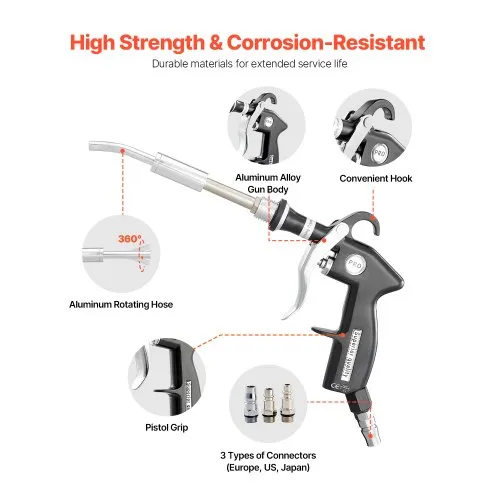
Whether your air compressor blow gun lasts through professional use or breaks down too soon in a workshop depends on the materials used in its construction. Because die-cast aluminum bodies are lightweight and corrosion-resistant to water, detailing chemicals, and humidity, they offer exceptional durability-to-weight ratios that reduce operator strain. When moisture condenses inside the cannon during cooling after prolonged use, brass internal components, especially in valve assemblies and air passages, resist corrosion better than steel substitutes. For experienced detailers who detail dozens of vehicles every week, hardened-steel trigger mechanisms are essential because they can withstand hundreds of thousands of actuation cycles without breaking or becoming sloppy from wear.
Because stainless steel nozzles maintain accurate orifice dimensions that dictate spray patterns and pressure delivery, they are resistant to chemical damage from acidic wheel cleaners, alkaline degreasers, and other detailing solutions that splash back during cleaning. To eliminate air leaks that reduce efficiency and produce obnoxious hissing while in use, VEVOR compressed air blow guns use industrial-grade seals and O-rings compatible with petroleum-based compressor oils and synthetic lubricants. Rather than throwing away entire guns when parts wear, easy maintenance restores like-new performance at a low cost, offering better long-term value than disposable economy models that need full replacement. Replaceable wear components include nozzles, seals, and trigger springs.
Why Choose VEVOR Car Cleaning Air Guns?
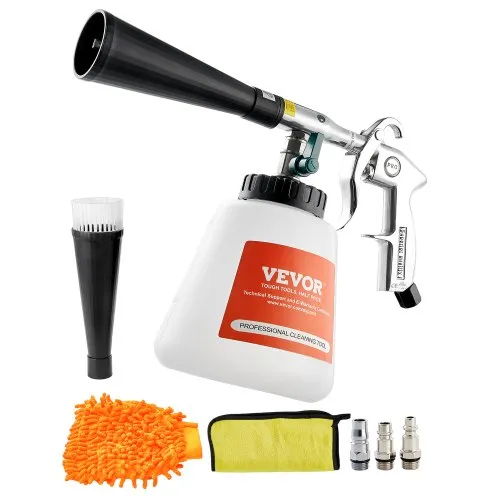
Are you looking for air guns for cleaning and maintaining cars? These guns offer professional performance, long-lasting construction, and unbeatable prices. Our line of products includes strong compressor air blow gun systems for tough jobs, exact car cleaning gun models with easy-to-adjust controls for fine detailing, and all-purpose compressed air blow guns for general cleaning. Check out our entire collection now to get results that look like they belong in a store, with strong, long-lasting tools. Find out what makes VEVOR different for great engineering, long-lasting performance, and a guarantee of your happiness. Buy now!
FAQs
What air pressure should I use for car cleaning air guns?
For fragile areas like vinyl wraps and convertible tops, use 60 to 70 PSI. For general drying and debris removal, use 80 to 100 PSI. And for heavy-duty engine bay or undercarriage cleaning, use 100-120 PSI. To avoid damage, adjust the pressure based on the surface's sensitivity.
What size air compressor do I need for a compressed air blow gun?
At 90 PSI, car cleaning guns normally need 4 to 6 CFM. For continuous operation, select compressors rated 1.5 to 2 times your gun's usage. Professionals benefit from 20+ gallon permanent compressors for prolonged detailing, while portable 4- to 6-gallon units are suitable for sporadic use.
What nozzle type works best for drying cars after washing?
Wide-pattern fan nozzles effectively dry large panels without removing sealants or wax. To remove water from gaps, trim, and emblems, use narrow, straight nozzles. During detailing, adjustable nozzles offer versatility, allowing you to switch between patterns as needed.
How do I maintain my air compressor blow gun to extend its lifespan?
Before each use, drain the moisture from the air line, lubricate the moving parts with pneumatic tool oil once a month, and check for wear on the O-rings and seals every 3 months. To ensure maximum performance and safety, keep firearms in dry places and replace worn nozzles promptly.