Home Wind Turbines











Results for Home Wind Turbines
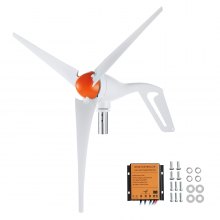
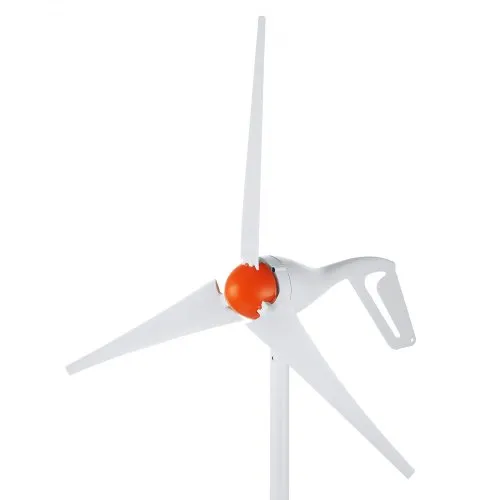
A home wind turbine is a small wind-powered generator that converts moving air into electricity for a house, cabin, or off-grid property. Spinning blades drive a permanent magnet generator, which produces three-phase AC that a controller turns into DC to charge a battery bank or feed an inverter. The turbine starts generating once the wind reaches its cut-in speed and climbs toward its rated output as the wind strengthens, while built-in overspeed protection keeps it safe in storms. Paired with batteries or a solar array, it supplies clean, renewable power and trims reliance on the grid or a fuel generator.
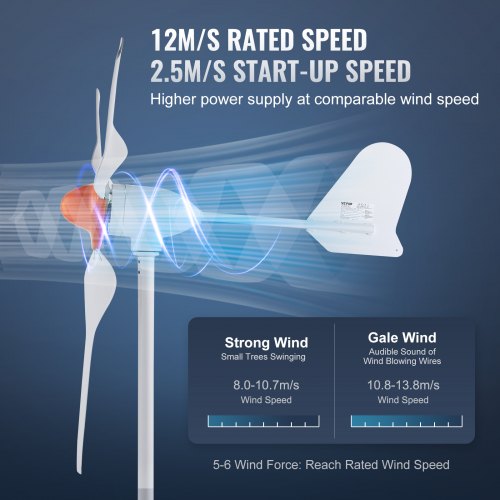
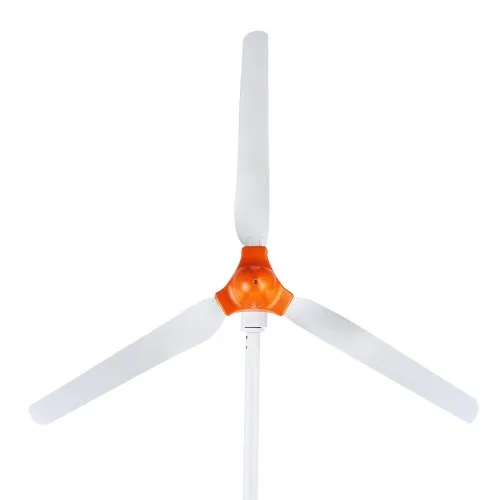
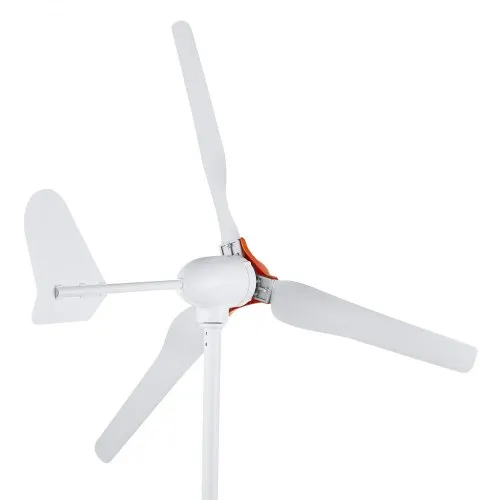
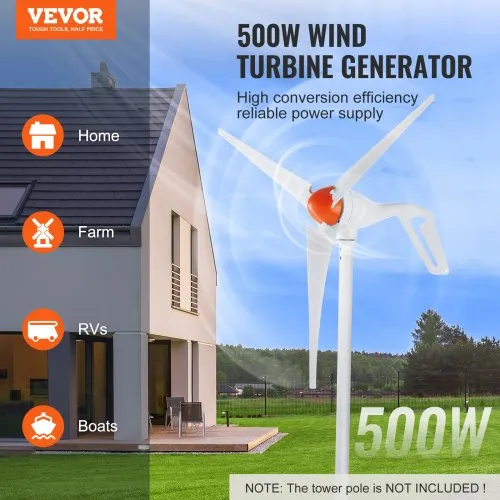
The range is built around 12V and 24V kits at several power levels. A 500W 3-blade turbine with an anemometer is an entry point that starts turning at 2.5 m/s and includes a wind-speed meter. An 800W 5-blade turbine with MPPT control captures more energy across a larger swept area, and a 1500W 24V turbine with a wind/solar hybrid controller tops the range for larger loads and combined solar setups. Most kits ship with an MPPT charge controller and reinforced fiberglass-nylon blades. Typical uses are off-grid cabins, rural homes and homesteads, farms, RVs and boats, and hybrid solar-wind battery systems. Tower poles are sold separately on most models.
Five things decide what you need:
- Rated power: size the turbine to your daily load; 500W suits lights and small devices, while 1000 to 1500W offsets more of a home's use.
- System voltage: match 12V or 24V to your battery bank and controller.
- Blade count: more blades can start and run more smoothly in lighter, gustier wind.
- Controller type: an MPPT controller suits wind-only setups, while a hybrid controller adds a solar input.
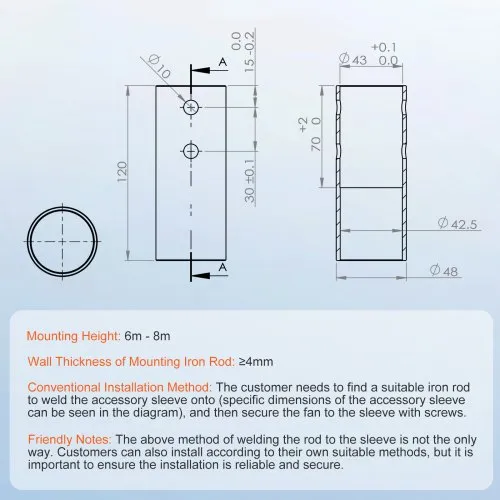
- Mounting and site: allow for a tower pole (usually sold separately) on the most exposed, least obstructed spot.
Browse every model in the home wind turbines collection, or explore the wider renewable energy range for solar panels and batteries.
Home Wind Turbine Types at a Glance
The power rating and controller a kit ships with determine how much energy it can harvest and whether it can share a battery bank with solar.
| Type | Rated Power | System Voltage | Controller | Selection Note |
|---|---|---|---|---|
| Entry 500W turbine | 500W | 12V | MPPT | Supplemental power for lights, devices, and small loads |
| Mid 800W turbine | 800W | 12V | MPPT or wind/solar hybrid | Larger rotor captures more wind for a bigger contribution |
| High-output 1000 to 1500W turbine | 1000 to 1500W | 12V or 24V | Wind/solar hybrid | Highest yield; pairs with solar for whole-home support |
VEVOR Small Wind Turbines for Homes – Clean, Quiet Energy Generation for Every Property
Are you prepared to use a small, effective wind energy system to lower your electricity costs and your reliance on the grid? The home wind turbines from VEVOR are designed for residential use; they are strong enough to significantly increase your home's energy supply, quiet enough for suburban homes, and long-lasting enough for rural and coastal settings. VEVOR offers renewable energy solutions that align with real residential budgets and installation scenarios, from ground-mounted vertical-axis wind turbines for residences with open land to compact small wind turbines for home rooftop installations.
Power Output and Installation Type: Choosing the Right Turbine for Your Home
A successful household wind energy system starts with choosing the right power output and installation design for your home wind turbine. The two established output ratings of 500W and 800W are the main focus of VEVOR's lineup, along with rooftop and ground-mounted installation options across a variety of property types and wind resource conditions.
500W Wind Turbine Generator for Entry-Level Home Energy Production
For households that are new to wind energy or want to add a second renewable energy source to an existing solar panel system, the 500W home wind turbine generator is the perfect place to start. With a rated output of 500 watts, this turbine may significantly reduce the amount of energy used at home each day for lighting, phone charging, small appliances, routers, and entertainment equipment that run nonstop.
With cut-in wind speeds as low as 2.5 to 3 meters per second, VEVOR's 500W models can generate usable power at wind speeds up to 11 to 13 meters per second. Compared to versions with a higher cut-in speed, this low cut-in threshold maximizes generation hours across a wider range of weather conditions because the turbine begins providing energy even in light breezes.
A 500W home wind turbine provides a useful and affordable renewable energy contribution for off-grid cottages, small rural properties, and homeowners with battery storage systems seeking to shorten generator runtime. VEVOR's 500W home wind turbine is a valuable energy asset in remote or semi-remote residential settings, providing a dependable supplemental power source that operates independently of grid availability when paired with a compatible charge controller and battery bank.
800W Wind Turbine Generator for Higher Output and Whole-Home Contribution
For larger residences, homesteads, and properties with reliable wind resources that wish to offset a significant portion of their grid electricity consumption, the 800W wind turbine generator greatly increases their energy contribution. When paired with grid or solar sources, an 800W turbine (operating) at capacity for six hours a day can provide over 5 kWh at rated output, which is sufficient to meet a sizable portion of the daily electricity use of an average family.
Compared to their 500W counterparts, VEVOR's 800W models have larger rotor diameters, which enable them to capture more wind energy over a larger swept area and produce more power at moderate wind speeds. Additionally, the larger rotor improves performance in turbulent or changing wind conditions, which are typical in suburban and semi-rural settings where terrain, trees, and buildings produce erratic airflow patterns.
Compared to entry-level 500W models, the 800W home wind turbine is a more capable and future-proof investment for homeowners who are truly committed to renewable energy self-sufficiency. Whether linked directly to a grid-tie inverter for net metering or integrated into a hybrid solar-wind system with battery storage, VEVOR's 800W turbine delivers the output needed to significantly reduce monthly electricity bills.
Roof-Mounted Wind Turbine for Homes: Installation on Existing Structures
For urban and suburban homes that lack the open land needed for ground-mounted turbines on designated poles, a roof-mounted wind turbine offers a space-efficient solution. The compact profiles and vibration-damping mounting hardware of VEVOR's roof-compatible turbine types reduce the transfer of structural stress to the building frame and roofing materials.
Compared to ground-level installations on the same property, rooftop placement provides access to slightly stronger, more reliable wind resources by elevating the turbine above ground-level obstacles such as fences, hedges, and low outbuildings. VEVOR's vertical axis models are especially well-suited for rooftop use because they receive wind from any direction without requiring yaw adjustment. However, rooftop turbulence generated by the building's own structure is a serious consideration.
Secure structural anchoring to roof beams or special mounting brackets is required for roof-mounted versions; this operation is best performed by a competent installer knowledgeable in both structural loading and the electrical wiring of small wind systems. For its roof-mounted turbine models, VEVOR offers precise installation guidelines that simplify installation planning for both experts and self-assured do-it-yourself installers. These guidelines include suggested mast heights above the roofline, wire routing recommendations, and charge controller pairing recommendations.
Ground-Mounted Turbines on Dedicated Masts for Maximum Wind Exposure
The strongest and most reliable wind resources on a particular property are accessed by ground-mounted home wind turbines mounted on specially constructed masts or towers, especially when the mast raises the turbine above nearby vegetation, outbuildings, and topographical features that cause turbulence and lower effective wind speeds at lower heights. The ground-mounting turbine models from VEVOR are compatible with commonly available steel or aluminum mast systems because they are made for standard mast diameters.
The option to place the turbine at the best location on the property, usually the tallest, most exposed spot with the fewest surrounding obstructions, rather than being restricted to the building's location, is the main benefit of ground mounting over rooftop installation. Compared with rooftop installations on the same site, this flexibility often results in noticeably higher energy yields.
Because the turbine may be tilted or lowered on a tilt-up mast system for inspection and service without working at roof height, ground-mounted installations also provide easier maintenance access than rooftop variants. A ground-mounted VEVOR home wind turbine on a properly constructed mast offers the most accessible and productive long-term wind energy installation for rural homeowners, smallholders, and off-grid properties with available open land.
Matching a Home Wind Turbine to Your Property
Power and voltage shortlist a kit, but the site, battery bank, and mounting method determine what actually performs.
| Property | Recommended Turbine | Site Check | Why It Fits |
|---|---|---|---|
| Off-grid cabin or RV | 500W 12V kit | Exposed spot clear of trees | Low 2.5 m/s cut-in gathers power in light wind |
| Rural home with open land | 800W 12V kit | Room for a ground mast | Larger rotor lifts output at moderate wind speeds |
| Homestead offsetting grid use | 1000 to 1500W kit | 24V battery bank capacity | Higher rating covers more daily consumption |
| Existing solar array | Kit with wind/solar hybrid controller | Spare solar input on controller | One controller blends wind and solar charging |
| Gusty suburban rooftop | 5-blade turbine | Structural anchoring and turbulence | Extra blades run smoother in shifting wind |
Turbine Design and Features That Affect Performance, Noise, and Longevity
The turbine's design, including its axis orientation, blade material, noise characteristics, and built-in protection mechanisms, affects how well it performs in residential settings and how reliably it functions over its service life, as well as its power output and installation type.
Home Vertical Wind Turbine Design for Omnidirectional Wind Capture
In contrast to conventional horizontal axis propeller-style turbines, the home vertical-axis wind turbine, also known as a vertical-axis wind turbine (VAWT), is a radically different approach to residential wind energy. A yaw mechanism that spins the turbine to face the wind is unnecessary with VEVOR's vertical-axis wind turbines for residences, which accept wind from any horizontal direction. Because of their omnidirectional capability, vertical turbines perform noticeably better in the turbulent, variable-direction wind conditions found in residential buildings.
For residential applications in neighborhoods where noise could cause conflict with neighbors or local planning authorities, the slower spinning speed of vertical-axis designs directly contributes to their quieter operation. The vertical-axis models of VEVOR's silent home wind turbines are designed to reduce audible noise at average domestic wind speeds.
Additionally, vertical-axis turbines have a smaller visual profile than large horizontal turbines, which makes them easier to integrate with rooftop or low-mast ground installations where height limits apply and more acceptable in suburban zoning. VEVOR's vertical-axis home wind turbine models provide a much better architectural match than traditional horizontal alternatives for urban and suburban homes that value omnidirectional wind capture, low noise, and a small visual footprint.
Blade Materials, Generator Technology, and Built-In Protection Features
The fiberglass-reinforced or carbon fiber composite blades used in VEVOR's home wind turbines combine lightweight with the structural rigidity needed to maintain blade form and aerodynamic efficiency over years of continuous rotation under a variety of wind conditions. Lightweight blades improve energy capture in the erratic gusts common in residential wind conditions because they respond faster to changes in wind direction and speed.
The three-phase AC output from the permanent magnet generators used in VEVOR's turbine models is either rectified to DC for battery charging or converted to grid-compatible AC via an appropriate inverter. By eliminating the brushes and slide rings found in earlier generator models, permanent magnet designs greatly increase operational service life and reduce maintenance needs.
Any residential wind turbine must have overspeed protection. VEVOR's models include automated braking or blade pitch adjustment mechanisms that kick in when wind speeds exceed safe-operation thresholds, usually above 14 meters per second. This safeguard ensures the turbine survives severe weather and resumes regular operation once conditions improve by preventing rotor overspeeding during storms, which could otherwise harm blades, bearings, or the generator itself.
Best-Seller Comparison
Side by side, these five kits separate on power rating, blade count, the controller supplied, and what each one adds.
| Product | Rated Power | Blades | Start Wind Speed | Controller | Included Extra | Best For |
|---|---|---|---|---|---|---|
| 500W Turbine, 3-Blade, with Anemometer | 500W | 3 | 2.5 m/s | MPPT | Anemometer (wind-speed meter) | Only kit here with a wind meter; new setups |
| 500W Turbine, 3-Blade, MPPT | 500W | 3 | 2.5 m/s | MPPT | Adjustable windward direction | Simplest 500W entry kit; cabins and RVs |
| 800W Turbine, 5-Blade, MPPT | 800W | 5 | 2.5 m/s | MPPT | 3-phase AC permanent magnet generator | Most blades here; smoother run in gusty wind |
| 800W Turbine, 3-Blade, MPPT | 800W | 3 | 2.5 m/s | MPPT | Heaviest unit at 26.9 lbs | Highest output of the five; rural homes |
| 500W Turbine, 5-Blade, MPPT | 500W | 5 | 2.5 m/s | MPPT | 5-blade rotor at 500W | Five-blade start in lighter breezes |
Why Choose VEVOR Home Wind Turbines for Residential Energy Generation?
VEVOR home wind turbines combine vertical and horizontal axis designs, proven 500W and 800W output options, and silent operation characteristics designed for actual domestic settings. VEVOR provides pure wind energy at a cost that makes renewable generation truly affordable, whether you are using it to augment solar power, lessen your reliance on the grid, or power an off-grid property. Take the first step toward energy independence by investigating the whole small wind turbine for home range right now.
FAQs
What wind speed do VEVOR home wind turbines need to generate power?
VEVOR home wind turbines start producing electricity at cut-in wind speeds as low as 2.5–3 m/s. Rated output occurs at approximately 11–13 m/s, and if operating outside safe parameters, automatic overspeed protection activates.
Are VEVOR vertical-axis wind turbines suitable for rooftop installation?
Yes, VEVOR's vertical-axis wind turbines for residential use are well-suited for rooftop installations in suburban areas due to their omnidirectional wind capture, low profile, and reduced rotational noise compared to horizontal-axis models.
Can a 500W home wind turbine power a whole house?
Although a 500W home wind turbine by itself cannot power a whole house, it significantly reduces demand for electronics, lighting, and other appliances. For the greatest contribution to home energy, it functions best as a component of a hybrid solar-wind system with battery storage.
Do VEVOR silent home wind turbines require regular maintenance?
The brushless design of VEVOR's permanent magnet generators greatly reduces maintenance needs. To maintain safe and effective operation, it is advisable to visually inspect the blades, mounting hardware, and electrical connections annually.
What are the main differences between wind turbines and steam turbines?
A wind turbine is driven by moving air across its blades, so it needs no fuel and produces no emissions, which is what makes a home wind turbine suitable for residential use. A steam turbine is driven by pressurized steam from a boiler that burns fuel or uses nuclear or geothermal heat, and belongs in power plants, not homes.
How do I install a wind generator safely and effectively?
Mount the turbine on a sturdy pole at the most exposed, least obstructed point, well clear of trees and buildings, and anchor it to resist wind load. Wire it through the supplied controller to a matched battery bank. A 500W kit with an anemometer helps you confirm the site has usable wind. Use a qualified installer for roof or electrical work.
What are the best low wind speed wind turbines available on the market?
The best low-wind turbines have a low cut-in speed and blades that respond to light, gusty air. Every kit in this range starts at about 2.5 m/s, and a 5-blade 500W turbine starts turning readily in lighter breezes thanks to its extra blades.
What are the different types of home wind turbines?
Home turbines are horizontal-axis (propeller-style, facing the wind) or vertical-axis (omnidirectional, catching wind from any direction). They also vary by power, from 500W up to 1500W, by blade count, and by controller, with wind/solar hybrid kits combining both sources.
Can a home wind turbine be mounted to a roof?
Yes, with care. A roof mount lifts the turbine above ground obstacles, but the building creates turbulence and transmits vibration, so secure anchoring to structural beams and vibration damping matter. Confirm your roof can carry the load, and have a qualified installer handle the mounting and wiring.