Manual Trailer Mover


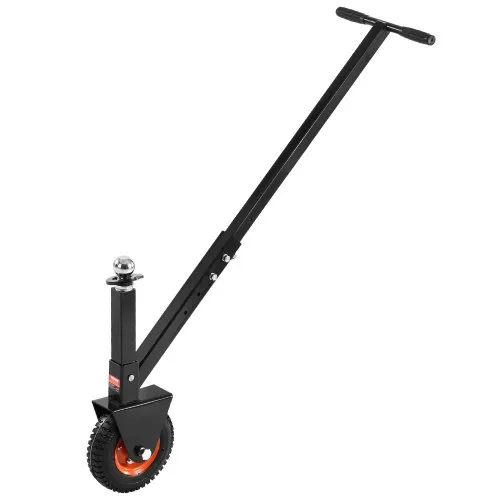


Results for Manual Trailer Mover
Looking for a manual trailer mover that makes moving large loads easy? From heavy duty 1,500 lb models for large RVs and boats to compact 300lb models for small utility trailers, VEVOR offers every capacity and tire type you need. Because each manual trailer mover is designed with robust frames, smooth-rolling wheels, and comfortable handles, you can move trailers in garages, storage yards, and narrow driveways without needing to tow a vehicle. VEVOR's whole line of manual trailer movers provides the durability and control you require in any situation, whether you are in charge of a single camper or a fleet of utility trailers.
VEVOR Manual Trailer Movers for Effortless RV, Boat, and Utility Trailer Positioning
Do you find it difficult to move a boat, trailer, or camper without starting the tow vehicle? Save time and protect your driveway or garage floor from unnecessary wear and tear by rolling trailers into place by hand with VEVOR's manual trailer movers. These manual trailer movers, which are made with sturdy wheels and reinforced chassis, can move anything from full-size RVs to little utility trailers, providing you with precise control in confined situations where driving a car is just not feasible.
Finding the Right Weight Capacity and Tire Type for Your Trailer
Knowing your trailer's loaded weight and the surface you'll be rolling it across is the first step in selecting the best manual trailer mover.
Choosing a Manual Trailer Mover by Weight Capacity
Each trailer's loaded weight varies, and VEVOR's manual trailer movers come in a range of capacities to accommodate those differences. A 300 lb trailer dolly, 420 kg trailer dolly, or 420 lb trailer dolly is often sufficient to move a load a few feet without much effort if you have a modest utility trailer or a single-axle camper. For mid-size utility trailers, jet ski trailers, or light landscaping equipment that still requires accurate, low-effort repositioning, upgrade to a 6600 lb trailer dolly.
The 1000 lb. trailer dolly or 1200 lb. trailer dolly has the extra leverage and structural strength to keep the mover stable under load for heavier configurations such as travel trailers, enclosed cargo trailers, or small boats. The 1500 lb trailer dolly is designed for bigger boats, dual axle campers, and those who have large 5th wheels. The base is wider, and the frame is stronger for optimal stability.
Proper capacity is important for safety and to protect the mover from damage. An undersized manual trailer mover can tip, slip, or break in the midst of the move if it’s overloaded. Know the exact weight your trailer (including cargo) is loaded to before you pick a dolly, and if you are anywhere near a capacity limit, round up.
Pneumatic Tire Manual Trailer Movers for Rough or Uneven Ground
Pneumatic tire trailer movers are preferable to solid-wheel models for gravel driveways, dirt storage lots, and uneven yards. As the dolly rolls over rocks, roots, and small ruts, its pneumatic, air-filled tires flex and absorb shock, preventing bouncing or snagging on debris. For this reason, a pneumatic manual trailer mover is an excellent option for job sites, campers, and rural properties with uneven terrain.
The trade-off is that, like vehicle tires, pneumatic tires require periodic air pressure checks to maintain minimal rolling resistance and simple steering. A slightly underinflated tire can make the mover harder to push, especially when carrying a larger load. Most VEVOR pneumatic models use puncture-resistant rubber to reduce the risk of flats from dirt or gravel.
If you regularly move trailers over grass, gravel, or packed dirt, the extra cushioning of a pneumatic tire trailer mover is worth the minor maintenance. It helps prevent the trailer's tongue and hitch from getting damaged on the road by absorbing the shock of a sudden impact, and it takes some of the strain off of your arms and back because you aren't fighting a stiff wheel over every bump.
Solid and Poly Tire Options for Paved Surfaces
A solid or poly-tire trailer mover is usually the more sensible choice if most of your movements occur on concrete, asphalt, or a smooth garage floor. Moving a big trailer from a stop takes less effort because solid tires never go flat, require no air-pressure maintenance, and roll with less resistance on hard, flat terrain. These wheels also frequently hold up well in storage, since there’s no risk of a slow leak deflating the tire between uses.
Dealerships, storage facilities, and homeowners parking trailers on paved pads often prefer this low-maintenance style over pneumatic tires. The main downside is comfort on rough ground. Solid tires transmit more vibration and are more likely to catch on cracks, dirt, or uneven seams than air-filled tires. If you have a paved lot but your trailer often has to cross a grassy area or gravel entrance, think about a solid-tire setup before you buy.
VEVOR’s manual trailer movers are not a one-size-fits-all solution, and instead have both tire types in the lineup so you can choose the wheel design that works best for your unique environment and keep it running well on any terrain.
Matching Capacity to Trailer Type: RV, Boat, and Utility Trailers
Your trailer type determines the dolly's requirements. The RV and boat tow dolly system has to handle a much heavier, longer load, plus an uneven center of gravity from water or fuel tanks. A small utility trailer for firewood or lawn equipment usually needs light-duty support. For RVs, choose a manual trailer mover rated significantly higher than the trailer's dry weight plus everything inside. A boat on a trailer can be a heavy load.
The hull, motor, water, and petrol all add up. So it pays to size up rather than assume the trailer tells the whole story. Although their weight is usually more predictable, a heavy-duty trailer dolly can be a boon for utility and freight trailers if they are often loaded with tools, appliances, or building supplies.
One of the most common reasons movers wear out early or become hard to control is a mismatch between the trailer type and the dolly's capacity. Consider your typical usage before you buy. Find out what trailers you want to move, how often, and how much weight they can carry. This helps in selecting the right tire mix and capacity.
Carbon Steel Construction and Adjustable Fit in VEVOR Manual Trailer Movers
Adaptability and materials also affect your dolly's longevity and how well it works with your hitch system.
Why Carbon Steel Matters for Durability
Your dolly frame material significantly affects how much abuse it can withstand over years of use. A carbon steel trailer mover is the best choice for people who move trailers frequently, rather than once or twice a year, because it resists repeated heavy loads better than lighter alloys or plastic components. Carbon steel also withstands dings and scrapes from garage floors, gravel lots, and the occasional bump against a wheel chock or curb. VEVOR coats its carbon steel trailer mover frames with a protective powder to stop rust and corrosion. This is crucial if the dolly is kept outside or utilized in humid or coastal settings.
Weight’s part of it too. Carbon steel is so rigid that a manual trailer mover can handle hundreds or thousands of pounds without bending. That stability translates directly into safer, more predictable moves, especially when you’re maneuvering around cars, walls, or other trailers in a tight storage area. If you are buying dollies based mostly on price, start with frame material. The difference between a mover that will last for years and one that must be replaced after one season of heavy use is usually the construction of the carbon steel frame.
Adjustable Hitch Ball and Frame Design for Universal Compatibility
An adjustable hitch-ball trailer dolly is better than a fixed, single-fit design because different trailers have different coupler sizes and hitch heights. One dolly can serve several trailers in your fleet or driveway because VEVOR's manual trailer movers usually come with hitch balls or coupler adapters that can be adjusted to accommodate 1-7/8", 2", and 2-5/16" couplers. Coupler size matters, but so does height adaptability. When the tongue sits too high or too low, you have to push against the trailer's natural balance, which increases effort and the chance the coupler will slip off the ball in the middle of a move.
To level the connecting point regardless of the trailer's ride height, look for a manual trailer mover with an adjustable frame or telescopic tongue. For homes or companies handling multiple trailer types, such as utility and boat trailers with differing tongue weights and coupler sizes, this versatility is particularly helpful. An adjustable design lets you adjust on the spot instead of buying a separate dolly for each. Since not all adjustable models cover the same span, make sure the adjustment range fits your coupler and hitch height before you buy.
Why Choose VEVOR Manual Trailer Movers?
With 300 lb to 1500 lb capacities, solid and pneumatic tire options, and durable carbon steel frames, VEVOR has one of the largest selections of manual trailer movers on the market. You get real durability and control at a reasonable price, since each model is priced to deliver professional-grade performance without the premium markup. VEVOR offers trailer movers designed and sized for the job, whether you're moving a full-size RV across a storage lot or repositioning a utility trailer in a narrow driveway. Find the ideal trailer capacity, tire type, and hitch fit by browsing the entire array now.
FAQs
What weight capacity trailer mover do I need?
Compare the dolly's rated capacity to the total weight of your trailer, including any goods. If your trailer is nearing capacity, round up, as VEVOR offers trailer dolly options ranging from 300 to 1500 pounds.
Should I choose pneumatic or solid tires?
Solid tires are great on concrete or asphalt and don’t need air maintenance, but pneumatic tires are better for gravel, grass, and rough terrain. Choose the surface you will use the mover on most.
Can a manual trailer mover fit different hitch sizes?
Indeed. One dolly may serve several trailers with various couplers thanks to the adjustable hitch balls or coupler adapters that match typical sizes like 1-7/8", 2", and 2-5/16".
Are carbon steel trailer movers better than aluminum ones?
Carbon steel frames are ideal for frequent, heavy duty use since they are stiffer and more resistant to bending under high loads. Although aluminum is lighter, it is typically less resilient to prolonged high-capacity loads.
Can one person operate a manual trailer mover safely?
Most VEVOR manual trailer movers are designed for one-person operation using a push handle, lever, or hand crank. Before transporting the trailer by itself, always compare its overall weight to the dolly's rated capacity.