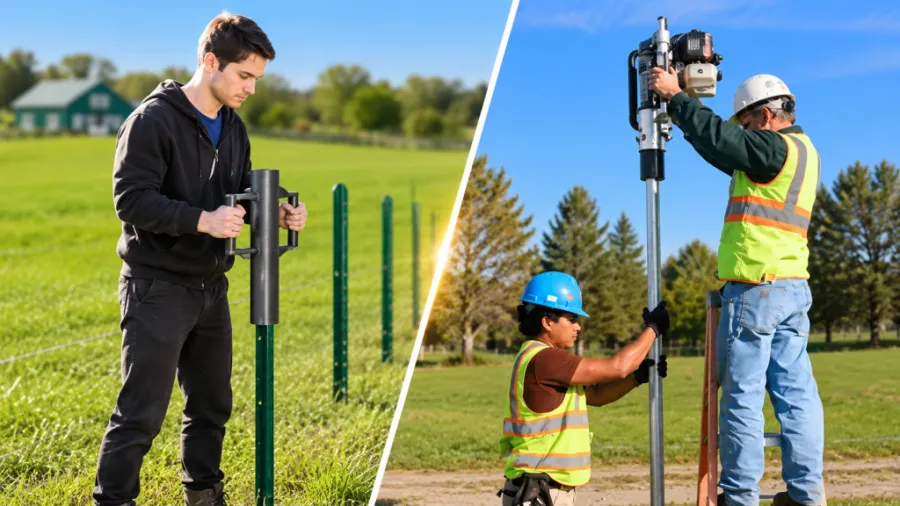
fence line is laid out, you’ve got your T-posts piled up, and one decision stands in your way: swing the hand tool or power through? Your answer depends on your post type, soil conditions, and how close you are to power sources. This guide compares both options by effort, project size, soil conditions, and power access so you can choose the right tool for your fence. For larger fence lines, compare powered fence post drivers to find an option that fits your needs.
- Powered vs. Manual Fence Post Drivers at a Glance
- What Are Powered and Manual Fence Post Drivers? How Do They Work?
- Which Fence Jobs Suit Each Driver
- How Soil, Post Type, and Project Size Change the Choice
- Cost, Effort, and Safety Compared
- How to Choose Between Manual and Powered
- Common Mistakes When Choosing a Fence Post Driver
Powered vs. Manual Fence Post Drivers at a Glance
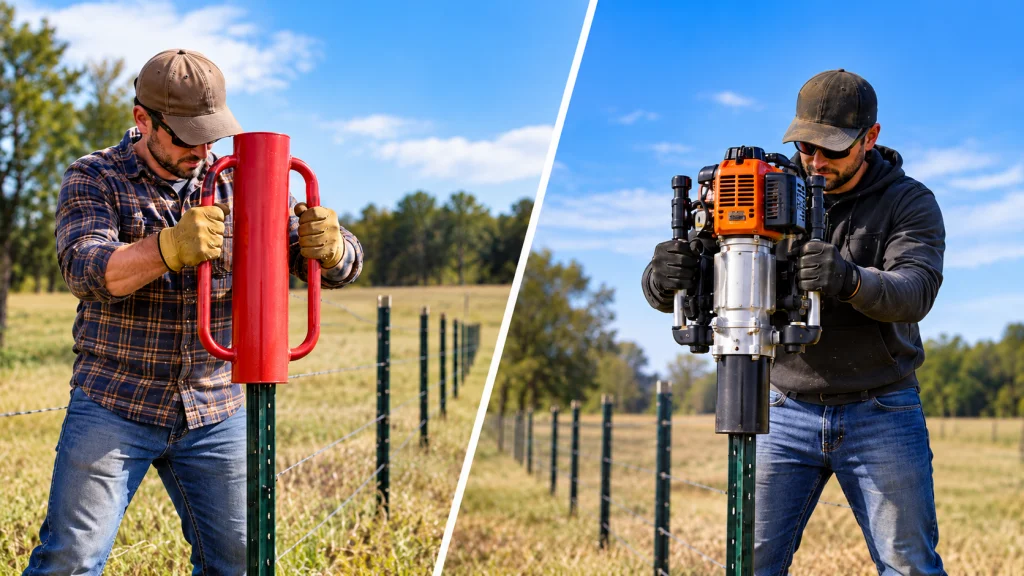
The main difference is their power source. The manual fence post driver relies on your physical effort to lift and drop the steel sleeve. A powered driver uses an engine or motor to create repeated hammering force. You guide the powered tool instead of lifting it for every strike.
| faktor | Manual Fence Post Driver | Gas-Powered Driver | Electric Driver |
| Napájací zdroj | Your own effort | palivo | Outlet or generator |
| Lifting effort | most | Najmenej | Nízky |
| Long-run use | pomalší | Často rýchlejšie | Often faster where power reaches |
| Hluk | Tichý | hlasnejší | Generally quieter than gas |
| údržba | Minimálna | Fuel and engine care | Cord and motor checks |
| Najlepšie sa hodí | Small jobs, short runs | Large or remote jobs | Jobs near available power |
Where a Manual Driver Makes Sense
A manual fence post driver is often the simplest choice for small jobs. With no engine to start, no fuel to bring, and no cords to deal with, you can take it from place to place on your property without worrying about power sources. It is silent, which makes it ideal for working near animals or neighbors, and it needs almost no maintenance thanks to its simple design.
For gardens, small pens, and wire fences, a heavy-duty manual fence post driver or T-post rammer is a good option for compatible posts and soil conditions. If you need a different sleeve size, look through the other hand-operated sleeve drivers. The downside is that you do all the work yourself, and long rows can tire your arms and back.
Where a Powered Driver Makes Sense
Beží na vodiči plotových stĺpikov excel when the work will last a while or become repetitive. Compared with a manual fence post driver, they can reduce the lifting effort required for each post. The tool does the striking, so your arms and back do less repetitive lifting while you work through a long row of posts.
Of course, there are costs involved. The gas-powered driver requires fuel and engine maintenance; the electric driver needs electricity and a long enough cord. Powered drivers generally produce more noise than manual hand tools. Use hearing protection when using powered equipment.
What Are Powered and Manual Fence Post Drivers? How Do They Work?
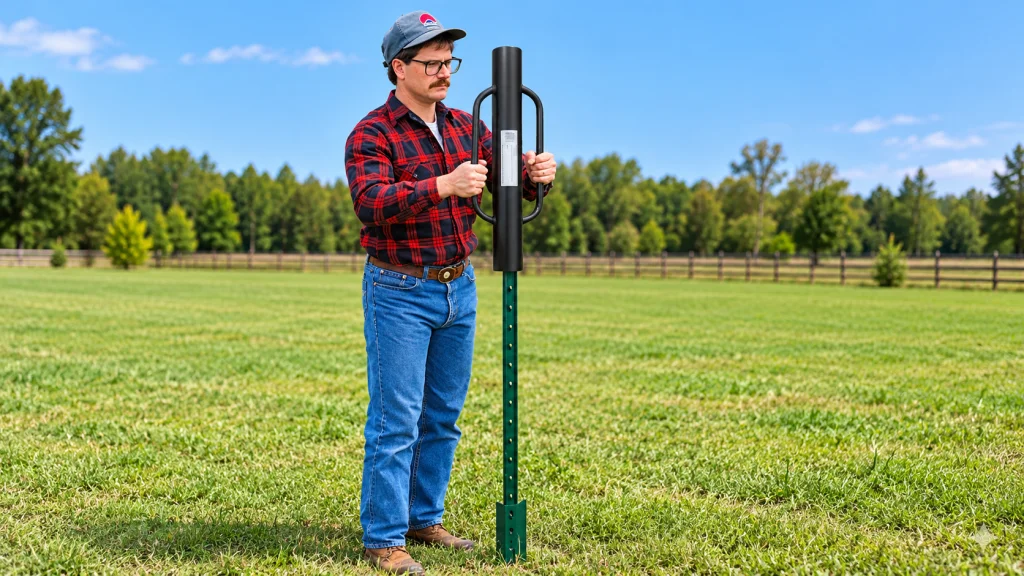
An understanding of what goes on inside the tool will explain its suitability for a particular task and give you better insights into product pages.
What Is A Manual Fence Post Driver, And How Does It Work?
A manual fence post driver has a simple design. It usually consists of a steel tube with a closed end and handles. The tube slips over the post, and you lift and drop it to drive the post into the ground. The sleeve keeps each strike centered, helping protect the top of the post while directing force downward. The sleeve size should match the post profile. Thin posts need a smaller sleeve, while thicker posts require a larger one. For example, a 4.11-inch post driver is designed for posts that fit its sleeve size.
Before using the manual fence post driver, mark the post location and position the post correctly. Insert the driver sleeve around the post and center it. Lift the driver by its handles and drop it onto the top of the post. Ensure that the post is vertical after a few hits. Also keep your hands away from the impact area. When choosing between a metal fence post driver and a fence post hammer, check that the tool matches the post and spôsob inštalácie.
Gas-Powered Drivers
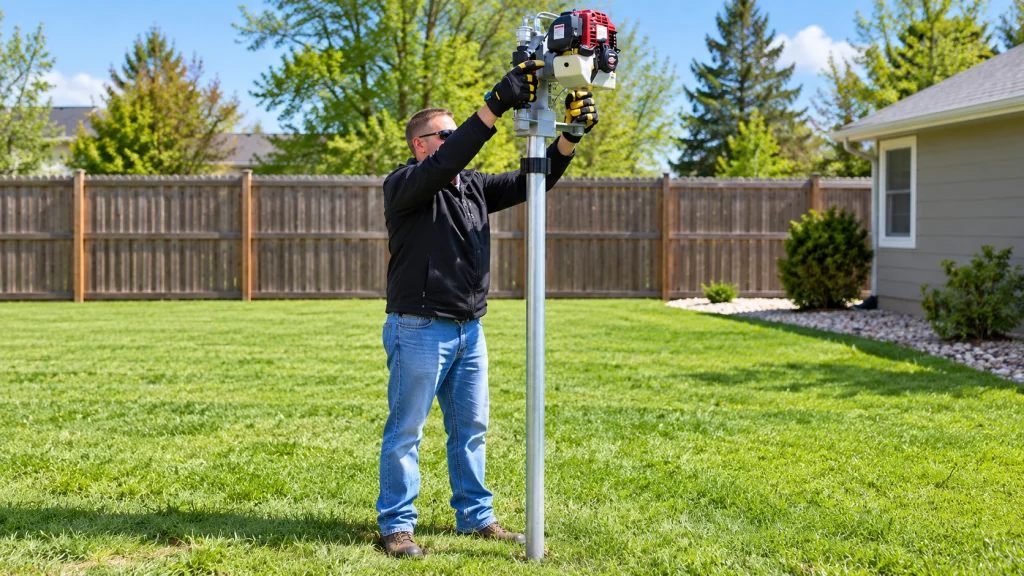
The gas-powered post driver uses an engine to provide a hammering mechanism. The gas-powered model delivers repeated hammering force through its engine, so you do not need to lift and drop the tool for each strike. The user attaches the sleeve to the post, starts the engine, and holds the device as it hammers. Some models come with different heads, allowing the same machine to work with various post sizes.
Gas-powered drivers are useful for long fence lines and locations where electrical power is not readily available. However, they require fuel, engine maintenance, and hearing protection because they are louder. A 4-stroke gas pounder is a common choice when repeated lifting would exhaust the user.
Electric Drivers
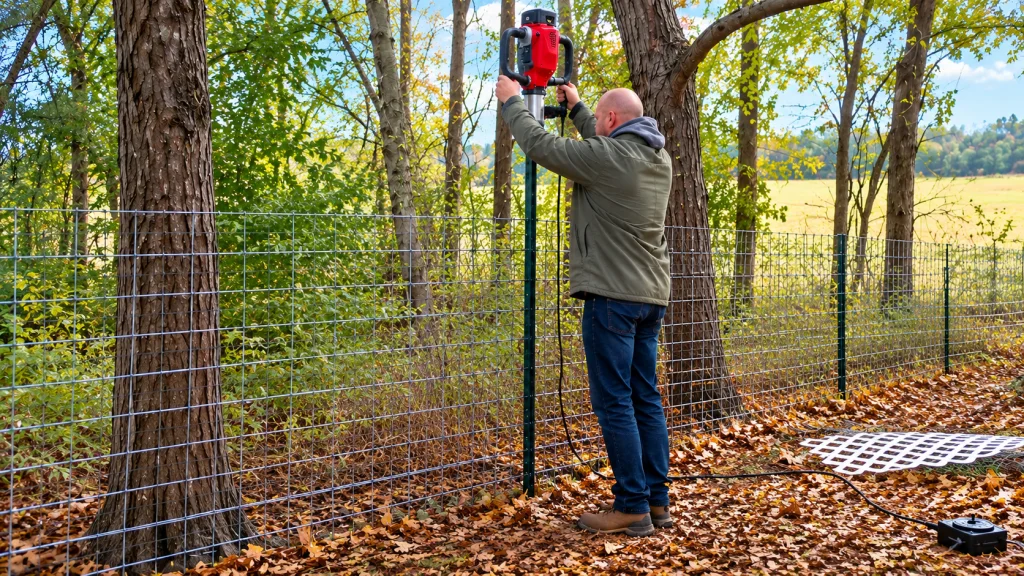
An electric T-post driver operates the same way, but uses a motor instead of an engine. It no longer requires fuel, and it usually starts up easily. The main limitation is access to electrical power. You need a suitable outlet or compatible generator, and the cord length limits how far you can work from the power source. A 2200W electric driver is provided with two sleeves.
Which Fence Jobs Suit Each Driver
Use the right tool for the job, not the other way around. Consider your number of posts, ground conditions, and distance from a source of electricity. Below is a table with some examples of tasks and which driver they should use.
| Fence Job | Lepšie fit | Prečo | Pozor na |
| Garden bed or small pen | Manuálny | Few posts, no fuel needed | Hard soil slows you down |
| Short wire fence along a yard | Manuálne alebo elektrické | Light posts, easy handling | Cord reach for electric |
| Long farm or pasture line | Na plyn | Many posts, less lifting | Fuel, noise, upkeep |
| Fence near a garage or outlet | elektrický | No fuel, simple to start | Needs a power source |
| Rocky or compacted ground | Prepared holes or powered | Hand driving struggles | Posts can deflect or stop |
How Soil, Post Type, and Project Size Change the Choice

These three factors can affect your choice. See to these before purchasing.
Pôdne podmienky
Soil conditions strongly affect how easily you can drive a post. Soft soil is generally easier to work with, while firm clay, rocky ground, and root-filled areas can slow the job. A powered driver can reduce repetitive effort in firm soil, but even a powered tool may struggle when it hits solid rock.
| Stav pôdy | Manual Driver | Powered Driver |
| Soft or loose | Easy, but check plumb often | Easy, steady the tool |
| Firm clay | Slower, more strikes | Often more manageable |
| Rocky or root-filled | Posts can deflect or stop | Can still stop, so move the spot or dig |
| Very dry or hard-packed | Needs far more effort | Usually the easier choice |
Do not force a post if it stops moving. Shift the post location or use a prepared hole instead. Check the required fence post depth before you begin.
Post Type and Size
This will determine your sleeve size and restrictions as well. Lightweight T-posts and similar post profiles work well with hand and power drivers, but heavy posts usually must be installed into holes. Aluminum posts may get dented when hit hard. In difficult ground conditions, make sure the chosen post and installation technique suit the site conditions, and consider heavier-duty steel posts. Whatever you decide on, match the sleeve to the post profile first.
Project Size and Time
Count your posts. You can handle a few posts manually without much difficulty. A long drive becomes tedious, and fatigue leads to mistakes and bent posts. If the job will take several days manually, a powered driver will save effort and help you maintain consistency. You can also switch between the two, using the manual fence post driver where needed and the powered one on long straight sections.
Cost, Effort, and Safety Compared
Price tags only tell part of the story. Running costs, upkeep, effort, and safety needs all shape what a tool really costs you.
| faktor | Manual Driver | Powered Driver |
| Cena vopred | Zvyčajne nižšie | Zvyčajne vyššie |
| Prevádzkové náklady | No fuel or electricity | Fuel or electricity |
| údržba | Clean and inspect the sleeve | Engine, motor, cord, or fuel care |
| Main safety concerns | Pinched fingers, back and shoulder strain | Noise, vibration, fuel handling |
| Ochranný výstroj | Gloves, sturdy boots, eye protection | Add hearing protection |
| Uskladnenie | Kompaktný | Zvyčajne väčšie |
Manual fence post driver requires little maintenance, but physical effort becomes the main limitation along an extended fence line. Using a powered driver adds operational considerations, but it may reduce repetitive lifting, which can help on larger projects.
Practice safety with either tool. Keep your hands away from the impact zone, rest before fatigue sets in, and always confirm there are no buried utility lines before driving any posts. Always wear protective gloves, heavy-duty work boots, eye protection, and hearing protection when using the powered tool. For more setup advice, pick up more fence post tips predtým ako začneš.
@ezequielgutierr87 @Vevor Nástroje #OSN MEXICKÝ ČINGÓN
♬ sonido originál – UN MEXICANO CHINGÓN
How to Choose Between Manual and Powered
Start with the project itself. A manual fence post driver is usually practical for a small job with compatible posts and soft or moderate soil. For a long line, a powered driver can reduce repetitive lifting. Then look at the ground. Firm, rocky, or root-filled soil points toward a powered driver or prepared holes.
Finally, check your power access. If an outlet is nearby, electric is easy. If power isn’t readily available, a gas model can be useful. For a larger job in firm soil, a 52cc 2-stroke driver is one powered option to consider. To see sleeve sizes and power types together, compare sleeve sizes and power types in one place. The options below include manual fence post drivers, gas models, and electric models.
Odporúčané pre váš projekt
Common Mistakes When Choosing a Fence Post Driver
The first is choosing based on price alone. Buying a cheap tool that doesn’t fit your soil or the number of posts will cost you time and energy. The second one is disregarding sleeve fit. Check the post profile before buying the fence post driver. The wrong sleeve may slide, jam, or damage the top of the post. If you have not selected the manual fence post drivers, Buy posts that suit your driver first and then the tool itself.
People also underrate their soil. One tool may work in soft soil, but it may not work well in hard soil, clay, rock, or rooty soil. So, test a few spots before choosing a single technique for your entire fence. Power availability is another issue, since an electric driver only works where there is electricity. Last but not least, don’t skip safety gear, even if the tools seem simple. See more driver options skôr ako sa rozhodneš.
Záver
The choice of driver depends on your posts, your soil, the task’s magnitude, and how you access the energy. Manual fence post drivers are easy and fuel-free for small tasks, while other options can help reduce the repetitive nature of the work over long distances. Match your tool to the job, assess the soil before driving, and use the right gear.
Často kladené otázky
Is a manual or powered driver better for a small fence?
A manual fence post driver is appropriate for this project if the posts and ground are suitable. It requires no fuel or electricity and is easy to store. As the task gets longer, powered drivers become increasingly useful.
Can I use a powered driver on any post?
Not at all. The sleeve or attachment needs to be compatible with the post. First, measure your post and read the tool’s directions. Some posts are better if set into holes that have been prepared.
Is a gas or electric driver better?
This depends on access to power. Gas-powered units don’t require an electrical outlet but do require fuel and engine maintenance. Electric-powered units don’t require fuel but do require adequate power.
What safety gear should I wear?
Wear gloves, sturdy boots, and eye protection. Put on hearing protection when working with power equipment. Keep your hands out of the striking zone, and locate underground utilities before setting up posts.