Pipe Stand








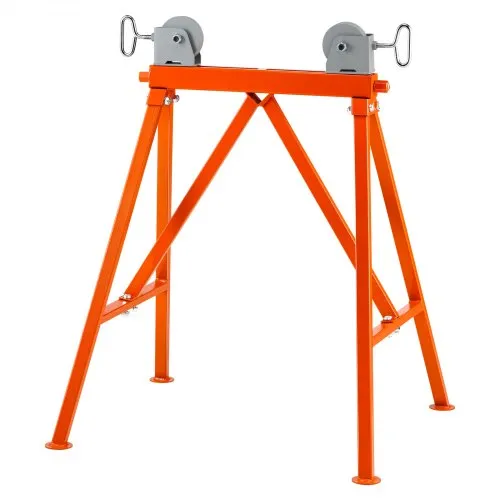
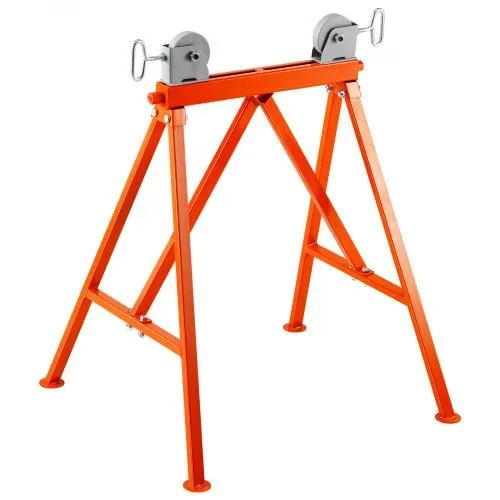
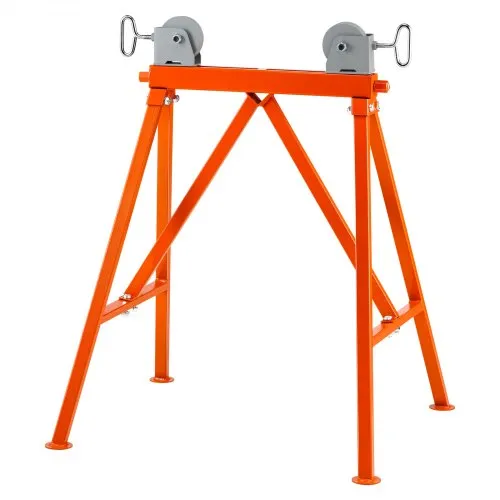


Results for Pipe Stand
Browse VEVOR pipe stands made for plumbers, welders, makers, and DIYers. We offer folding tripods, fixed-base units, V-head and roller head designs, and heights from bench level to over 50 inches. This support is the right size for the job, whether you need to thread conduit in a cellar, feed wood through a table saw, or hold a 6-inch steel line steady for a root pass. Every model is made of steel, has adjustable legs, and is priced fairly.
VEVOR Adjustable Pipe Stands for Welding, Plumbing, and Cutting Work
Have you ever tried to cut a piece of pipe that kept rolling off a sawhorse? That is what pipe stands are for. You can thread, weld, or cut with these supports because they keep the material at a steady working height. You do not need a helper. VEVOR has models that fold up, roll, and stay in place, so you can use them in your yard, shop, or on the job site.
Choosing the Right Head Type and Adjustment Range
The head is what contacts your material and controls whether the pipe stays in place or moves around. This choice matters more than almost every other spec.
V Head vs. Roller Head: What Each One Does
A V-pipe stand has a fixed V-shaped cradle that holds round stock in place. This is what you want when the material cannot move, such as when you are welding a joint, holding a flange in place, or tacking a fitting. The V shape centers the pipe itself from about 1/2 inch to 12 inches on most models, so you can use the same head across a wide range of diameters without switching parts.
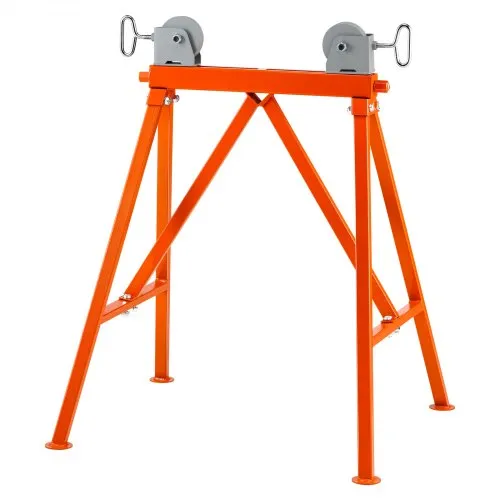
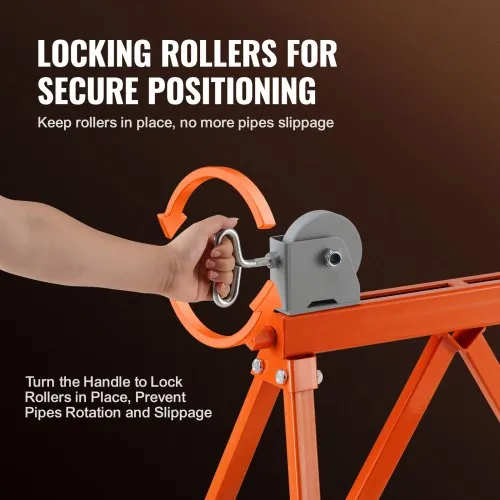
Roller pipe stands work the other way around. When you feed stock into a threader, pipe cutter, or bandsaw, you need two or four rollers that let the pipe spin and slide easily. You can also rotate a roller-head pipe stand to reach the far side of a weld without unclamping anything.
Many welders keep both kinds in their truck. For long runs of conduit or straight black iron, use a V-head jack stand at the fixed end and a roller at the feed end. On some VEVOR heads, you can switch between the V-cradle and the rollers on the same base.
Adjustment Range and Height Selection
Adjustable pipe stands usually use a threaded screw shaft, a pin-and-collar system, or both. With the screw adjustment, you have fine control; small increments let you set a slope for drainage lines or level two supports on an uneven concrete floor. Pinned systems move faster, but only in set steps, generally every inch or two.
Most VEVOR ranges are between 23 and 43 inches, and tall pipe stands can be 52 inches or more. The range should match your main work surface. If you work mostly on a 34-inch bench or feed a 36-inch pipe threader, a stand that rises to about 43 inches will give you space above and below that point.
When installed above or on a platform, tall models are very valuable. When the load is heavy, adjustable pipe jack stands with long screw travel make it safer for one person to set the exact height rather than stacking blocks under a short stand.
Base Design and Stability Underfoot
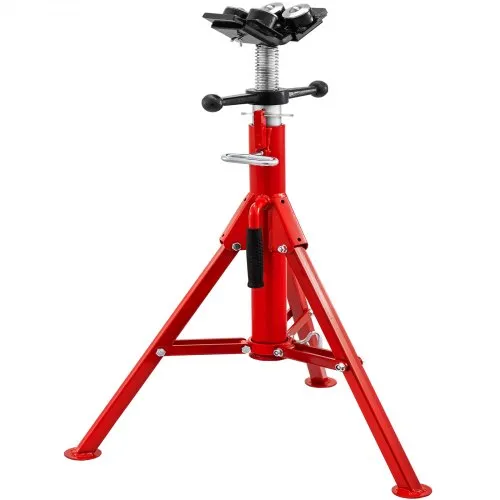
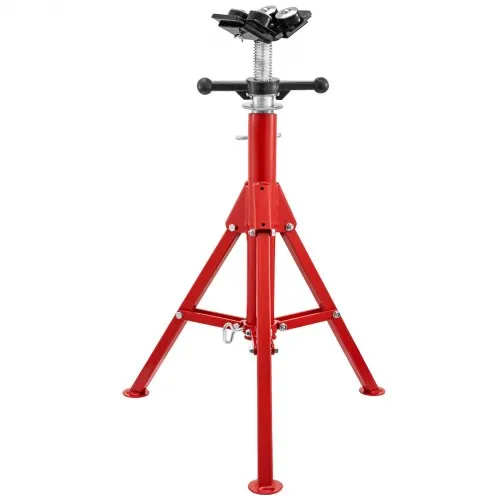
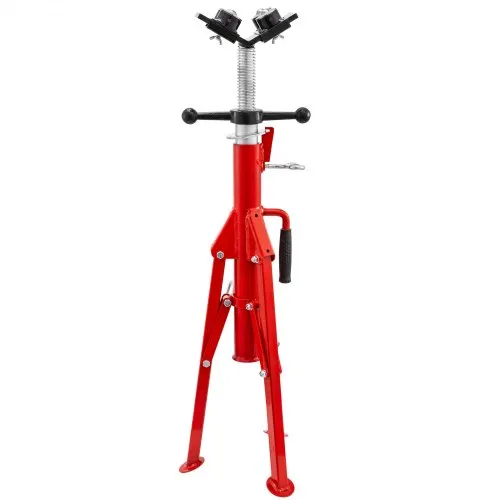
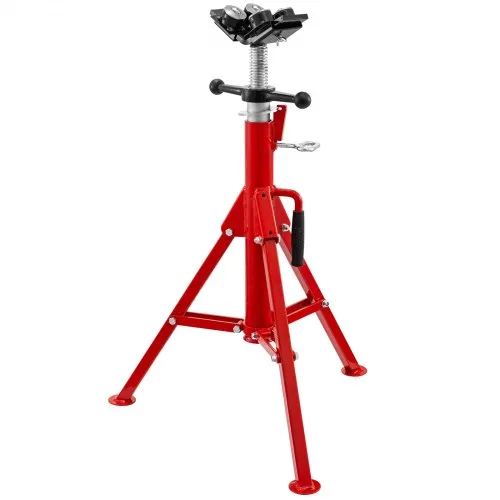
Before you look up, look down. Because they are easy to move and set up, folding tripod bases make folding pipe stands the first choice for service techs who are switching between calls. In exchange, they are smaller than a fixed four-leg base.
Fixed-leg and four-leg designs distribute the load more evenly and keep the stand from tipping over when the weight is off-center. A wider base matters if you need to support a long cantilever, like 10 feet of pipe hanging off the stand. Some VEVOR units come with rubber feet or spiked tips. Rubber protects polished floors and sticks to concrete, while spikes work in dirt and gravel outside.
Also, consider the leg-locking device. While cam locks are quick, threaded collars are more stable when the load is moving. An adjustable spread is always preferable to a fixed spread on uneven ground.
Material, Finish, and Long-Term Durability
Most VEVOR pipe stands are made of welded steel tubes that have been zinc-plated or powder-coated. Not caring for a metal pipe stand in a heated shop will shorten its lifespan. But if you put it in the bed of your truck during the winter, you will need to protect it to keep the weld seams from rusting.
For surface protection, the roller material is important. Steel rollers can handle hot work and big loads, but they can leave marks on soft copper or coated pipe. Nylon or polyurethane rollers are quieter and don't mark clean stock, but they handle weld dust less well when it hits them directly.
For welding pipe stands, look for bare steel or high-temperature finishes near the head. Over time, the finish chips because spatter sticks to painted surfaces. Check whether the head is grounded through the frame. For convenience, some fabricators clamp the ground lead directly to the stand. Check the screw threads periodically. A shot of dry lubricant keeps the change smooth. Grit in the threads is the most common cause of a stand becoming stuck.
Weight Capacity and Portability in VEVOR Pipe Stands
After choosing the head type and height, the practical questions are the stand's weight capacity and how easy it is to move from job to job.
Reading Capacity Ratings Honestly
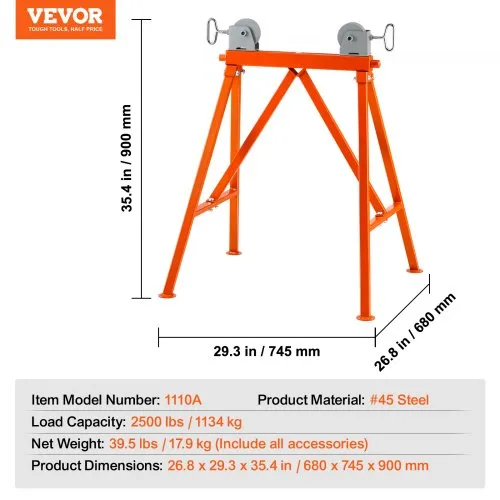
Most VEVOR heavy duty pipe stands can hold between 1,000 and 2,500 pounds, but some fixed-base models can hold more. That rating is based on a static load in the middle of a flat area. It doesn't account for a pipe hanging six feet off to one side. Do the math for the real work. A 20-foot stick of 4-inch schedule 40 steel weighs about 220 pounds. Two supports can easily share that.
When you add water to the same line, the number goes up quickly, so use the full-load size if you are hydro testing. When the ground is soft, or the load is not in the middle, it is best to keep working loads below half their ratings. Be extra careful with pipe jackstands that use a jack-screw system, since the screw itself is often the weak link, not the frame.
Portability, Storage, and Jobsite Handling
The fair trade-off is weight. Carry light folding models up a ladder; they weigh 12 to 20 pounds. Use rolling pipe stands with locking casters in a fixed fabrication bay because they move heavy items across the shop floor without moving anything.
You can store a portable pipe stand that folds flat behind a truck seat or in a van rack. If you do not have much room, check the folded size before you buy. Even smaller are pipe roller stands that adjust and have removable heads. Crews are better off buying stands in matching pairs. This is because the identical adjustment scales make it easy to set both stands to the same height without guessing.
Why Choose VEVOR Pipe Stands?
VEVOR offers folding tripods, rolling shop units, V-head welding supports, and heavy-duty fixed-base types. The prices are reasonable, so you can buy them for a crew or your own garage. They come standard with steel construction, useful capacity ratings, and easy adjustment. Supported by quick shipping and helpful customer service after the sale. Browse the pipe stands to find the right support system for your work.
FAQs
What's the difference between a V head and a roller head?
A V-head is best for welding and fitting pipes because it holds them still. A roller head lets the pipe spin and feed easily, which is good for activities like cutting, threading, and turning while welding.
How many stands do I need for a long pipe?
For most runs up to 20 feet, two supports are enough. If the pipe is longer, has a thicker wall, or is clearly sagging between supports, add a third.
Can I use these for woodworking?
Yes. This type of outfeed support works well for table saws, planers, and miter saws. V-head units work best with round stock, such as posts and dowels.
Do they work on uneven ground?
Some models have differently adjustable legs that can handle slopes and rough surfaces. If the ground is soft, use stands with spiked feet or put a piece of board under each leg.
What capacity should I look for?
One thousand pounds is enough for most plumbing and light construction. For large-diameter steel, water-filled lines, or structural work, choose models rated for 2,500 pounds.