Tomato season can get messy fast. You have a basket of ripe tomatoes, but peeling them and removing every seed takes too much time. A food mill for tomatoes can make this job easier by separating skins and seeds from the pulp. There’s a strecuratoare de rosii built for this job if you’re shopping for one.
But which type should you use? The manual mill is good for small amounts, while an electric tomato mill is better for large amounts because it makes the task easier. This guide explains how to use a food mill for tomatoes and what to look for when making sauce, passata, tomato paste, or preparing tomatoes for canning. In addition to food mills, you can also use commercial tomato presses to process tomatoes.
- What to Look for in the Best Food Mill for Tomatoes
- Comparing Food Mills for Tomatoes Across Brands
- Manual vs. Electric: Which Food Mill for Tomatoes Fits You?
- How to Use a Food Mill for Tomatoes
- How to Choose the Best Food Mill for Tomatoes Based on Your Needs
- How to Prevent Clogging When Milling Tomatoes
- Întrebări frecvente
What to Look for in the Best Food Mill for Tomatoes
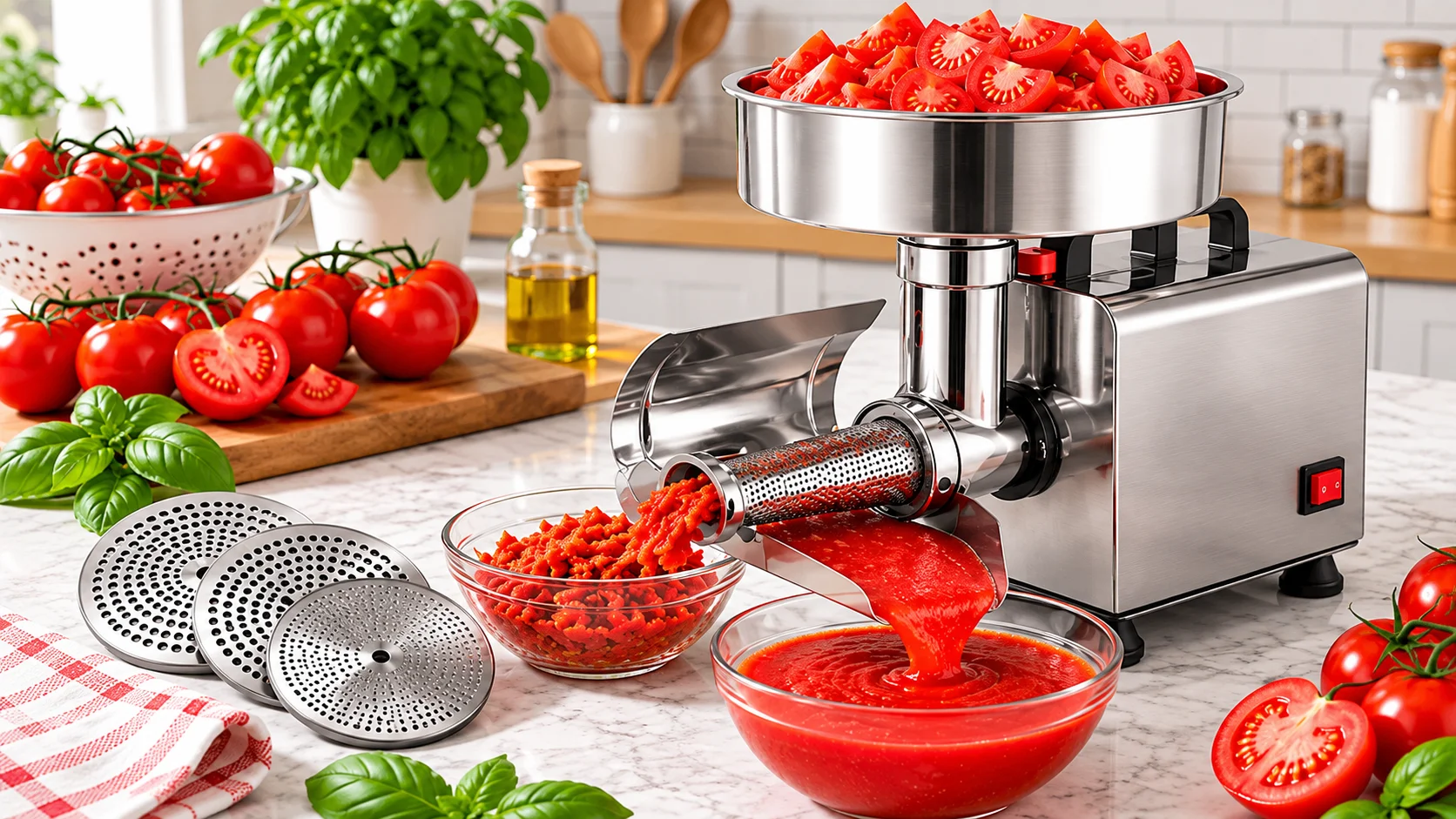
A good food mill for tomatoes should make your work easier, not add more steps. Before choosing one, think about how much tomato you usually process and the texture you want. You can compare different designs before choosing the right one.
Dimensiune ecran
The screen controls the texture of your sauce. A fine screen gives you a smoother result and helps keep skins and seeds out. A coarse screen lets more pulp through and works well for thicker sauces. If possible, choose a mill with more than one screen; a four-screen model covers that need in one machine. Then, you can also use the same tool on different recipes.
Capacitate de procesare
Think about how much tomato you usually process. A small mill can handle smaller batches, while a larger hopper is more useful when you have many tomatoes to process. For electric models, check the manufacturer’s stated capacitate de procesare before choosing one. A larger hopper can also be useful when you need to work through a large harvest.
Manual or Electric Operation
A manual mill uses a hand crank and does not need electricity. It works well for smaller batches. An electric food mill for tomatoes uses a motor and reduces the amount of hand work; this high-output model, for instance, is built for larger amounts. This can be useful when processing many tomatoes.
Material și construcție
Check the materials used for the main parts. Construcții din oțel inoxidabil can also be worth considering if you plan to use the mill often. Also check how the mill comes apart. Removable parts can make cleaning easier after processing a large batch.
Sfat: Don’t look at motor power alone. Compare capacity, screen options, construction, and how much tomato you normally process.
Comparing Food Mills for Tomatoes Across Brands
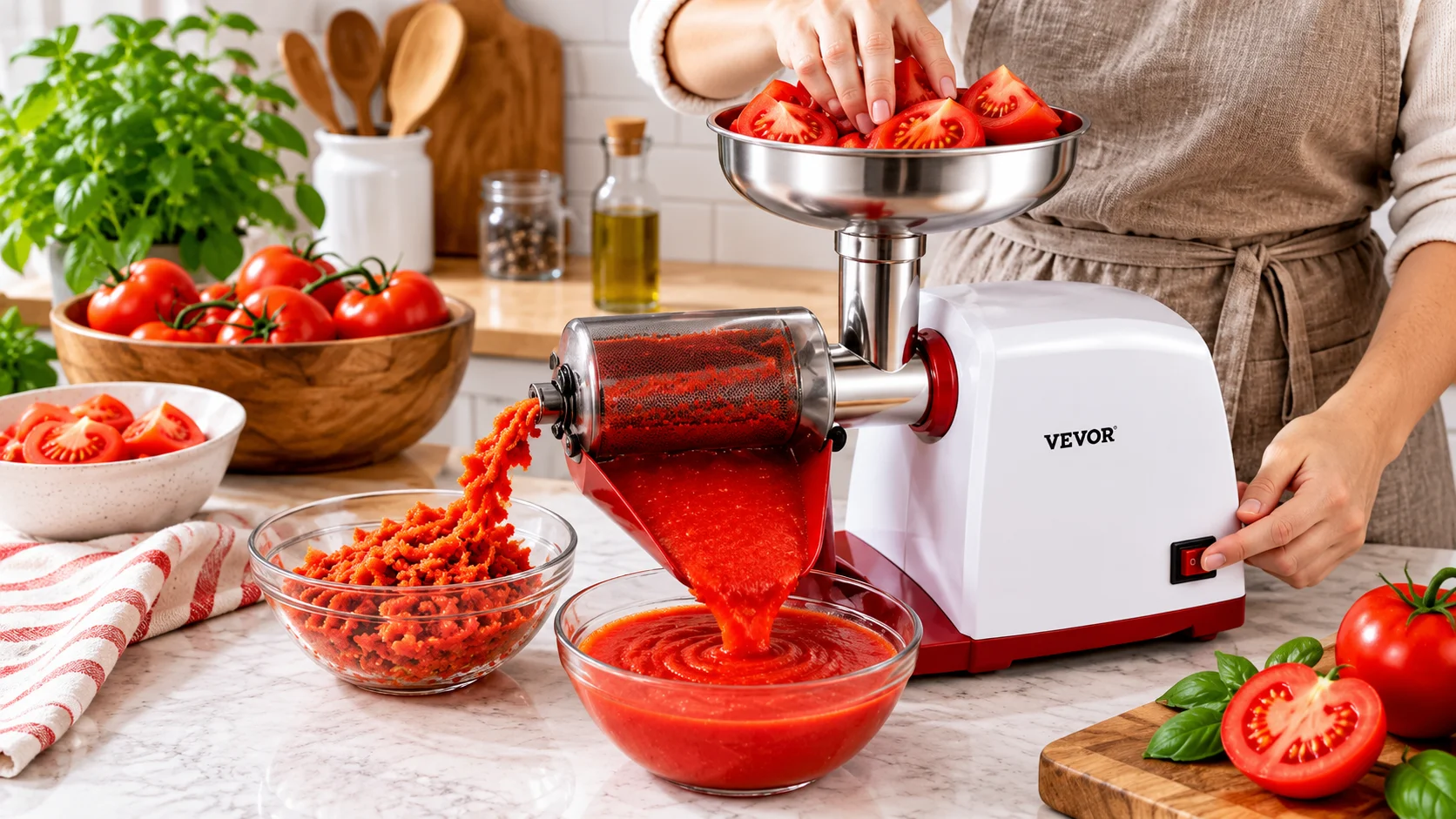
Several manufacturers make food mills and tomato strainers, but the models differ in capacity, operation, screen options, and intended use. Comparing these features can help you choose a model based on your batch size and how much hands-on work you want to do.
| Marcă și model | Tip | Capacity / Screens | Cele mai bune |
| OXO Good Grips Food Mill | Manual | 2.3 qt; 3 discs: fine, medium, coarse | Small batches, sauces, purees |
| Victorio VKP250 Strainer | Manual | 1-gallon hopper; screen options | Home tomato processing, small batches |
| Weston Deluxe Electric Tomato Strainer | Electric, 250W | 4-qt hopper; 3 screens | Larger batches of tomatoes and sauces |
| VEVOR Electric Tomato Strainer | electric | 198–330 lb/h; 1mm, 1.5mm, 3mm, 6mm screens | Large batches, frequent processing |
What to Consider When Comparing Food Mills
The right food mill depends on how much food you usually process and how much hands-on work you want to do. A manual model can be practical for smaller batches, while an electric model can reduce the effort needed for larger quantities. Multiple screens can also give you more control over the final texture.
OXO Good Grips Food Mill has a capacity of 2.3 quarts and comes with three discs: fine, medium, and coarse. Its release button makes changing discs and cleaning easier. Its main advantages are the three texture options, easy disc changes, and no need for electricity. However, it requires manual cranking and has a smaller capacity.
The Weston Deluxe Electric Tomato Strainer has a 250W motor, a four-quart hopper, and three screens. Its motor, larger hopper, and multiple screens make it useful for processing larger quantities of tomatoes. On the other hand, it requires electricity and has more parts to clean.
The Victorio VKP250 Strainer is a manual model designed for processing fruits and vegetables. It comes with a standard Apple/Tomato screen, while additional screens are available for foods such as berries, pumpkin, squash, potatoes, and salsa. It can also be used with an optional motor, giving you the choice between manual and motor-powered operation. Its main advantages are the range of available screens and the option to add a motor later. However, the standard setup requires hand cranking, so it may take more effort when processing larger batches.
For larger batches, a four-screen model offers several screen options for adjusting the texture. This model has a stated output of 198–330 lb/h and stainless steel construction. Its main benefits include four screen options, high stated processing capacity, and stainless steel construction. However, it requires electricity and may be more than needed for occasional use. If you are comparing different machines, tomato strainer options can help you compare capacity, design, and screen choices.
VEVOR Options for Different Batch Sizes
VEVOR offers several electric tomato strainer models with different motor specifications, processing capacities, hopper sizes, and screen options. The differences can help you choose a model based on the size of your usual batches.
- Higher-capacity models – Some models offer a processing capacity of 198–330 lb/h, making them suitable for larger batches.
- Multiple-screen models – Some models include four screen sizes, allowing you to adjust the texture of the finished food.
- Larger-hopper models – Models with larger hoppers can be useful when processing bigger quantities at one time.
If you do not plan to process tomatoes regularly, a manual food mill may be enough for smaller batches. For frequent large-batch processing, an electric tomato strainer can reduce the effort required for manual cranking. Consider the motor specifications, processing capacity, hopper size, screen options, and cleaning requirements when comparing models.
Recomandat pentru proiectul dvs
Manual vs. Electric: Which Food Mill for Tomatoes Fits You?
The biggest difference between the two is simple: how much work you want to do yourself. The food mill is manually operated by a crank that is turned while crushing the tomatoes. An electric model, such as the wide-hopper option, does that part with a motor.
For a few tomatoes, turning a crank may not feel like much work. You can use the mill anywhere without looking for an outlet, and it is easy to move when you need to put it away. Things change when you have a large basket of tomatoes to process. An electric food mill for tomatoes can save you from turning the handle over and over, which can be useful when making sauce, passata, or preparing tomatoes for canning.
| Food Mill Type | Ziua Operației | Cele mai bune | Efort | Electricitate | Prelucrare |
| Manual Food Mill | Manivelă | Loturi mici | More hands-on work | Nu este necesar | Depinde de ritmul tău |
| Electric Food Mill | Motor-powered | Larger batches | Mai puțin efort manual | Necesar | Depinde de model |
However, if you are preparing tomato sauce occasionally, then a hand-operated mill may be sufficient for your needs. For a bigger harvest or several batches in a row, an electric model can make the job less tiring. Think about how many tomatoes you normally process, where you will use the mill, and whether you want to turn the crank yourself before deciding between the two. Larger electric models may be useful for frequent processing.
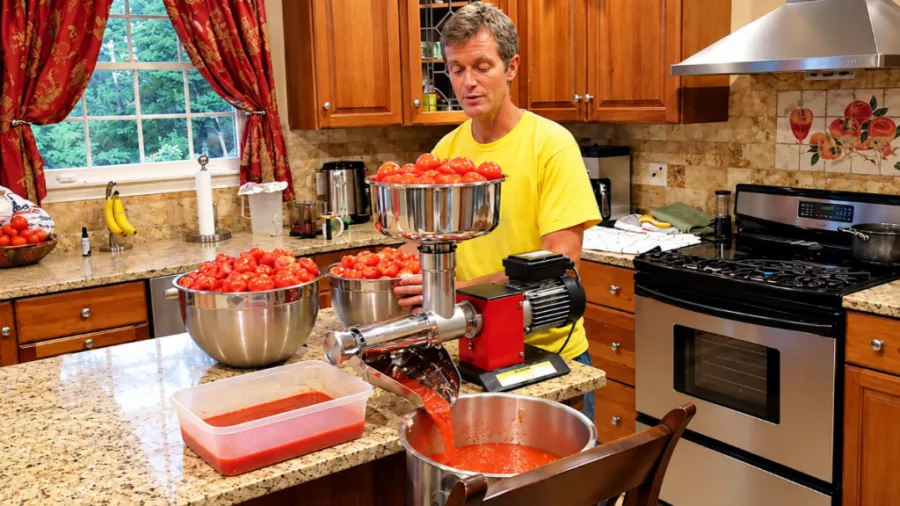
Watch a Tomato Strainer in Action
Seeing a tomato strainer in use can make the process easier to understand.
How to Use a Food Mill for Tomatoes
Using a food mill for tomatoes is simple once you know the basic steps. It separates the soft tomato pulp from the skins and seeds, so you do not have to peel and seed every tomato by hand.
Step 1: Wash and Prepare the Tomatoes
Wash the tomatoes and trim off the stems and any areas that might have been damaged. It is advisable to cut the larger tomatoes into smaller pieces to facilitate cooking.
Pasul 2: Gătiți roșiile
Cook the tomatoes until they soften and are easily breakable. Soft tomatoes can easily go through the screen and avoid clogging.
Step 3: Let the Tomatoes Cool
Let the cooked tomatoes cool for some time. The tomatoes need to be warm but not excessively so, as to be able to touch them.
Step 4: Set Up the Food Mill
Place the food mill on top of a bowl or pot. Ensure the food mill is secure before inserting the tomatoes.
Pasul 5: Adăugați roșiile
Add a small quantity of the prepared tomatoes into the food mill. Be careful not to overfill the machine because doing so makes the process difficult.
Step 6: Turn or Run the Mill
If the machine is a manual food mill, then rotate the handle. If it is an electric machine, operate it as per the manufacturer’s guidelines. You can also compare tomato mill options if you regularly process larger batches.
Pasul 7: Verificați textura
Monitor the sauce throughout the process. Use the fine screen to create a smoother texture, while using the coarse screen creates a textured sauce.
Pasul 8: Finalizați sosul
Once the milling process is complete, monitor the thickness of your sauce. The longer the cooking process, the thicker the sauce and tomato paste.
How to Choose the Best Food Mill for Tomatoes Based on Your Needs
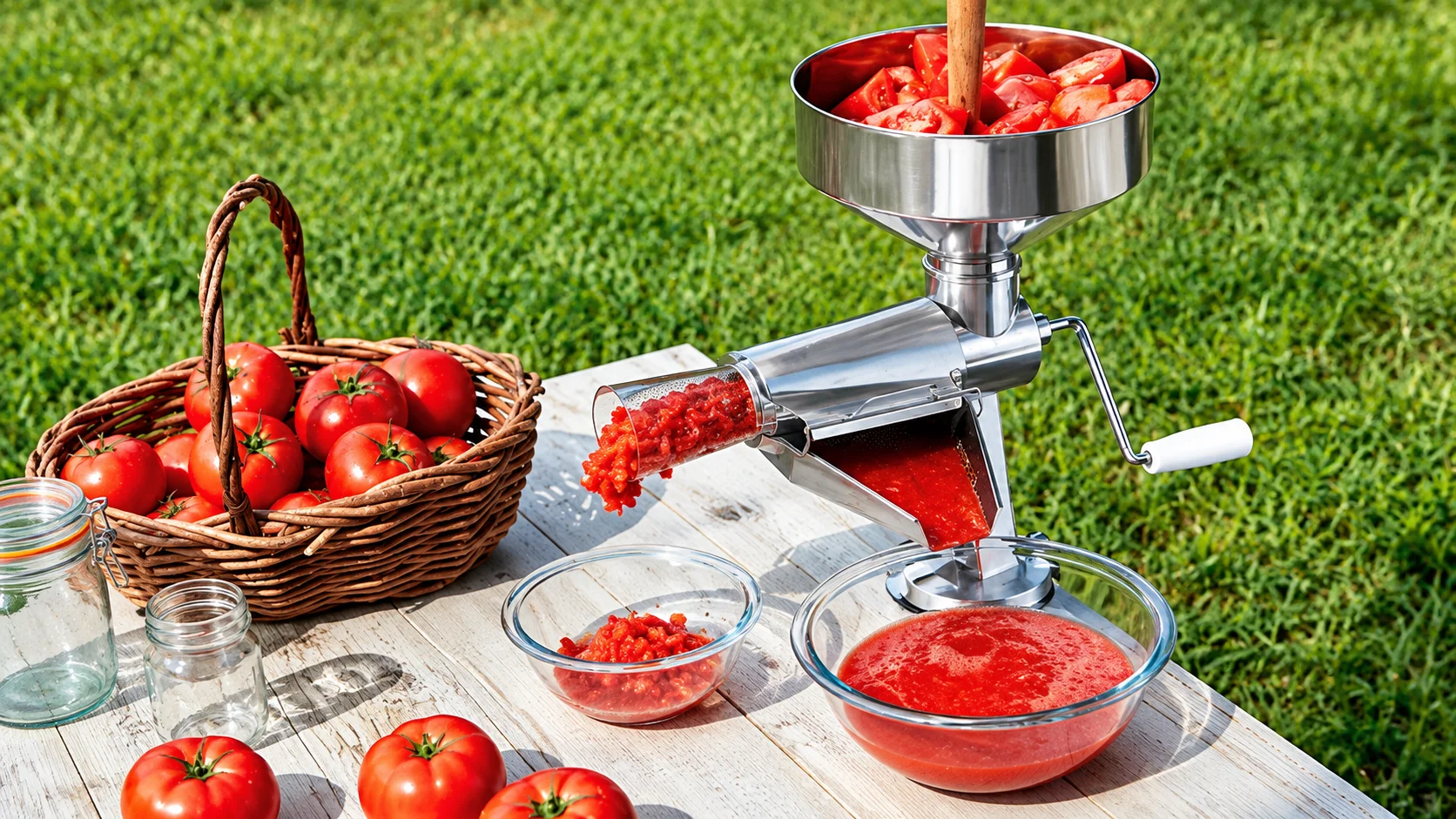
Your screen choice could affect the texture of your finished tomatoes. Consider the batch size as well, since this may influence what is important to look for.
| Tip ecran | Cele mai bune | Rezultat |
| E bună | Passata and smooth sauce | Textura mai netedă |
| Mediu | Everyday tomato sauce | Textură echilibrată |
| Aspru | Thick sauce and puree | More pulp and texture |
| Ecrane multiple | Different recipes | Mai multă flexibilitate |
Este recomandabil să luați în considerare utilizarea unui food mill for tomato sauce that has a finer mesh to strain tomato sauce, as it will allow for removing skins and seeds from tomatoes. This will be necessary in case one needs to prepare a smooth tomato sauce but does not want to peel off tomatoes.
Thicker tomato sauce requires the use of medium or coarse mesh, allowing more tomato pulp to pass through. If one makes different tomato recipes, it will be ideal to have a food mill that comes with mai multe ecrane. Tomato paste should be made using the fine mesh, and the strained pulp is cooked further to get rid of moisture.
The batch size is just as important as the texture, as canning can require a large number of tomatoes. Therefore, it will be useful to have a food mill that has a good hopper capacity. This four-screen strainer covers four different sizes. For those who wish to preserve their harvested tomatoes, this guide on how to vacuum seal tomatoes may prove helpful.
How to Prevent Clogging When Milling Tomatoes
The blocked screen could affect the entire process. Tomato peels, seeds, and pulp could accumulate in the mill if it is overwhelmed by too many tomatoes or if the tomatoes have not been softened.
Softening the Tomatoes Prior to Milling – The tomatoes should be cooked until they soften before being added to the mill. Soft tomatoes will be easier to mash and allow for smooth passage through the screen.
Feeding the Mill Appropriately – Too many tomatoes should not be added at once to the hopper. They should be added gradually so that the mill can process them. This is especially applicable when using a manual food mill since too much food could make turning the crank difficult.
Use the Right Screen – A super-fine screen will get clogged up more quickly while working with thick produce. Check the screen often and take action as soon as it is clogged. If extra fineness is not necessary, try using a coarse screen.
Don’t Force the Tomatoes Through – If the machine does not work well anymore, check the screen again. Don’t use any force and don’t overload the machine. As for an electric tomato mill, follow the manufacturer’s advice and don’t add too much produce into the hopper; a model with a reverse function can help clear a stuck batch.
Clean the Food Mill Right After Using It – It is better to rinse the removable parts right away. Otherwise, dried tomato pulp will be harder to clean afterward.
Several small things can change the results for the better. Prepare the tomatoes correctly, process them gradually, choose the right screen, and clean the mill carefully.
Învelire
When it comes to making tomato sauce, there is no need to peel off and remove seeds manually from each tomato. The food mill for tomatoes helps to sort out the skins and seeds but gives control over the end result. Manual mills can be used for small amounts of product, but you may choose an electric one too — browse tomato mills if you need one for larger batches. Selecting the correct screen size, capacity, and type will help you get a smooth sauce, passata, or tomato paste with less effort.
Întrebări frecvente
1. What are the best food mills for making tomato sauce on a stovetop?
A manual food mill for tomatoes can work well for making sauce on a stovetop, especially for small or medium batches. Choose a fine screen for smoother sauce or a medium screen if you want more texture.
2. What are the top-rated food mills for making smooth tomato passata?
For smooth passata, look for a food mill for tomato sauce with a fine screen that can separate skins and seeds from the pulp. A model with multiple screen options can also give you more control over the final texture.
3. Which food mills make it easiest to separate skins and seeds without clogging?
A food mill for tomatoes with the right screen size and enough capacity can make separating skins and seeds easier. Cook the tomatoes until soft, add them in small amounts, and avoid overloading the mill to help prevent clogging.
4. Which food mills are best for leaving seeds and skins out of sauces?
A fine-screen food mill for tomato sauce is a good option when you want smoother sauce with fewer skins and seeds. Properly cooking the tomatoes and choosing the right screen can also improve the result.
5. What are the top heavy-duty food mills for canning and large batches?
For canning and large batches, look for an electric food mill for tomatoes with a larger hopper, good processing capacity, durable construction, and suitable screen options. Electric models can also reduce the manual effort required when processing many tomatoes.