

Concrete Screeds






Results for Concrete Screeds
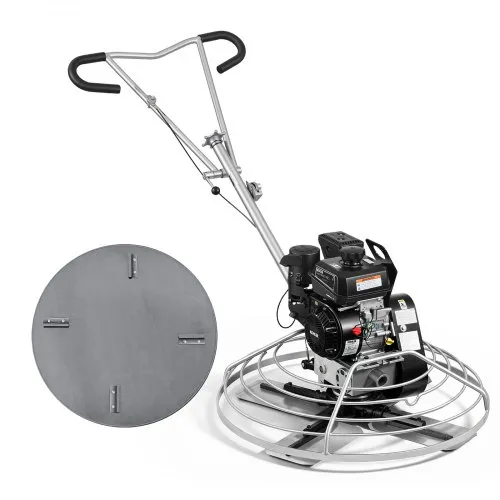
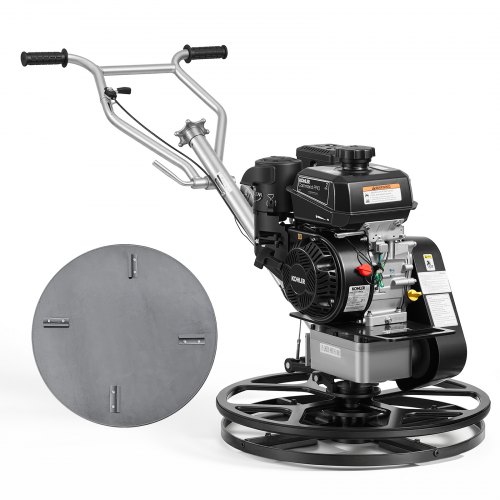
A power trowel is a concrete finishing machine that spins rotating blades across a freshly poured slab to produce a smooth, dense, level surface. It replaces the slow, physically demanding work of finishing concrete by hand, driving the blades over the curing surface to compact it, close surface pores, and refine the texture. As the machine floats across the slab, the turning blades flatten ridges and draw a tight, uniform finish into the top layer. The result is a harder, flatter, and more durable concrete surface, achieved faster and far more consistently than manual troweling can manage.
Power trowels fall into two groups: gas-powered walk-behind machines and smaller corded electric finishers. Walk-behind gas trowels run blade diameters from roughly 24 to 46 inches on engines of about 5.5 to 14 HP, with adjustable blade pitch for each finishing stage. Compact electric trowels swap engine power for a quieter, lower-emission corded motor suited to enclosed interiors. Larger diameters and higher output clear big slabs faster, while smaller machines reach into tight corners. Typical uses are garage, basement and driveway slabs, warehouse and industrial floors, retail build-outs, and bridge-deck finishing.
Five things decide which power trowel you need:
- Slab size: measure the square footage and the tightest spaces to pick a blade diameter that covers ground without trapping the machine in corners.
- Engine output: higher horsepower holds blade speed on stiff, late-stage concrete, while lighter pours finish fine on 5.5 to 7 HP.
- Power source: gas suits open and outdoor sites, while a corded electric unit avoids exhaust inside enclosed or occupied rooms.
- Blade pitch range: a wider adjustable pitch lets one machine move from flat floating passes to steep burnishing passes.
- Weight and handling: a one-operator machine should be light enough to reposition and transport without extra crew.
Browse the full walk-behind power trowel range to match blade diameter, engine output, and power source to your slab, or open the complete power trowel collection to compare every configuration in one place.
Power Trowel Types at a Glance
The table below sorts the category into its main machine classes so you can see how reach, power, and weight shift as the machines get larger.
| Type | Trowel Diameter | Engine / Motor Output | Operating Weight | Selection Note |
|---|---|---|---|---|
| Compact walk-behind | 24 in class | 5.5 to 7 HP gas | About 100 lb | Fits tight interiors and finishes close to walls and formwork edges |
| Mid-size walk-behind | 28 to 38 in class | 5.5 to 7 HP gas | One-operator range | Balances coverage per pass with weight one person can manage |
| Full-size walk-behind | 46 in class | 9.5 to 14 HP gas | Over 200 lb | Fastest coverage on large slabs but needs help to reposition |
| Electric finishing trowel | Small corded disc | 800 W, 120 to 200 RPM | Lightest, hand-carried | Low-emission choice for enclosed interiors and small patches |
VEVOR Power Trowels: Reliable Concrete Finishing Machines for Every Slab and Site
Are you searching for power trowels that, without the physical strain and irregularities of hand troweling, consistently produce a hard, smooth concrete surface finish over vast slab areas? Proper concrete power trowels significantly shorten finishing times, increase surface density, and yield results that are difficult to duplicate on a large scale with hand tools. Every concrete contractor can choose a machine that fits their typical slab sizes and finishing standards thanks to VEVOR's wide range of blade diameters, engine outputs, and operational configurations.
Blade Diameter and Motor Power in VEVOR Power Trowels
The two main performance parameters of any power trowel are blade diameter and motor power, which determine the finishing coverage each pass and whether the device provides enough torque to work the concrete surface efficiently throughout the curing phase. VEVOR's power trowels are precisely engineered to accommodate a wide range of slab sizes and finishing requirements.
Blade Diameter Options – 24, 36, and 46 Inch Configurations
The finishing width per spin is determined by the diameter of the power trowel blade, which directly affects how quickly a machine can complete a specific slab area. A common configuration in the walk-behind power trowel category is a 24-inch blade diameter, ideal for limited interior pours, smaller residential slabs, and spaces where a larger machine cannot move comfortably. When finishing coverage is crucial, but room is limited, a 24-inch machine's small footprint enables it to operate near walls, columns, and formwork edges.
A popular configuration for residential and light commercial concrete work is a 36-inch blade diameter, which balances finishing coverage per pass with a machine weight and footprint that one operator can safely manage throughout the workday. A 46-inch blade diameter helps optimize finishing speed for large commercial slabs, such as warehouse floors, industrial facilities, and large-format retail spaces, by covering the maximum surface area per rotation, lowering the total number of passes needed to finish the slab, and shortening the critical window between concrete placement and final surface finishing. The three-blade diameter variations of VEVOR's concrete power trowels are available; each product lists specific machine specifications and finishing coverage rates.
Engine Output and Motor Power for Different Slab Conditions
A concrete power trowel machine's ability to maintain constant blade speed and torque under various concrete stiffness conditions during the finishing window depends on its engine or motor output. A machine with insufficient power will bog down, slow its blade speed, and produce an uneven surface finish as the slab stiffens toward its final troweling stage. However, fresh concrete at the early stage of surface set requires less blade torque to work effectively.
Many residential and commercial finishing applications are handled by petrol-powered walk-behind power trowels in the 5 to 9 horsepower range, with higher-output engines in the 7 to 9 horsepower range providing the sustained torque required for large slabs and late-stage burnishing passes on stiff concrete. Electric power trowels, which provide steady motor output in a lower-emission configuration suitable for occupied building renovations and indoor industrial floor finishing, can be a useful option for enclosed interior environments where gasoline-engine exhaust is a ventilation concern. Site managers can choose the right power source and output level for their specific site conditions and ventilation limits with VEVOR's power trowels, available in both gasoline and electric configurations with clearly defined engine and motor output ratings.
Blade Speed and RPM Control for Different Finishing Stages
Using a power float trowel to finish concrete typically requires several passes at progressively later stages of the curing cycle, each with a different blade speed setting to achieve the desired surface appearance. Lower blade speeds that work the surface aggregate and bleed water without overworking the fresh material are used in the first floating pass, which is performed when the concrete surface can support the machine's weight without significant blade penetration. This pass helps close the slab's bleed-water channels and level surface imperfections.
The surface layer is consolidated by subsequent troweling passes at progressively higher blade speeds, which also refine the surface texture toward the desired finish quality and increase density and hardness. The firm, dense, mirror-smooth surface that distinguishes properly polished industrial concrete is created during the final burnishing pass at maximum blade speed on a virtually cured slab. The process flexibility required to produce a professional multi-stage finish result on any slab is provided by VEVOR's concrete power trowels' adjustable blade speed controls, which enable the operator to dial in the proper RPM for each finishing stage.
Walk Behind Power Trowel Dimensions and Site Maneuverability
The ease with which a walk-behind power trowel may be moved around a slab, carried between job sites, and stored while not in use depends on its physical dimensions and operational weight. In smaller operations, when a lighter machine would be more operationally efficient, a machine that is too heavy for a single operator to move comfortably necessitates additional workforce for positioning and transportation, adding expense and complexity. Compact 24-inch models weigh about 100 pounds, while full-size 46-inch units weigh more than 200 pounds.
Over the course of a long workday, handlebar ergonomics and design significantly impact operator fatigue and finishing quality. Throughout lengthy finishing sessions, operators of varying heights can maintain proper posture and control thanks to adjustable handlebars. With flexible handlebar configurations and balanced machine weight distribution, VEVOR's walk-behind power trowels are made with the operator's ergonomics in mind. This feature helps minimize physical strain and maintain precise steering control throughout the concrete finishing process.
Matching a Power Trowel to the Job
The specs above describe the machines; this table starts from the job and points to the configuration plus the single factor that matters most for each setting.
| Project Setting | Priority Configuration | Key Consideration | Why It Fits |
|---|---|---|---|
| Small interior or basement slab | 24 in gas, 5.5 to 7 HP | Maneuvering space | Finishes close to walls where a wide machine cannot turn |
| Garage or driveway pour | 24 to 38 in gas, 6 to 7 HP | Finishing window | Holds blade speed as the slab stiffens across an open pour |
| Occupied indoor renovation | Electric 800 W, corded | Ventilation | Corded power avoids engine exhaust in enclosed, occupied rooms |
| Warehouse or industrial floor | 46 in gas, 9.5 to 14 HP | Coverage per pass | Wide blades cover the slab before it cures past troweling |
| Bridge deck or large outdoor span | 28 to 46 in gas, 7 to 14 HP | Burnishing torque | High output sustains late, high-speed passes on stiff concrete |
Features and Applications That Define Professional Power Trowels
The operational characteristics and application versatility of a concrete power trowel machine influence how effectively it performs across the variety of finishing tasks a professional contractor encounters, along with blade diameter and motor power. The features of VEVOR's power trowels are designed to meet the needs of actual job sites.
Pitch Adjustment, Guard Design, and Operational Safety Features
One of the most crucial functional aspects of a professional concrete power trowel is blade pitch adjustment, which allows the operator to adjust the trowel blades' angle relative to the concrete surface during use. When the concrete surface is still relatively soft in the early floating stage, a flatter blade pitch provides less pressure over a larger contact area. To further consolidate and harden the surface layer during the later troweling and burnishing steps, a steeper blade pitch directs finishing pressure.
Any power trowel operating in a professional site setting should include safety measures such as engine kill switches, dead-man throttle controls, and full-perimeter blade guards. The blade guard helps reduce the risk of the machine running over formwork edges or other obstructions at operating blade speed and prevents unintentional contact with the moving blades. With blade-pitch adjustment mechanisms and comprehensive safety guards designed to comply with common professional site safety guidelines, VEVOR's concrete power trowels provide operators with the finishing control and physical protection required for safe, efficient everyday operation.
Residential, Commercial, and Industrial Power Trowel Applications
Power trowels are used in a wide range of concrete finishing applications in commercial, industrial, and residential construction, and the appropriate machine specification differs significantly across different settings. A 24 to 36-inch machine with a mid-range engine power may effectively finish smaller slab sections in residential applications, such as garage floors, basement slabs, and driveway pours, without the expense and complexity of complete commercial-grade equipment. A smooth, dust-resistant surface that is suitable for direct coating or finished flooring is the finishing standard for many residential slabs.
Larger blade diameters and higher engine outputs are necessary for commercial and industrial applications, such as warehouse floors, manufacturing slabs, and large retail areas, to cover the slab surface within the allotted finishing window before the concrete stiffens beyond the ideal troweling consistency. A flat, hard, burnished floor that satisfies specific flatness tolerances and surface hardness standards for forklift traffic, racking loads, and heavy industrial use is also often required for these applications. With both application scales covered by VEVOR's power trowels, contractors can find the right tool for any project without relying on specialized equipment outside VEVOR's product line.
Best-Seller Comparison
These five machines, listed in the catalog they appear in the category, show how diameter, power, and weight trade off across the current lineup.
| Product | Finishing Pan Diameter | Trowel Diameter | Engine Output | Blade Pitch | Net Weight | Best For |
|---|---|---|---|---|---|---|
| 24 in Power Trowel, 5.5 HP | 24 in | 23.23 in | 5.5 HP | 0 to 18° | 115.4 lb | Lowest-power pick here; tight interior slabs and edging near walls |
| 24 in Power Trowel, 6 HP | 24 in | 23 in | 6 HP | 0 to 28° | 125 lb | Lightest verified unit; compact slabs needing a 0 to 28° sheen |
| 34.8 in Power Trowel, 5.5 HP | 36 in | 34.84 in | 5.5 HP | 0 to 18° | 157.52 lb | Widest reach still running on 5.5 HP; mid-size residential floors |
| 38 in Power Trowel, 6 HP | 38 in | 35 in | 6 HP | 0 to 28° | 210 lb | Most pan reach under 6 HP; larger residential and light-commercial pours |
| 46 in Power Trowel, 9.5 HP | 46 in | 46 in | 9.5 HP | 0 to 18° | 282.96 lbs | Largest pan and highest output in the set; warehouse and industrial slabs |
Shop VEVOR Power Trowels for Fast, Professional Concrete Finishing
From small walk behind power trowels for home slab work to high-output concrete power trowel machines designed for demanding commercial and industrial finishing, VEVOR offers a comprehensive line of power trowels covering every blade diameter, motor output, and finishing application. Each machine delivers dependable, high-quality finishing results at an affordable cost for both construction companies and independent contractors. Get the ideal power trowel for your upcoming concrete project right now by browsing the whole inventory at VEVOR.com.
FAQs
What are the different types of power trowels?
The main split is gas-powered walk-behind machines and smaller corded electric finishers. Walk-behind units cover roughly 24 to 46 inch blade diameters for slab work, while compact electric trowels suit enclosed interiors and small patches. Ride-on trowels exist for very large pours but sit outside this lineup.
What size power trowel do I need?
Match blade diameter to the slab: a 24 inch machine handles garages, basements and tight interiors, a 36 to 38 inch unit suits mid-size residential and light-commercial floors, and a 46 inch trowel clears large warehouse and industrial slabs fastest. Smaller diameters also reach corners a wide machine cannot.
What blade diameter power trowel do I need for a residential garage slab?
For the majority of residential garage slabs, a 24 to 36-inch walk-behind power trowel works well. Compact enough to operate near walls and formwork edges without leaving incomplete perimeter portions, the 36-inch design effectively covers ground on open pours.
How much does a power trowel weigh?
Weight climbs with blade diameter. Compact 24 inch walk-behind models start around 100 pounds, mid-size 34 to 38 inch units run roughly 155 to 210 pounds, and full-size 46 inch machines top 200 pounds. Corded electric finishers are the lightest, easy to carry by hand.
When during the curing process should I start using a power trowel?
Depending on the mix design, temperature, and humidity, start the first floating pass 1 to 3 hours after installation, or until the concrete surface can support the machine's weight without significant blade sinkage. Starting too late makes completing much more difficult, while starting too early can damage the surface.
What safety tips should I follow when using a power trowel or float?
Keep both hands on the handlebars, wear eye and hearing protection, and never reach under a running power trowel. Check that the centrifugal kill switch and blade guard work before starting, run gas models only in ventilated areas, and let the engine cool before refueling or cleaning blades.
Can power trowels be used on all concrete mix designs?
Standard Portland cement mixes used in both residential and commercial construction are generally well suited to power trowels. Blade adjustment or timing modification is often necessary for fiber-reinforced and custom additive blends. Before deciding on a finishing strategy for non-standard concrete, always refer to the mix design specifications.
What maintenance does a concrete power trowel machine require?
After each use, check and clean the blades to remove any hardened concrete residue. Before every operation, check the engine oil level. Regularly lubricate blade pitch adjustment mechanisms, check blade edges for wear or distortion that can lower finishing quality, and replace blades when they become too thin.
