Traction Boards








Results for Traction Boards
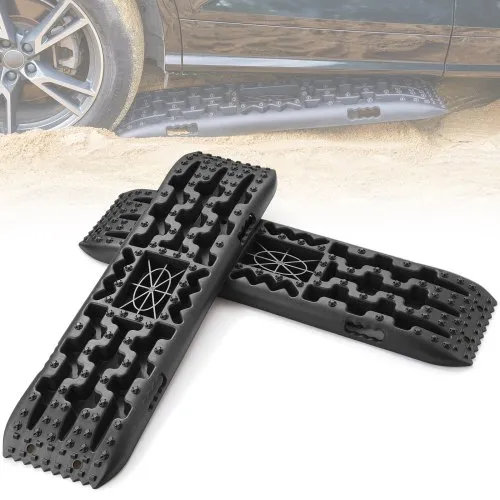
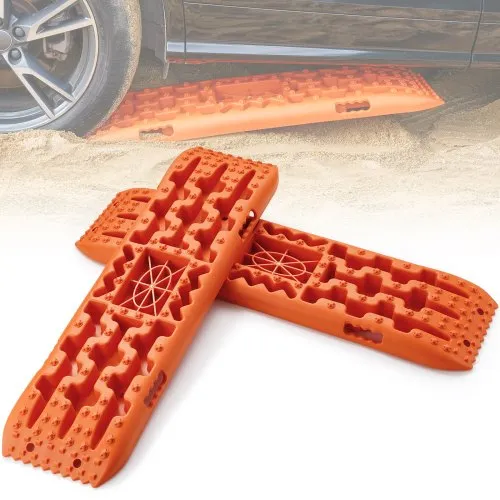
Traction boards are portable recovery mats that give a stuck vehicle's tires something firm to grip when the ground underneath has lost its hold. A driver wedges one board tight against the face of each spinning drive tire, then applies gentle throttle. Raised teeth on the top surface lock into the tire tread, while the wide, ribbed base spreads the vehicle's weight so the board stays on top of loose ground rather than sinking. The tire climbs onto the board, rolls along its length and drives off the far end onto firmer footing. Once the vehicle is free, the boards are lifted out, knocked clean and stowed for the next recovery.
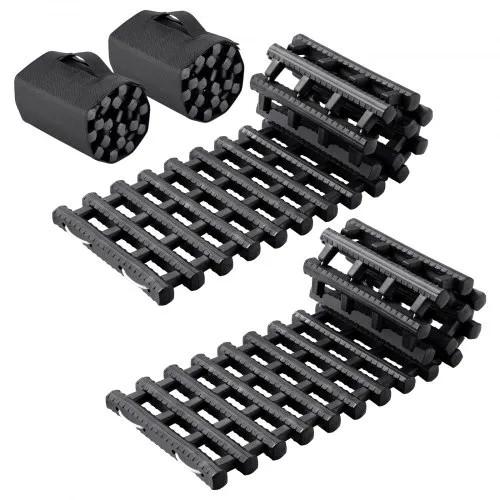
VEVOR builds its range around three board styles. Medium-length straight PP recovery boards measure 40.9 inches, carry a 10-ton rating and give the gentlest climb out of deep sand and mud. Short PP traction boards keep the same 10-ton rating in a 27.2-inch body that suits smaller cargo areas, while roll-up TPR track boards bend to the ground around a steel core, carry 7 tons and roll up for storage. Typical uses are freeing cars, SUVs, pickups and RVs from mud, snow and sand, winter commuting, overlanding and slippery boat ramps.
Four things decide what you need:
- Vehicle weight: add curb weight, gear, roof loads and any trailer, then keep the total under the board's load rating.
- Terrain: deep sand and mud reward a longer ramp, while packed snow and quick roadside stops suit a shorter board.
- Storage space: measure the trunk, bed or rack first; rigid boards lie flat, while track boards roll up.
- Rigidity: rigid boards hold a straight ramp under heavy tires, and flexible ones follow ruts and slick surfaces.
Compare every length, material and color in the full traction boards collection, or round out your roadside kit with more tire accessories from VEVOR.
Traction Board Types at a Glance
The three board styles differ most in how they are built, how much ramp they give and how they pack away.
| Board Type | Structure | Ramp Length | Storage | Trade-offs |
|---|---|---|---|---|
| Long straight board | Rigid PP, cross-shaped teeth | Longest, gentlest climb | Lays flat; bulkiest to stow | Most climb support, but heaviest to carry |
| Short straight board | Rigid PP, cross-shaped teeth | Short, steeper climb | Lays flat; fits small trunks | Easy to stow, less ramp in deep ruts |
| Roll-up track board | Flexible TPR, steel core | Short, bends to terrain | Rolls up into a bag | Most compact and conforming, lower load rating |
VEVOR Traction Boards for Off-Road Recovery Across Mud, Snow, and Sand
Are you planning a trip where the terrain will be unpredictable? Drivers can count on VEVOR traction boards to provide the grip, structure, and durability they need when their tires start to sink or spin. These off road traction boards make a stable path for your car to climb out of soft snow, deep mud, or shifting sand. These sets are designed for people who commute to work every day, go on weekend trips, or travel across the country. They come in small, easy-to-store packages that are always ready to help.
Material & Traction Design That Defines High-Performance Recovery
At first glance, traction devices may seem simple, but the engineering that goes into them is anything but. When the ground gets rough, the board's effectiveness depends on the material's strength and flexibility, the shape of the teeth, and how well they distribute the vehicle's weight.
Material Strength for Reliability in Harsh Terrain
The material used to make a recovery board is what makes it reliable. Cheap plastics often warp or crack when it's cold, and materials that are too stiff can break when heavy vehicles drive over them. VEVOR uses tough blends of PP and TPR that withstand pressure without breaking. It means that the boards can be used over and over again, even when they are under spinning tires or on rough rock surfaces. These materials can also withstand significant temperature changes, remaining strong in the cold and soft in the heat. Drivers going to remote areas can't afford to have their recovery equipment fail.
A broken recovery board isn't just a hassle; it can prevent drivers from getting out of dangerous situations. Material resilience also makes the grip more even, so the board can hold SUVs, pickups, and RVs without breaking. The quality of the base material should always be the first thing you look at when choosing traction recovery boards. It is because it affects how much you can trust them when the ground gets worse. Strong construction makes sure the traction boards stay in your emergency kit for years, even if you only use them once in a while or on long overlanding trips.
Traction Teeth and Surface Patterns for Maximizing Grip
The shape of the traction teeth affects how well a board holds itself under a tire. If the pattern is wrong, things can slip. If the surface is well-designed, things will stick right away. VEVOR's traction boards feature raised teeth angled in different directions to bite into tire grooves. It creates a strong connection that helps the car regain stable ground. This design is especially important for traction boards for snow, where slippery surfaces need sharper, strategically spaced teeth to keep the board from spinning. The pattern's height and density affect how smoothly the tire moves from soft ground to the board itself.
A gradual slope keeps the vehicle from bouncing too much while still providing the grip it needs to move forward. Side-edge features also prevent lateral slippage when weight is added, keeping the board in line with the tire's intended path. The surface texture is also important, but not as much as the other factors. Coarse areas help the tire grip better at first, and reinforced zones spread pressure evenly across the board's body. When comparing recovery traction boards, the small engineering choices that make the difference between good and bad options are often very small.
Load Ratings and Structural Reinforcement for Off-Road Conditions
When buying off-road traction boards, one of the most important factors to consider is how much weight they can support. Many drivers think that all traction boards can handle heavy vehicles, but the structural strength varies widely. VEVOR sells traction boards that can hold up to 10 tons, so they can support trucks, SUVs, and loaded overlanding rigs without bending. Reinforcement ribs on the bottom of each board ensure the weight is evenly distributed rather than concentrated at a single point. It prevents cracking and keeps it stable even on uneven ground.
Structural strength is even more important in mud or wet sand, where suction forces are stronger. Rigid reinforcement also helps transfer energy from tire rotation to board movement, keeping it moving forward rather than sideways. When picking equipment, consider more than just your car's weight. Also, think about the extra weight from gear, trailers, or roof racks. Your set of traction boards will handle real-world conditions, so you can travel with greater confidence whether you're off-roading for fun or driving on remote winter roads.
Practical Scenarios for Highlight Material and Traction Effectiveness
Picture driving through snow that has just fallen, with a thin layer covering soft spots underneath. Tires start to spin, and progress stops. You can make an escape path almost right away with well-designed traction boards. Their teeth hold onto the tires while the bottom stays stable on slippery ground. When the ground is muddy in the spring, and tires sink quickly, the material's strength matters most. When you put weight on them, traction boards have to stay straight; otherwise, they won't work. Overlanders often come across sand that moves in unexpected ways.
The board is strong enough that it won't warp in the sun or break down when tires rub against it repeatedly. For drivers who are towing campers or heavy vehicles, the quality of the structure is even more important. These examples show how choices about materials and traction patterns affect how quickly and easily recovery happens or how stressful and uncertain it is. Users of VEVOR's traction boards, built for strength and grip, get consistent performance on a wide range of surfaces, including sand, mud, and snow, regardless of the vehicle they use or the weather they encounter.
Matching Traction Boards to the Recovery Situation
Each kind of stuck calls for a different board style and a little prep before the first push.
| Recovery Situation | Board Style to Use | Prep Before Placing | Main Risk | Buyer Tip |
|---|---|---|---|---|
| Soft or deep sand | Long straight board | Shovel sand clear ahead of each tire | Boards burying under spin | Attach the pull straps so buried boards come out easily |
| Deep mud | Long straight board | Clear mud from the tire face | Suction holding the tires | Ease on throttle; hard wheelspin can shoot boards out behind |
| Packed snow or ice | Short or long straight board | Kick snow from under each tire | Board sliding on ice | Push the board tight against the tread before moving off |
| Slippery boat ramp | Roll-up track board | Lay flat on the wet concrete | Board spinning out under the tire | Flexible track style grips better on wet, slick concrete ramps |
| Rutted or uneven trail | Roll-up track board | Fill deep holes in front of the tire | Rigid board rocking on ridges | Bendable track follows the ground instead of rocking on bumps |
| Heavy truck or towed load | 10-ton straight board | Clear every drive tire; use both boards | Exceeding the load rating | Add cargo and trailer weight before trusting the rating |
Size & Portability Features in Effective Traction Boards
Strength and grip are important for recovery, but size, portability, and ease of storage are what really matter when it comes to how often drivers bring the boards with them. A recovery tool is only helpful if you can get to it.
Right Board Length for Your Vehicle and Terrain
The length of your board affects how smoothly your tires move from unstable ground to firmer ground. Longer boards have a shallower climb angle, which makes them great for heavier vehicles or deep mud and sand where traction is low. VEVOR offers both long and short formats, so users can choose the one that best suits their driving situation. Short boards are better for quick recovery situations and fit easily inside smaller cars, even though they are smaller.
Longer boards help off-road travelers who often have to deal with uneven slopes or rutted paths, where a longer ramp helps keep the ascent more stable. For drivers who use traction boards in winter, longer surfaces provide extra protection when driving over icy patches. When choosing a size, consider your vehicle's tire size and the terrain you usually drive on. The right length not only makes recovery easier, but it also makes it easier to maneuver without putting unnecessary strain on your body.
Portability, Storage, and On-Board Mounting Solutions
Whether traction boards are a useful tool or something you forget about depends on how easy they are to carry. VEVOR's boards are strong but light enough for drivers to carry and move around easily. The included storage bags help keep dirt and debris in check, so users can carry the boards in their cars without making a mess. Their thin shape makes it easy to fit in trunks, roof baskets, or bed organizers. Mounting points on the boards allow them to work with various rack systems for overland setups.
The board has molded handles that make it easier to move around, even when you're wearing gloves. The ability to store and use traction boards quickly ensures they are used not only on planned adventures but also for unexpected roadside recovery. VEVOR makes it easy for drivers to stay ready year-round with a compact, user-friendly design. This doesn't mean giving up cabin space or convenience.
Best-Seller Comparison
Here is how the distinct VEVOR traction board builds compare side by side.
| Product | Board Style | Material | Load Capacity | Board Size | Weight | Recovery Extras | Best For |
|---|---|---|---|---|---|---|---|
| 10 Ton Long PP Traction Boards | Straight board, medium length | PP | 10 t / 22,046 lbs | 40.9 x 11.1 x 2.7 in | 11.2 lbs | Jack socket, shovel ends, 2 pull straps | Longest ramp here; heavy SUVs, trucks and RVs in sand |
| 7 Ton TPR Track Traction Boards | Track style, short | TPR, steel core | 7 t / 15,432 lbs | 30.9 x 8.5 x 1 in, unfolded | 8.8 lbs | Rolls up; non-slip textured surface | Only flexible, roll-up set; slick ramps and tight trunks |
| 10 Ton Short PP Traction Boards | Straight board, short | PP | 10 t / 22,046 lbs | 27.2 x 10.9 x 2.7 in | 6.6 lbs | Jack socket, shovel ends, 2 pull straps | Lightest 10-ton set; compact SUVs and smaller cargo areas |
Why Choose VEVOR Traction Boards for Reliable Vehicle Recovery?
VEVOR traction boards are made of strong materials, have a reinforced structure, and a smart traction design that makes them reliable for getting out of mud, snow, and sand. Each set comes in different lengths, has a high load rating, and stores easily, making them reliable for everyday commutes or off-road adventures. VEVOR is a good choice for anyone looking for reliable self-recovery gear, as it is affordable and offers responsive customer support after the sale. Get traction boards for your car today so you're ready for any terrain you might encounter on your travels.
FAQs
What vehicles can use traction boards?
Traction boards work with most cars, SUVs, pickups, and off-road vehicles. Just put them under the drive wheels and apply gentle throttle to get going again on rough ground.
Do traction boards work in winter conditions?
Yes. Traction boards work well on snow and ice because their teeth provide a strong grip, and the materials are strong. They stabilize the surface so tires don't spin and provide better traction as you move forward.
How should traction boards be stored in a vehicle?
Use straps or mounting brackets to keep them in a trunk, on a roof rack, or in a bed organizer. VEVOR comes with storage bags that keep mud and sand from getting out.
Are long or short boards better for recovery?
Long boards are better for climbing because they are smoother and more stable. They also perform better in deep mud or sand. Short boards are small and easy to use for quick roadside recoveries.
Can traction boards replace a winch?
They have different uses. Traction boards give tires instant grip without any extra tools, and winches help with steep or difficult recoveries. Many people who go off-road carry both.
What are the best traction boards for off-road adventures?
For most off-road trips, rigid boards with a high load rating and a long ramp work best, since the gentler climb helps tires escape deep sand and mud. The VEVOR 10-ton long PP boards add shovel ends and pull straps. Choose flexible track boards when cargo space is tight.
How do I choose the right traction boards for my 4x4 vehicle?
Start with weight: your loaded 4x4, gear and any trailer should stay under the board's rating, which runs 7 to 10 tons across VEVOR sets. Then match length to terrain, longer for sand and mud and shorter 10-ton boards for snow, and confirm they fit your cargo area.
Can traction boards be used on skid steer tracks?
Not as intended. VEVOR traction boards are built for wheeled vehicles such as cars, pickups, SUVs, RVs and trucks, with teeth shaped to bite into tire tread. VEVOR does not rate them for tracked skid steers, so keep these boards for wheeled machines within their 7 or 10-ton rating.
Are traction boards worth it?
Yes, for anyone who drives on sand, mud, snow or unpaved roads. A pair lets you self-recover quickly without a second vehicle or tow call, and roll-up track boards pack into a bag. They will not replace a winch on steep, difficult pulls, though.
Where to buy traction boards?
You can buy them directly from VEVOR's traction boards collection, which carries long and short rigid PP sets in black, red and orange plus roll-up TPR track boards. Every set includes a storage bag, and each product page gives the load rating and dimensions for quick comparison.