







Download VEVOR App 

Get $5.00 Off $99.00+ Orders on Your First 3 App Orders
Scan the QR code to download

A wide range of platform carts designed for usage in workshops, retail establishments, warehouses, and construction sites is available from VEVOR. We offer caged versions, dolly carts, hand trucks, and heavy-duty platform carts in a range of platform dimensions and weight capacities. These carts work dependably even when carrying heavy loads, whether you're moving cartons, machinery, or bulk commodities. For effective transportation, each design combines a significant capacity with smoothly rolling wheels. VEVOR provides all material-handling needs at competitive prices, from small units for confined spaces to large industrial carts for heavy freight.
Are you sick of traveling frequently or fumbling with odd burdens that put stress on your back? Platform carts make material handling more efficient and injury-free by eliminating the need for multiple trips. VEVOR manufactures these carts for companies and individuals who frequently move heavy objects and need equipment that can withstand repeated use. Our lineup covers everything from minor retail stocking to serious industrial hauling.
Knowing how load capacity and platform dimensions align with your real transport requirements is the first step in selecting the best platform carts. These standards determine whether you can move safely and whether objects fit without overhanging or stacking issues. Achieving both will result in carts that are effective for your particular uses.
The maximum safe load that a cart can support while being transported is indicated by its weight capacity. Manufacturers put these ratings through supervised testing. Overshooting them puts operators in danger and destroys carts. Light-duty platform carts can handle 200–400 pounds. These are useful for household chores, transporting office supplies, and retail settings. This category includes packaged products, small appliances, and merchandise boxes.
Medium-duty carts can support 400–800 pounds. This category includes the majority of commercial applications. This type of platform hand truck cart efficiently handles bundled supplies, small machinery, and several boxes stacked together. Serious industrial loads are handled by a heavy duty platform cart rated for 1000 to 2000 pounds. Construction sites, manufacturing plants, and warehouse operations require this capability. Heavy-duty ratings are necessary for palletized products, equipment cases, and engine blocks.
Extreme applications are served by heavy duty platform trucks weighing more than 2000 pounds. Maximum capacity is required when moving industrial equipment, loaded pallets, and safes. For the loads they are designed to carry, these carts have specially designed wheels and strengthened frames. Platform carts rated higher than your maximum anticipated load should always be chosen. Safety margins prevent uneven weight distribution, impact loads during movement, and sporadic overloading. A cart that consistently operates close to its maximum wears out and breaks down sooner than one that runs comfortably within its capacity.
The platform size determines what physically fits on the cart and how the weight distributes during transportation. The loads overhang dangerously because the structure is too small. If the cart is too big, it becomes cumbersome in confined areas. 24 by 36 inches are the typical dimensions of platform carts. This size supports most typical loads, including boxes, small machinery, and bundled items. These dimensions are easily accommodated in warehouse doors and aisles.
Bigger products and heavier weights are carried by larger platforms that measure 30 by 48 inches or 36 by 60 inches. When transporting heavy loads, a platform dolly cart with larger dimensions reduces the number of trips. Decreased mobility in cramped areas is the trade-off. Platforms that are smaller than 24 inches can operate in confined spaces. Smaller footprints are advantageous in narrow aisles, on elevator conveyance, and in retail backrooms. A smaller platform enhances navigation while limiting load volume.
When choosing platform carts, consider your usual load dimensions. No overhang should grab doorframes or shelves; everything should fit completely on the platform. Additionally, when loads change during movement, overhang can pose a tipping risk.
When choosing platform carts, particular considerations must be made for various materials. Weight alone does not fully convey the story. Shape, density, and fragility all influence the need for safe transportation. Dense materials concentrate weight in small regions, such as machinery, concrete products, and metal stock. To prevent bowing under point loads, platform carts with these loads require a strengthened deck design. Force is distributed over a greater area when weight is distributed.
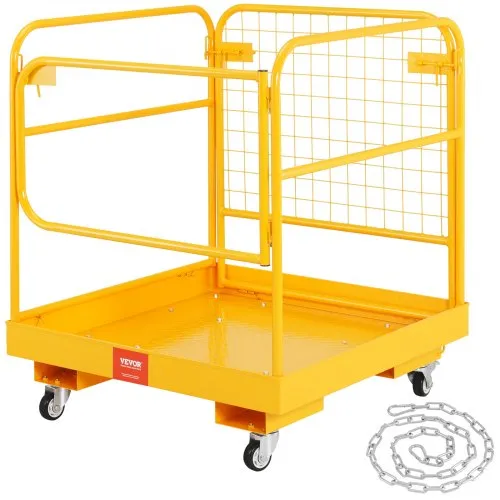
Tall loads increase the risk of tipping since they boost the center of gravity. When being transported, a platform truck cart with a cage provides retention to prevent it from toppling. Tall stacks need to be loaded carefully and moved more slowly if there are no rails or cages. Platforms that mitigate shock during rolling are necessary for fragile products. Every bump is transmitted straight to the cargo on hard steel decks. Delicate items are protected from damage during transit with rubber matting or padded deck surfaces.
Loads with irregular shapes are difficult to handle. Platform carts with tie-down points are useful for pipes, drums, and strange equipment. By securing goods, carts can avoid shifting that throws them off balance when turning and stopping.
Safety and handling are affected by the weight distribution across the platform. Improper loading raises the danger of accidents and makes carts difficult to manage. For the easiest pushing and pulling, evenly distribute the load across the wheels. Leverage created by weight can work against the operator when the weight is positioned too far forward or backward. Balanced loading maximizes the rolling efficiency of platform carts.
Distribute several items across the entire platform. When weight is concentrated in one region, it stresses that area while underutilizing others. Balance is maintained while capacity is maximized through even distribution. When stacking, place heavy items at the bottom. Even when the heaviest objects are placed on the bottom, a heavy duty platform cart stays steady. Top-heavy cargo is prone to tipping while turning or hitting uneven flooring.
If at all feasible, leave clear sightlines. Tall stacks that obstruct forward visibility increase the likelihood of collisions. Operators must be able to view crossings, pedestrians, and obstacles. Use spotters for blind loads or position loads to preserve visibility.
The performance of platform carts in everyday use is determined by features and wheels, as well as capacity and size. Wheel type affects durability, floor protection, and ease of rolling. Features such as handles, rails, and folding capabilities add functionality in certain applications.
Platform cart performance is mostly dependent on its wheels. Even little loads are difficult to move on bad wheels. High-quality wheels require little effort to roll smoothly under big loads. Rubber wheels protect floors and operate quietly. Smooth surfaces, such as those found in offices, retail stores, and medical facilities, are ideal for these. The rubber absorbs shocks that would harm cargo on hard wheels.
Polyurethane wheels offer both smooth rolling and durability. Polyurethane wheels on a platform hand truck cart are more resilient than rubber on rough terrain, outside pavement, and warehouse floors. Place big loads on these wheels to avoid flat patches. Pneumatic wheels are perfect for challenging outdoor terrain. Air-filled tires are necessary for uneven terrain, gravel yards, and construction sites. Pneumatic wheels on a heavy-duty platform truck allow it to roll over barriers that solid wheels cannot.
Although steel wheels can support heavy loads, they can cause noise and damage floors. Steel wheels are acceptable in industrial settings where the flooring is strengthened. Softer wheel materials are required for completed floors in homes and businesses.
Straight-line tracking and maneuverability are determined by wheel arrangement. Various configurations are appropriate for different settings and operator tastes. Four swivel casters provide maximum maneuverability. Platform carts can easily maneuver through confined places and spin into position. Reduced straight-line tracking necessitates frequent steering adjustments as a trade-off.
Two swivel front casters and two fixed rear wheels balance stability and maneuverability. When pushed from behind, a platform dolly cart in this design turns curves efficiently and tracks straight. To change direction, four fixed wheels must be lifted, but the vehicle continues to track straight. These are effective for long, straight runs with little turning. Fixed-wheel designs are frequently used on production lines and loading docks.
When loads are briefly at rest, locking casters stop them from rolling. Lock it for loading and unloading; unlock it for transportation. For safety, most commercial platform carts have locking mechanisms on at least two wheels.
Handles affect control and comfort when pushing during transportation. Rail alternatives offer more grasp points and contain loads. One or both ends have fixed handles. Although they offer reliable grasp positions, these permanently lengthen the cart's size. With the stability of a platform, a platform hand truck cart with a fixed handle functions similarly to a conventional hand truck.
When not in use, folding handles fold flat. Keeping the handles down greatly aids storage. In storage spaces, nesting several platform carts conserves floor space. To contain loads, push rails along the edges of the platform serve as handles. A platform truck cart provides a complete enclosure with a cage, which prevents objects from falling off during rough handling.
Configurations can be changed according to load needs thanks to detachable rails. For tall stacked loads, add rails. For large objects protruding past the platform's margins, remove them.
In locations with limited space, storage efficiency is important. When not in use, platform carts that fold or nest minimize their environmental impact. Platform carts that can be folded down to a small fraction of their original size. Sometimes platforms, handles, and wheels fold flat. It becomes convenient to store several units in truck beds or closets.
Nesting designs can be stacked horizontally or vertically. Z-frame architecture is a common feature of heavy-duty platform vehicles, enabling carts to nest together. Three non-nesting units have ten carts on their floor. Quick-assembly designs disassemble without tools, making them portable. Carts that fit in vehicle cargo bays are useful for field personnel and delivery operations.
Think about how frequently you use platform carts versus how often you store. Folding capability is rarely required for permanent warehouse installations. Compact storage is very important to service businesses that move carts between locations.
VEVOR provides material handling solutions that blend useful jobsite features with significant capacity. For companies and individuals who transfer heavy loads daily, our platform carts offer dependable transportation, smooth rolling, and sturdy construction. Each cart satisfies weight requirements and can withstand rigorous commercial use. The selection meets all of your material handling needs, from small platform dolly cart solutions for confined locations to heavy duty platform cart models for industrial transport. VEVOR gains credibility via honest equipment performance, reasonable pricing, and prompt customer service. Look through our entire inventory now to move your materials effectively.
The majority of warehouse applications call for a capacity of 800–1500 pounds. During ordinary operations, a heavy duty platform cart in this range may handle several boxes, machinery, and bundled products without reaching its limits.
On carpet, larger wheels roll more easily than smaller casters. Platform carts easily handle low-pile commercial carpet with wheels 4 inches or larger in diameter. A thick home carpet may still create resistance.
For tall stacks, use a platform truck cart with a cage or rails. For unusual goods, add tie-down straps. Heavy things should be loaded at the bottom first. Before transporting, secure any loose things.
Outside, pneumatic wheels perform well on grass, gravel, and uneven surfaces. Larger-wheeled, heavy-duty platform vehicles are more adept at navigating outdoor terrain than indoor carts with smaller wheels.
Periodically inspect the wheel bearings and oil them if squeaking starts. Check for damage or flat areas on the casters. Secure loose fasteners on platforms and handles. Before worn wheels break under load, replace them.