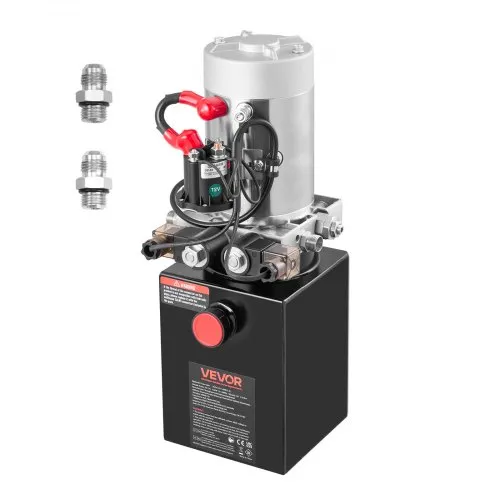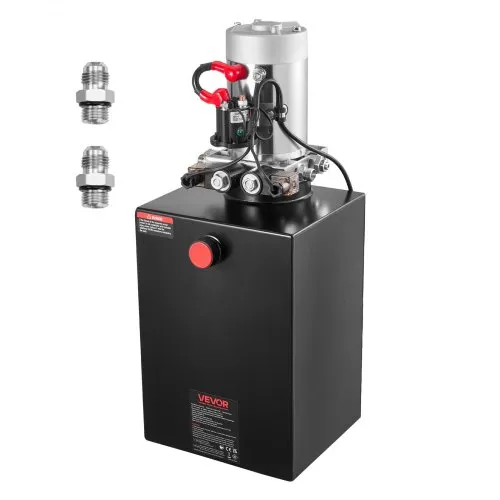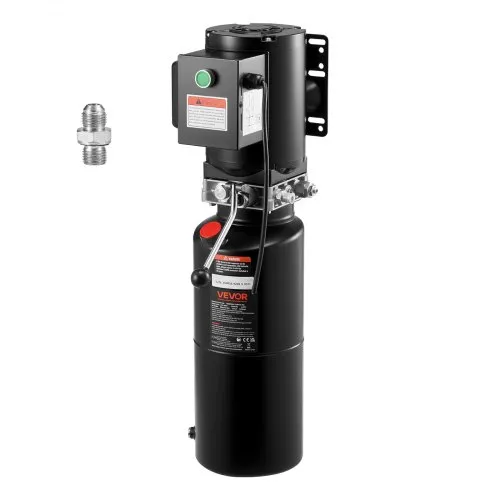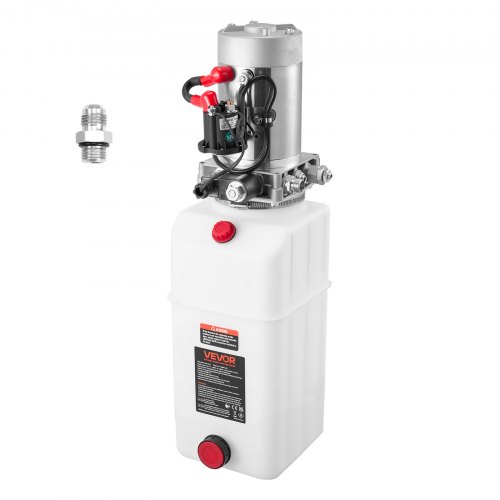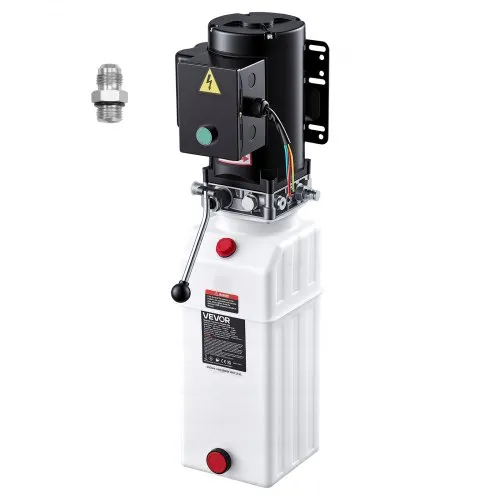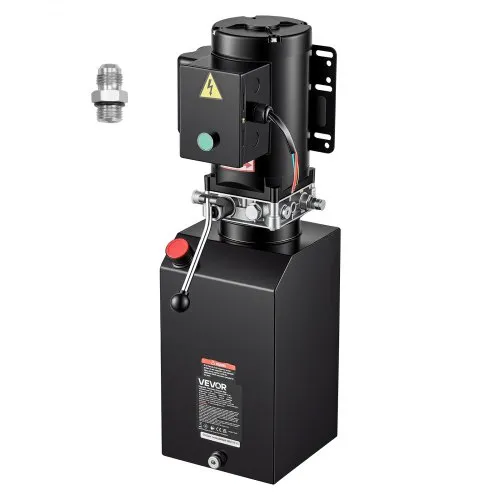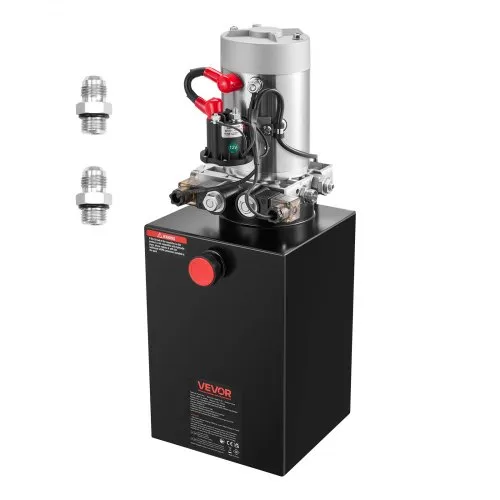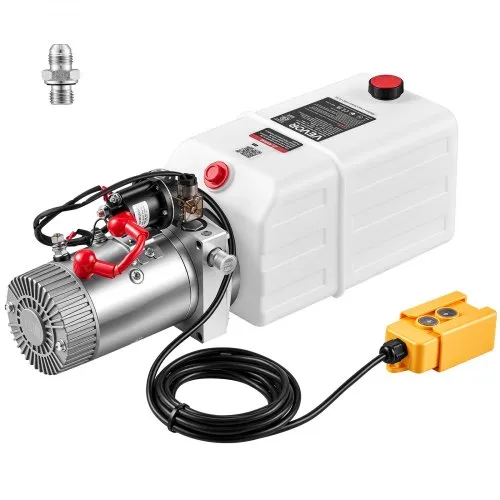


You can look through a full range of hydraulic pumps with tanks ranging from 3 quart small ones to 15 quart ones for tough runs. VEVOR has both single-acting and double-acting models in 12V DC, 110V AC, and 220V AC. They come with remote controls, mounting tools, and reservoirs that are pre-filled or ready to fill. You can power a log splitter, haul a dump trailer, raise a two-post car lift, or run a tailgate. Each post has clear pressure and flow specs, so you can confirm the unit will work with your cylinder before you buy it.
Replace a broken power unit or start from scratch when building a lift system? Whether your cylinder cycles easily or runs out of oil mid-stroke depends on reservoir size and actuation type. VEVOR hydraulic pumps with tanks come as whole units that include the motor, pump, valve block, and reservoir. This way, you do not have to guess how to pair the parts yourself.
The two specs that indicate whether a unit will work for your application are the reservoir capacity and valve configuration. Get these right, and the rest will follow.
For your cylinders to fully extend, the reservoir capacity must exceed the total fluid they move, plus some extra. A tank that runs dry mid-stroke draws air into the system, making it work spongily and eventually damaging the pump.
A 3 quart hydraulic pump is good for small jobs with a single cylinder, like light tailgate lifts, tiny tilt beds, and small utility jobs where the cylinder bore and stroke are not very big. The 4 Quart Hydraulic unit steps up for longer strokes or larger-bore cylinders.
Mid-range options handle most trailer work. A 6 Gallon Hydraulic Power Unit and an 8 gallon dump trailer pump can handle single- and dual-cylinder dump beds, where the amount of water moved increases quickly as the bed gets longer. Find your cylinder displacement by measuring its size and stroke, then add about 25% headroom.
The 10 Quart Hydraulic Power Unit and the 15 Quart Hydraulic Power Unit have larger tanks that work well for systems with multiple cylinders, car lifts with long strokes, and systems that cycle frequently. More fluid volume also helps dissipate heat, which matters for units that run repeated cycles rather than one-time lifts. It costs a little more and takes up a little more space during installation, but improper sizing can cause real problems.
A Single Acting Hydraulic Pump moves fluid to make the cylinder longer. As the fluid returns to the reservoir, gravity or the load's weight pulls the cylinder back down. This is standard for dump trailers, tilt beds, and tailgates, and the load itself provides the return force.
Single-acting units are easier to use, cost less, and only need one hydraulic line to connect to the cylinder. With fewer lines, there are fewer places where water can leak. The limit is clear: the cylinder stays extended if nothing pushes it back.
Two lines and a reversing valve make up a double-acting hydraulic pump that moves things in both directions. Use this method when the load will not return on its own, when you need to control the return speed, or when the cylinder operates horizontally without gravity's help.
Most horizontal actuators, car lifts, and log splitters need to work in two ways. This also applies when a load must stay in place while power is applied. One-acting cylinders have one port, while two-acting cylinders have two. Make sure your cylinders match. Using a single-acting cylinder with a double-acting pump wastes money, and the reverse will not work.
The force your cylinder can generate is based on its maximum pressure, typically given in PSI. To find the actual lifting force, multiply the system pressure by the cylinder piston area. If your cylinder pressure is below your pump's maximum pressure, the relief valve needs to be set correctly. Most complete units already have this adjustment done.
The flow rate, given in gallons per minute, determines how fast the cycle runs. A higher flow rate makes a cylinder stretch faster, but it also needs more power from the motor and battery. On a 12V system, high flow uses a lot of current, so battery condition and cable size become limiting factors. Before you install the pump, make sure that the hose and fitting sizes match the port threads. Although NPT and SAE threads may look similar, they don't bond reliably.
Use the fluid grade that comes with your unit. Depending on the temperature range, most electric hydraulic pump systems need either AW32 or AW46 hydraulic oil. You can use automatic transmission fluid in some situations, but not all. Do not guess; check the instructions instead.
Most small power units have intermittent-duty ratings, meaning they can operate for short periods and then shut down. An elevator that raises the dump trailer once per delivery fits nicely into that range. When a car lift cycles 20 times during a shift, it approaches its limit.
Reservoir size directly affects how well it handles heat. Bigger tanks can hold more fluid, and more fluid soaks up more heat before the temperature gets high enough to break down seals and cause oil to oxidize. If your application involves a lot of cycling, this is a good reason to size up.
Place the unit where air can flow through it. Putting a power unit inside a sealed toolbox traps heat and makes the motor last much less time. As planned, change the oil and check the filter or strainer. Usually, a hydraulic power unit pump fails prematurely due to dirty oil, and clean fluid is much cheaper than a new assembly.
The installation site's power source immediately limits your options. Before you compare anything else, think about what you already have.
Because it runs on a car or trailer battery, a 12V DC hydraulic pump is the most popular choice for mobile apps. Any Dump Trailer Hydraulic Pump that is going to be used on the road will be 12V and get its power straight from a solar panel or a deep cycle battery that is charged by the tow vehicle.
When the unit is under load, it draws high peak current; larger units often draw more than 100 amps. Keep runs short, use heavy-gauge cable, and keep the terminal connections clean. If the wire isn't the right size, voltage drops, which makes the motor work harder and the lift crawl.
With a 110V Hydraulic Power Unit, you can plug it into standard shop current and never have to worry about changing the batteries again. A 220V AC Hydraulic Unit delivers more power at a lower current, making it the best choice for a Car Lift Hydraulic Power Unit or any other high-demand shop equipment that needs its own circuit.
A hydraulic lift pump is most often used on dump trucks and tilt decks. These machines usually have a single-acting unit with a 6–8-quart reservoir and a corded or wireless remote. When the bed rises, wireless remotes let the person stay out of the way.
Because a two-post lift moves a lot of fluid throughout its travel, vehicle lifts require double-acting operation and larger reservoirs. Holding valves in hydraulic power packs set up for lift duty keep the cart in place if the power goes out.
Farm tools, log splitters, snow plows, and cutting tables also use hydraulics in the field. For any of these, first check the number of cylinders, the shape of the ports, and the length of the stroke. Then, choose a hydraulic pump and tank assembly that is comfortably bigger than the calculated displacement.
VEVOR offers a wide range of options: 3- to 15-quart reservoirs, single- and double-acting valve blocks, 12V DC motors, and 110V and 220V AC motors. This way, you can find the exact cylinder and power source you need instead of settling for what a single-type seller has in stock. Competitive pricing helps keep repair and equipment costs low, and quick after-sales service supports every unit sent out. Browse the collection now to get your trailer, lift, or tool back on the road.
Find the cylinder's total displacement at full extension, then add a margin of about 25%. Tanks that are too small let air into the system during the stroke, which makes the pump work in a spongy manner and eventually damages it through cavitation.
Do you want a dump cart with a single or double acting?
It is normal to only act once. As fluid returns to the tank, the bed's weight pulls the cylinder back into place. This means powered retraction isn't needed and adds cost, hoses, and possible leak points.
Depending on the operating temperature, most units call for either AW32 or AW46 hydraulic oil. Before you use automatic transmission fluid instead of something else, check your manual, as it only works with certain assemblies.
Usually a drop in power. Check the cable gauge, battery charge, and terminal corrosion. When the motor is under load, long or too-short wire runs starve it of power, which makes lifting weak and slow even when the pump is healthy.
No, compact power units have intermittent duty rates, which means they need time to cool down between cycles. Larger reservoirs release more heat, so applications that cycle heavily should use a larger tank instead of running a small one hard.