Taps
















Results for Taps
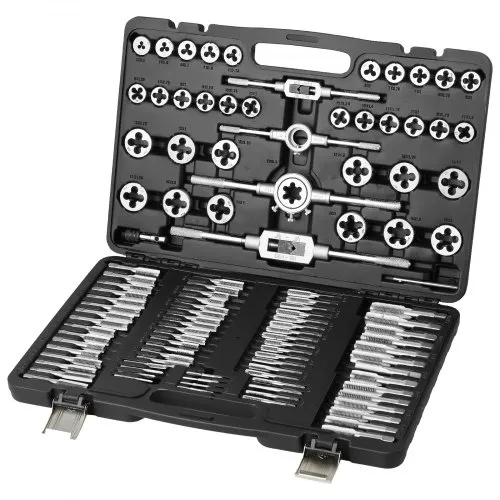
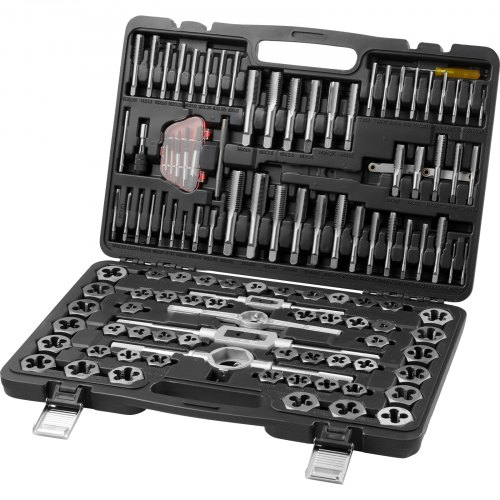
VEVOR offers a full range of tap and die sets for machinists, mechanics, plumbers, and serious DIYers. Whether you need a metric tap and die set for imported fasteners, an NPT tap and die set for pipe threading, or a professional-grade ratcheting set for high-volume shop work, VEVOR has you covered for any job requirement with a full range of thread standards, piece counts, and material grades.
VEVOR Tap and Die Sets: Metric, NPT, SAE & Ratcheting Solutions for Every Threading Job
Are you tapping new threads, repairing damaged threads, or performing precision pipe-fitting work? The wrong tap and die set can damage threads, break tooling, and waste time. The VEVOR lineup includes metric tap and die sets, SAE tap and die sets, NPT configurations, carbon steel construction, and ratcheting drive options, so your thread standard, material, and workflow are all covered in one place.
Understanding the Different Types of Tap and Die Sets VEVOR Offers
The first step in selecting the right tap and die set is to understand the thread standard your project requires. Using the wrong standard produces threads that look right, but don't work under load, an expensive mistake on any mechanical or plumbing job.
Metric Tap and Die Sets for Imported Fasteners and Modern Machinery
If you work on imported cars, European machinery, bikes, electronic enclosures, or anything that uses M-series fasteners, a metric tap and die set is the right place to start. Metric threads are defined by a pitch (distance between the crests of the thread) in mm, rather than threads per inch like the SAE threads. It means you can't substitute a metric tap with an SAE tap without ruining the thread engagement.
VEVOR metric tap and die sets cover the most common size ranges, typically M3 through M12, with finer-pitch options for precision applications. The dies are precision-ground to DIN tolerances, so the threads you cut will mesh cleanly with standard metric hardware without any additional chasing or adjustment. If you’re an automotive mechanic working on Japanese or German vehicles, a dedicated metric tap and die set means you don’t have to guess which standard a damaged thread is.
The sets include taper taps for starting threads and plug taps for threading deeper into the hole. It is important in practice because trying to force a plug tap into an untapped hole results in tap breakage. It is a problem that often results in a more expensive repair than the original threading job. VEVOR includes both taper and plug taps in many metric sets to provide the proper threading sequence.
NPT Tap and Die Sets for Pipe Threading and Plumbing Applications
NPT (National Pipe Taper) is a different thread standard from either metric or SAE and is not interchangeable with either. NPT threads are tapered (not parallel), helping create a seal as the fitting is tightened, typically with thread sealant. It makes an NPT tap and die set the must-have tooling for anyone working on hydraulic systems, compressed air lines, fuel systems, or standard plumbing connections in the United States.
VEVOR’s NPT tap and die sets cover the most common pipe sizes, typically 1/8” NPT to 1” NPT, which covers the majority of residential and light commercial plumbing and pneumatic applications. The taper on these taps and dies is precision-ground to ANSI/ASME B1.20.1 standards, ensuring that the threads will seal reliably when assembled with standard pipe fittings and the proper thread sealant.
NPT taps require more cutting torque than straight-thread taps of the same size because the tapered geometry engages more material at a time. The VEVOR NPT sets are combined with the right-sized tap wrenches or made for ratcheting handles that give you the mechanical advantage to cut clean tapered threads without overloading the tap. NPT taps and dies are irreplaceable by any SAE or metric set. It is specialized tooling that is non-negotiable for plumbers, HVAC technicians, and anyone fabricating fluid or pneumatic systems.
SAE Tap and Die Sets for American Standard Fasteners and Repairs
SAE tap and die sets are based on the Unified National thread standard, UNC for coarse pitch and UNF for fine pitch, measured in threads per inch. It is the correct standard for most American-manufactured equipment, domestic vehicles, agricultural machinery, and standard hardware store fasteners. Whether you’re fixing a bolt hole on a domestic truck, restoring threads on a machine made in America, or cutting threads in steel stock for a fabrication project, you’ll need an SAE tap and die set to get the job done.
VEVOR's SAE tap and die sets include the most popular size ranges from #4-40 to 1/2-13 UNC and their UNF counterparts - sizes that cover the vast majority of fasteners found in American mechanical and construction applications. Fine pitch taps are also included. Both coarse and fine pitches are needed because the correct pitch must match the original specification. Using UNC in a fine-thread application instead of UNF will result in a loose, unreliable fastener engagement.
For general repair shops and home garages working on domestic equipment, an SAE tap and die set is often all you need, whether you’re restoring stripped lug nut studs or cutting new threads in fabricated steel brackets. Many VEVOR SAE sets include both taper and bottoming taps, allowing blind holes, which are common in automotive and machinery repair, to be fully threaded to their maximum usable depth without the need for separate taps.
40 Piece Tap and Die Sets for Complete Thread Coverage in One Kit
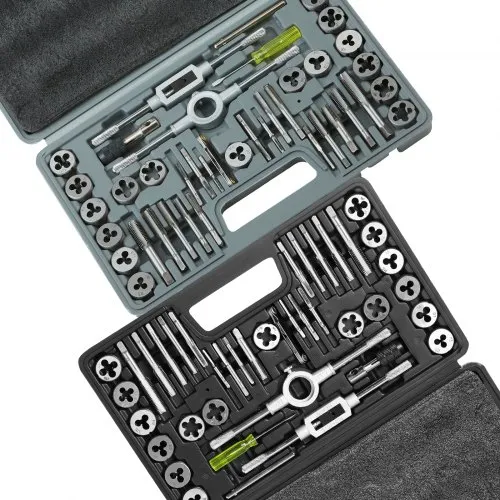
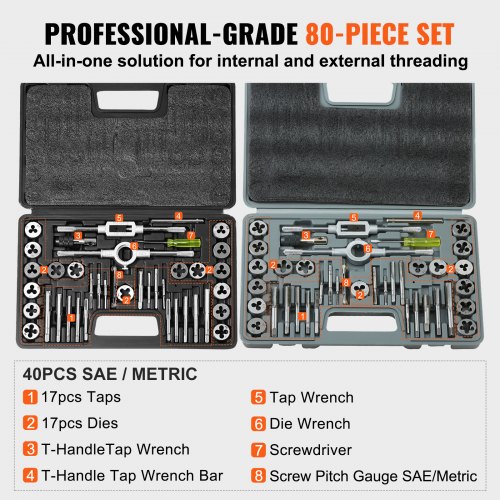
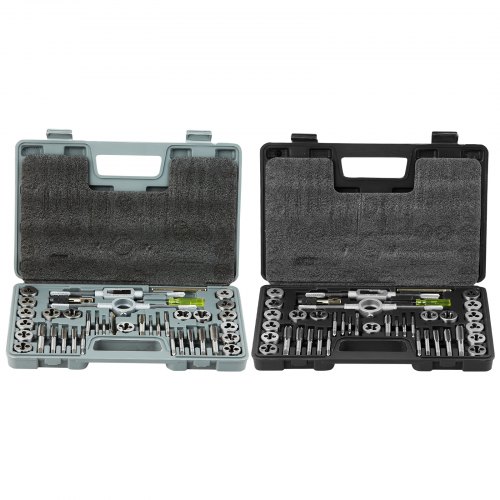
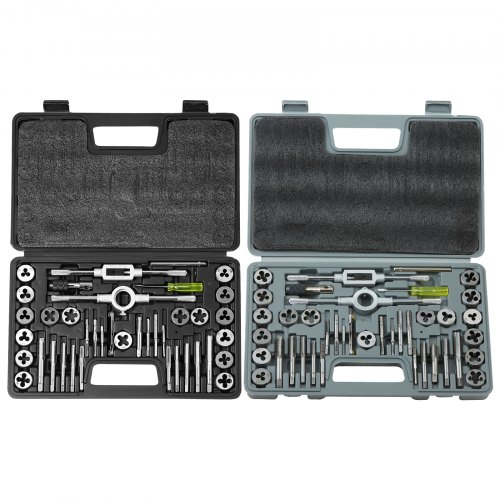
The 40-piece tap and die set is the practical standard for a fully equipped workshop or professional tool kit. Typically, a 40-piece set includes a range of common sizes in coarse and fine pitches, with the drive handles, extension bars, and alignment guides needed to use them properly. This piece count means you do not have to buy individual taps if a surprise thread size shows up in the middle of a job.
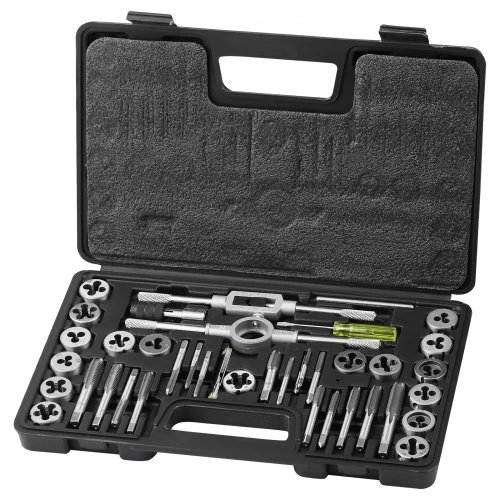
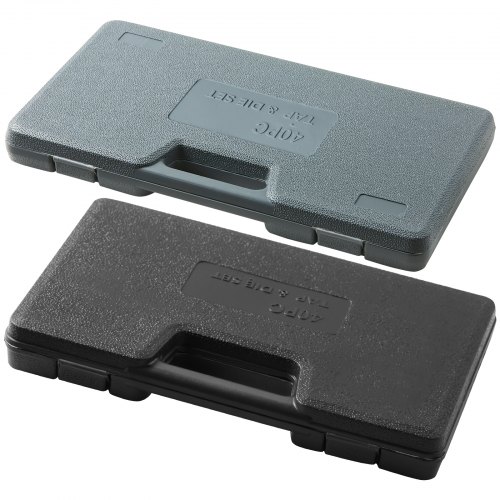
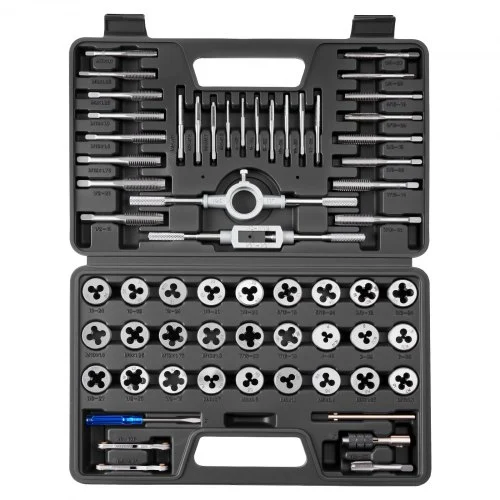
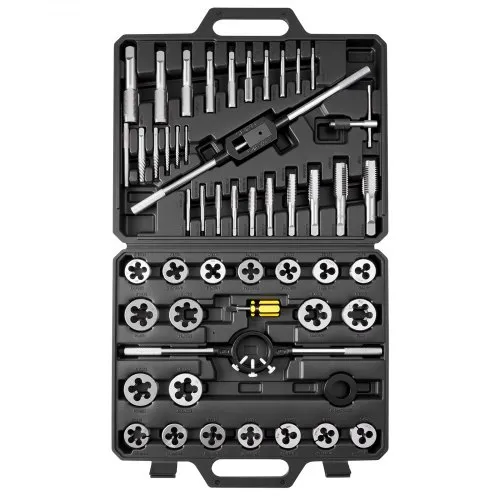
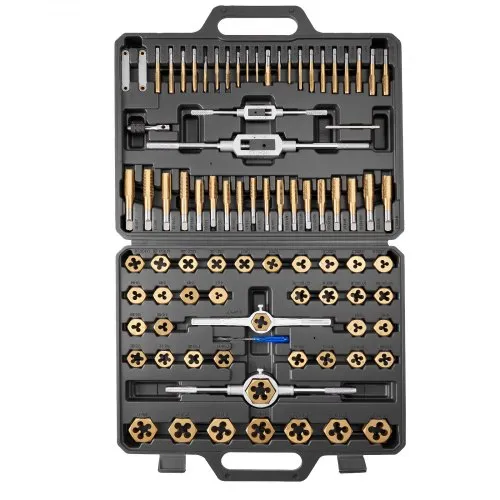
VEVOR’s 40-piece tap and die sets come in fitted cases, with clearly marked slots for each tap, die, and other accessories. This organizational detail is more important than it looks; loose taps in a drawer are easily mixed up between metric and SAE sizes, and the wrong tap in an existing hole can cause irreparable damage. A custom case keeps the whole set together, properly labeled and ready for use.
For mechanics, maintenance technicians, and serious DIY'ers who handle a wide variety of equipment, the 40-piece configuration covers the range of thread sizes required without carrying redundant tooling. Depending on the main use, VEVOR offers all-metric and combo metric-SAE sets. The construction throughout is carbon steel or HSS, which ensures the tooling will hold its cutting edge through repeated use on steel, aluminum, and cast iron workpieces.
Choosing the Right Tap and Die Set Material and Drive Type
In addition to the thread standard and the number of pieces, the material grade and drive mechanism directly affect how long your tap and die set will last and how well you can use it on a real job.
Carbon Steel vs High-Speed Steel: Picking the Right Material Grade
The choice of material in a tap and die set is a direct tradeoff between cost and cutting performance. Carbon steel tap and die sets are good for occasional use, soft materials like aluminum and brass, and light repair work where thread cutting is infrequent. Carbon steel holds an edge well for those uses and is much cheaper than the enhanced options. For a home garage kit, cutting a few threads a month is the practical choice.
For professional tap and die sets used in production environments on hard materials such as stainless steel, tool steel, or hardened alloys, and in any situation where taps are used daily, high-speed steel (HSS) construction is the way to go. HSS maintains its cutting geometry at the high temperatures generated by high-volume thread cutting, where carbon steel would soften and dull quickly. For a professional tap and die set used in a machine shop, fabrication facility, or busy repair operation, HSS construction is not optional; it’s the difference between tooling that lasts years and tooling that needs replacing in months.
VEVOR offers both carbon steel tap and die sets for economical general use and higher-grade options for demanding applications. The product specifications clearly state the material grade, making it easy to match the tooling with the actual use frequency and material hardness. For most home mechanics and general maintenance work, a carbon steel tap and die set will provide reliable performance for a practical investment.
Ratcheting Tap and Die Sets for Faster, More Controlled Thread Cutting
A ratcheting tap and die set replaces the standard fixed-handle tap wrench with a mechanism that lets you rotate continuously without repositioning your grip. That means you can cut threads in tight places, in engine bays, in equipment frames, or anywhere the full 360-degree rotation of the handle is blocked, without stopping to reposition the wrench on every partial turn.
The ratcheting mechanism also provides more consistent torque application than a standard fixed handle, reducing the risk of tap breakage caused by uneven pressure spikes. Feeling resistance through a ratchet handle and backing off before the tap binds is a practical skill advantage that experienced machinists immediately recognize when cutting threads in harder materials or deeper holes.
Some VEVOR tap and die sets feature a ratchet mechanism, reversible for forward cutting or backward rotation to release the tap and clear chips. It is the appropriate way to avoid breaking taps when working in deep holes. The ratchet body is typically sized to accommodate the full range of tap shanks included in the set without requiring separate adapters, so tool changes are fast during multi-size jobs. The ratcheting drive is the right spec for professional mechanics and machinists who use tap and die sets day in and day out. The benefits of efficiency and control are immediately apparent on any job that requires more than a few thread cuts.
Shop VEVOR Tap and Die Sets for Every Thread Standard and Application
Whether you need a 40-piece tap and die set that covers your full shop needs or a dedicated NPT tap and die set for precision pipework, VEVOR has the right tooling for every thread standard, material, and drive preference. Metric, SAE, carbon steel, ratcheting… we have it all, with the strength to deliver, backed by VEVOR’s quality guarantee and after-sales support. See the full collection and get the right set for your next job today.
FAQs
Can I use an SAE tap and die set on metric fasteners in an emergency?
No. SAE and metric threads are based on incompatible pitch standards, forcing an SAE tap into a metric hole permanently wrecks the thread. Always use the original thread standard for the tap. If in doubt, use a thread pitch gauge to determine the correct specification before cutting.
What is the difference between a taper tap and a plug tap?
Taper taps have a gradual lead, which makes them easier to start in a new threaded hole. A plug tap cuts threads close to the bottom of a hole. Most jobs require both. Begin with the taper tap and end with the plug tap to achieve maximum thread depth.
How do I prevent tap breakage when using a tap and die set?
Use appropriate cutting fluid when threading metals, especially in steel and stainless steel. To clear chips, back the tap out a half turn for every full turn forward. Never force a stopped tap; back it out, clear chips, and continue. Ratcheting handles allow for better torque control to avoid breakage.
Is a carbon steel tap and die set suitable for stainless steel?
Stainless steel is best cut with high-speed steel (HSS) taps to maintain the cutting geometry under the heat generated. Carbon steel taps dull quickly on stainless steel and are more prone to breakage. Always use HSS or cobalt-grade tools for stainless steel applications.