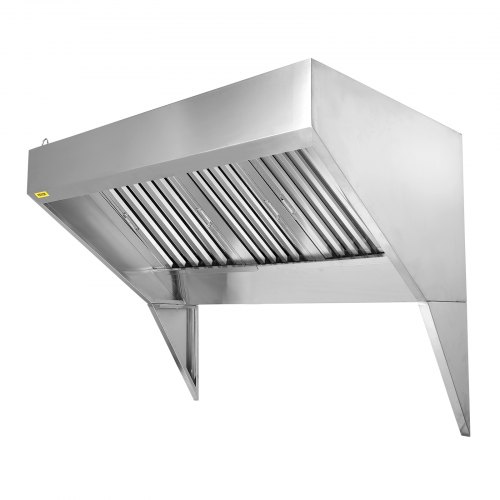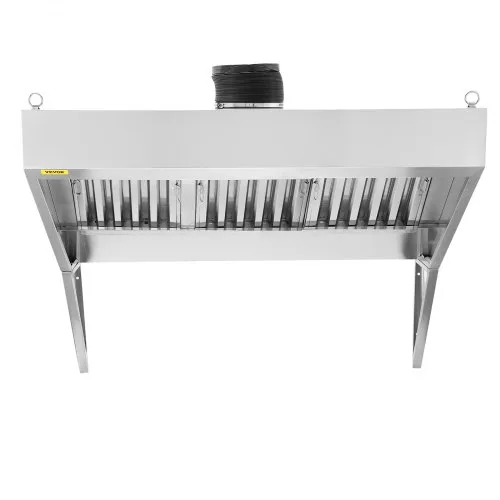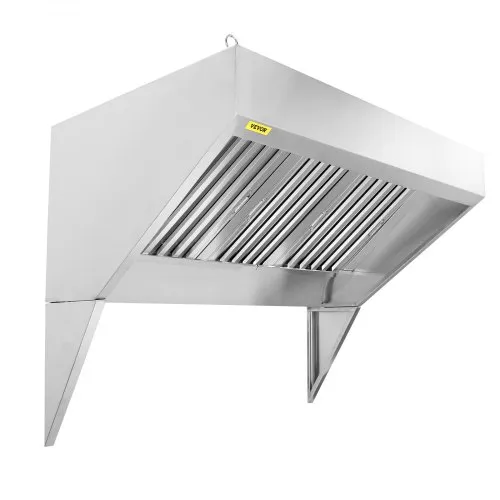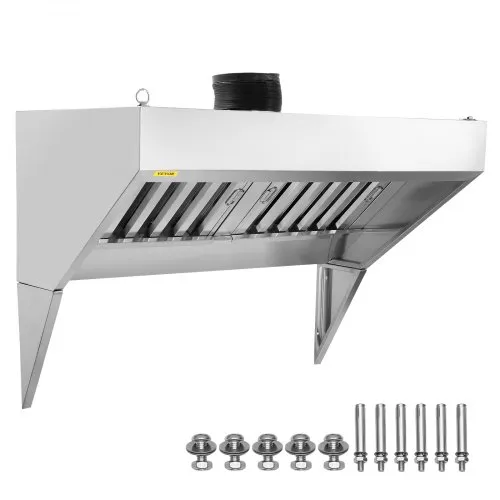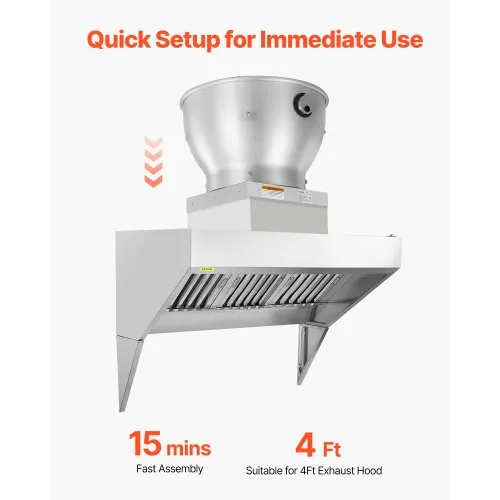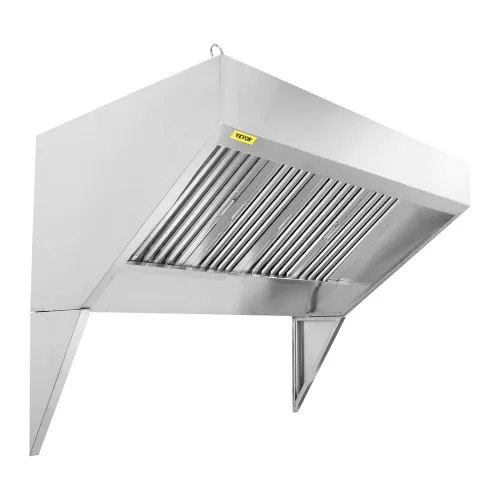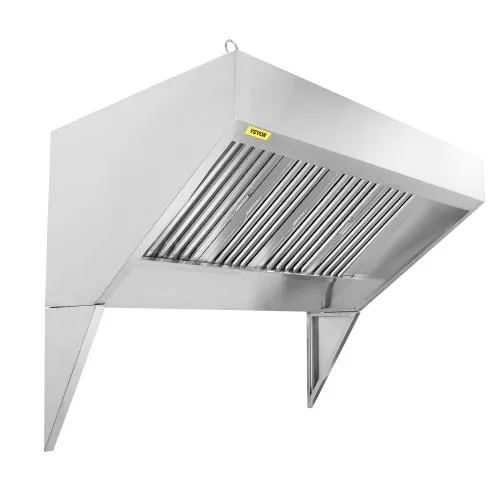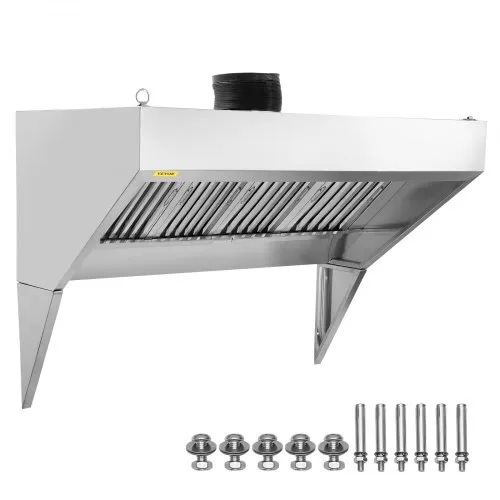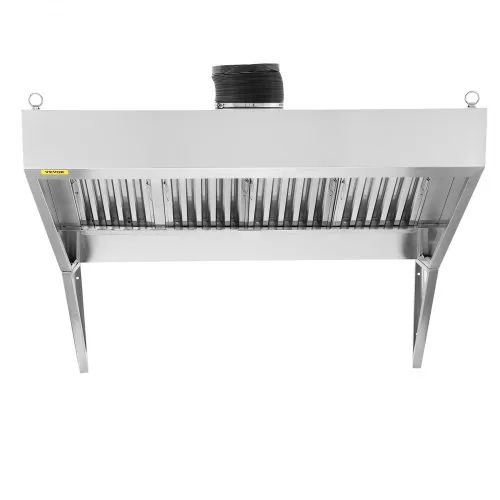

Browse a full selection of concession hoods for food trucks, concession carts, ghost kitchens, and cook lines in full-service restaurants. VEVOR stocks welded stainless steel units ranging from 4 to 9 feet. All units include baffle filters, built-in grease troughs, and matched blower sets. Find the right size, CFM rating, and mounting style for your equipment and budget, whether you need to vent a single flat-top griddle in a trailer or a full row of fryers and ranges in an industrial kitchen.
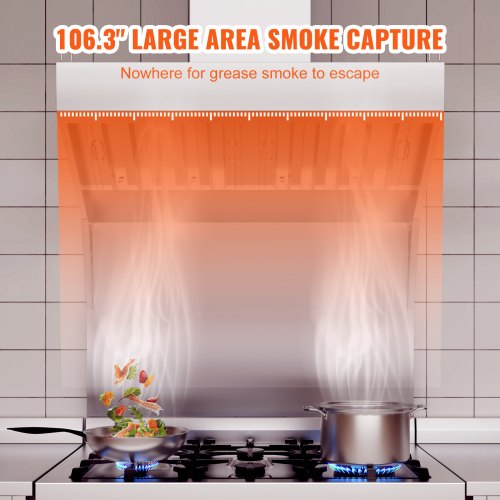
Are you sick of seething smoke out of your service window and greasy gunk on everything? The right-size hood will pull heat, steam, and grease from the air and out of the room before they settle. This will keep your work area safe and your inspection paperwork clean. VEVOR makes concession hoods that fit your cooking area and ceiling height, whether you have a two-burner trailer or a busy restaurant line.
Each choice, including hood length and purpose, depends on CFM needs, duct size, mounting method, and electrical load. Getting the size right from the start helps you avoid failed inspections and costly rework later.
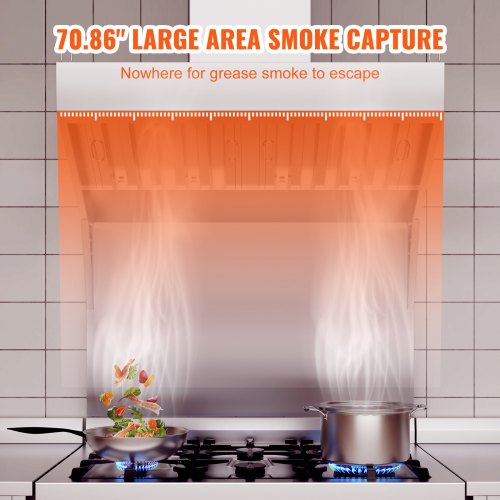
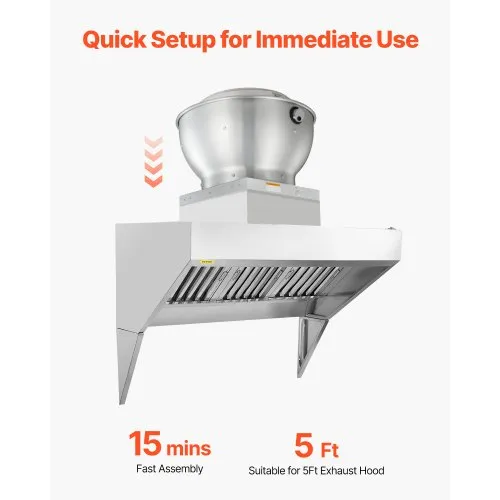
This is where most mobile kitchens begin. A 4 ft commercial exhaust hood can fit a single flat-top griddle or two-basket fryer with room to spare. It also fits against the wall of a normal 14- to 16-foot trailer without making the prep counter too crowded. You should have at least 6 inches of overhang on each side of the hood that hangs over your cooking area. For this reason, a 36-inch griddle needs at least a 4-foot canopy. Upgrading to a 5 ft commercial exhaust hood gives you room to add another appliance later.
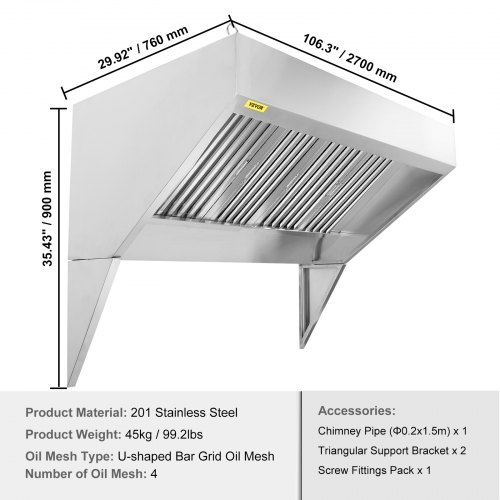
When mounting a hood, weight is important. A 4-foot stainless steel unit weighs about 60 to 80 pounds before the blower, so don't use sheet metal for the wall backing and hanging brackets. The other limitation is the roof opening. For smaller concession hoods, an 8- or 10-inch duct collar works best. This size is easier to seal and flash on a curved trailer roof than the bigger holes that longer canopies need. For a first build, this ease of use is worth a lot.
A 6 ft commercial exhaust hood is the bare minimum when you have a griddle, fryers, and a charbroiler using the same space. Six feet of capture area can cover about 60 inches of cook surface, with enough overhang on both ends. For food trucks and trailers that are 20 to 24 feet long and have a cook line that goes along most of one wall, a 7 ft commercial exhaust hood works best. It also lets you move the equipment later without replacing the ventilation.
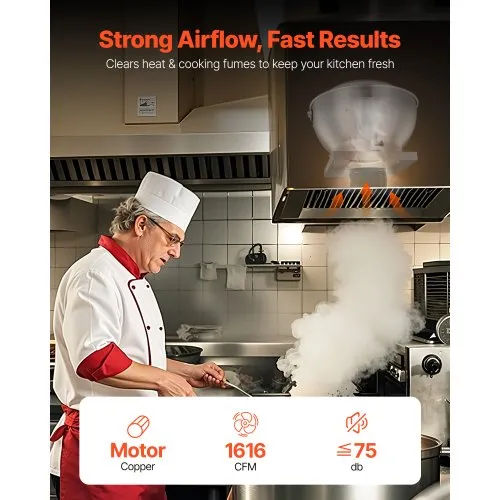
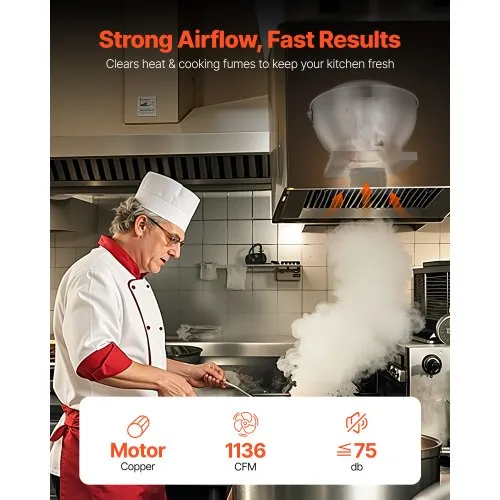
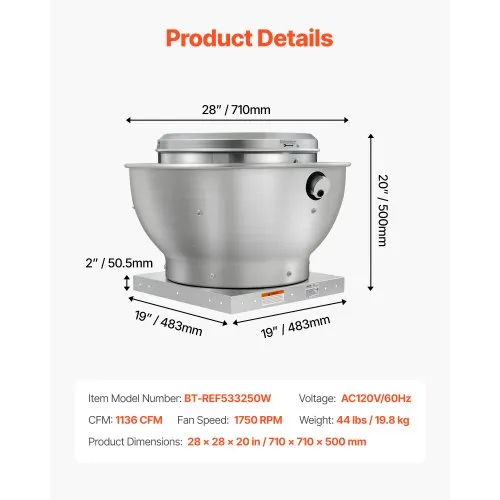
At these widths, you can expect higher CFM demand. In this price range, a food truck ventilation hood usually needs 900 to 1,400 CFM, depending on whether you use grease-heavy appliances. This means you need a bigger fan and a stronger electrical circuit. Make sure your generator or shore power can handle the load before you order it. If the food truck exhaust hood trips a breaker in the middle of service, it is worse than not having an exhaust hood at all. Make sure the fan amperage matches the source amperage and leave headroom for refrigeration cycling.
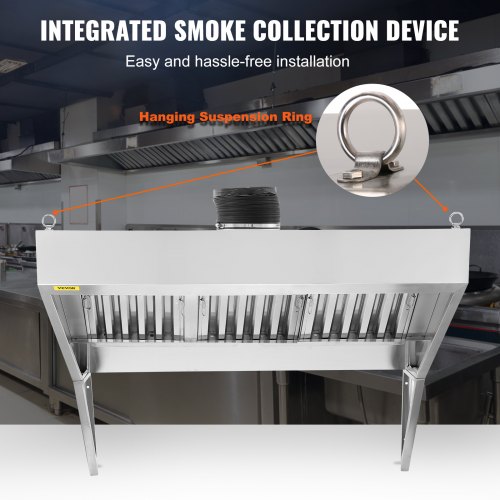
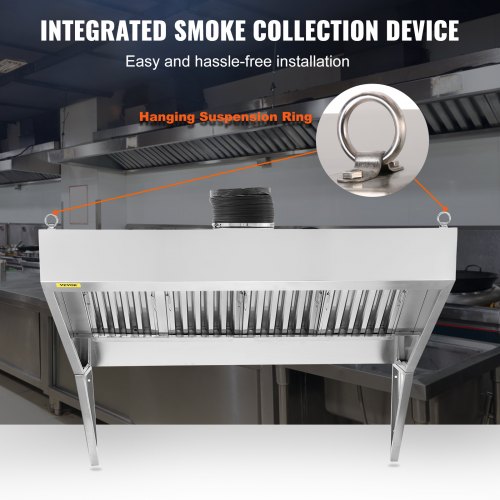
On the far end of the range are kitchens with walls, floors, and large trailers. An 8 ft commercial exhaust hood can cover a normal four-appliance line, including a range, griddle, fryer, and salamander, with a single, continuous canopy. This is cheaper and cleaner than using two shorter units side by side. A 9 ft commercial exhaust hood can handle the wider lines common in high-volume businesses. At this length, look for internal bracing and hanging points no more than 4 feet apart. An unsupported stainless canopy will sag over time.
It depends on the ceiling height. There should be at least 24 inches of space between the bottom of an open-flame commercial range hood and the finished floor, which is 6 to 7 feet above the range hood. Local code often requires a fire suppression device for hoods larger than this size class. Before you buy a commercial vent hood for permanent installation, check with your fire marshal and health department to make sure it meets their standards.
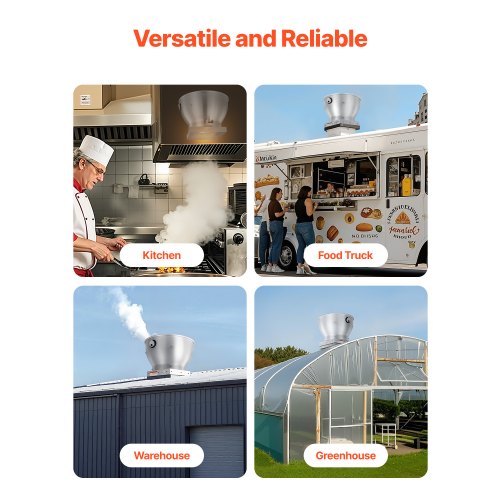
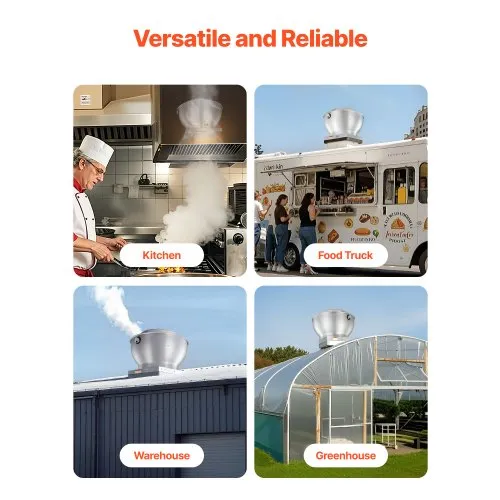
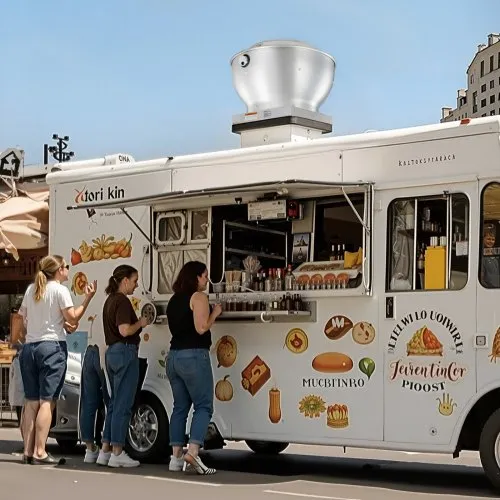
Depending on where it lives, the same hood does different things. A food truck vent hood has to deal with vibration, road shock, and regular temperature changes that a fixed installation never has to. Because of this, welded seams and stronger hanging points matter more than they do inside. The concession trailer hood also has to work with little makeup air. Pulling 1,000 CFM out of a sealed box without an intake path starves the fan and creates negative pressure that makes doors hard to open. Trailers are small. Plan a service window or an entry vent with a screen.
When installing ventilation in a restaurant, separate makeup air units and rooftop curb mounting make the job a lot easier. If you want to buy a range hood for food truck use, you should make sure it can handle both heat and grease-filled air. That means baffle filters and a real grease cup, not the wire screens that come with home units.
The filter system and blower type show how much care your hood needs and how reliably it moves air over years of daily use.
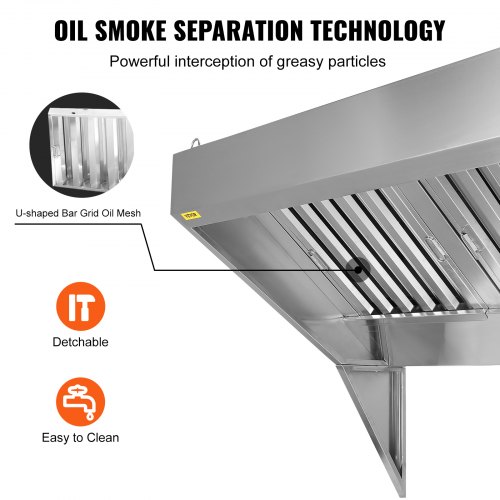
In commercial service, detachable grease filter vent hoods are common, and for good reason. You can quickly slide out stainless baffle filters by hand and put them in the dishwasher or soak them in hot, soapy water at the end of your shift.
The baffle design forces air through sharp changes in direction. This way, grease droplets hit the metal and drain down into the collection trough instead of coating your ducts. To prevent fires, most fire codes require baffles instead of mesh filters. Clean the filters once a week if you don't use the fryer often, and every day if you do. Clogged filters stop airflow, and even a properly sized food truck vent can still become a source of smoke.
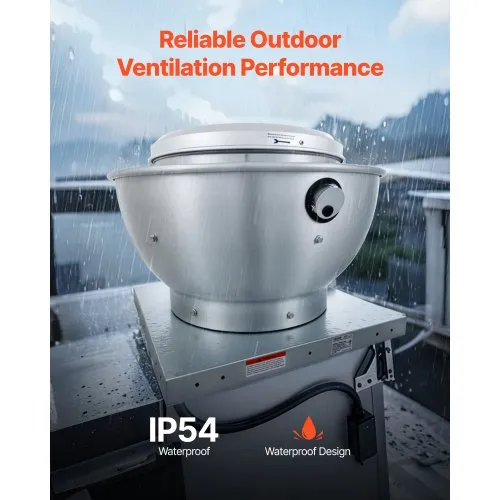
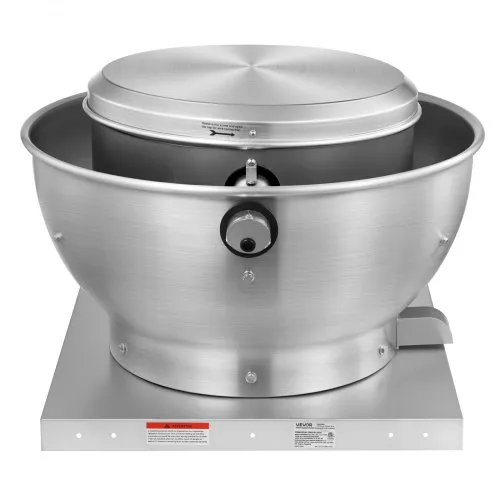
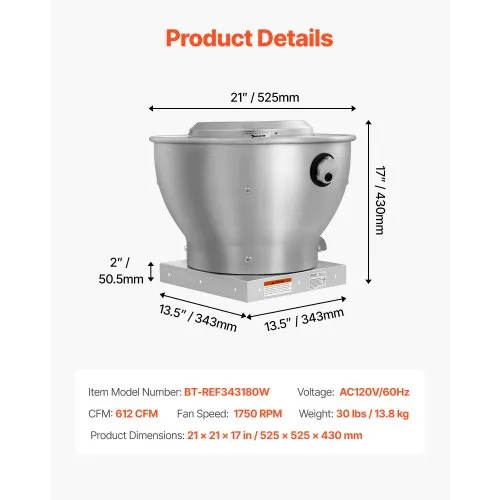
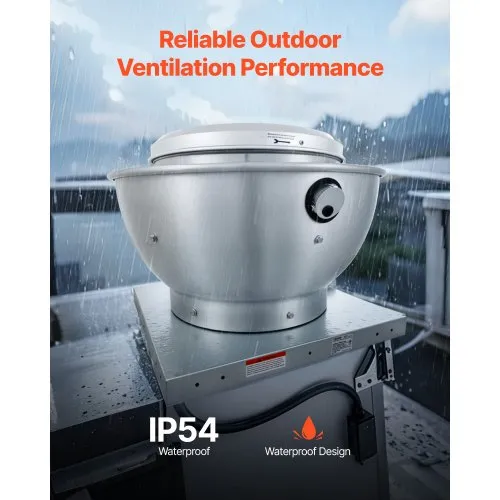
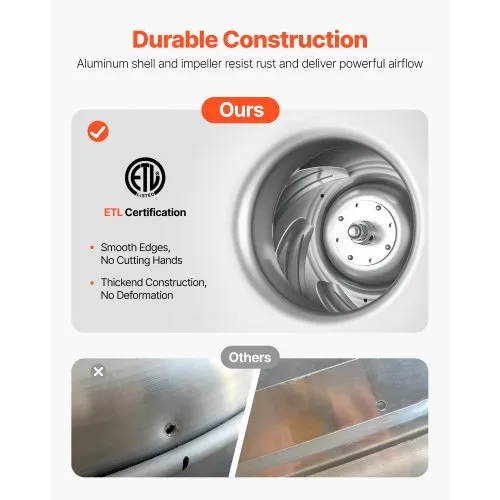
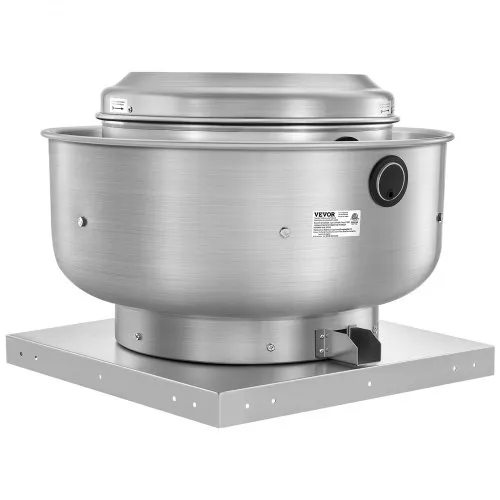
A team's performance depends on how many fans it has. There are no belts to tighten, slip, or replace with a direct drive exhaust fan because it connects the wheel directly to the motor shaft. This is perfect for a moving car. A restaurant canopy exhaust fan with a belt drive lets you change the pulleys to change the CFM. This helps in fixed kitchens where it is hard to predict duct static pressure. The trade-off is regular belt repair.
Most buyers will find it easier to go with a commercial hood fan with direct drive. Match the restaurant canopy hood exhaust fan rating to the length and number of elbows in your duct, not just the hood size. Every 90-degree turn adds resistance, which slows airflow.
VEVOR offers everything you need: stainless canopies from 4 to 9 feet long, matched direct-drive blowers, baffle filter sets, grease cups, and replacement parts. And the prices are much lower than what restaurant equipment sellers charge. Customer service responds quickly to orders, and the return and warranty process is easy to understand. This way, you are covered if a unit arrives damaged or doesn't meet your needs. Browse the collection now, measure your cook line, and solve any ventilation problems before your next inspection.
Add 6 inches to each side of the visible cook surface. A 36-inch griddle needs at least a 4-foot canopy, and a full line of four appliances usually needs 8 feet.
Based on the appliance type and hood length, most mobile setups need between 600 and 1,400 CFM. Fryers and charbroilers, which use a lot of grease, need the higher end of that range.
Yes. When you pull a lot of air out of a covered trailer, you create negative pressure, which makes the fan work less efficiently. You can either add a screened air vent or leave the service window open a little while the engine is running.
Once a week for light use and every day for heavy cooking. You can remove baffle filters by hand, and they will not get damaged in a dishwasher or a hot degreaser soak.
Yes, most of the time for permanent installations and most commercial mobile units. Rules vary by location, so check with your local health department and fire marshal before installing it.