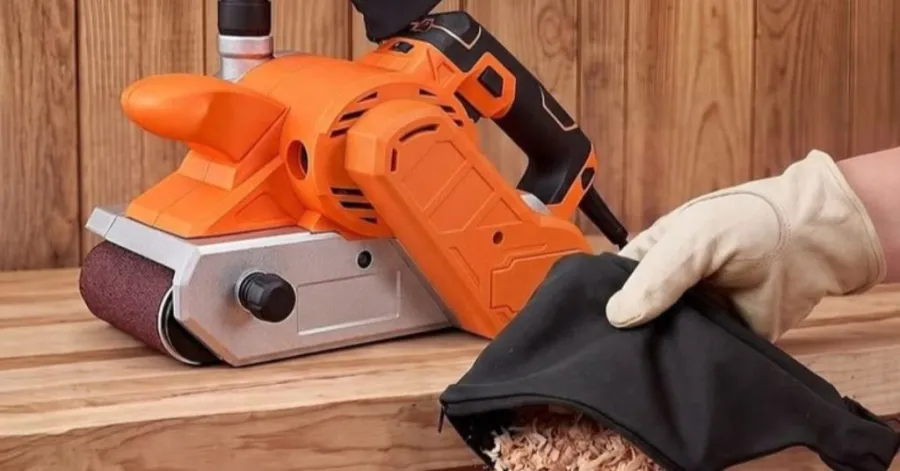
For example, consider a poorly made wooden shelf you recently built, or an old door coated with paint layers that won’t come off. You need a tool; thus, the question arises: “What is a belt sander?” A belt sander is a power tool that uses a looping strip of sandpaper to shape and sand various materials. The main purposes of a belt sander include sanding materials quickly, flattening surfaces, and removing surface finishes. The tool uses a motor to drive a belt. You will soon learn about its important components, operations, varieties, and safe usage.
What Is a Belt Sander?
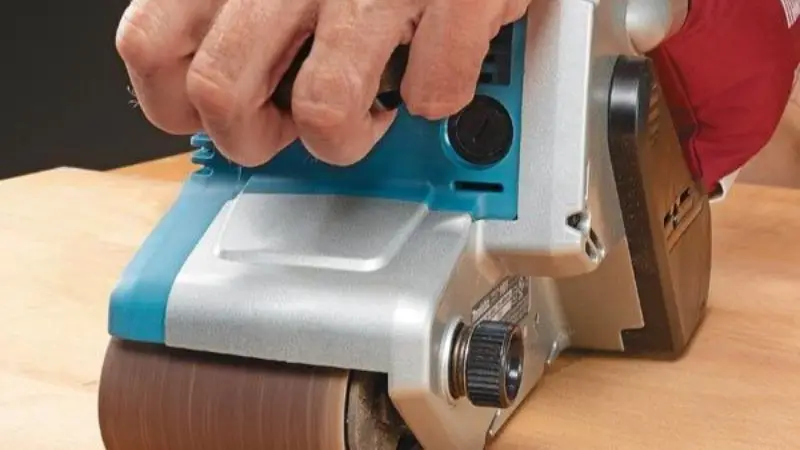
A belt sander is a power tool with one main idea. The idea is an endless strip of sandpaper running over a flat base. The strip performs shaping and sanding. If you are still thinking, “What is a belt sander?” imagine a rapid sanding machine.
Recommended For Your Project
How Does a Belt Sander Work?
The machine has a continuous loop of sanding paper that is wrapped around two drums. The motor powers these two drums and spins the sanding paper very fast on two rollers, where the bottom of the loop contacts the workpiece. The tool removes material through abrasion as the sanding paper moves along.
The operator controls pressure by manually operating the tool. A flat plate called the platen sits behind the sanding paper. This platen keeps the sanding paper flat against the wood. The continuous loop of sanding paper keeps spinning as long as the motor is running.
What Is a Belt Sander Used For?
This sander is best for quickly removing material from your workpiece. When a board needs to be thinned quickly, this machine is best. It takes only a couple of passes to remove thick materials such as paint, varnish, or rust.
Sand a tabletop, straighten a door frame, or smooth a rough board. Sanding is faster because the belt has a large surface area. This large size removes material and evens out an entire piece of wood. You can also use this sander to quickly sand thick pieces of wood before switching to another type of sanding machine. Just note that this sander sands aggressively. With a light touch and steady hand, you have maximum control while sanding.
What Are the Main Parts of a Belt Sander?
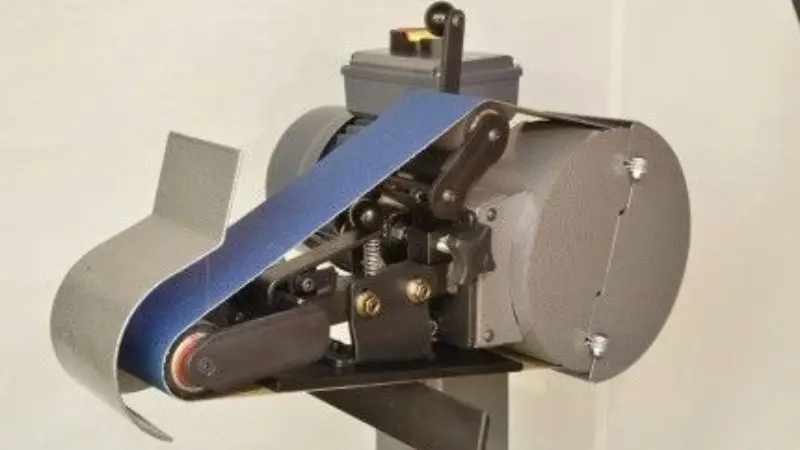
All belt sanders come in a similar form. Several major components make the belt move in a circular motion. Once you understand each part of the sander, you can use it with ease.
Sanding Belt
The sanding belt is the star of the show. It’s a continuous loop of abrasive material joined at one seam. You mount it over a pair of drums that hold it tight. The rear drum, called the drive wheel, connects to the motor and pulls the belt around. The front drum, or idler drum, spins freely and keeps tension. Together, these rollers guide the abrasive belt in a smooth, endless cycle.
How to use a belt sander? Getting the belt centered matters a lot. If it drifts to one side, it can fly off or damage your work. Most sanders have a tracking knob. Turn it slightly while the tool runs until the belt stays in place. Always check tracking before you touch wood.
Motor
The electric motor provides all the power. It spins the drive wheel at high speed, and that motion travels through the belt. A typical motor runs at a fixed speed, so the belt moves at a constant rate. You control the cut by how fast you move the tool, not by changing motor speed.
This electric motor needs clean airflow to stay cool. Sawdust clogs the vents fast. Blow out the vents after every session. A clogged motor overheats and wears out early. Keep the motor clean, and your sander will last for years.
Types of Belt Sanders
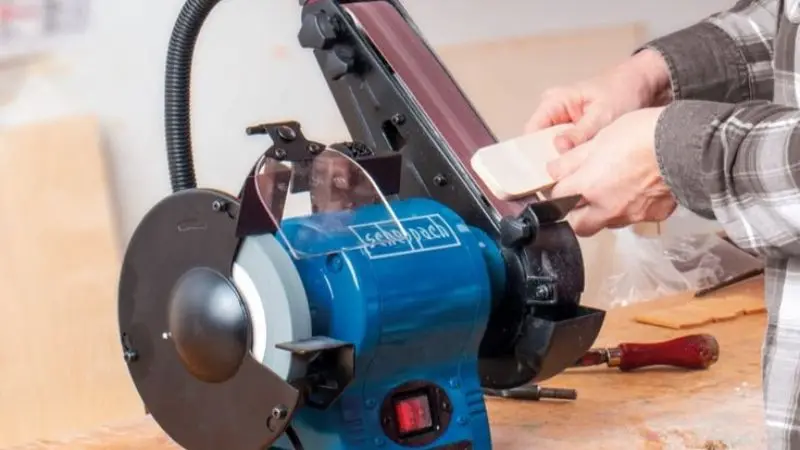
The belt sander you choose depends on your workspace and the job. Two main designs exist. Each handles material removal differently. One kind you carry to the work. The other kind stays put while you bring the work to it.
Handheld Belt Sanders
The hand-held belt sander is the most common portable option. You grip the handles and guide the tool across your workpiece. The motor runs the belt as you push the sander forward. This design lets you work on large items you cannot move easily.
You use this sanding tool on large, rough surfaces like a wooden deck or an old table. The aggressive belt removes paint and quickly evens out bumps. You control the depth of cut by how much pressure you apply. Move the sander in long, straight strokes along the grain. Let the tool do the work instead of forcing it down. A light touch prevents gouges and keeps the surface level.
This machine makes flattening a door or shaping a beam simple. Just keep the sander moving at all times. If you stop in one spot, you create a dip in the wood. That is the main rule for handheld use. Stay in motion, and you get smooth results every time.
Benchtop Belt Sanders
The stationary belt sander is a tool attached to your workbench or a stand. You need to bring the wood to the tool. In most cases, these models use a vertically aligned belt. This means that you press the material against the belt to form edges and ends.
As you can see, this type provides excellent control while sanding materials. It allows you to shape chisels, round, square, small boards, and more. The operator can use both hands to control the wood. This is one of the best options for beginners because of its stability. The device does not move. It lets you focus entirely on manipulating the wood.
A platen on one side supports surface work, and a table holds the wood in the correct position. Some stationary models even include a miter gauge for angled cuts. This tool is an irreplaceable part of any workshop. They perform the same job: the process of wood removal. Your task is to choose one of these tools: either bring the wood to the tool or bring the tool to the wood.
Belt Sander vs Other Sanders
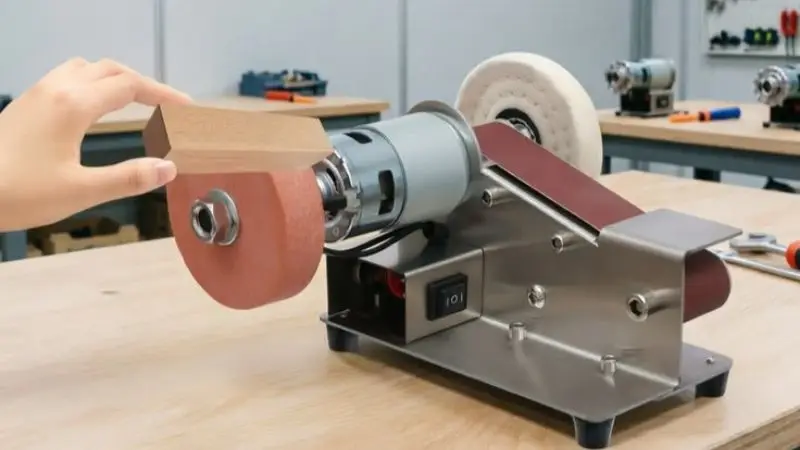
A belt sander is not your only option. You have other tools in the sanding family. Each one has a specific job. Match the tool to the task. This section helps you choose between the main types.
Belt Sander vs Orbital Sander
An ordinary orbital sander vibrates within a tiny area. It is perfect for fine finishing. Use it when preparing surfaces before painting. A belt sander is much more aggressive. It is a more aggressive sanding tool than an orbital sander. It works rapidly, removing the surface layer. You move in a straight line while using a belt sander. Otherwise, you will create a deep groove if you pause in one place. An orbital sander is very forgiving. You can leave it stationary, and nothing will happen.
What should you choose? Everything depends on your needs. Do you need to remove old paint from a door or even level the door itself? Use the belt sander. Would you like to prepare the wood surface for your table? Choose an orbital sander. The type of sander you have determines how quickly you perform your work. Many people have both of them.
Belt Sander vs Random Orbital Sander
A random orbital sander works differently. It spins and vibrates at the same time. This random pattern prevents swirl marks. It gives a very smooth finish. You can use it for nearly any sanding task. It is very gentle on the wood. But it removes material slowly. It is not a fast tool.
The sander’s strength lies in its speed. It is a powerful tool used for shaping wood or flattening a board. This process takes just a couple of seconds when compared to random orbital sanding. Think of these sanders as partners. Apply the belt sander for the aggressive job and the random orbital for the finishing steps. Together, they deliver speed and a great finish.
What Grit Sandpaper Should You Use With a Belt Sander?
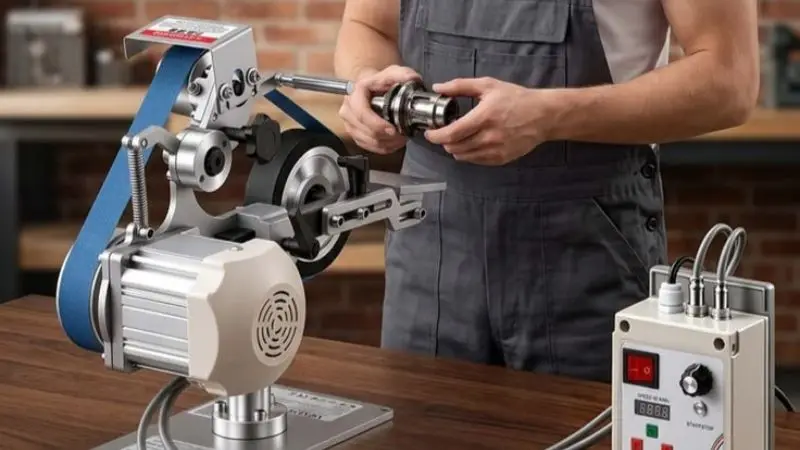
Choosing the right material matters. Grit size determines how aggressive the cut will be. A low-numbered sandpaper has large teeth that are hungry for wood. A high-numbered sandpaper is fine and serves as a polishing material. Start coarse and work your way up gradually.
Coarse Grit Sandpaper
What can you use a belt sander for? Coarse belts range from about 40 to 80 grit. These are your heavy hitters. Grab a 40- or 50-grit belt when you need to strip paint, remove rust, or flatten a warped board. The abrasive particles are large and spaced out. They bite deep into the wood with every pass.
This is where your belt sander shows its true power. A coarse belt removes years of finish in minutes. You can quickly level a glued-up tabletop or shape a rough beam. But be careful. These belts cut fast and leave deep scratches. Keep the tool moving at all times. If you pause, you gouge the wood. Always follow up with a finer grit to erase those scratches.
Medium Grit Sandpaper
Medium grits range from 80 to 120. This range is your workhorse for general sanding. An 80-grit belt smooths out the scratches left by coarse paper. It also prepares the surface for final finishing. You use this grit after the heavy removal is done.
If you want a smoother surface without sacrificing material, a 100- or 120-grit belt would be suitable. These belts work perfectly for refining edges and preparing the surface for a changeover to a random orbital sander. A medium-grit belt balances rough shaping with fine finishing. Still, don’t forget constant motion. A medium belt is more forgiving than a coarse one and leaves a touchable surface. It is time to move to finer grits for a perfect finish.
Conclusion
The belt sander is a highly productive tool. It uses a rotating loop of sandpaper to smooth, shape, and finish surfaces. The motor drives the drums; the belt slides on the platen; and all the parts of the sander operate simultaneously. In this article, you learned what the belt sander was and how the parts of this equipment function together. Stay safe at work! Put on your protection and do not let the tool sit idle during sanding. Don’t forget to keep the belt moving over the wood surface. Any novice can handle this sander!
FAQs
Best belt sanders for beginners in France
Beginners should choose models with variable speed settings, comfortable handles, user-friendly control panels, a dust-collection system, and a lightweight design.
What are the best belt sanders for sanding metal in France?
When choosing a belt sander for metalwork, opt for heavy-duty models from Makita, Metabo, and Bosch with variable speed, powerful motors, durable belts, efficient cooling, and a belt-tracking system.
Name some of the best belt sanders for sanding wood in France?
For wood finishing, beginners should choose models with variable speed and easy belt replacement. These include models from Bosch and Makita.
What are the safest belt sanders for beginners in France?
Beginners should use belt sanders equipped with a dust extraction system, safety belt guard, trigger lock, stable handles, overload protection system, and belt tracking system.