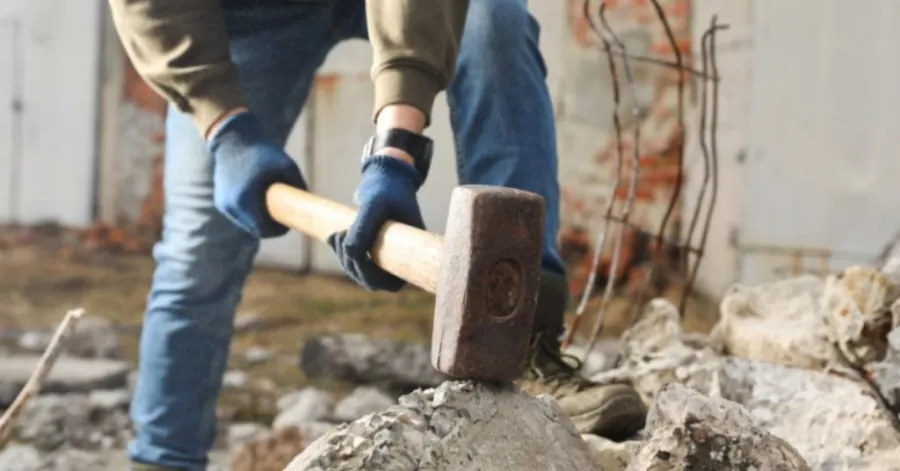
You don’t always need a jackhammer, or any powered tool, to break concrete. On small slabs, walkways, pavers, and damaged areas, a concrete sledgehammer can crack the material and break it into pieces you can actually handle. But technique is what makes the difference. Pick a hammer that fits the job, clear the work area, put on the proper safety gear, and work in measured stages rather than swinging wildly. From picking the right tools to hauling away the rubble, this guide walks through breaking concrete with a sledgehammer. You will also find out when a sledgehammer does the job and when it makes more sense to bring in a jackhammer
Table of Contents
How to Use a Concrete Sledge Hammer Step by Step
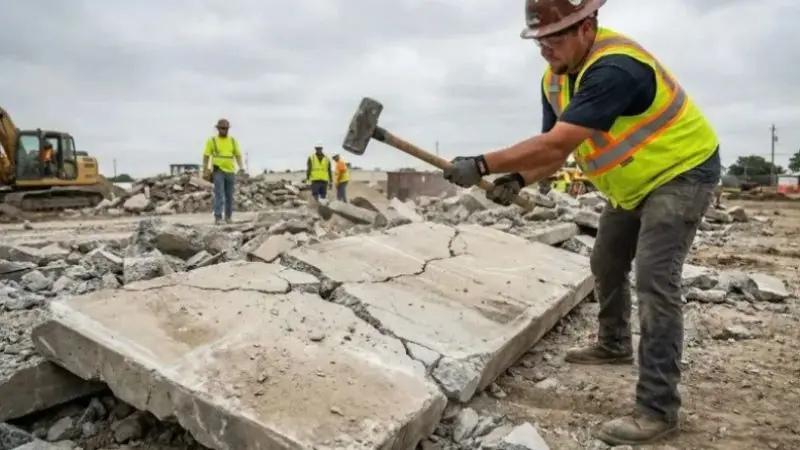
With your tools and safety gear in place, the next step is to tackle the concrete in an organized way. Picking the right place to start can make the whole demolition job far easier.
Don’t just pound away at one spot as hard as you can. Find a weak spot, keep your swings under control, and let small cracks grow into bigger breaks. Below is the process for using a sledgehammer to break concrete more safely and with less effort.
Recommended For Your Project
Inspect and Prepare the Concrete
Before your first strike, take a close look at the whole concrete area. Look for cracks already there, control joints, edges that are damaged, or other weak spots — these tend to break more easily. Also check around the area for pipes, electrical lines, drainage components, or other structures that demolition might damage. For a slab, also get a rough idea of how thick it is. Thin concrete often gives way quickly to hand tools, but reinforced or very thick concrete may call for different equipment. Clear loose objects out of the way and set up a safe working zone. This preparation is a key first step in learning how to break a concrete slab with a sledgehammer.
Mark the Area You Want to Break
Marking the demolition area keeps the cracks where you want them and prevents damage beyond the planned section. Use chalk or another visible marker to outline the section you want gone. For slabs, mark straight lines around the section whenever you can. Existing joints can serve as handy boundaries too. Cracks can spread past the point of impact, so keep an eye on the surrounding concrete as you work. Steel reinforcement inside the concrete, or a connection to another structure, means you should slow down and think before you swing. With clear markings, you can work to a set pattern instead of swinging at the surface wherever you feel like it.
Create a Starting Point
A starting point leaves the concrete with a weak spot, and that is where the cracking will originate and travel from. Scan for a joint, an exposed edge, an existing crack, or a section that is already damaged. Set a masonry chisel on that point, then bring the sledgehammer down on it in measured blows. You are after an opening fracture, not a total collapse of the concrete on the very first swing. After the first crack appears, keep working it and widen the gap as you go. When you start from an edge, the concrete has less material holding it on all sides, so pieces often come away more readily. If you are just learning to break concrete with a sledgehammer, this approach helps: a couple of controlled cracks are easier to handle than impacts scattered all over.
Strike the Concrete With the Sledgehammer
With a starting point open, widen the cracks by working the sledgehammer over them. Plant your feet, find your balance, and make sure nobody else is within range of the swing. Grip the handle tightly, and swing with control instead of putting everything you have into every stroke. Take aim at the cracked or weakened spot instead of dropping the head on unbroken concrete over and over. After a few blows, stop and look at how the cracks are running, then shift where you are aiming. As soon as the task starts wearing you down, take a break. So, can you break concrete with a sledgehammer? For concrete that fits the technique, the answer is yes, but thickness, reinforcement, and the size of the slab all influence whether it is really practical.
Break the Concrete Into Smaller Pieces
Remove the Broken Concrete
When the concrete has come apart, replace the headline for sense with: Now that the slab is in moveable chunks, lay the hammer aside and start hauling debris. Loosen stuck material with a pry bar, then lift or carry the handle-see units with your body aligned for lifting. Skip chunks too cumbersome or poorly balanced. Everything that comes out goes in a disposal spot; do not pile it up across the rock. Small eroding fragments and dust go into a dustpan after them. Proper cleanup also lets you inspect the exposed surface for remaining concrete that needs attention. With that, the basics of breaking concrete by hand, without a jackhammer, are covered.
How to Pick the Right Sledgehammer for Concrete
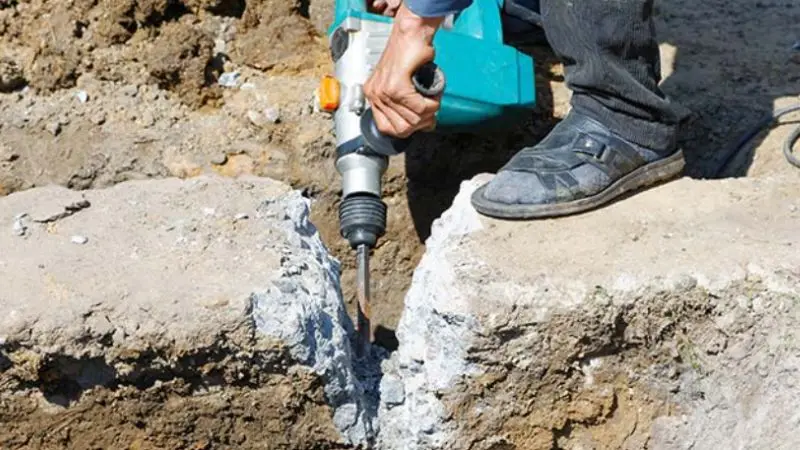
How hard you have to work, and how much say you get over each strike, both come down to which sledgehammer you pick. More weight means more impact, but swing a heavy hammer too long, and it wears you down.
Weigh the hammer‘s weight, its handle, how the head is made, and the concrete you’re facing before you buy or swing one. Taken together, these give you the best sledgehammer for breaking concrete that suits the actual job, not just the heaviest one on the rack.
Pick the Right Hammer Weight
Sledgehammer heads are not all one size or weight. What size you should buy depends on the concrete you are hitting and your ability to manage the tool. A lighter 6 to 10 pounds model is usually plenty for thin slabs, minor patch jobs, or controlled teardowns. Stepping up to a mid-sized head between 10 and 16 pounds provides the extra impact tougher spots require. While heavy heads take care of thick pours, swinging them safely takes real physical effort and room to work. You’re after a balance: impact on one side, control on the other. Handle a hammer that’s too heavy, and the fatigue will throw off your aim. Pick a weight that lets you strike again and again with control, staying in good form the whole way.
| Concrete Type | Suggested Sledgehammer Range | Typical Use |
| Thin slab | 6–10 lb | Small patios, thin walkways |
| Medium concrete | 10–16 lb | Slabs, steps, larger sections |
| Thick concrete | 16–20+ lb | Heavy demolition where practical |
| Small blocks or pavers | 6–10 lb | Controlled breaking |
These weight recommendations are just where you begin. How thick the slab is and whether there is rebar or mesh inside can easily push you toward a different weight. Working room is another factor to keep in mind. Above everything else, make sure it is a hammer you can safely control.
Consider Handle Length and Grip
The length of the handle directly changes how much control you have over the tool. That length also dictates how much power goes into every strike. Going with a longer handle widens your swing arc, which builds up more momentum. That setup is great if room is not an issue.
In tight or confined quarters, though, that extra length can get in the way. You get much better control in close quarters with a shorter tool. Pick one with a grip that sits comfortably in your palm and won’t slip. Swinging over and over on a long job wears your hands down, which is where a solid grip helps.
Give the handle a quick once-over every time before you start swinging. Watch for splits, cracks, anything coming loose, or any other signs of wear. During demolition work, a handle that feels comfortable and holds up well keeps the hammer easier to manage and less dangerous.
Check the Head’s Material and Durability
The head absorbs every blow, so how it’s made matters a lot. A well-made head built for heavy striking, attached firmly to the handle, is what you want. Check the striking faces for serious damage, mushrooming, or anything else that could make the tool unsafe. Used correctly, a good head will hold up to hit after hit on concrete. Don’t keep using a damaged hammer just because it’s heavy or within reach. Before you begin, look over the head and handle, especially if the hammer hasn’t been used in a while. A solid build plus routine inspection keeps a concrete sledge hammer reliable through job after job.
Pick the Hammer That Fits the Concrete Thickness
How thick the concrete is ranks among the big things to weigh when picking a sledgehammer. For thin, unreinforced concrete, a lighter hammer often works, but thicker sections call for a heavier one and steadier technique. Reinforced concrete plays by different rules because steel can hold the pieces together after they’ve cracked. In that case, a sledgehammer by itself may not do the job. Treat the table above as a starting point and also size up the section and how much room you have to swing. If you’re looking into how to break thick concrete with a sledgehammer, keep in mind that going heavier won’t solve the problems rebar or excessive thickness creates.
How to Break Different Types of Concrete With a Sledgehammer
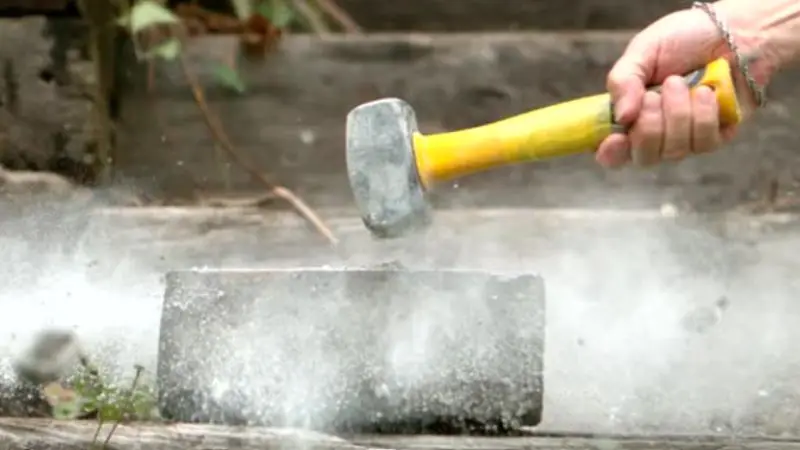
Concrete doesn’t all break the same. A thin patio slab will break nothing like a concrete paver, a step, or a thick section; each one demands its own technique and its own level of effort.
The method stays consistent: find the weak points, start cracks, and separate the material bit by bit. Match your hammer weight, striking style, and working area to the concrete you’re actually removing.
Breaking Thin Concrete Slabs
When a slab is thin, not much material stands in the way of each blow, so it yields more easily. Before anything else, look for cracks, joints, or edges that are already exposed. Outline the area to be removed with your marking of choice, then start your strikes at an edge or some other natural weak point. Land a few controlled strikes to get a crack started, then trace it across the slab as it grows. When a piece starts coming loose, concentrate on its boundaries instead of pounding away at the middle. Where a cracked piece is still holding on, a pry bar gives you the leverage to lift it free. If you’re working through how to break a concrete slab by hand, this method keeps the operation orderly and easy to track.
Breaking Concrete Pavers and Blocks
Since pavers and blocks are smaller than slabs, your real problem is landing the right amount of force without wrecking the neighboring pieces. To pull out just one paver, first clear away the joints around it as best you can. Control improves if you drop down to a lighter sledgehammer or switch to a proper masonry hammer. Once a paver is freed from the ground, rest it on a stable surface, and at all times keep hands clear of the strike zone. When you’re working on blocks, aim for an edge or another weak spot rather than the wide center. Take it piece by piece until the material comes apart into chunks you can handle. Anyone learning to break up concrete by hand benefits from this kind of deliberate, controlled approach.
Breaking Concrete Steps and Walkways
Steps and walkways often need more thought up front, since they tend to connect to other structures. Check the area first for joints, edges, cracks, buried utilities, or reinforcement before you swing. Begin at an exposed edge or an already damaged area where you can open a fracture without much risk. On a walkway, stay inside the marked boundary and leave the sections you’re keeping untouched. Their shape and the support underneath make steps trickier to break, since neither is predictable. Clear away the smaller chunks as you go so the site doesn’t turn into a mess. If reinforcement or a structural connection is present, pause and decide whether hand demolition is the right call.
Breaking Up Small Portions of Thick Concrete
Thick slabs try your patience: the first few blows with a sledge may do no more than scratch the surface. Rather than trying to punch through the full depth in one go, concentrate every blow on an edge, an existing crack, or a deliberately chosen starting point. Deepen the crack with a masonry chisel so later hammer swings land on a tighter target. Keep prying the fracture open until the concrete comes apart in manageable sections. Heavy hammer work drains you fast, so build in breaks. But when thick steel bars run through the concrete, or the piece is simply too big to handle safely, a sledgehammer stops being the sensible tool. Keep this in mind above all when you’re working out how to break thick concrete with a sledgehammer.
Sledgehammer vs. Jackhammer for Breaking Concrete
Either tool will crack concrete, but they go about it in different ways, and each suits a different kind of job. The jackhammer runs on powered percussion that pounds away again and again, whereas the sledgehammer is just your own muscle behind the swing.
Which wins comes down to how thick the concrete is, how big the project is, the space you have to work in, the noise you can tolerate, and how hard you’re willing to push yourself. The rows that follow show where each tool belongs, which should help you settle on the right way to work.
Where a Sledge Hammer Wins
Small demolition — the kind that never needed a power tool in the first place — is exactly where a sledge hammer comes into its own. Thin slabs, small walkways, individual pavers, and blocks all fall within its range, along with limited sections you can break down gradually. You won’t need electricity, an air compressor, or a rental either. For anyone figuring out how to break concrete without power tools, a sledgehammer and masonry chisel make a simple starting setup. Physical effort is the biggest limitation. Thicker or larger areas take much longer when you’re breaking them by hand. You also need enough space to swing the hammer safely and keep control of it while you work.
Which Jackhammer is Best for Heavy Demolition VS Light Chiseling?
If the job is light DIY work, a compact electric breaker is generally easier to handle than a large pneumatic jackhammer. For heavy demolition, you may need a more powerful breaker and the right bits and supporting equipment to go with it. Compare models on impact energy, weight, vibration, power source, bit compatibility, and operating environment instead of judging by size alone.
When a Jackhammer Is More Suitable
A jackhammer makes more sense whenever there’s a large volume of concrete to remove or the material is too thick to break efficiently by hand. Instead of the operator supplying the force, its powered mechanism delivers impact after impact, which cuts the physical effort required. Electric versions handle lighter tasks easily, provided you can plug into an outlet close to the work area. Air-powered types require a separate compressor and are standard fare for tougher demolition. Demolishing thick concrete, expansive slabs, or tall sections of wall goes significantly faster with a jackhammer. The trade-off is a massive amount of dust, violent vibration, and loud noise. You cannot skip the proper protective gear or careful handling on the job. If the project is truly minor, an ordinary sledgehammer could be plenty. You might not even need a jackhammer if that is all you are doing.
Compare Pneumatic Versus Electric Breaker Hammers: Which is Better for DIYers in France?
The main distinctions between electric and pneumatic breakers come down to power source and setup effort. Running a pneumatic breaker requires an air compressor along with air hoses. Because of that, getting them ready for minor DIY tasks can be more of a hassle. An electric model just has to be connected to a suitable power supply. For the average project around the house, that makes them simpler to work with.
Still, going electric comes with a few constraints. There has to be a nearby power point, and you can only work as far as the cord stretches. French DIYers ought to verify the electrical rating on the breaker before plugging it in. They also need to stick to safety guidelines and observe any local restrictions on where and when tool use is permitted. Picking the right breaker comes down to the concrete itself, the scale of the task, the space you are working in, and what tools are already in your shed. Neither tool is the right answer every single time.
Comparing Effort, Speed, and Control
Physical effort, demolition speed, and control are where a sledgehammer and a jackhammer part ways. Every strike is under your direct control with a sledgehammer, which helps when the section you need to remove is small and specific. Manual impacts repeated over and over, though, take a real physical toll. A jackhammer covers larger areas faster with rapid powered impacts, but it vibrates more and is harder to steer precisely. The table below sets the two against each other plainly.
| Factor | Sledge Hammer | Jackhammer |
| Power | Manual | Electric or pneumatic |
| Effort | More physical effort | Less physical effort |
| Best For | Small jobs | Large demolition |
| Control & Setup | Easy to control and set up | More power, but needs power or a compressor |
You can tackle smaller tasks by hand, though heavier demolition might require power equipment. Let the scope of the work and the depth of the slab make the call, not raw machine strength.
Wrap Up
A sledgehammer may be all you need if you are only tearing out a small patch of concrete. It avoids extra complication on days you do not want to mess with power tools. Choose a weight you can swing cleanly without it getting away from you. Start on firm ground, then follow the cracks as the material begins to split. Keep breaking the concrete until the pieces are manageable enough to haul off without fighting them.
Keep to baseline safety rules throughout the entire job. Keep your balance when moving that much weight, and stay clear of jagged edges on the rubble. A hammer works well enough if you are dealing with garden paths, pavers, thin concrete, or awkward corners. Heavy pours, tight rebar grids, or huge square footage might force you to bring in power tools. Check the condition of the concrete and measure the job site before you decide how to tackle it. With those details in hand, select tools that actually match the job’s true size.
FAQs
If I’m buying a jackhammer for the house, what factors should I check out first?
Keep an eye on total weight, impact strength, vibration, how it’s powered, the chuck bits, handle comfort, and the size of your workspace. Choose a model you can hold onto and balance without fighting it. For basic DIY tasks around the house, a lighter electric breaker will probably give you an easier time than a heavy-duty machine.
What does safe operation and maintenance look like if you want a jackhammer to last?
Before you switch the unit on, get your safety glasses, hearing protection, gloves, and sturdy boots on. Check every bit and fitting prior to use, and hold the housing firmly with both hands while running it. Give the machine a good wipe-down after you finish up. Follow the maintenance and oiling schedule given in the manual.
How do pneumatic, electric, and hydraulic jackhammers differ, and what tells you which one to pick?
While electric breakers run off an ordinary wall plug, pneumatic tools need air lines running back to a compressor. Dedicated machinery provides the pressurized fluid that runs hydraulic units. Your choice comes down to site layout, available power, job scale, mobility requirements, and how much striking force you actually need.
Which breaker hammers are best suited to beginners in France, and why do they work so well?
Lighter, smaller breaker hammers tend to feel far more manageable to a beginner. Look first for firm handles, muted vibration, simple controls, and bits that change out without hassle. Setup is practically effortless with electric models since you don’t have to deal with an air compressor.
Which demolition hammers do the best job of keeping you from tiring out through their ergonomic design, and where do they stand in relation to one another?
Notice how the tool feels in terms of balance, how effectively it damps vibration, and if the grips and switches fall right where your hands want them to. Instead of leaning on someone else’s rankings, take the models you are considering and measure them directly against each other on these exact points. Choose the hammer that fits your frame, the job you have to do, and the length of time you will be holding the trigger.