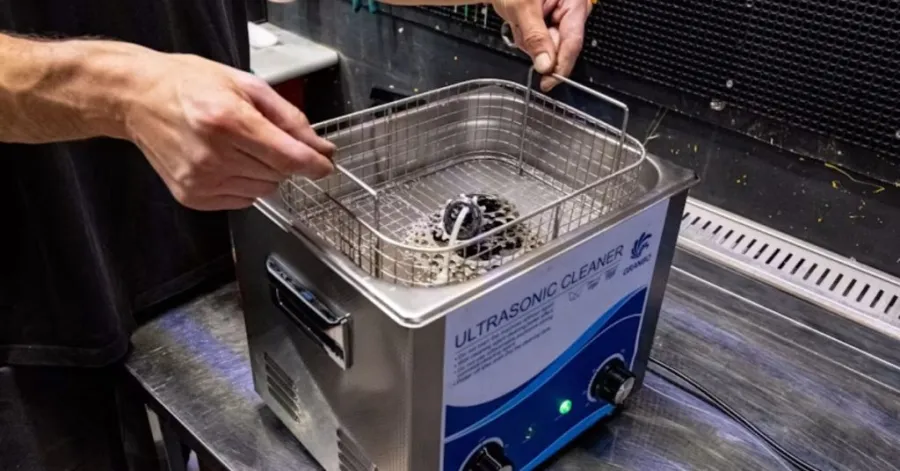
Ever ask yourself, “Ultrasonic cleaner, how does it work?” The solution is an interesting phenomenon involving high-frequency sound waves and a million minuscule bubbles. You put your objects in the water, and the ultrasonic cleaner starts working. This technique is effective for cleaning using very small bubbles. This technology can reach even the minute cracks and corners and clean them up faster and more safely for you.
Industrial cleaners are far from rare these days and have become a familiar way to clean in homes and workshops, including ultrasonic cleaners. This technology provides fast, deep, yet gentle cleaning of various items such as jewelry, eyeglasses, auto parts, and medical devices. You will learn about ultrasonic cleaning, the science of cavitation, the various elements involved, the advantages, and the effective use of the ultrasonic cleaner.
Ultrasonic Cleaner: How Does It Work? (Core Mechanism Explained)
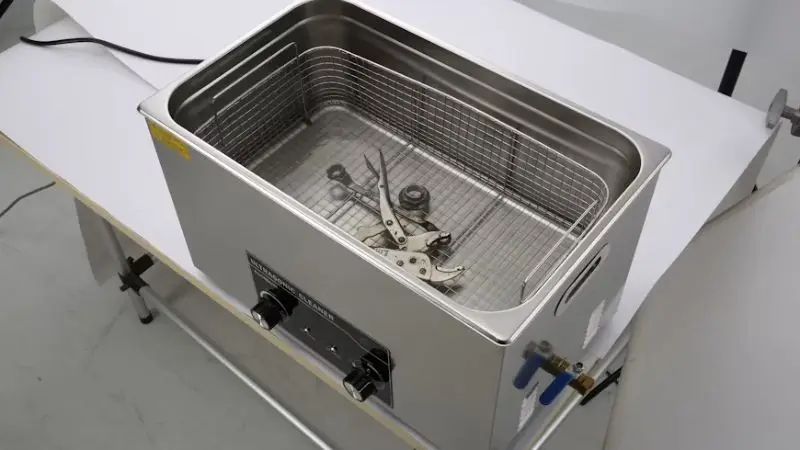
The ultrasonic cleaner uses sound waves transmitted through water or a cleaning solution at high frequencies. Cavitation is the formation of millions of micro-bubbles from these waves. As the bubbles form and collapse very quickly, they release energy that lifts dirt, grease, and other contaminants from surfaces. With the right cleaning solution, this process will be further improved, making cleaning thorough and efficient.
The Science of Ultrasonic Waves
The strength of ultrasonic cleaning comes from the ultrasonic waves. These waves are sound waves traveling at a high speed. The ultrasonic cleaner emits these waves when it is turned on and placed in the water or cleaning solution. The waves are energetic and fast-moving in the liquid. The ultrasonic waves generate millions of tiny bubbles when they travel through the liquid. These bubbles quickly form and break, creating microscopic bursts of energy that dislodge and wash away contaminants. This means the user can get a deep cleaning without doing much work at all. How effective are ultrasonic cleaners? Ultrasonic cleaning removes dirt using ultrasonic sound waves rather than abrasive contact. This way, it’s less abrasive to many valuable or delicate items of property.
Cavitation Process: How Tiny Bubbles Do the Cleaning
It is the small bubbles that do the magic. Millions of bubbles are formed in solution due to ultrasonic waves. This is known as cavitation. The bubbles quickly form and burst. They release energy when they explode. This power repels dirt, oil, and grime from your belongings. How does cavitation work in ultrasonic cleaning? Cavitation can penetrate into all small areas, even those you cannot see. The advantage of cavitation is that it can provide deep cleaning without manual scraping. There are many things with very small crevices, holes, and grooves, as well as hard-to-reach spots where dirt can get stuck over the years. Handwashing can be challenging in these locations and requires a significant amount of time. The best results will be achieved with the proper cleaning solution and by following the proper steps when using cavitation.
Role of Cleaning Solution in Enhancing Effectiveness
Water isn’t the cleanest. Adding a cleaning solution will improve the cleaning performed by bubbles. The solution will eliminate grease and stains. There are some solutions designed for jewelry. Others use tools or glasses. What is the working principle of ultrasonic cleaning? It is always necessary to get the proper solution for your items. A cleaning solution for this type of contamination is specially formulated to enable the ultrasonic cleaner to remove it from surfaces easily. This ensures a much more effective cleaning process than water alone, as it combines ultrasonic waves with a cleaning solution. The cleaning solution lowers the liquid’s surface tension, making it easier for microscopic cavitation bubbles to penetrate throughout the item. Users can choose the right solution to enhance cleaning and protect the cleaned surface.
Step-by-Step Breakdown of the Cleaning Cycle
Ultrasonic cleaning uses sound waves and bubbles to deliver deep cleaning every time. How do ultrasonic cleaners clean metal parts? The cleaning cycle also assists users in preparing the items correctly before beginning the cleaning process. If users properly load items into the basket and do not allow the basket to become too full for the tank, ultrasonic waves can circulate freely across all surfaces.
Here are some steps:
- Place the items into the tank.
- Add cleaning solution and water.
- Set the timer and temperature.
- Start the ultrasonic cleaning.
- Observe the bubbles forming, then wipe off all surfaces.
- Remove items during the cleanup process.
Understanding the Key Components of an Ultrasonic Cleaner
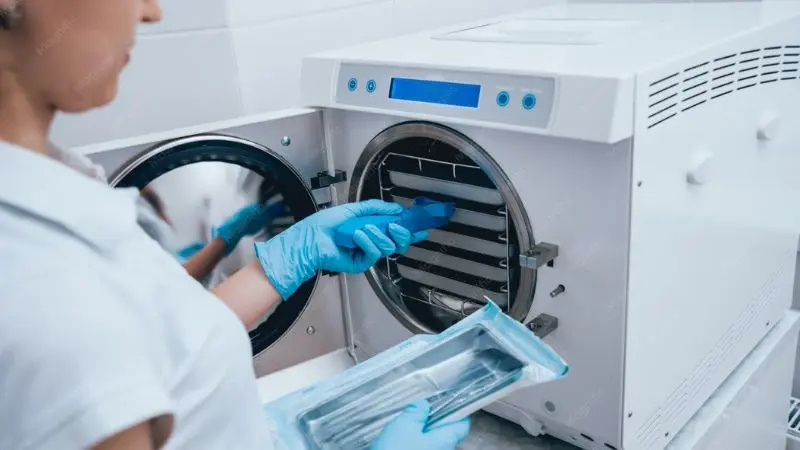
The ultrasonic cleaning process depends on several components to be effective. The transducer converts electrical energy into ultrasonic waves, and the stainless steel tank distributes these waves throughout the cleaning solution. The control panel enables the user to tune time, temperature, and frequency. All of these, in combination, produce the optimal cleaning conditions for various articles and contamination levels.
Ultrasonic Transducers and Their Function
Many people ask, “How does ultrasonic cleaning remove dirt, and why does it work so well? It’s primarily because of the transducer. This part converts electrical energy into ultrasonic waves. The transducers are mounted either on the bottom or the side of the tank. The generator is connected to the transducer when it is turned ON. The transducer vibrates at a frequency. The shakes make ultrasonic waves that clean your things. Without a good transducer, you will not have a strong cleaning. The electric power flows from the power supply to the transducer when the ultrasonic cleaner is switched on. The transducer then vibrates rapidly to generate ultrasonic sound waves. The sound waves in the tank generate millions of tiny bubbles in the cleaning solution. These bubbles are constantly created and burst, thus providing the cleaning action needed to remove contaminants from surfaces.
Cleaning Tank and Material Design
Items and solutions are added to the cleaning tank. The stainless steel is used for most tanks. This metal conducts ultrasonic waves in the liquid. The tank needs to be large enough to fit the transducer and to reflect the waves. Cleaning will be more effective if the tank is of the correct speed. In some tanks, the shape is special to add strength in cleaning. How effective are ultrasonic cleaners? The cleaning tank is the part of the ultrasonic cleaner that holds the water or cleaning solution and the cleaning items. When operating, the ultrasonic waves pass through the liquid in the tank. These waves can move efficiently throughout the solution due to the tank’s design and construction. This enables the cleaning process to reach all exposed surfaces of the items inside, including those that are hard to access.
Control Panel, Timer, and Temperature Settings
The panel is used to manage the ultrasonic cleaner. The timer and heat can be set. The generator allows you to select the speed of the waves. Some cleaners allow you to choose high speed for gentle cleaning. Others use low speed for the difficult ones. The timer can help you not wash for too long. The heat setting can enhance the solution’s cleaning ability. The main control center of the ultrasonic cleaner is the control panel. It allows the user to control the machine’s various functions easily. Users can start and stop cleaning cycles and set the temperature and cleaning time using a few buttons or controls. In this feature, you can simply discover the manner in which ultrasonic cleaners clean jewelry. Always make sure you have your settings before you begin. You can get the best cleaning at the right speed and time.
Power Supply and Frequency Range Explained
The power supply energizes the generator. This energy is transferred to the transducer by the generator. The wave speed can be selected. The frequency range of most ultrasonic cleaners is 20-40 kHz. High speed makes small bubbles and gentle cleaning: low speed – big bubbles & strong cleaning. The item should be moved at a consistent speed for optimal cleaning. The power supply provides energy to the ultrasonic cleaner. The power supply provides power to the transducers and generator when the machine is turned on. These transducers then convert the electrical energy into high-frequency sound waves.
Top Benefits of Using an Ultrasonic Cleaning Technology
Ultrasonic cleaners can thoroughly clean difficult-to-reach areas and small crevices that cannot be cleaned by hand. They save time by cleaning multiple items quickly, without scrubbing. Their gentle cavitation process is safe for delicate items such as jewelry, watches, and eyeglasses. Furthermore, the ultrasonic cleaning process is environmentally friendly, as it reduces the amount of water and harsh chemicals used.
Deep Cleaning in Hard-to-Reach Areas
It is hard to clean small cracks by hand. This is easy for you, thanks to ultrasonic cleaners. The sound waves create bubbles that spread throughout. These bubbles penetrate all the little spaces. They remove dirt that you can’t see. You get a deep clean each time you use it. What is the principle of ultrasonic cleaning? The cleaning process uses ultrasonic waves and a phenomenon known as cavitation. The cleaner produces millions of microbubbles in the cleaning solution as it runs. These minute bubbles permeate the fluid and then come into contact with all exposed surfaces of the object being cleaned. An ultrasonic cleaner will help remove all this buildup, restoring the item to its original appearance and cleanliness.
Time-Saving and Efficiency Advantages
You’ll save time using ultrasonic cleaners. You only place items in the tank. Then you turn on the machine. How effective are ultrasonic cleaners? The cleaner performs all work for you. The majority of jobs are completed within a few minutes. No scrubbing/bushing is required. Perfect for the busy folks seeking quick cleaning. An ultrasonic cleaner makes this easier by automatically cleaning using ultrasonic waves and microbubbles. This enables users to get great results with minimal effort and time. Cleaning with an ultrasonic cleaner is as simple as placing items in the tank, filling it with the proper cleaning solution, setting the timer, and operating the machine. The cleaner operates automatically, allowing users to perform other tasks during the cleaning cycle.
Gentle Cleaning for Delicate Items
But some items require gentle handling; jewelry, eyeglasses, and watches may be damaged if cleaned too hard. How does ultrasonic cleaning remove dirt? They are cleaned using soft bubbles with ultrasonic cleaners. No scratching or damaging of items. This cleaner can be trusted for your fine items. These items might be rubbed or pressed too much when cleaned by hand. This can cause scratches, dull finishes, or other types of damage over time. This risk is minimized with ultrasonic cleaning, which uses sound waves and microscopic bubbles to clean rather than mechanical scrubbing. Ultrasonic cleaning is an effective method for gently removing dirt, oils, and other contaminants while preserving the condition and appearance of delicate products.
Eco-Friendly Cleaning Compared to Traditional Methods
Ultrasonic cleaning is good for the environment. Does not consume as much water as conventional cleaning methods. It is also less reliant on strong chemicals. You can achieve excellent results without harming the earth. Many people choose ultrasonic cleaners because they are environmentally friendly. This process can be very resource-intensive and wasteful. How does an ultrasonic cleaner clean metal parts? This is where ultrasonic cleaning is a more efficient alternative, with the majority of the cleaning achieved by high-frequency ultrasonic sound waves and the formation of microscopic bubbles. Users can use a very effective cleaning method without relying on harsh chemicals that can pose risks to humans and the environment. This is for the benefit of being safer and more sustainable when cleaning.
What Can Be Cleaned with an Ultrasonic Cleaner?
Ultrasonic cleaners can effectively clean a wide variety of items. Ultrasonic waves and the cavitation process can clean hard-to-reach areas without damaging surfaces by removing dirt, grease, and other contaminants. Proper precautions can also be used to clean delicate tools and electronics safely. This means that ultrasonic cleaning is an effective method for personal and professional use.
Jewelry, Watches, and Eyeglasses
Do you have rings or necklaces that look dull? With ultrasonic cleaning, they can be brought back to life. You simply put jewelry in the tank, and the ultrasonic waves take care of the rest. The bubbles go to small areas where dirt is concealed. You can also clean your watches and eyeglasses. What is the principle of ultrasonic cleaning? It will take away grime and smudges without scratching. One of the best items to clean with ultrasonic waves is jewelry. Daily wear and tear of rings, necklaces, bracelets, earrings, and other accessories can trap dirt and body oils. This accumulation can, over time, dull their luster. Ultrasonic cleaning cleans both visible surfaces and the hidden areas.
Dental and Medical Instruments
Dentists and doctors use ultrasonic cleaning on their tools. It is a good way of cleaning dental picks, scissors, and tweezers. What is the cleaning principle of ultrasonic cleaning? The ultrasonic waves will eliminate germs and small pieces of debris. This keeps everything in order and ready for use. It delivers a thorough clean that can’t be matched by hand washing. Cleanliness is of paramount importance in the dental and medical instrument manufacturing sites. Dental picks, forceps, scissors, tweezers, clamps, and surgical tools come into contact with various materials during use. The problem is solved by ultrasonic cleaning, which uses high-frequency sound waves and micro bubbles.
Automotive Parts and Mechanical Components
If you work on cars or bikes, you know how greasy parts can get. Ultrasonic cleaning makes it easy to clean nuts, bolts, carburetors, and gears. How does ultrasonic cleaning remove dirt? The ultrasonic bubbles lift away oil and dirt from every corner. You save time and get better results than scrubbing by hand. Automotive and mechanical components often have complex shapes with narrow passages, threads, holes, gears, and hidden surfaces. Examples include carburetors, fuel injectors, nuts, bolts, bearings, gears, valves, engine parts, and small machine components. These areas can be difficult to clean using traditional methods because brushes and cloths cannot always reach every surface.
Electronics and Precision Tools (With Precautions)
You can use ultrasonic cleaning for some electronics and tools. It works well for circuit boards, small metal parts, and watch tools. Always check the manual first. Some items need special care. Make sure everything is dry before you use it again. Precision tools are designed to perform highly accurate tasks, so cleanliness is important. Ultrasonic cleaning offers a simple way to keep many items spotless. You just need to follow the right steps for each item. Traditional cleaning methods often focus only on visible surfaces. However, contaminants can remain hidden inside small spaces and intricate components. Ultrasonic cleaning reaches these areas automatically, providing a deeper and more thorough clean.
How to Use an Ultrasonic Cleaner Safely and Effectively
The best way to use an ultrasonic cleaner is to carefully place the items in the basket, removing any loose parts. Select the appropriate cleaning solution for the materials and determine the required time, temperature, and frequency for the job. Run the cleaning cycle, then rinse and dry the items to remove the solution. These steps ensure safe, efficient, and consistent cleaning practices.
Preparing Items for Cleaning
Check your items first. Clean off debris and dirt chunks. If any components can be separated, disassemble them. This allows ultrasonic cleaning to clean all areas. Put your items in the basket. Ensure that they are not touching. How effective are ultrasonic cleaners? You would like the ultrasonic waves to propagate around each of those items. Proper preparation also helps ensure that all parts are cleaned equally. There are many objects with parts that can be taken off or that can move. These parts are disassembled (when possible) to expose areas that might otherwise be inaccessible to the cleaning solution and ultrasonic waves. For instance, jewelry composed of detachable parts, small tools, or mechanical parts can sometimes be cleaned more thoroughly.
Choosing the Right Cleaning Solution
The right cleaning solution is required for the best results. Water helps with certain things; a special solution can help enhance ultrasonic cleaning. Search for a cleaning solution designed for the products you plan to clean. Other solutions might be necessary for jewelry, tools, and glasses. The label should always be read before pouring the solution into the tank. What is the principle of ultrasound cleaning? A proper cleaning solution is specially designed to work with ultrasonic technology. It enables the release of contaminants and facilitates their removal from the item’s surface via cavitation bubbles. Specific cleaning solutions are created to help eliminate specific contaminants, increasing the effectiveness of the cleaning procedure. Avoid using bleach or flammable liquids. These can be harmful to your ultrasonic cleaner.
Setting Time, Temperature, and Frequency
The timer should be timed depending on the dirtiness of the items. How do ultrasonic cleaners clean metal parts? The majority of ultrasonic cleaning tasks require 3 – 10 minutes. If your cleaner has a temperature control, use it. A warm solution facilitates the breakdown of grease and dirt. Choose the correct frequency for the items. Use a lower frequency for tough jobs. More frequent are mild-to-fragile items. When used properly, ultrasonic cleaning can also be used for electronics. Some electronic components, such as circuit boards and metal assemblies, can accumulate manufacturing dust, oils, and residues. Many other manual cleaning methods, including ultrasonic cleaning, are not effective at removing these materials. This can be helpful in certain circumstances, such as during repair, maintenance, or restoration, when cleanliness is a factor.
Post-Cleaning Rinse and Drying Tips
Carefully remove items from the ultrasonic cleaner. Wash them with clean water to wash away any residual solutions. Dry with a soft cloth or air-dry. Ensure that all items are dry before using or storing. Always disconnect an ultrasonic cleaner after use. This is an example of the type of learning that can be achieved with this feature, meaning you will know how ultrasonic cleaning removes dirt.
Now you understand what ultrasonic cleaners are and how they help to clean in depth by using waves and bubbles.
- This approach will save your time, and your items will be safe.
- Use ultrasonic cleaning for jewelry, tools, or glasses.
Want to learn more? Learn about guides on best practices and cleaning solutions.
Wrap Up
How do ultrasonic cleaners work? Ultrasonic cleaning technology is a simple, effective method for deep cleaning. How effective are ultrasonic cleaners? Ultrasonic cleaning technology is simple yet powerful for achieving the best, deepest cleaning. These bubbles clean even the tiniest, most intricate surfaces, eliminating dirt, grease, and other contaminants. Jewelry, eyeglasses, auto parts, medical equipment, and precision tools are just a few of the industries using ultrasonic cleaners. Cleaning results can be further enhanced by using the correct cleaning solution, time, temperature, and frequency. In general, ultrasonic cleaning is a modern technology that is very effective, environmentally friendly, and waste-free. If you follow safe usage procedures and precautions, you can extend the lifespan of your items.
FAQ
When should you replace the cleaners?
Solution should be replaced if it becomes soiled or after each use. The fresh solution provides the best cleaning effect.
What can you put in an ultrasonic cleaner?
No, you cannot. Do not clean pearls, soft gemstones, or glued-on objects. Please refer to the care instructions for your item first.
Can ultrasonic cleaning be used on electronics?
Some electronics, such as circuit boards, can be cleaned by removing the batteries and drying them thoroughly. Do not use a screen or loose wires to clean objects.