Before selecting a pond air pump, begin by calculating the amount of water in your pond. To obtain the right pump, align your choice with the size of your pond, depth, total volume of water and the amount of oxygen you need. While one too large increases energy bills and stirs up insignificant water, an undersized pump risks leaving water poorly ventilated. In this guide, we walk through pond measurements, calculating oxygen demand, and choosing a pump with the right output and specifications. The right set-up of the pump and safe operation day-to-day are also covered. Get the right sizing and installation, and you will see cleaner and healthier water as well as better living conditions for fish, plant life and beneficial bacteria.
Why Does a Pond Need an Air Pump at All?
Good pond aeration keeps water moving and helps maintain healthy oxygen levels. An air pump is especially useful when natural water movement is limited.
Recommended For Your Project
How Air Pumps Add Oxygen to Pond Water
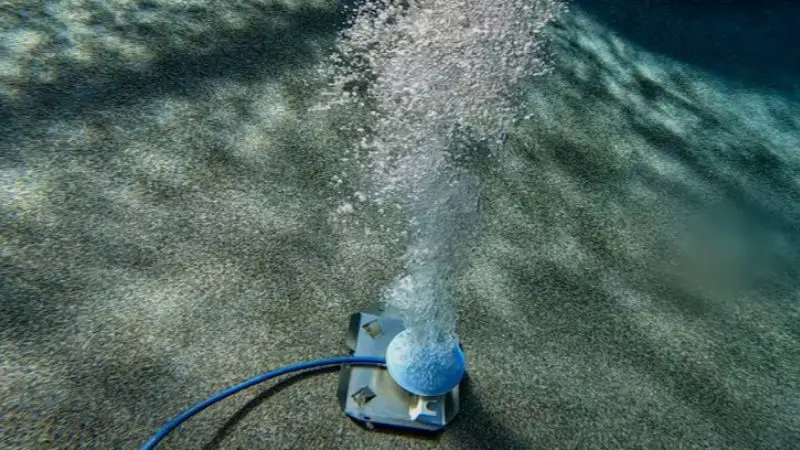
Air travels through the tubes of a pump to a stone of air or diffuser resting near the bottom of the pond. Small bubbles form on the diffuser and go to the surface of the water. Their upward path pulls moving water and stimulates gas exchange that goes out on the surface. CO2 is released into the air, and fresh oxygen is dissolved. Bubbles are not a material that, in themselves, will have most of their oxygen transferred to the water. Rather, they pull low-oxygen water to the surface, so that oxygen will propagate throughout the entire pond. A pond air pump of the right size supports the circulation and promotes consistent oxygen levels in all areas.
Why Proper Pond Aeration Matters
Proper aeration helps fish thrive, supports beneficial bacteria activity, and raises water quality in general. Fish depend on oxygen for survival, just as beneficial bacteria need oxygen for decomposing waste and organic accumulation. A dedicated air pump for the fish pond maintains a steady flow of water, which helps eliminate dead pockets. If oxygen is low, you could see fish congregate in fountains or waterfalls, go to the surface or just act lethargic. The water that has become cloudy or smells bad gives you another clue that there’s insufficient aeration. The warmer climate, depth of the pond, heavy loads of fish and dying algae can increase oxygen requirements. With an air pump designed for the ponds of the garden, the decorative characteristics of the water are maintained with reliable aeration without relying on fountains alone.
How to Select the Right Air Pump for Your Pond
You cannot pick the right pump strictly from water volume alone. Your choice also hinges on water depth, how many fish you keep, airflow rates, and running conditions.
Look at Pond Dimensions and Depth
When picking out a pump, the size and depth of the pond are the starting points. Larger ponds typically call for higher airflow, whereas deeper water puts heavier pressure on the diffuser. Work out the approximate volume first by checking the pond’s length, width, and average depth. If the pond is circular, take the diameter and average depth rather than length and width. How many fish you keep changes the oxygen requirement as well, particularly when the weather gets hot or algae starts dying back. Large pond aeration often requires several diffusers connected to the pump so air reaches every section. With modest water features, a small-pond pump will move the water sufficiently without churning it up too much.
Look at the Airflow Rating
Look at the airflow specs and verify that the pump actually delivers that volume at the depth where you place the diffuser. Because the pump is pushing against heavier water pressure deeper down, airflow rates can drop as depth increases. Make sure your diffusers and air stones are properly paired with what the pump puts out. You might need a few diffusers spread across a bigger pond to get full coverage. Picking a pump for a koi pond means factoring in how many fish you have and how much oxygen they pull, on top of water depth. If the pond sits near a patio or bedroom window, look for an outdoor air pump that runs quietly and sips electricity. Weigh the airflow, wattage, noise level, and build quality against one another before you settle on a model.
What Type of Air Pump Is Best for Your Pond?
Air pump styles are not one-size-fits-all; each suits particular pond volumes, water depths, and aeration demands. Picking the right one comes down to knowing how each style operates.
Diaphragm Air Pumps
Small and midsize ponds are a great fit for diaphragm pumps, which tend to be low-cost, compact, and economical to run. Air is driven through the line by a bendable rubber diaphragm flexing back and forth. Power draw is minimal with such a simple build, but you will have to service it now and then as the rubber degrades. Swapping in a rebuild kit usually does not take much effort. Do not just trust the surface output number when shopping for a small pond pump; make sure to verify what it actually delivers down at the diffuser. If you have a lot of fish in the water, you might need higher airflow than someone keeping only a few. You will get far more consistent aeration if you size the pump to your pond’s actual water volume and depth.
Linear Air Pumps
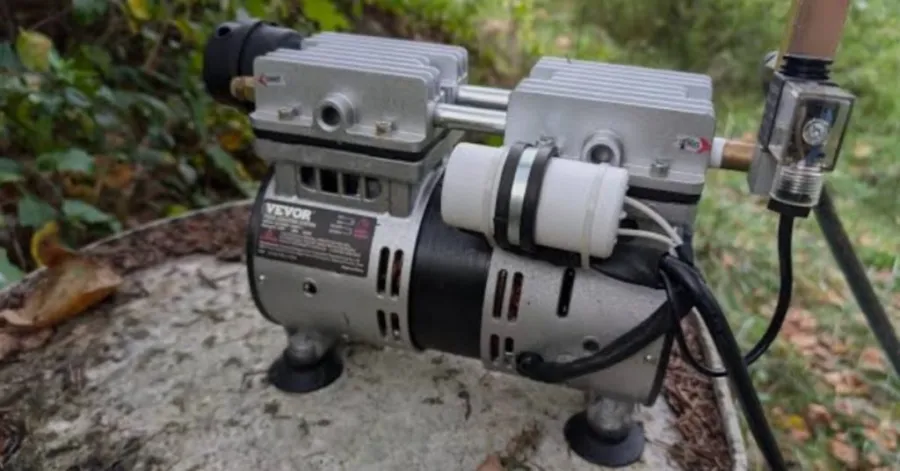
Ponds that run air day and night benefit from linear pumps, which have a reputation for running quietly and drawing little power. Built around a magnetic piston with few moving components, they can deliver steady air across long stretches of time. They fit right into backyard ponds where keeping equipment quiet matters. When you are dealing with deeper water or multiple diffusers, piston units push more volume and higher pressure, though they tend to be louder and draw more power. Where there is no power outlet, solar models can do the job, though expect output to drop off at night or on overcast days. Weigh the airflow, running pressure, noise level, power consumption, service needs, and pond depth before you settle on an outdoor pump.
How to Set Up an Air Pump for Your Pond
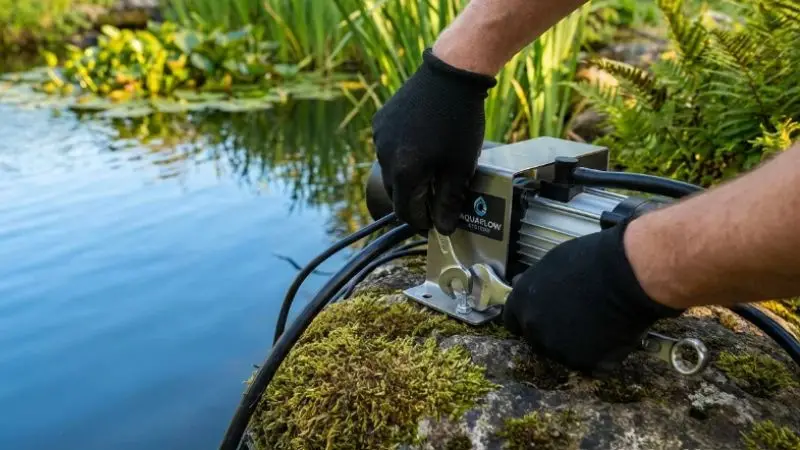
Putting the unit in properly keeps it running efficiently and lowers the odds of electrical faults or equipment breakdowns. Taking a few straightforward steps will also help aerate the pond more effectively from end to end.
Step 1: Pick the Right Spot for the Pump
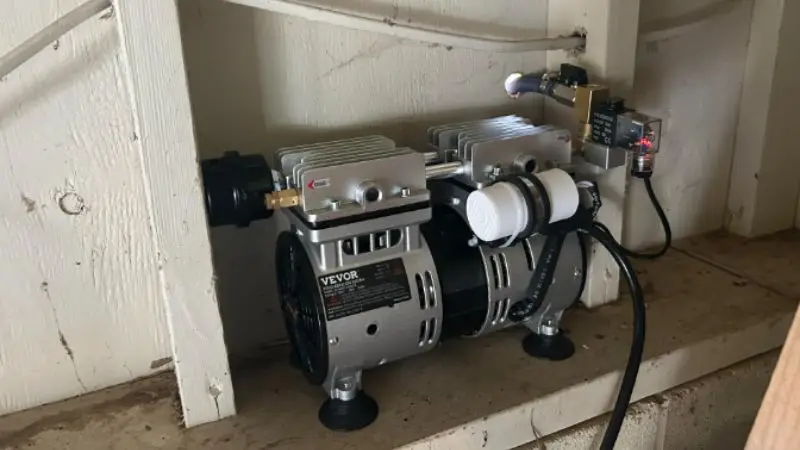
Set the unit on a flat, solid surface somewhere dry. Positioning it higher than the pond’s surface helps prevent water from siphoning back inside, so do that if you can. Direct sun and high temperatures will wear the pump out faster, so look for a spot that offers shade and plenty of moving air. Make sure rain, splashes, and rising floodwaters cannot reach the pump. When putting in an air pump for backyard pond setups, pick a spot you can still reach easily for routine upkeep. Run your power connections through weather-resistant outdoor covers and plug into a ground-fault circuit interrupter (GFCI). Keeping the setup dry and secure keeps both the equipment and anyone near it safe.
Step 2: Connect the Air Hose and Diffuser
Fasten the air hose tightly to both the diffuser and the pump outlet. Pick the right size tubing and keep the line free of kinks, sharp turns, or needless length, as any of those will choke the airflow. Position the diffuser so the rising bubbles move the water around without kicking up bottom sediment or bothering plants, liners, and fish. If the pond is on the larger side or shaped irregularly, you might need more than one diffuser to distribute the air evenly. Once all the connections are made, switch the pump on to verify that bubbles are rising steadily. Check for leaking air, then dial the airflow in a little at a time. Turn down the air or move the diffuser if the water is churning too hard or the fish look stressed. When set up right, it keeps water moving steadily without churning things up too much.
Step 3: Maintain the Pump and Aeration System
Routine upkeep keeps your aeration setup running as it should. Look over the air hose for kinks, cracks, or other signs of wear, and check the diffuser now and then for dirt or scale. If the air stream drops off, you might have a blocked hose, a fouled diffuser, or worn-out pump parts. Stick to the manufacturer’s care guidelines, cleaning or swapping out any damaged components whenever necessary. Routine inspections matter even more with an air pump for garden pond installation, since drifting leaves, dirt, and decaying plants can disrupt the equipment. Keep an eye on water conditions and how your fish are acting, too, if you have any in the pond. Steady air delivery paired with regular upkeep aids in stabilizing oxygen and promotes healthier water overall.
How to Maintain an Air Pump for Ponds
Routine upkeep keeps the airflow steady and extends the working life of the pump. A few straightforward checks will head off clogs, low output, and excess wear.
Clean Air Stones and Diffusers
Give the diffusers and air stones a cleaning whenever the airflow drops off or the bubble pattern looks patchy. The tiny pores can get choked by dirt, algae, and mineral buildup, forcing the pump to strain. Follow the manufacturer’s cleaning instructions because some diffusers need soaking, while others can be gently scrubbed. Replace the air stone if cleaning no longer restores normal airflow. This is especially important when using an air pump for fish pond setups because fish depend on steady oxygen levels. Warm weather can also increase oxygen demand, so check your diffuser more often during hot months. A clean diffuser helps an air pump for ponds maintain consistent aeration.
Check Air Hoses for Blockages
Inspect the air hose regularly for kinks, cracks, leaks, or internal blockages. Damaged tubing can reduce the amount of air reaching the diffuser and make your pump work harder. Keep hose runs as short and straight as possible to maintain better airflow. Also, protect the pump from rain, splashing, flooding, and excessive moisture. Place it inside a ventilated, weather-resistant enclosure without blocking the air intake or cooling vents. These steps are useful for an air pump for outdoor pond systems that operate in changing weather. If airflow becomes weak, check the hose, diffuser, and pump for blockages or worn parts before they cause further problems.
Wrap Up
You now have a clear path for choosing the right air pump for ponds. Measure your pond’s volume and depth, then estimate oxygen demand based on fish load, weather, and water conditions. Choose a pump type and airflow that can maintain steady output at your diffuser depth. For an air pump for large ponds or an air pump for small ponds, always check the actual flow at operating depth rather than relying only on surface ratings.
Getting the size right keeps the pond running well over time and helps your fish stay healthier. Steer clear of the usual sizing errors by reviewing airflow, where the diffusers sit, how everything is installed, and basic safety. Let actual pond dimensions dictate your purchase, whether you are shopping for an air pump for a koi pond, an air pump for a garden pond, or an air pump for a backyard pond. Take out a tape measure today and get your pond sized.
FAQs
Which water pump types are most commonly used around the house?
Typical home water pumps include centrifugal, booster, submersible, jet, and utility styles. These distinct types handle different jobs, from drainage and water transfer to boosting line pressure or drawing from wells and storage tanks.
Which pond pumps work best if you want to keep the water clear?
Pumps that maintain consistent circulation cut down on stagnant spots and help push water through your filtration setup. Pick a model by matching its flow rate and needed head height to your pond’s volume and filter capacity so the water circulates properly.
Which features matter most when shopping for a garden pump?
Find a pump that offers the right head height, flow rate, build quality, power draw, and a continuous-duty rating. If it will sit outside, you also want to weigh weatherproofing, noise, maintenance needs, and how easily it hooks up to hoses or irrigation setups.
Which water garden pumps work best for gardens on the small to medium side?
Smaller surface or submersible pumps can supply the right balance of circulation, irrigation, or fountain flow in small to medium gardens. Which one you need comes down to your water source, how high you have to lift the water, the necessary flow rate, and what you plan to use it for.
What are the best water garden pumps for koi ponds, and what makes them the right pick?
To keep conditions stable and push water through the filter, koi ponds require dependable circulation. Do not simply go by physical size; base your pick on pond volume, fish stock, filter demands, flow rate, and head height.