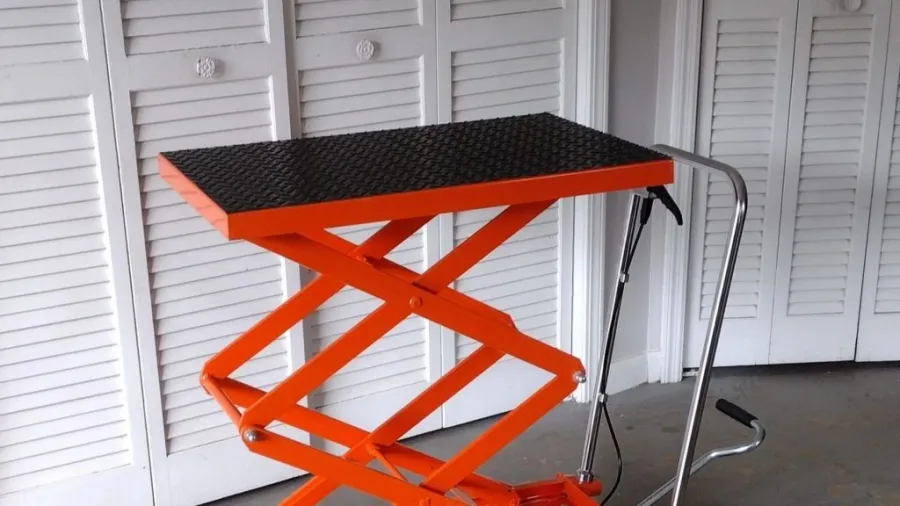
A compressor already runs in the workshop corner. The scissor pneumatic lift cart beside it still needs forty foot-pumps to reach bench height, and somebody does that ninety times a shift. A pneumatic lift table puts the shop air to work instead of the operator’s leg, and the lift table range shows how the alternatives compare. The table scissor lift guide covers the mechanism itself. By the end, you’ll know which drive type your work actually justifies.
Recommended For Your Project
What Is a Pneumatic Lift Table?
Every scissor table opens the same way. What differs is what pushes the arms apart: a foot pump, a motor, or compressed air. An air lift table takes the third route, which changes its upkeep, its speed, and the site it suits.
How Compressed Air Raises The Platform
Shop air at roughly 6 to 8 bars does the lifting work. Air pressure usually acts on a hydraulic circuit, so a pneumatic lifting table still lifts on oil but needs no pumping. A valve on the handle meters the flow, and the platform stops where you release it. Capacity tracks supply pressure, so a pneumatic work table loses lift when the compressor drops below its set point. An air lift table sized on paper can underperform on a weak line. A pneumatic lift cart on casters behaves no differently.
Air-Over-Hydraulic Versus Air Bag Designs
Two builds dominate. Air-over-hydraulic pressurizes oil with air, giving steady height holding and good load control. The bellows type inflates a rubber bag under the platform, so an air-powered table holds no oil and has few wearing parts. Bellows designs run quieter and cycle faster.
They hold height less precisely, since air compresses under a shifting load, and that matters on a pneumatic height table used for fine assembly. For a pneumatic lift table doing repeat transfers, that trade is worth taking. A pneumatic lift platform holds height by air pressure alone, and an air lifting table of either build still needs the supply.
Where A Pneumatic Drive Genuinely Fits
Worth stating plainly: the VEVOR lift tables range is manual hydraulic apart from one electric bench model, so a pneumatic scissor table comes from industrial plant suppliers rather than this catalog. The three drives divide by site requirement:
- Manual hydraulic, foot pump, no supply needed, suits occasional heavy lifts on any floor.
- Electric, a 220 V socket, suits repetitive bench work under about 150 kg.
- Pneumatic lifting platform, compressor and airline, suits high-cycle lines and spark-sensitive areas.
- Pneumatic height table, bellows, compressor and airline, suits fast cycling where no oil is permitted.
An air lifting table earns its place on a line that never stops; a pneumatic work table in a one-van workshop rarely does. The lifting equipment range reaches that capacity with a pump instead.
Pneumatic Versus Hydraulic And Electric Drives
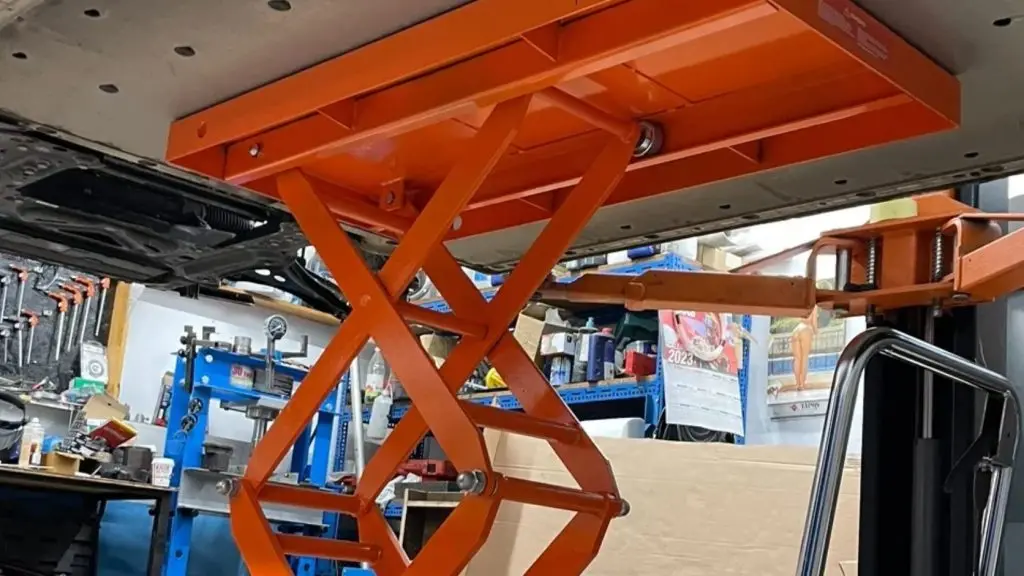
Value depends on what you already have. A compressor makes air cheap; without one, a pneumatic lift cart is the most expensive option once you add the plant. A pneumatic lift table is judged on capacity and cycle count together.
What are the best value electric vs hydraulic lift tables available in France?
Electric wins on repetitive bench work under about 150 kg; manual hydraulic wins on heavy single lifts, moving 500 to 1000 kg for less outlay. For example, you can consider VEVOR 150 kg electric lift table. An air lifting table sits outside both unless compressed air is already piped to the bench.
| Buying for | Best drive | Real reason | Watch out for |
| Repeated bench moves | Electric | No pumping, hands-free | Capacity ceiling near 150 kg |
| Heavy one-off lifts | Manual hydraulic | 500–1000 kg, lowest outlay | Pumping effort per cycle |
| High-cycle production line | Pneumatic lift platform | Air does the work, fast reset | Compressor plus airline cost |
| Wet or yard work | Manual hydraulic | Nothing to seal or supply | Heavier to reposition |
A 1000 kg hydraulic lift table shows the payload a foot pump reaches for the money. A pneumatic lifting table matches that capacity only with a sized supply, and an air lift table on a shared compressor loses some of it.
Which lift table models in France are most energy-efficient and suitable for continuous use?
Screw-driven electric tables, which draw power only while the platform moves, so consumption follows cycles rather than hours. Compressed air is least efficient because generating it wastes most input energy as heat. A pneumatic lift platform still wins on cycle tolerance, a different question from efficiency.
| Drive type | Energy draw | Continuous use | What limits the duty |
| Manual hydraulic | None | Low-cycle work only | Operator fatigue |
| Electric screw drive | Only while moving | Yes, within rated cycles | Motor heat, rest intervals |
| Pneumatic lifting table | Continuous compressor load | Yes, very high cycles | Air consumption and supply |
| Air-powered table, bellows | Continuous compressor load | Highest cycle tolerance | Bellows life, pressure drop |
Published duty-cycle figures are rare here, so judge a pneumatic work table or a motor by thrust, a stated overload cutoff, and any rest interval given. A 500 kg hydraulic lift table has no electrical duty limit, which helps for intermittent work.
Maintenance and Reliability of Pneumatic Lift Table By Drive Type
Upkeep divides cleanly by what does the lifting. Oil circuits need seal checks, motors need thermal headroom, and a pneumatic lift table needs a dry, clean air supply. Fewer parts almost always means fewer faults, which is why a simple pneumatic scissor table outlasts a complicated one.
Which lift tables sold in France are easiest to maintain, and what models should I consider?
Manual hydraulic single scissor carts, by a clear margin: one oil circuit, one pump, no electrics, no air prep. Consider the 500 kg and 1000 kg single-scissor models for heavy work, or the 150 kg electric bench table if pumping is the problem. All of them are listed under lift tables.
| Drive type | Routine upkeep | Service interval | Models to consider |
| Manual hydraulic, single | Check oil level, grease pivots | Occasional, by use | 500 kg or 1000 kg single scissor |
| Manual hydraulic, double | Same, plus more pivot points | Occasional | 150 kg double scissor, 1260 mm |
| Electric screw drive | Keep drive clean, test cutoff | Light, no fluid | 150 kg electric bench table |
| Pneumatic lifting platform | Drain water trap, check fittings | Weekly air prep | Industrial supply only |
A 150 kg double-scissor cart has twice the pivot count of a single-scissor frame, so it needs greasing more often. A pneumatic work table adds air prep on top of all that. The manual hydraulic lift table walkthrough covers the pump side of the routine.
Which lift tables sold in France are considered most reliable by maintenance teams and which products are listed?
Simple manual hydraulic frames, because they carry the fewest failure points. No maintenance team ranking is published for this range, so judge reliability by component count and serviceable parts.
| Component | Why it fails | Which drives have it | What to inspect |
| Hydraulic seals | Oil weep under load | Manual and pneumatic scissor table | Cylinder for film or drips |
| Electric motor | Heat on high duty | Electric only | Warmth, cutoff behavior |
| Air bellows | Rubber fatigue, grit | Pneumatic lift platform | Creasing, slow sag |
| Casters and brakes | Floor grit and load | Every pneumatic lift cart too | Free roll, brake bite |
| Scissor pivots | Dry wear, side load | All drives | Play when raised |
An electric bench lift table adds a motor and a cutoff circuit but removes the pump, which a pneumatic lift table never carries either. The right trade depends on whether your site repairs electrics or oil. A pneumatic lift platform shifts the question again, since its wear lands on bellows and fittings. Frames on the building materials side follow the same inspection logic.
Overrated Types And Common Criticisms of Pneumatic Lift Table
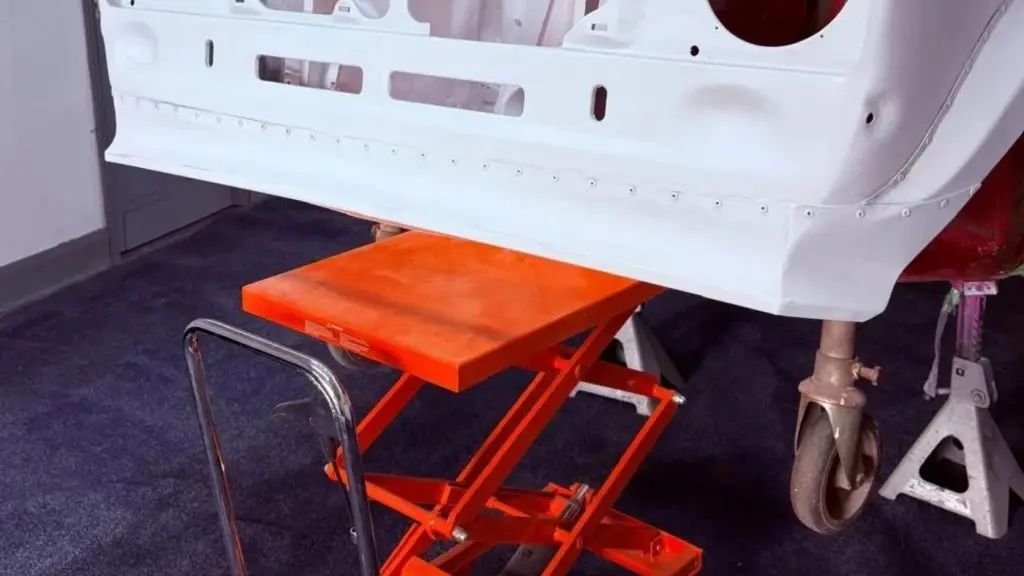
Most disappointment with a pneumatic lift table comes from a mismatch, not a bad build. The table does what it was rated to do; the job asked for something else. A pneumatic height table bought without a compressor is the clearest case.
Which lift table types available in France are overrated and which specific models tend to disappoint buyers?
Double scissor frames are the most overrated for heavy work, and powered bench tables for pallet handling. No specific model is singled out here, because the pattern is choosing the wrong capacity and deck size rather than any one product failing. An air-powered table bought for a site with no air line fails the same way, and so does a pneumatic lifting platform on a quiet line.
| Type | Where it’s overrated | What actually suits | Why |
| Double scissor hydraulic | Heavy loads at full height | Single scissor, lower reach | Payload drops as reach climbs |
| Electric bench table | Pallet and crate handling | 500–1000 kg hydraulic | 150 kg ceiling, small deck |
| Pneumatic lift cart | Sites with no compressor | Manual or electric drive | Plant cost exceeds the table |
| Any pneumatic height table at its limit | Daily use at maximum | One capacity class up | No margin for shock loading |
Reliability complaints follow the same logic. Which lift tables in France are most often criticized for reliability issues, and what models are mentioned? Criticism clusters on symptoms, not model names: slow sag from a weeping seal, casters that stiffen on gritty floors, frames run at their ceiling daily. A 770 lbs double scissor cart used within its band avoids all three; loaded to its limit daily, it shows the first soonest.
5 Checks That Prevent Most Faults
Run these, whatever drive you pick, including an air lift table:
- Center every load, with nothing overhanging the deck edge.
- Lock all four casters before lifting, and drop the foot pads.
- Keep one capacity class of margin for your heaviest regular load.
- Wipe grit off the deck and pivots at the end of each shift.
- On a pneumatic lifting table, drain the water trap and check fittings weekly.
Floor conditions do more damage than people expect. Grit works into caster bearings and pivots, and a pneumatic height table on a dusty line needs air prep, too. For wet or outdoor duty, pick a manual frame from the hydraulic scissor cart options rather than a pneumatic scissor table. General principles sit in the material handling guide. A small hydraulic lift project is a useful reality check. Specs are documented the same way across material handling equipment listings.
Conclusion
A pneumatic lift table makes sense where compressed air is already piped in and the line cycles constantly. Without a compressor, the plant costs more than the table saves, and an electric or manual hydraulic frame does the same job for less. Judge any pneumatic lifting platform on capacity with margin, height range, deck size, and how many parts can wear. The lifting table comparison helps you choose. An air lift table only pays where the compressor already runs. Compare the documented builds in the lift tables category against the loads you actually handle.
FAQs
How does a pneumatic lift table differ from a hydraulic one?
Compressed air does the pumping instead of a foot pedal. Many designs still lift on oil, with air pressurizing the circuit; bellows types use an inflatable bag and hold no oil. Either way, an air-lifting table needs an on-site compressor.
Do I need a compressor for an air-powered table?
Yes, plus an airline, a regulator, and a water trap. Capacity on an air-powered table depends on supply pressure, so an undersized compressor reduces lift. Without one installed, a pneumatic lifting platform costs more than it saves.
Is a pneumatic scissor table faster than an electric one?
Usually, especially bellows designs, which reset quickly for high-cycle work. The trade-off on a pneumatic lifting table is height-holding precision, since air compresses under a shifting load while a screw drive locks wherever it stops.
What maintenance does an air lifting table need?
Drain the water trap, check fittings for leaks, and inspect bellows or seals for creasing and weeping. Grease the pivots as on any other frame, and keep the pneumatic work table deck clear of grit.
Which drive lasts longest on heavy daily use?
Manual hydraulic single-scissor frames, mostly because they have the fewest wearing parts. Whether you run those or a pneumatic lift cart, a capacity margin above your heaviest regular load extends service life more than any other habit.