A picker bends ninety times before the morning break, because the carton sits at ankle height and the scan gun is at chest height. Nobody logs that as an injury until someone can’t stand up. A lift work table closes the gap by bringing the load to the hands, and the lift table range covers the drives that do it. The table scissor lift guide explains the frame itself. Here you’ll learn which height range, deck size, and control type your bench actually needs.
Recommended For Your Project
What A Lift Work Table Changes At The Bench
A fixed bench forces the worker to the load. A lift work table reverses that, holding the job at whatever height the task wants. The frame is a scissor mechanism either way; what matters is how finely you can set a work lift table and how often.
How The Height Range Decides The Posture
Platform travel is the spec that governs posture. A lifting work table spanning roughly 200 to 710 mm puts a carton at seated height at the bottom of its range and at standing bench height near the top. Below 200 mm, you are back to floor-level reaching. A height-adjustable table with a short span forces compromise, which defeats the purpose, and that is why travel matters more than payload on a bench. Lockable height keeps the deck where you set it through a whole shift, which is the practical difference between a lift work table and a fixed industrial work table.
5 Specs To Check Before Buying a Lift Work Table
Five factors decide whether a work lift table suits a workstation:
- Height range in mm on the work platform table, from the lowest deck to the highest.
- Deck size, since a 760 × 440 mm top takes a carton but not a pallet.
- Capacity with margin above your heaviest regular load.
- Control type on the lift platform table: foot pump, wired pendant, or remote.
- Travel speed loaded, which sets the cycle time on a work table lift.
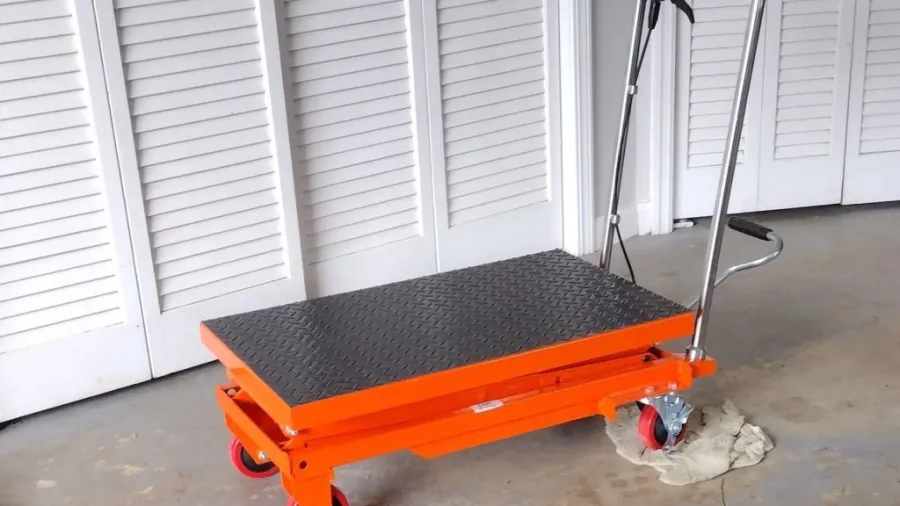
A 150 kg electric lift workbench covers all five for bench duty: 200 to 710 mm travel, a 760 × 440 mm deck, a remote with 10 m of range, and 5 mm per second under load. Pallet work needs a wider deck than any bench-sized work lift table offers.
Ergonomics and Back Protection for Lift Work Table
Most bench injuries come from repetition, not from one heavy lift. A lift work table removes the bend rather than making the load lighter, and a lifting workbench set at the right height is the only fix that lasts for years. Design around posture, reach, and frequency.
Which electric lift tables available in France are best for ergonomic workstation setups?
Look for one with roughly 200 to 710 mm of travel, a deck near 760 × 440 mm, and a remote control so the operator never has to crouch to adjust it. Powered adjustment matters more than capacity here, because a height-adjustable table nobody bothers to reset ends up fixed. On a lifting work table, the remote is what keeps it moving.
| Working posture | Task height | Platform position | Suited table |
| Seated assembly | 650–750 mm | Low, 200–300 mm | Electric lift workbench |
| Standing bench | 900–1000 mm | Mid, 500–600 mm | Electric, remote control |
| Pallet to bench | Floor to 700 mm | Full travel | Hydraulic work lift table |
| Overhead transfer | 1200 mm plus | Maximum | Double scissor hydraulic |
| Example: VEVOR electric lift table, 150 kg | 650–1000 mm | 200–710 mm travel with remote | Electric lift workbench |
What are the top-rated lift tables in France for ergonomic back protection and which models are recommended?
Look for models that eliminate bending: a powered deck that sets the load between knuckle and elbow height, roughly 700 to 1000 mm. No published star ranking covers this range, so judge a work table lift on travel span and how easily the height changes mid-task. For heavier transfers, the 500 kg and 1000 kg single scissor models do the same job with a foot pump.
| Lifting habit | What goes wrong | What the table must do | Build that provides it |
| Repeated floor-to-bench | Lumbar flexion under load | Raise the load to knuckle height | Powered work table lift |
| Twisting to a conveyor | Spinal rotation with weight | Hold height, let the deck turn | Lifting workbench plus turntable |
| Reaching into a deep crate | Forward reach, long lever | Raise the crate as it empties | Wide-travel lift workbench |
| Heavy occasional lift | One-off overload | Carry the weight, not the worker | 500–1000 kg hydraulic frame |
A 500 kg hydraulic lift table handles that last row at 900 mm of lift. The lifting table comparison sets out where a pump beats a motor.
Picking, Assembly and Fragile Loads
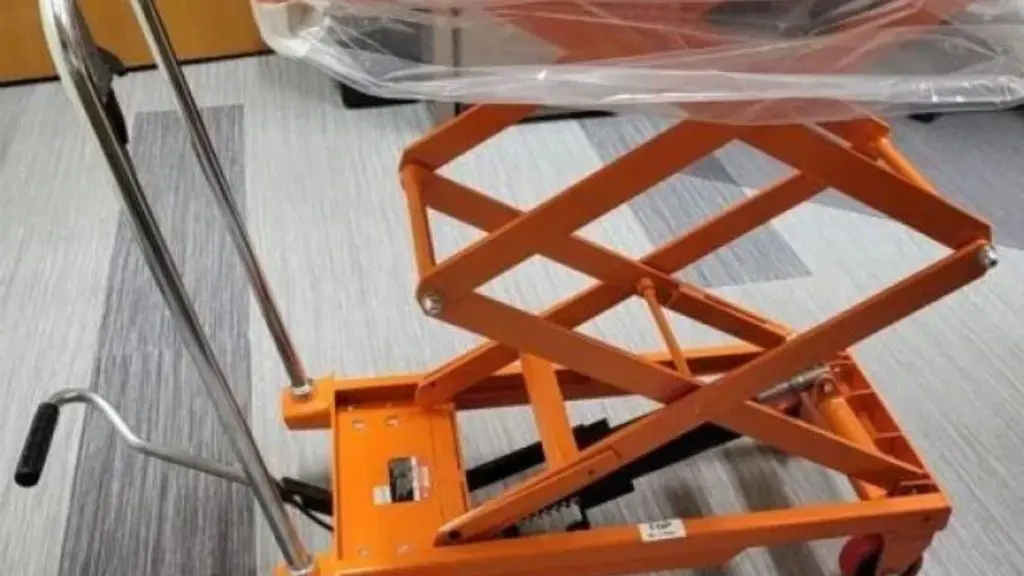
Three jobs dominate workstation use, and each asks something different about a lift work table. Order picking wants travel. Assembly wants a steady deck. Fragile goods want slow, controlled movement, so the work platform table that suits one rarely suits all three.
What are the top lift tables for ergonomic order picking in France, and which models should I shortlist?
Wide-travel tables that keep the pick face between 700 and 1000 mm as the carton empties. Shortlist the 150 kg electric work platform table for light picking, and the 500 kg or 1000 kg single-scissor hydraulic frames for heavy cartons. All three are in the lift tables listings. Here is how the applications compare side by side.
| Application | What it needs most | Height priority | Suited work platform table |
| Order picking | Frequent height changes | Pick face at 700–1000 mm | Electric, remote control |
| Assembly line | Steady height, fast reset | One height per station | Powered industrial work table |
| Bench repair | Occasional change | Set once per job | Manual hydraulic, non-slip pad |
| Heavy transfer | Payload over travel | Lower reach, high capacity | 500–1000 kg hydraulic |
| Example: VEVOR 1000 kg single scissor lift table | Payload over travel | 1000 mm lift | Manual hydraulic, single scissor |
Line engineers ask a narrower version of the same question. Which lift tables available in France are best suited for assembly lines? Powered frames hold one station height and shift and reset quickly between units, as the assembly row above describes.
A lifting workbench on a line also needs its deck to clear jigs and fixtures, so measure the fixture height before the table height. An industrial work table that fouls a jig is useless at any setting. An 1100 lbs single scissor cart suits a heavy station where the height rarely changes. A real-world account of one in service sits in this hydraulic lift table cart review.
Which lift tables available in France are best for lifting fragile or sensitive goods?
Powered screw-drive tables, because they travel at about 5 mm per second under load and stop dead where you release the control. Slow and lockable beats fast with glass, electronics, or filled containers, so a motor-driven lift platform table wins here.
| Risk to the load | What causes it | Feature that prevents it | Where to check it |
| Shock on starting | Sudden pump stroke | Screw drive, steady travel | Loaded speed in mm/s |
| Slide across the deck | Smooth steel top | Non-slip pad on the lift platform table | Deck description |
| Sag while loaded | Seal weep over time | Lockable height, no creep | Hold test under load |
| Tip at full height | Narrow base, high reach | Lower reach, wider frame | Scissor type and footprint |
A 500 lbs double scissor cart carries a non-slip pad for exactly that second row. For the gentlest travel, an electric work platform table remains the better pick, since a foot pump moves in strokes rather than smoothly.
Precision Height Control of Lift Work Table
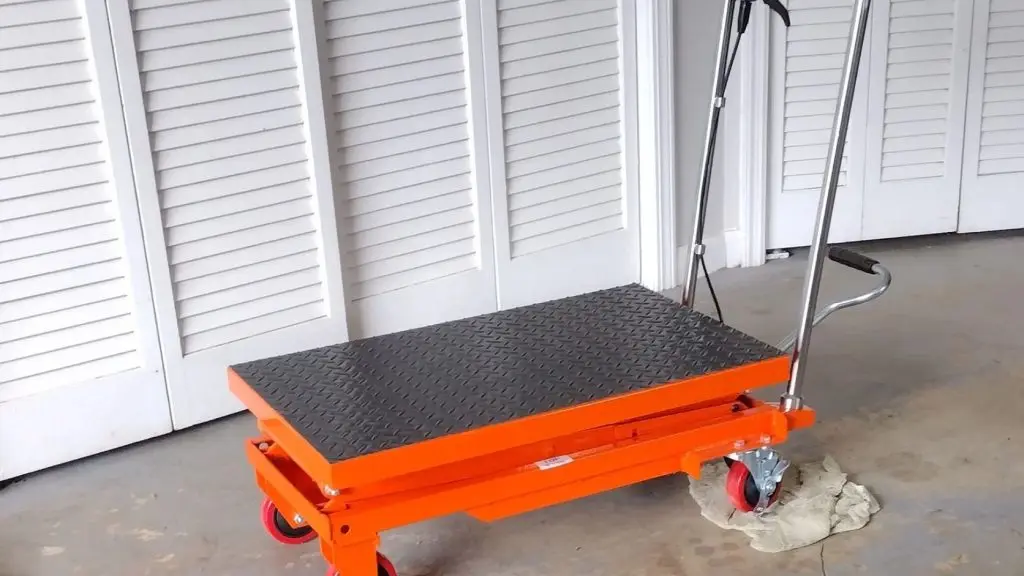
Setting a deck to the nearest 50 mm is easy. Setting a lift work table to the nearest 5 mm, repeatably, is a drive-type question. How a scissor lift table holds position matters as much as how it moves. The manual hydraulic lift table walkthrough covers pump upkeep.
What are the best scissor lift table models in France for precision height adjustment, and which products offer that?
Screw-driven electric models stop and lock wherever the control is released, rather than settling. The 150 kg electric bench model is the one lifting work table in this range that offers it, with 200 to 710 mm of travel and a wired pendant alongside the remote. No manual height-adjustable table matches that repeatability.
| Drive type | Height precision | How it holds | Best for |
| Electric screw drive | Stops were released | Mechanical lock, no creep | Precision assembly, inspection |
| Manual hydraulic, single | Stroke by stroke | Valve holds oil pressure | Set-and-forget bench work |
| Manual hydraulic, double | Coarser per stroke | Same, with more travel | High transfers, less fine work |
| Foot-pump with pedal release | Operator dependent | Controlled descent valve | Occasional repositioning |
A 150 kg double scissor cart reaches 1260 mm but adjusts more coarsely per stroke, which is the honest trade for that reach. Every scissor lift table in the wider lifting equipment range follows the same rule: more travel, less fine control.
5 Checks For A Workstation Setup
Run these before the first shift on a new industrial work table:
- Set the lift workbench deck so the work sits between knuckle and elbow height.
- Lock all four casters, then lower the foot pads for static work.
- Check the deck clears every fixture and jig at working height.
- Keep a capacity class of margin above the heaviest regular load.
- Confirm the operator reaches the work table lift control without crouching.
Floor condition undoes good setup faster than anything else. Grit in caster bearings makes a lift platform table drift under load, and an uneven floor twists the scissor arms. For a yard or washdown area, choose a manual frame from the hydraulic scissor cart options instead of a powered work lift table.
Conclusion
Judge a lift work table on travel span first, then deck size, capacity margin, control type, and loaded speed. Powered screw drives suit picking, precision, and fragile goods; a foot pump suits heavy loads lifted occasionally. Set a lifting workbench so the work meets the hands between knuckle and elbow height, and most bench strain disappears. That is what a lift work table is really for. Compare the documented builds in the lift tables category against the postures your team actually works in.
FAQs
What height should a workbench platform sit at?
Between knuckle and elbow height for the person using it, roughly 700 to 1000 mm on a height-adjustable table. A lift workbench set for precision work sits a little higher; heavy material handling sits lower, so the load stays close to the body.
How much weight does a lifting work table carry?
Bench-sized powered models carry around 150 kg, limited by motor thrust. Manual hydraulic frames reach 500 to 1000 kg, so a heavy industrial work table means choosing a pump over a motor and accepting slower adjustment.
Is a scissor lift table stable enough for precision work?
Yes, at lower deck positions, where a scissor lift table frame is widest and most rigid. Precision drops as a single scissor nears full extension, so keep fine work in the lower two-thirds of the travel.
Can a height-adjustable table be used on an assembly line?
Yes, and a powered lifting workbench suits it best. Set one station height, lock it, and it resets between units without anyone bending. Check the deck clears fixtures before committing to a height.
Does a work table lift need a non-slip deck?
For fragile or smooth-based loads, yes. A non-slip pad stops items from sliding as the lift platform table deck tilts slightly under load. Bare steel is fine for crates and boxed goods that grip on their own.