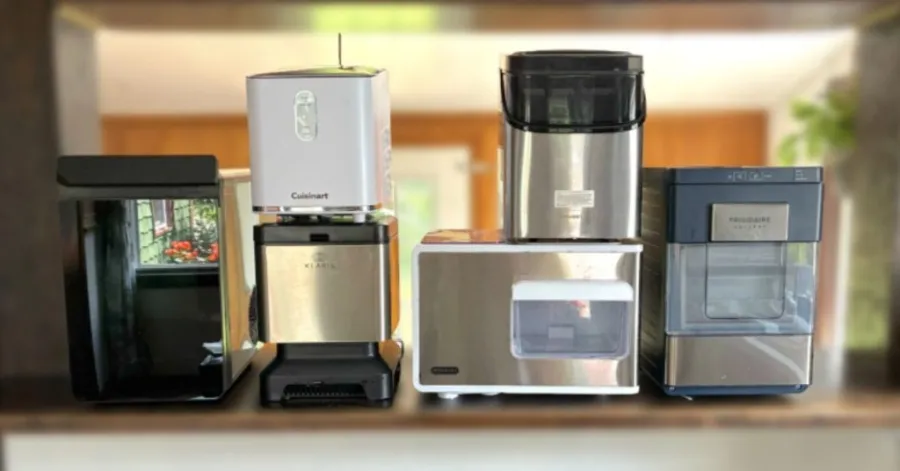
Everyday drink service runs noticeably smoother when you have the right ice machine in place. It also prevents drink tickets from piling up the moment your rush begins. Between iced coffee, cold brew, smoothies, tea, soda, and other cold beverages, coffee shops run through huge amounts of ice. That means you have to balance daily production output with storage capacity. Your choice comes down to floor space, what is on your drink menu, daily foot traffic, and the intensity of your biggest rush. A slower cafe can frequently get by on a basic countertop unit. A cafe dealing with a steady stream of patrons may need a heavier-duty commercial machine built to work all day. In the sections that follow, we cover machine styles, daily ice requirements, key specs, overall size, setup, and routine upkeep.
How Much Ice Does a Coffee Shop Need?
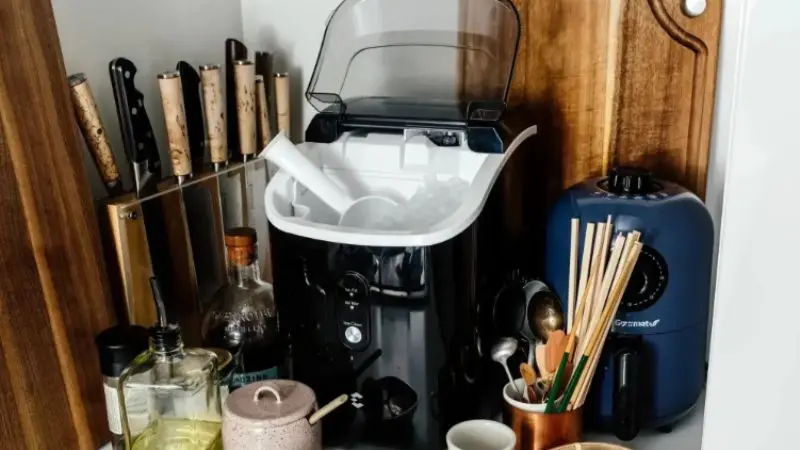
Ice usage comes down to the individual business. Foot traffic, your menu mix, and peak-hour patterns all shift that number. Work out your daily usage in advance so you do not run out in the middle of a shift. You also avoid blowing the budget on a machine sized well beyond your needs. Weigh all of this before committing to a purchase.
Recommended For Your Project
Estimate Daily Ice Consumption
Begin with a daily tally of every cold drink your shop moves. Ice usage varies depending on the specific beverage. How much ice you go through also comes down to cup size. Where hot coffee makes up the bulk of orders, you may not go through much ice. You will burn through significantly more if cold brew, iced lattes, and smoothies drive your numbers.
If you keep track of daily drink sales, start by pulling up those figures. Work out roughly how much ice each beverage takes based on those figures. Build in a buffer on top of that for prep work, melt, waste, and your busiest rushes. That calculation will show you more clearly what your day-to-day ice needs actually look like.
Consider Peak-Hour Demand
The moment the shop fills up, your ice supply can vanish in a hurry. Heat, morning rushes, lunch trade, and full weekends all drive up the volume of cold drinks you sell. You need an ice maker that keeps up when those rushes hit. Relying on an average day’s figure by itself will not cut it.
If you run dry on ice mid-rush, operations across the entire shop can drag to a crawl. That leaves you either pulling cold drinks off the menu or running out to buy bagged ice. Pick a unit sized for the hours when demand peaks. Have a reserve on hand in case demand spikes without warning.
Plan for Seasonal Demand
Warmer weather typically drives up how much ice you go through. Orders for cold brew, soda, frappes, iced tea, and iced coffee might climb. Summer demand might outpace a unit that handles winter volume with no trouble.
If you have old sales data, look through it. Find the weeks or months when your cold drink sales climb. If local regulations and your storage room permit, another option is storing bagged ice in a freezer as a reserve. This information can help you decide whether your ice machine needs to handle high summer demand or normal daily use.
How to Choose the Best Ice Maker for a Coffee Shop
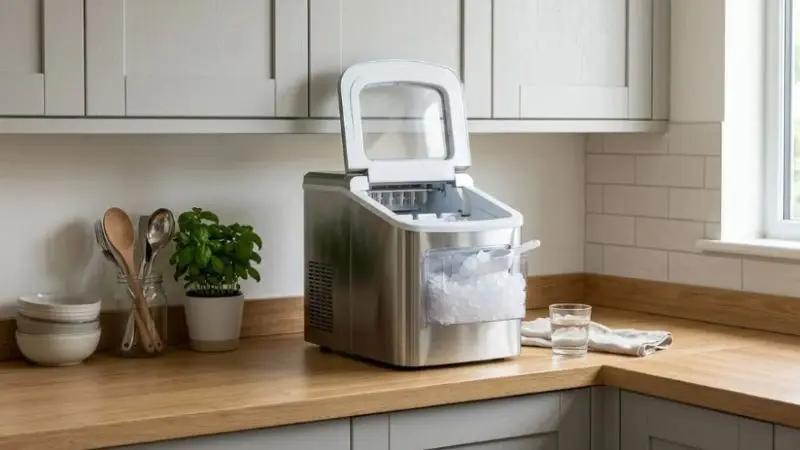
Daily output numbers tell only part of the story when it comes to finding the right ice maker. The machine also has to fit your menu, daily hours, physical space, plumbing, and whatever maintenance routine you will actually stick to. Compare compact models against standard commercial machines before you buy anything, too.
Choose the Right Ice Production Capacity
Base your selection on your café’s actual ice consumption. Do not just default to whatever machine has the highest capacity. Tally your daily orders for iced coffees, cold brews, sodas, blended drinks, and any other chilled beverages.
Look for an ice maker that covers an average day comfortably, with enough headroom to carry you through rushes. Manufacturers generally measure daily yields in pounds produced per 24 hours. Remember that warmer ambient air or higher water temperatures will pull those production numbers down. Having that extra headroom keeps the equipment from being pushed to its absolute limit all day long.
| Coffee Shop Size | Typical Equipment Direction | What to Consider |
| Small café | Countertop or compact under-counter | Lower daily demand and limited space |
| Medium café | Under-counter or larger commercial unit | Steady iced-drink sales |
| Busy café | High-output commercial machine | Peak-hour and seasonal demand |
| High-volume operation | Large modular ice machine + bin | Continuous production and large storage needs |
Select the Right Ice Type
Base your choice of ice on what you actually serve in your cups. Because it is slow to melt, standard cube ice does a solid job in iced coffee, tea, soda, and similar cold beverages. Nugget ice has a soft texture that makes it easy to chew. Patrons who favor a softer crunch often gravitate toward it.
Flake ice comes in handy for chilling food items and raw ingredients. You rarely see it scooped into standard iced drinks. Standard cubes give you plenty of versatility if your beverage list covers a lot of ground. Weigh your drink offerings against customer tastes before settling on an ice maker.
Consider Machine Size and Available Space
Your shop’s square footage largely dictates what unit you can realistically bring in. Check the width, depth, and overhead clearance of the intended spot before you settle on a unit. Keep some clearance around the cabinet so air can circulate and technicians can reach it.
A countertop unit helps when floor space is at a premium. You can tuck an under-counter unit right beneath a beverage counter, too. Bigger units demand extra floor area and might require an external bin on top of that. Keep in mind the distance between your ice supply and the prep area. Staff can work faster when the ice is within easy reach of the counter. It cuts down on staff crossing the floor repeatedly during a rush, too.
Check Ice Storage Capacity
Making ice is one metric; storing it is an entirely separate matter. A unit might churn out plenty of ice each day yet come with very little bin space. That mismatch creates bottlenecks whenever a rush of orders comes in for iced beverages.
Weigh how much ice it can drop in a day against the actual capacity of the bin. Verify that what the bin holds will get you through your peak business periods. Keep the unit’s physical footprint in mind, too. Smaller shops often get by just fine on a compact ice machine and a mid-sized bin. Bigger shops might require extra bin capacity so they do not run short of ice during a rush.
Check Water Supply and Drainage Requirements
A commercial ice maker requires a suitable water line and drain setup. Certain small countertop units use a tank that you have to top up manually. Bigger commercial units tend to plumb straight into a water line.
You might also have to provide a floor drain or some other approved drainage arrangement. Read through the manufacturer’s manual prior to setting it up. Verify the water pressure, fitting sizes, drainage specs, and required clearances. Even if a machine physically fits the footprint, it will not function without the right pipes in place. Getting the plumbing and drainage right from the start simplifies day-to-day operation and cleaning.
Compare Energy Consumption
These machines often run for a large portion of the day in a commercial setting. That run time makes electricity consumption a big factor. The sticker price should not be the only thing you weigh. Weigh each model’s electricity and water consumption against the others.
If a more expensive machine cuts down on water and electricity, your day-to-day operating costs might end up lower. Weigh how much power the unit draws against the amount of ice it actually yields. Check that any figures you line up against each other were gathered under equivalent testing conditions. Cutting down on kilowatt-hours helps keep your ongoing utility bills in check.
Consider Noise Levels
Placement near seating areas turns operating volume into a real consideration. In tight quarters like a small cafe, the churn of a water line, a loud fan, or a noisy compressor carries fast. The sound stands out even more if patrons happen to be seated right next to it.
Look up the manufacturer’s decibel rating, assuming they publish one. Pay attention to where you plan to install the ice unit. Tucking the unit under a counter can shield guests from a good portion of the sound. Even so, you must leave adequate clearance around the cabinet so the vents can breathe.
Look at Cleaning and Maintenance Needs
Because these units run on water to freeze ice, routine cleaning is not optional. Confirm that the storage bin, water reservoir, condenser coils, and any detachable hardware are easy to get your hands on. Pick a model that comes with plain, step-by-step sanitation guidelines.
Certain units include automated cleaning cycles or alerts that tell you when it is time to clean. Routine maintenance is often simpler with these options included. Stick to the manufacturer’s cleaning directions alongside your local food-safety regulations. Staff end up spending more hours on a unit that resists easy cleaning. Getting to the core components without hassle speeds up the cleaning routine. That difference matters all the more in a high-volume coffee shop.
Top Standalone Ice Machines for Cafés and Bars
Standalone ice machines give cafés and bars a dedicated way to produce and store ice without relying on freezer ice trays or small countertop units. The right choice depends on available floor space, daily ice demand, ice type, storage capacity, energy use, and maintenance needs. The following options from different brands can help you compare machines based on business size, space, and operating needs.
| Ice Machine | Brand | Ice Type | Daily Production | Storage Capacity | Best For |
| Commercial Ice Maker (110 lb model) | VEVOR | Cube ice | Up to 110 lb/day | 33 lb | Budget-conscious cafés and bars |
| CU50 | Scotsman | Gourmet ice | Up to 65 lb/day | 26 lb | Compact commercial spaces |
| iT0620 | Manitowoc Ice | Dice or half-dice, depending on configuration | Up to 535 lb/day | Depends on the compatible storage bin | High-volume businesses |
| KM-301BAK | Hoshizaki | Crescent ice | Up to 285 lb/day | Depends on the selected configuration | Cafés and restaurants |
| ICEU150HA | Ice-O-Matic | Half-cube ice | Verify the exact model specification | Verify the exact model specification | Small to medium businesses |
VEVOR Commercial Ice Maker
VEVOR commercial ice makers are designed for businesses that need a steady supply of ice without relying on small household units. Different models offer varying production capacities, storage sizes, and ice types for cafés, bars, restaurants, and other food-service settings. When choosing a VEVOR model, check its dimensions, daily output, storage capacity, power requirements, and ventilation needs. These factors help you select a machine that can handle your expected demand while fitting the available installation space.
Scotsman Commercial Ice Maker
Scotsman offers several configurations of commercial ice makers, including options for companies with limited capacity. The different sizes and ice machines allow cafés and bars to select depending on their day-to-day needs. Compare the dimensions of the machine, the production rate, the storage capacity and the cleaning and installation requirements before buying. Compact models can be useful when each inch of floor or space is significant, while larger capacity can be in the interests of firms with higher demand for ice.
Manitowoc Ice Commercial Ice Maker
Manitowoc Ice manufactures commercial machines for food-service companies requiring consistent ice production. Its range includes different sizes and configurations, so businesses can have options for various workloads and installation spaces. Manitowoc model comparison takes into account daily production, storage capacity, physical size, water needs and access to services. While a machine with higher output can be better suited for a loaded bar that uses more ice, a smaller unit may be in a café with moderate demand.
Hoshizaki Commercial Ice Maker
Hoshizaki commercial ice makers come in different sizes and configurations for cafés, bars, restaurants and other food-service environments. The brand offers machines generating various types of ice, so the right choice depends in part on how the ice is to be used. Compare manufacturing capacity, storage space, machine sizes, power requirements and cleaning procedures before you buy. It is also convenient to check the local technical availability and access to replacement parts for the model that you choose.
Ice-O-Matic Commercial Ice Maker
Ice-O-Matic offers commercial equipment for ice making for various production and space requirements. The range includes machines which are designed for food service environments where regular ice making is important. When comparing models, check daily ice performance, storage capacity, size, energy consumption and maintenance requirements. While a machine of higher capacity can be better suited to busier operations with more daily use of ice, a compact model can work well for a smaller café.
Which Standalone Ice Machines Work Best When Café Or Bar Floor Space Is Tight (Recommended Models)?
For tight spaces, focus on width, depth, height, ventilation distance, and the storage capacity of the machine. While a narrow loose device without excessive floor space can provide more production, an undercounter model can fit under one work surface. Compare the installed area to the sizes of VEVOR, Scotsman, Manitowoc Ice, Hoshizaki and Ice-O-Matic models before making a choice.
Which Standalone Ice Machines Offer the Best Mix of Price and Reliability, and What Are the Top Picks?
Compare the purchase price with daily ice production, energy consumption, warranty coverage, cleaning requirements, replacement-part costs, and local service availability. While a higher-priced commercial model may offer features or service support suited to heavier use, a lower-priced machine may have lower upfront costs. Consider both the expected demand for ice and when comparing models’ long-term operating costs.
Wrap Up
Any ice machine you pick for a coffee shop has to align with your floor plan, drink menu, workflow, and daily customer volume. Every ice style has its own specific job, whether you choose cube, nugget, or flake. Available floor and counter space dictates whether you should install an under-counter unit, put a machine on the counter, or buy a full-sized rig.
Before buying anything, check the daily output, storage capacity, power requirements, water and drain hookups, decibel levels, and maintenance demands. Getting the capacity right begins with working out how much ice a cafe uses per day. Weighing these details ahead of time prevents you from buying a machine that cannot keep up or one that takes up far more capacity than you need.
FAQs
How big of an ice machine does a small coffee shop actually need?
A compact machine usually works well enough for smaller shops, as long as daily drink orders do not outstrip it. Check daily yield, storage bin limits, and exterior dimensions against your busiest hours before settling on a model.
Can a coffee shop realistically get by with a countertop ice maker?
When ice use stays modest, putting a unit on the counter often makes good sense for a smaller shop. It saves floor space entirely and puts ice right next to the drink station. A larger machine, though, may be unavoidable for shops serving far more drinks.
How often does a coffee shop ice maker need cleaning?
Follow what your local health regulations require alongside the instructions in the manual. Machines running constantly might need to be scrubbed out often so scale, dirt, and residue do not gather.