Choosing the right commercial ice machine can simplify and streamline restaurant operations. Your ideal machine must match your ice demand, available space, beverage menu, and service schedule. A small cafe might need a small unit, while a busy restaurant might need a high-capacity modular system with separate storage. You should also consider the type of ice your customers want, production capacity, energy efficiency, durability, and maintenance needs. This restaurant ice machine purchaser guide covers the key considerations before you buy. By analyzing your needs and the available machine types and features, you can make a decision that helps your restaurant maintain stable ice production throughout the day.
Table of Contents
What to Consider Before Choosing an Ice Machine
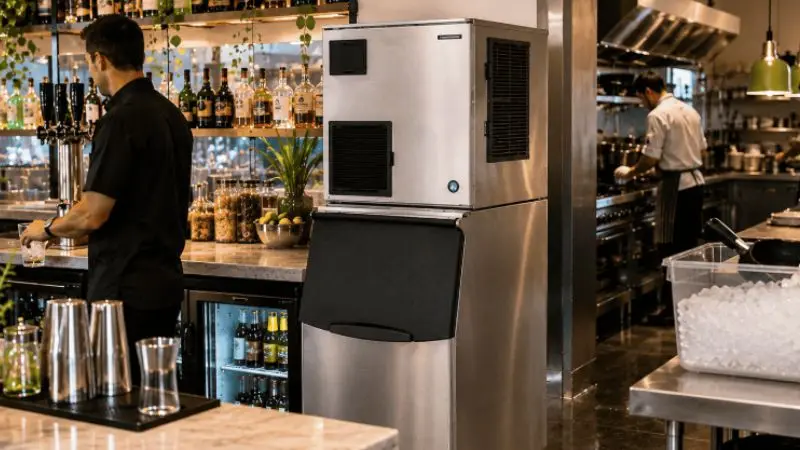
To choose the right machine, start by understanding your restaurant’s day-to-day operations, available space, and ice needs. A machine that works in a small cafe might not be enough for a large restaurant. The right ice machine for your restaurant should suit your serving volume, installation area, and demand. Before buying an ice machine, consider how much ice you need, where you’ll place it, and how fast it makes ice. These factors can help you narrow your choices and make your restaurant ice machine purchase much easier.
Recommended For Your Project
Estimate Your Restaurant’s Daily Ice Needs
Start by determining how much ice your restaurant uses on a typical day. Consider how many customers you serve, what types of drinks you sell, how much food you prepare, and how you store ice or present food. A large restaurant and lots of cold drinks will obviously need more ice than a small coffee shop with few drinks. Knowing the amount of ice required by a restaurant will enable you to purchase an appropriately sized machine that is not too small or too large. Consider your busiest days instead of just average demand. This will help you understand your actual needs and choose a machine that can deliver service every day.
Consider Your Available Space
Another consideration in choosing a commercial ice maker is the available space. Measure the area where you plan to fit the machine, including its height, width, and depth. Also allow sufficient space to ventilate, clean, plumb, and perform normal maintenance. A smaller under-counter model may suit tight floor space, while a modular model may suit restaurants with a separate ice storage bin. Depending on your installation location, a countertop or freestanding model may be more convenient. This information can significantly simplify selecting an ice machine for a restaurant and help avoid future installation issues once you’ve considered these details.
Check the Required Ice Production Capacity
Production capacity – The amount of ice a machine can produce over a certain time, normally 24 hours. Compare this number to your projected daily demand, and add capacity to accommodate peak times. A machine that makes an adequate amount of ice daily might not perform well during the weekends, functions or events, or on the busiest days. When choosing the most appropriate commercial ice machine for restaurants, don’t rely only on the production rate shown in advertisements; also consider storage space, recovery time, and the operating environment. Choosing sufficient production capacity helps ensure you have enough ice during service, so you don’t have to wait for another batch to freeze.
Types of Ice Machines for Restaurants
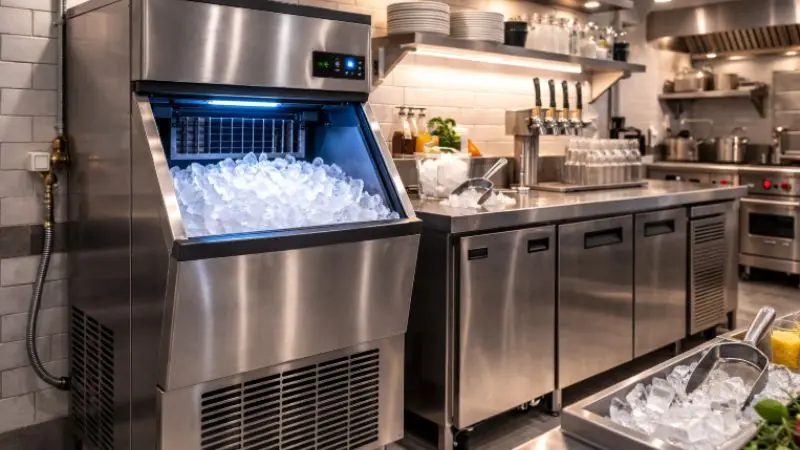
Several types of ice machines exist, and the type a restaurant selects depends on its operational needs. Your space, ice needs, storage, and serving setup will determine the right choice. Some machines combine ice production and storage, while others require a separate bin or dispenser. Knowing these distinctions makes it easier to compare the most suitable ice machine for restaurants without focusing only on price. Common types that are used in restaurants, cafes, bars, hotels, and other food service settings are as follows.
Under-Counter Ice Machines
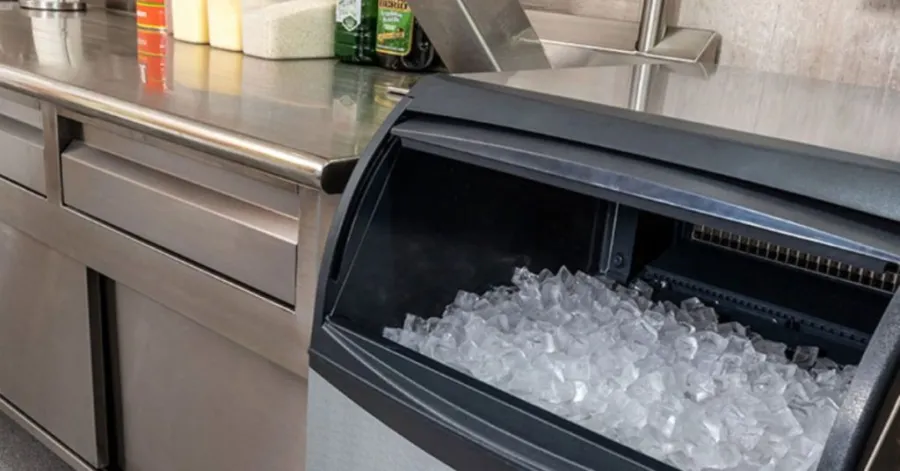
Under-counter ice machines are single-unit machines that produce and store ice. These are smaller than average counters, can be placed under standard counters, and are used in restaurants, cafes, bars, and other locations with limited floor space. The advantage is that staff don’t have to walk to another storage bin for ice; they just open the unit. They suit moderate-ice-need operations better than very high-volume service. When buying an ice machine for restaurants, always verify the machine’s size, production capacity, storage capacity, and ventilation requirements before installation. A properly sized under-counter model offers convenient access to fresh ice and uses valuable workspace efficiently.
Modular Ice Machines
Modular ice machines are built to generate large amounts of ice and are commonly mounted over a dispenser or a separate ice storage bin. They are a convenient option for restaurants that need large quantities of ice daily because you can choose production and storage independently. This configuration is also more flexible when you need extra capacity as your operation expands. In the comparison of the best ice maker to use in a restaurant operation, pay attention to the number of units that the machine can produce daily and the size of the storage bin that will fit the machine. Modular systems are commonly used in busy restaurants, cafeterias, hotels, and other commercial kitchens that need a continuous supply of ice all day.
Countertop Ice Makers
Countertop ice makers are small devices that sit on a work surface and provide easy access to ice. They are best suited for small restaurants, cafes, offices, beverage stations, or places with low ice demand. Their smaller size makes them easier to install, since they typically take up much less space than larger commercial systems. However, production and storage capacity may be limited compared with under-counter or modular machines. Whichever you choose, consider your customer traffic and daily beverage volume. A countertop model is a good option when you need to supplement ice or run a smaller food-service area without the capacity of a larger commercial machine.
Ice and Water Dispensers
Ice and water dispensers integrate two popular beverage-service capabilities into one unit. They can serve drinking water and ice on demand, making them suitable for self-service zones, cafeterias, hotels, medical institutions, and restaurants. They can be designed to ease the burden of moving ice manually during peak times. Nevertheless, before choosing this type, you must consider installation requirements, water connections, drainage, available space, and anticipated ice demand. If you’re researching the best ice machine for a restaurant, and convenience, self-service, and efficient beverage distribution are vital to daily operations, an ice and water dispenser can be a viable option.
How to Choose the Right Ice Type for Your Restaurant
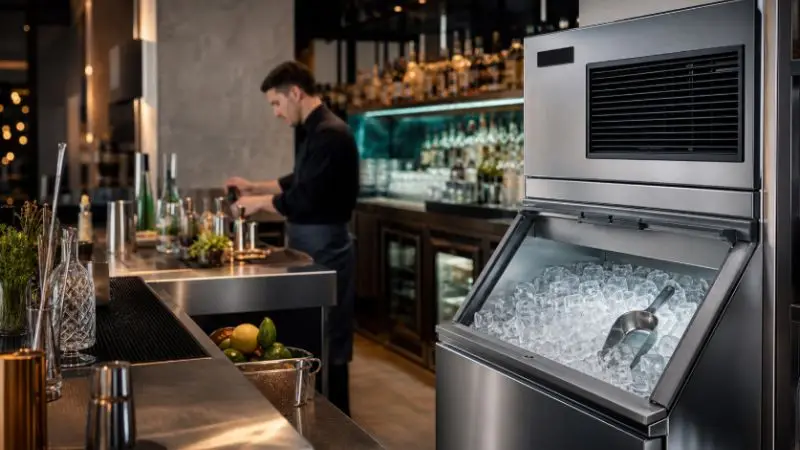
The type of ice your restaurant needs depends on how you serve drinks and food. Different ice shapes melt at different rates and provide a range of textures. Making the right choice will enhance beverage presentation and service overall. Consider your menu, customer preferences, storage needs, and daily ice requirements when deciding. These differences are a key part of selecting an ice machine for a restaurant and can help you choose a machine that produces the type of ice appropriate for your business.
Cube Ice for Drinks and General Restaurant Use
One of the most popular types of ice to use in restaurants is cube ice, as it can be used with a variety of beverages. Its hard form melts relatively slowly, so it keeps drinks cold without rapid dilution. Cube ice is applicable in soft drinks, cocktails, Iced coffee, water, and most other drinks. This type of ice might be especially useful in restaurants offering an assortment of beverages since it is versatile during the day. When selecting a cube ice machine, consider cube size and shape, and production and storage capacity. A good cube ice machine can support daily beverage service and deliver consistent results even during peak times.
Nugget Ice for Soft Drinks and Chewable Ice
Nugget ice is soft and chewable, thus used in soft drinks, specialty drinks, and those who love to chew ice. Its porous design absorbs some of the beverage’s flavor, creating a different drinking experience than conventional cube ice. For texture and customer preference, restaurants, cafes, and beverage-oriented businesses can use nugget ice. Because nugget ice has unique production and storage needs, make sure your machine can meet your expected daily demand. If you offer many fountain drinks, flavored drinks, or specialty drinks, a nugget ice machine can provide the texture and presentation that best fit your service.
Flake Ice for Food Displays and Food Preparation
Flake ice is made of small, soft particles that can be packed around food without easily damaging delicate products. It is typically employed in seafood displays, salad bars, produce storage, and food presentation. It can also be used in food preparation where it must be in close contact with food. Fresh seafood restaurants and food displays can also benefit from a machine that specializes in flake ice. Consider your food-service needs and expected production levels before choosing one. Flake ice doesn’t suit all beverage programs, but it can be very helpful when food presentation, cooling, and ingredient storage are the primary concern.
Crescent Ice for Attractive Beverage Presentation
Crescent ice is curved and looks appealing in glasses, with good cooling performance. Its design creates a unique look for soft drinks, cocktails, iced tea, and other beverages. Places where drinks are the focus can use crescent-shaped ice, as it makes drinks look more sophisticated. When choosing a machine, consider how much ice your restaurant sells and whether this shape suits your menu. Also compare production capacity, storage space, and maintenance requirements. Depending on the type of ice you use to serve and present your drinks, you can make your commercial ice-making facility more convenient.
Key Features to Look for in a Restaurant Ice Machine
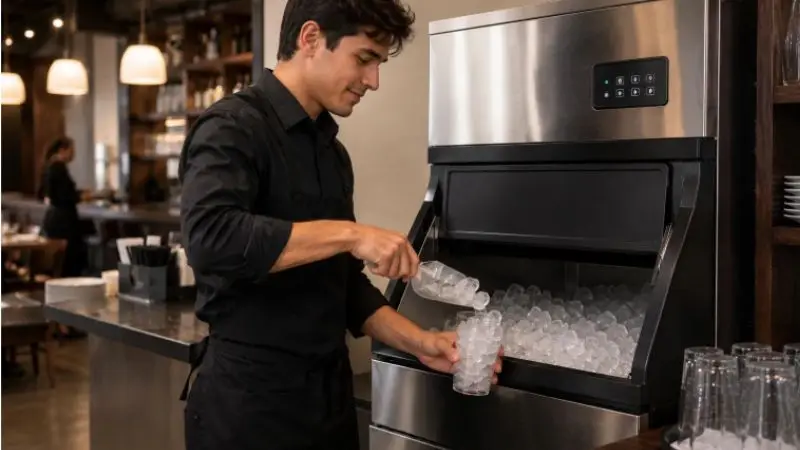
After learning the types of ice available, the next step is to compare the features that affect daily performance. Capacity isn’t the most important factor because it is about production capacity, but it is not the only factor that can determine a machine’s success in your restaurant. Energy consumption, build quality, cleaning needs, and storage space can also affect long-term value. Considering these features can help you narrow your choices and find a machine that fits your workload. This is especially important when choosing the right commercial ice machine for restaurants.
Check Production and Storage Capacity
Production capacity explains what a machine can produce in a given time frame, and storage capacity explains what a machine can store. These two figures matter because a machine can produce enough ice daily but still have limited storage capacity during peak demand. See how many units per hour the machine produces and how fast your restaurant uses the stored ice. When you run long hours, proper storage can help fill gaps when production can’t meet demand temporarily. Combining the two capacities will give you a clearer picture of whether a machine can handle the busiest times in your restaurant operation.
Compare Energy and Water Efficiency
The operating cost of a commercial ice machine can be impacted through energy and water efficiency. An efficient machine that yields the desired quantity of ice while using resources effectively can be more cost-effective in the long run. When comparing models, look at their energy and water ratings, not just the purchase price. Your restaurant’s operating schedule also matters, since the machine running most of the time can use more resources over time. Consider the anticipated daily workload, local utility rates, and manufacturer requirements, then decide. An efficient machine can help manage operating costs while delivering the ice your restaurant needs.
Look for Durable Construction and Reliable Controls
Restaurant ice machines endure long hours of use and exposure to moisture, cleaning, and temperature changes. Durable construction helps a machine withstand these harsh conditions and perform well over time. Look for materials designed for commercial food-service settings and controls that staff find easy to use. Good construction is especially crucial in high-traffic kitchens where equipment is used continuously. Also consider ease of access to critical parts, since easier access can simplify routine service and maintenance. A machine with good construction may cost more, but its reliability can extend service life and reduce daily disruptions in the restaurant.
Choose a Machine That Is Easy to Clean and Maintain
Regular cleaning and maintenance keep a restaurant ice machine running well and delivering clean, fresh ice. Consider how easy it is to access the interior, removable parts, water lines, filters, and other sections that need regular care; think before buying about how easily staff can access what they need. A machine with a simple cleaning procedure fits easily into a busy restaurant schedule through regular maintenance. Clean the machine according to the manufacturer’s instructions and follow the recommended schedule. Another factor is how easy it is to replace service parts and filters. A machine with an easy maintenance process can support steady performance and help minimize unnecessary downtime throughout the working period.
How to Choose the Right Ice Machine Size for Your Restaurant
Selecting the right machine size involves balancing daily ice needs with your workload and available space. An undersized machine may not perform as needed during peak service, while a larger model can take up unnecessary space and increase operating costs. Consider your customer traffic, beverage sales, food preparation needs, and busiest service times. If you’re asking how big a restaurant ice machine to buy, estimate daily demand, then compare it to the machine’s production and storage capacity. The guidelines below will help you choose the right size for various restaurant operations.
Choose an Ice Machine for Small Restaurants and Cafes
Small restaurants and cafes usually have lighter ice needs than busy full-service operations, and a compact machine can meet production needs without taking up too much space. Consider your average customer volume, drink sales volume, and whether you need ice to prepare or display food. When space is tight, an under-counter or small commercial model will work. Still, don’t size the machine based only on average demand. Also consider your busiest service times. If your coffee shop sells a lot of frozen drinks at lunch or in the evening, more production space will help you avoid shortages. The right machine size provides dependable ice production while saving valuable workspace.
Choose an Ice Machine for Medium-Sized Restaurants
Medium-sized restaurants usually need more ice because they have more customers and may have a more extensive beverage list. When choosing a machine, compare your daily consumption with the machine’s 24-hour production capacity and storage volume. A smaller under-counter machine can handle moderate demand, with a larger modular system available to produce more during busier service. When estimating your needs, consider peak hours, weekend traffic, catering orders, and seasonal variations. A machine with a little extra capacity provides a handy buffer in case demand rises suddenly. Proper sizing ensures a medium-sized restaurant has a steady supply of ice without investing in oversized equipment.
Choose a High-Capacity Ice Machine for High-Volume Restaurants
High-volume restaurants may need a lot of ice throughout the day for beverages, food preparation, displays, and other service needs. A high-production modular machine, paired with a suitably sized storage bin, is usually beneficial for these operations. When setting capacity, consider customer volume, beverage sales, hours of operation, and peak service times, not average consumption. The extra production and storage space helps the restaurant meet unexpected demand without running out of ice. When choosing the right commercial ice machine for a restaurant, focus on production rate, storage capacity, durability, and recovery performance. An optimally sized, high-capacity system will be more reliable for continuous service.
Wrap Up
There is more than production figures or buying costs involved in selecting an ice machine that best fits your restaurant. Consider your daily ice needs, installation space, ice type, storage capacity, efficiency, durability, and cleaning. Your restaurant size and customer volume should also determine the machine’s production capacity. The right size can help you avoid shortages during peak times and prevent unnecessary equipment costs. Match the equipment to your operation, whether it’s a small under-counter type, a countertop model, or a high-capacity modular system. With this guide, you can weigh your options and choose an ice machine that supports efficient restaurant service.
FAQ
What quantity of ice is required by a restaurant daily?
A restaurant’s daily ice requirement varies with customer volume, beverage sales, food preparation, and service duration. Determine maximum demand and select sufficient production capacity to prevent shortages.
How large an ice machine should a restaurant be?
The right size depends on daily consumption, peak service demand, available space, and storage requirements. Before choosing a machine, compare estimated usage with production capacity.
Which is the most appropriate ice machine in a restaurant?
The most suitable machine depends on your restaurant’s ice needs, available space, the type of ice you use, and your budget. Massive restaurants usually require modular systems with individual storage.
Which ice machine should you select in a restaurant?
Before finalizing your purchase decision, compare the daily ice requirements, machine size, production capacity, storage, type of ice, energy efficiency, construction, and maintenance needs.
What features should a commercial restaurant ice machine have?
Commercial machines must provide sufficient production and storage space, efficient functionality, robust construction, easy controls, and easy cleaning to handle the hard-working environments of restaurants.