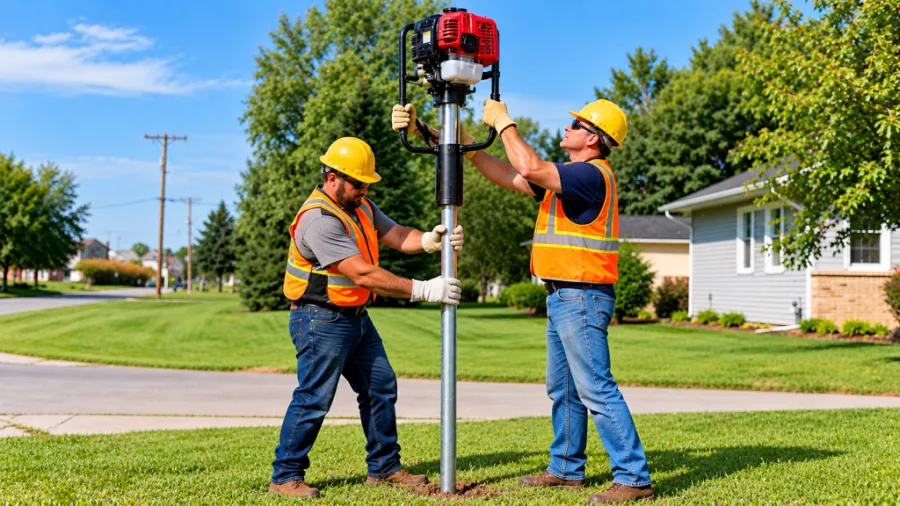
After driving 40 posts, your shoulders are done, but the job is far from over. The right gas-powered T-post driver depends on three main factors: the posts you are driving, the soil conditions, and the size of the project. For a better understanding of the overall fence setup, see our fence installation guide.
Engine size, impact energy, impact rate, and weight narrow your options further when choosing a gas-powered T-post driver. The non-technical guidelines fit the criteria with real-world applications, not sales pitches. Want to read more while you learn? Check out the latest gas-powered post drivers.
- What a Gas-Powered T-Post Driver Is
- How Post Drivers Compare Across Categories
- When Gas Power Beats Manual and Hydraulic
- How to Choose the Right Post Driver by Spec
- Matching the Right Post Driver to Posts and Soil
- Picking the Post Driver for Your Project Scale
- Attachments and Comfort Extras Worth Paying For
What a Gas-Powered T-Post Driver Is
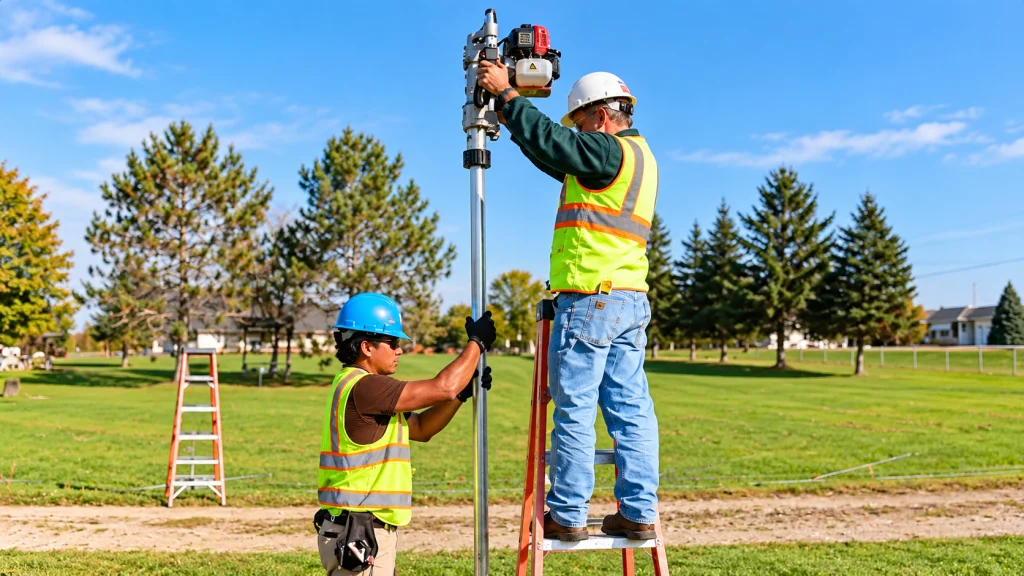
A gas-powered T-post driver is a handheld device with a small engine and a striking mechanism built into its housing. The head at the bottom fits around the top of the T-post. When the engine runs, the mechanism delivers a series of fast strikes, and the head keeps each strike on target. You control the device’s direction rather than raising the weight for each stroke.
This is designed for studded steel T-posts, which are standard for wire, farm, garden, and livestock fencing. If you haven’t used these posts before, installing metal posts will cover everything you need to know, and steel T-posts show you your options. Fencing that needs rigid posts usually requires dug holes.
How Post Drivers Compare Across Categories
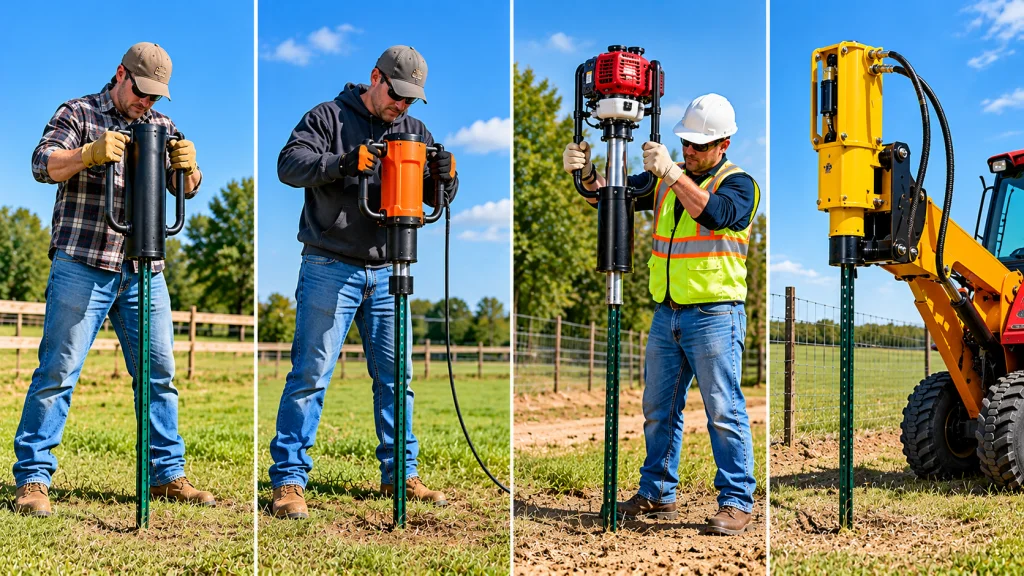
A gas-powered T-post driver is one of several ways to set a post. The right category depends on the job, and this table puts the main options side by side.
| Category | Power Source | Best For | Main Limit |
| Manual | Your own effort | Small jobs, quiet work | Tiring on long lines |
| Electric | Outlet or generator | Medium jobs near power | Cord reach |
| Gas powered | Fuel | Long lines, remote areas | Fuel, noise, engine care |
| Hydraulic | Tractor or loader | Very large commercial runs | Needs heavy equipment |
For a garden bed or short fence, a manual T-post rammer is usually enough. If you have access to an outlet or generator, an electric driver can be a practical option for medium-sized jobs. For longer fence lines or remote areas, a gas-powered driver can save time and reduce the repeated effort of manual driving.
Recommended For Your Project
When Gas Power Beats Manual and Hydraulic
Gas power works well when you need to install a fence over a long distance, have limited electrical access, or need to install many T-posts. Gas power reduces the number of lifts you have to make compared to a manual driver and is also easier to maneuver than the heavy equipment used by a tractor/loader. But it is not always the most effective tool. A gas-powered T-post driver is especially useful when portability and repeated post installation matter.
How does a gas powered T-post driver work, and what makes it different from other post drivers?
It is not always the best option. In some cases, a hand driver is easier and less costly. For a very large industrial project, mounted tools may be more appropriate. Gas-powered T-post drivers are more capable than hand tools and more portable than other machines. To see how models differ, compare gas drivers by head count and engine type.
How to Choose the Right Post Driver by Spec
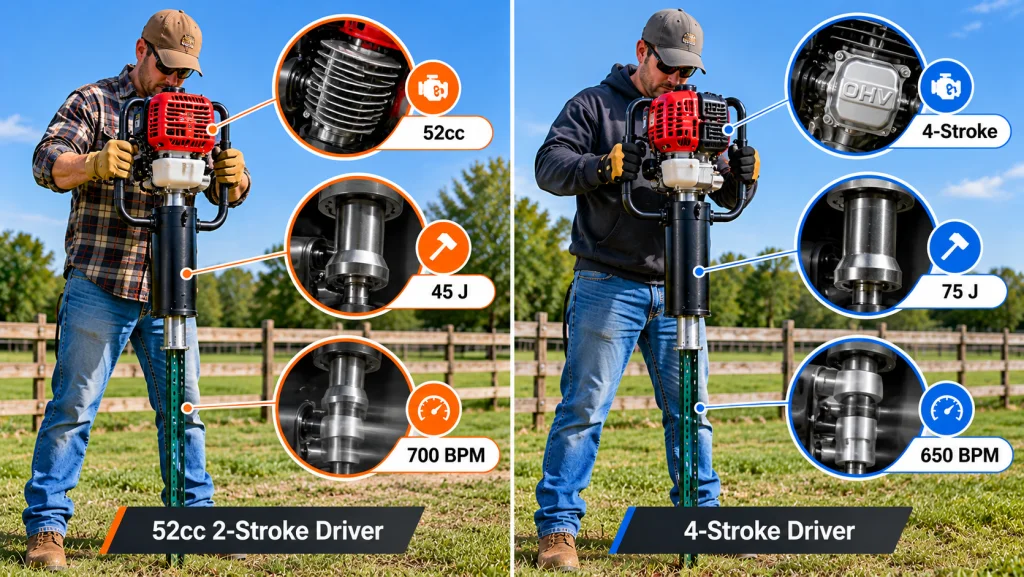
Spec sheets might seem scary, but only a handful of numbers really count. Each number says something unique about how the tool will work.
Engine Displacement, Impact Energy, and BPM
Engine displacement gives an idea about the size of the engine and its power potential. Impact energy tells us about the strength of each strike. Blows Per Minute, or BPM, tells us about the frequency of the strikes. Together, these specifications influence how the tool performs and how it feels during use. It is the same set of three figures that can answer another typical question regarding T-post installation.
| Spec | What It Tells You | Watch For |
| Engine displacement | Engine size and potential power | Bigger isn’t automatically better for your job |
| Impact energy | How hard each blow lands | Too much can bend light posts |
| BPM | How quickly blows arrive | Fast and light can stall in hard ground |
| Engine type | 2-stroke or 4-stroke needs | Changes fueling and upkeep |
BPM/impact energy ratio is crucial here. A too-fast, light-hitting machine will get stuck in hard pan soil, but too slow and powerful will continue to move forward. For example, additional impact power in soft soils will not have much effect and will even drive the pole deeper than intended. When choosing a gas-powered T-post driver, do not go after maximum numbers. Compare a 52cc 2-stroke driver and a 4-stroke gas pounder hammer to understand how the engine makes a difference to specifications.
Weight, Balance, and Vibration
It is a tool that you will be holding for long periods of time; hence, how comfortable it feels is just as important as its impact. A heavier gas-powered T-post driver may provide the power you need, but it can also become harder to hold and maneuver. The balance will affect the ease with which you can keep the driver level on the post. Look at the weight in the product description and picture yourself holding it for one hour. This can be a factor when working alone or on slopes.
Matching the Right Post Driver to Posts and Soil
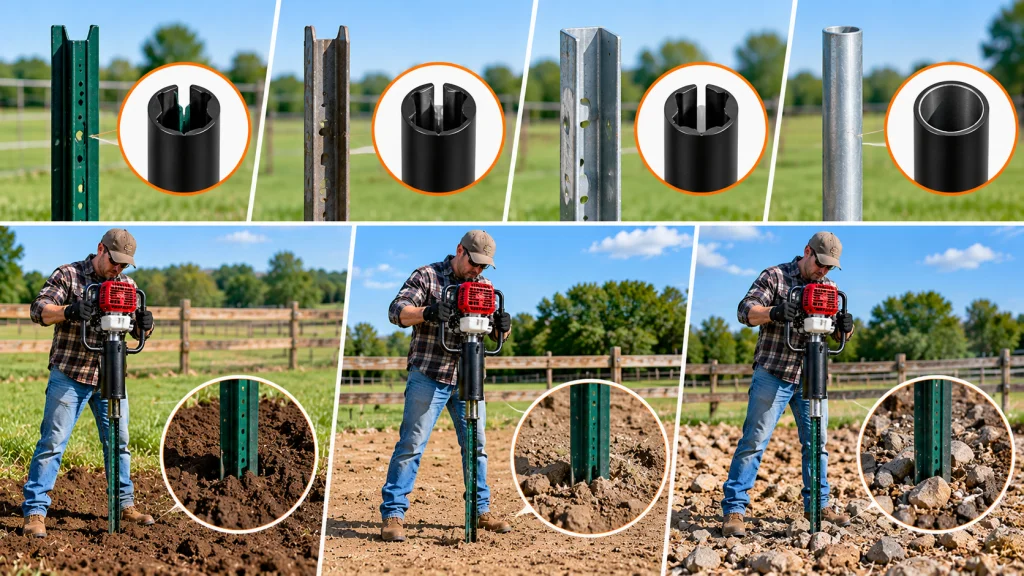
An efficient engine will be of no use if the device does not match up to your posts and your land.
Post Size, Wall Thickness, and Drive Tool Fit
The T-posts vary according to their weight and length. The light posts will be suitable for temporary and garden fences, while heavier posts with thicker walls are best suited for long-lasting livestock fencing. The head, or drive tool, must always match the top of your post. Get the measurement of your biggest post and match that with the size of the head.
Wall thickness is important as well. A post that has thin walls will be bent with a strong tool, while a thick post will take a firm hit. Other shapes such as U-channel and round posts will fit only when they have a proper head and when the manufacturer recommends such a configuration. As for selection, sturdier steel posts may assist. The right gas-powered T-post driver should match both the post and the ground conditions.
Soft Ground, Hardpan, and Rocky Soil
Soil determines how much assistance the motor will need to drive T-posts. Soils that are soft allow the posts to sink quickly, and the danger there is that the post might drift or sink too deep into the soil. Hardpan soil makes everything slow down, and here is where driving using a motor makes a lot of sense.
| Soil | What to Expect | Practical Move |
| Soft or loose | Posts sink fast and may lean | Check plumb often and stop at depth |
| Hardpan or firm clay | Slow progress, steady strikes | Loosen the surface and stay patient |
| Rocky | Posts deflect or stop | Shift the spot or dig a hole |
Test one post drive before settling on a technique for all of them. Do not drive any post that refuses to budge. Digging post holes is another option when driving is not suitable. Check the required fence post depth before you start to ensure the posts are installed correctly.
Picking the Post Driver for Your Project Scale
Scale is the third filter when choosing a gas-powered T-post driver. It can seem like the right tool in one case and completely wrong in another.
| Project | Typical Need | Gas Driver Fit |
| Garden or small pen | A few posts | Often more than you need |
| Acreage or hobby farm | Dozens of posts | A good middle-ground fit |
| Large agricultural run | Long lines, remote areas | Strong fit |
| Contractor work | Heavy, repeated use | Depends on volume and durability |
Small Jobs vs. Large Agricultural Runs
For a small task, using a gas-powered T-post driver may be more than you need. You will waste more time refueling, starting, and storing the machine than saving by using it. For a large farm task, carrying the equipment will be easier than using equipment that needs a tractor/loader to move from one fence line to another. Buy according to your needs.
What Professional Contractors Look For
The durability, serviceability, and uniformity of multiple posts are important considerations to professionals. They would want posts that make the air filter and spark plug accessible, strong handles, and replaceable heads, as time lost is money wasted. If you use a gas-powered T-post driver often, these features may matter more than an impressive headline figure.
Attachments and Comfort Extras Worth Paying For
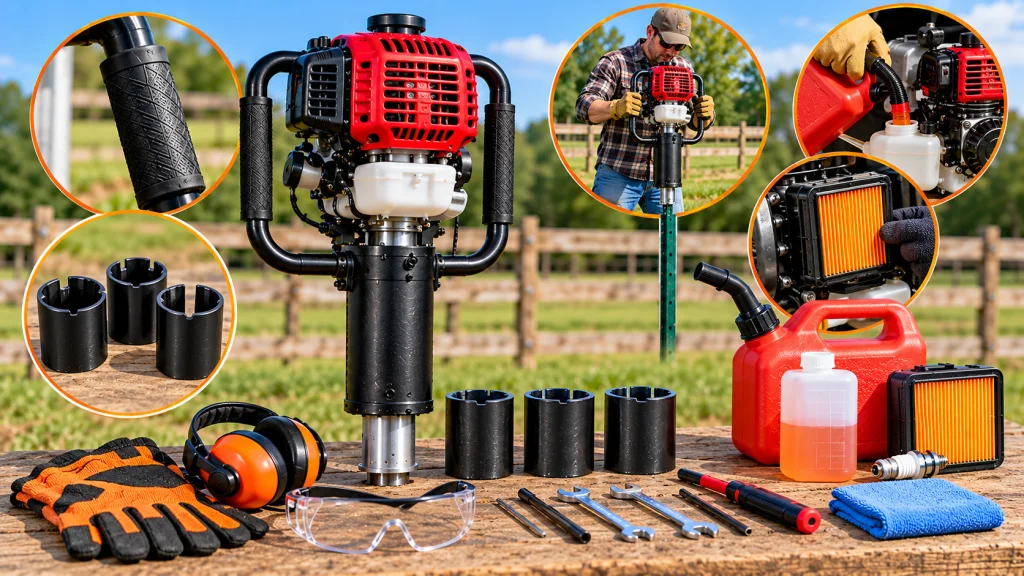
Extras are only worth spending money on if they address a problem you have.
Drive Tool Sizes and Adapters
With different posts, interchangeable heads can save you from buying another driver. A 3-head gas-powered T-post driver is one example. Be sure that the head sizes fit your posts, and that replacement heads are readily available. For further examples, view more driver heads.
Anti-Vibration Handles and Ergonomics
Ergonomic handles make a long workday a little easier. Find handles that fit your hand and a design that allows you to stand in a natural position. If the description includes anti-vibration technology, know what it covers. There is no handle that will reduce vibration completely, so expect break periods anyway.
Maintenance, Fuel, and Safety
Regular maintenance keeps your gas-powered T-post driver running reliably and extends its service life. Follow the manufacturer’s instructions for fuel handling, cleaning, and routine engine checks to avoid common problems.
Starting and Operating Basics
Identify the post installation points, look out for underground utilities, and remove all rocks and roots. Fill up the fuel tank when the machine is leveled and cold. Start the machine on level ground and at least a foot away from the post as instructed in the manual. Raise the post vertically, push it into position by hand, lower the head to fully cover the top, and let the machine do its work.
Routine Care and Fuel Mix Basics
Some engines use pre-mixed fuel and oil, while others use oil separately, so make sure you know your type and use only what the manufacturer recommends. Check the air filter and spark plug frequently, inspect the bolts and head before each use, and clean off the dirt afterward.
Stale fuel is one of the most common reasons an engine won’t start, so don’t leave it in the tank between seasons. Store fuel in an approved container away from heat sources. For more setup tips, get more fence post tips.
Safety Features and Operator Protection
Protect your eyes and ears, wear gloves, and wear good footwear. Hold the handles and avoid contact with the striking zone, while keeping other people, children, and pets at a distance.
Look out for any buried utility lines before you begin your first strike. Refuel when the engine is stopped and cooled, away from any ignition source, and use the machine outside to dissipate exhaust fumes. Take frequent breaks, as tiredness and vibration increase the likelihood of accidents and crooked posts. Do not use a broken tool or force a stuck post. For additional equipment, browse fence tools.
Conclusion
Selecting gas-driven fence post drivers requires running through a mental checklist of criteria. Start by considering the post, soil, and project size. This is followed by compatibility with the post driver’s head, engine, impact force, striking frequency, and weight. Choose a gas-powered T-post driver that matches your needs rather than one with the biggest engine. Get one that will serve you for a few years and go with steel fence posts.
Frequently Asked Questions
Is a bigger engine always better for a gas-powered T-post driver?
No. A bigger engine produces more power, but it also adds weight and vibration. Select an engine based on your driver’s needs.
Can one gas driver handle different post sizes?
Some come with interchangeable heads. Measure the head size to match your posts before purchasing.
How often does a gas post driver need maintenance?
Follow the schedule according to the manual. Most of the time, you should test the gasoline, air filter, spark plug, and bolts before and after each job, and keep the tool dry for future use.
Is a gas driver worth it for a small fence?
Usually No. A manual driver can manage a few posts successfully. A gas-powered T-post driver is better suited for long lines or places where power isn’t available.