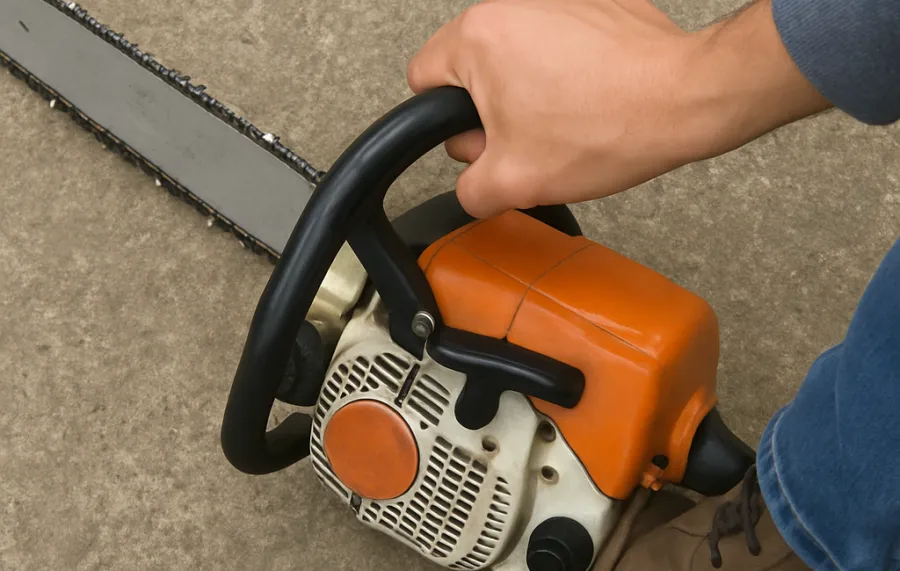
You don’t need to be a lumberjack to master a gas chainsaw. Whether a storm dropped a heavy oak limb across your driveway or you are prepping winter firewood, this is the ultimate tool for taking control of your property. When comparing petrol vs battery powered saws, industry experts highlight that gas engines deliver a superior power-to-weight ratio, letting you slice through dense wood efficiently without quickly exhausting your arms.
Harnessing that raw capability requires genuine mechanical respect. According to consumer safety data, the primary physical risks of operation stem from unexpected kickback forces or losing your balance mid-cut. Proper power tool safety isn’t about fearing the machine; it is about maintaining absolute control of the equipment before the blade ever touches bark.
Building that reliable confidence takes a simple roadmap of the basics. Mastering safe residential cutting requires a clear understanding of protective gear, proper fuel mixing, and smart handling techniques. By mastering these fundamentals, you can safely turn a daunting Saturday chore into a highly satisfying yard project.
- Building Your Safety Shield: The 5 Pieces of Essential Gear That Keep You Whole
- Mixing the Perfect 50:1 Fuel Cocktail: Preventing Engine Seizure and Smoky Starts
- Mastering the Ground-Start: How to Wake Up Your Saw Without Breaking Your Arm
- Neutralizing the Kickback Zone: Using the ‘Clock Face’ Method to Stay in Control
- Sharp Teeth and Proper Tension: Keeping Your Saw from Working Against You
- From Cleanup to Firewood: Your Roadmap to Safe and Productive Sawing
Building Your Safety Shield: The 5 Pieces of Essential Gear That Keep You Whole
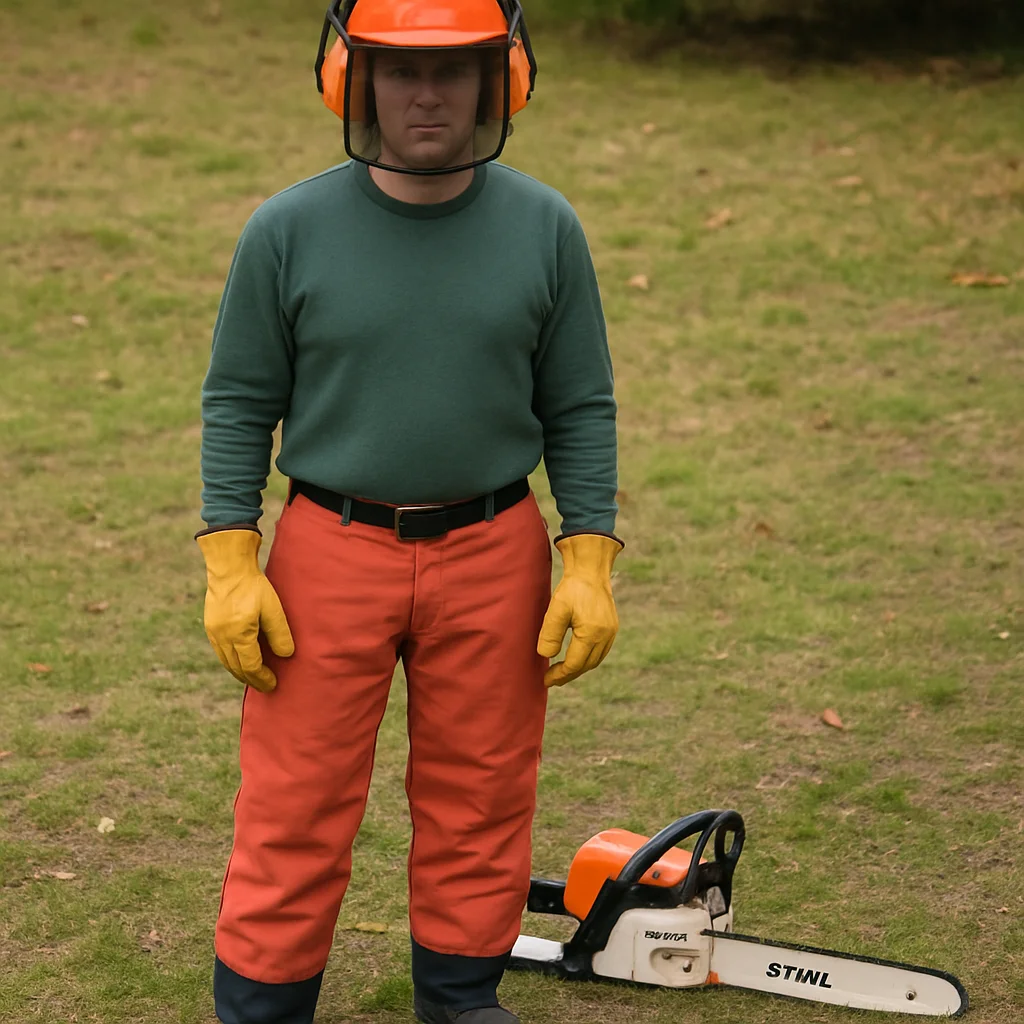
Because that chain spins around the guide bar at over 50 miles per hour, your favorite heavy-duty denim jeans offer exactly zero protection. When metal meets cotton at high speed, standard fabric slices open instantly, making specialized personal protective equipment for woodcutting an absolute necessity for any yard project.
Instead of acting like hard armor, modern ballistic fiber chaps actually work by stopping the engine. They are packed with layers of long, tough threads; if a moving chain bites into your leg, these fibers pull out and instantly clog the saw’s drive sprocket. Jamming the tool before it reaches your skin makes these chaps your most vital piece of PPE safety gear.
Gas engines also blast noise well above safe limits, meaning your ears require defense from permanent decibel damage. Always use this zero-compromise checklist of the best gas chainsaw safety accessories before pulling the starter cord:
- Ballistic Chaps: To intentionally clog and stop a rogue chain.
- Helmet with Face Shield: Deflects flying wood chips.
- Hearing Protection: Earmuffs or plugs to block dangerous decibels.
- Steel-toed Boots: Guards your feet from dropped heavy logs.
- Heavy-duty Gloves: Provides grip while absorbing engine vibration.
A fully suited operator is only half the equation; your tool requires its own internal defense to run smoothly. The right fuel mixture prevents engine seizure and smoky starts.
Mixing the Perfect 50:1 Fuel Cocktail: Preventing Engine Seizure and Smoky Starts
Unlike your car, a chainsaw doesn’t have a separate oil pan to keep internal parts moving smoothly. Instead, it relies on a specific 2-cycle engine fuel mix ratio to lubricate the engine while it runs. If you forget this specialized oil, metal grinds against metal and destroys the tool in minutes. You should also avoid standard pump gasoline with high ethanol, as it attracts internal moisture that ruins small carburetors. Always choose ethanol-free gas chainsaw fuel when possible.
Getting this 50:1 recipe right is critical for your tool’s lifespan. Too little oil creates a dangerous “lean” mix that causes overheating, while too much makes a “rich” mix that sputters heavy white smoke. Guarantee a perfect blend every time by following three simple steps:
- Use a dedicated gas can.
- Add the 2-cycle oil first.
- Pour in the fresh gasoline to naturally stir the mixture.
A carefully crafted fuel cocktail doesn’t just protect the motor; it prevents the exhausting chore of starting a flooded engine, where poor fuel soaks the spark plug and stops it from sparking. With your tank properly filled and lubricated, safely waking up your saw without breaking your arm is the next critical step.
Mastering the Ground-Start: How to Wake Up Your Saw Without Breaking Your Arm
Your first instinct might be to pull the starter cord in mid-air, but that easily throws you off balance. The safest gas chainsaw starting procedure happens flat on the dirt.
Push the front handguard forward for immediate chain brake engagement. This mechanism acts exactly like a car’s parking brake, ensuring the sharp chain won’t accidentally spin the second the motor fires.
Waking a cold motor requires an initial gulp of fuel. The primer bulb manually pushes gas into the carburetor, while the choke temporarily restricts air. Leaving the choke pulled out too long after the engine “burps” guarantees a flooded engine. Master this ‘Cold Start’ sequence:
- Engage Chain Brake
- Pull Choke
- Press Primer Bulb
- Pull Starter Cord on the ground
After you have made a few cuts, your engine is “warm” and doesn’t need that heavy fuel mixture. Simply leave the choke pushed in, skip the primer, and pull the cord from your anchored ground position. With the motor running safely, neutralizing the kickback zone keeps you in absolute control.
Neutralizing the Kickback Zone: Using the ‘Clock Face’ Method to Stay in Control
Imagine the very tip of your saw is a clock face. Regardless of your chainsaw bar length, the upper quadrant between 12 and 3 o’clock is the ultimate “No-Go Zone.” Since we know the chain moves forward over the top of the bar, making bar-tip contact against a solid log with that specific upper corner instantly stops the chain’s forward momentum. Instead of shaving away wood, that trapped energy creates a violent rotational force that throws the spinning blade directly up and back toward you—a terrifying reaction known as kickback.
Because this reaction happens in a fraction of a second, relying solely on your reflexes is a losing battle. You must adopt a safe woodcutting posture by standing slightly to the left of the saw, keeping your head and torso out of the bar’s direct path. If the saw does kick back, your left wrist will naturally roll forward and strike the front handguard. This instantly triggers the chain brake, acting as your final safety net to stop the blade.
The best defense against this danger is keeping that violent energy from developing in the first place. Follow these core kickback prevention safety tips every time you fire up the engine:
- Never cut with the nose of the bar.
- Keep the chain sharp.
- Maintain a firm two-handed grip.
Success in kickback prevention naturally relies on strict maintenance routines, particularly ensuring sharp teeth and proper chain tension.

Sharp Teeth and Proper Tension: Keeping Your Saw from Working Against You
Forcing a dull blade through a log doesn’t just exhaust your arms; it dangerously forces you to push harder. You can instantly tell when to learn how to sharpen chainsaw teeth by watching the debris flying out of your cut. If you see thick, chunky wood chips, the chain is biting perfectly, but fine, powdery sawdust means those little chisels are blunt.
Proper tightness and constant oil are equally vital to keep that sharp edge gliding safely through timber. When tensioning a loose saw chain, always perform the “Snap Test”: pull the chain down from the middle of the bar and let go. It should snap firmly back into the groove without sagging. While it spins, the automatic lubrication system steadily pumps slick bar oil onto the metal to prevent catastrophic overheating.
A reliable saw requires a consistent routine to maintain peak engine torque and cutting power. Follow this maintenance checklist:
- Check tension (the ‘Snap Test’).
- Clear the air filter (restore power by cleaning a clogged air filter).
- Inspect the spark plug.
- Sharpen teeth after every 3 tanks of fuel.
These brief mechanical checks ensure your tool works with you, rather than against you. With the hardware safely dialed in, establishing a consistent pre-cut routine is all that stands between you and safely clearing your yard.
From Cleanup to Firewood: Your Roadmap to Safe and Productive Sawing
You’ve moved past simply recognizing the power of a chainsaw and now possess the knowledge to control it. By mastering the fuel mix, respecting the kickback zone, and prioritizing protective gear, you have built the foundation for safe chainsaw operation. This preparation separates a cautious novice from a highly capable operator. Whether you are consulting a gas chainsaw buying guide for a new purchase or winterizing outdoor power equipment after a long season, adopting a “safety first, cutting second” mindset ensures every project ends safely.
Now it is time to put this knowledge into practice. Before tackling a fallen branch, establish a mental pre-cut routine. Inspect your safety gear, buy fresh gas, and head to the yard to practice a standard ground-start without making a single cut. Each time you safely pull that starter cord, you build practical proficiency, transforming intimidating yard work into a highly rewarding and productive project.