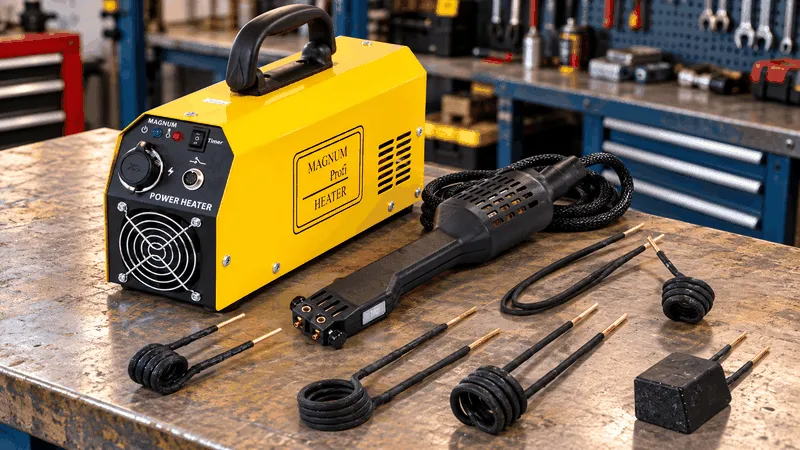
A propane or oxy-acetylene torch will heat the frozen nut, but it doesn’t care what else it affects: scorched paint, molten connections, distorted aluminum housing, or worse, a fuel line. A flameless induction heater performs the same job without using flames, and induction heating kits are gaining popularity in precision applications.
How do flameless heating and a torch differ in safety, precision, and the types of parts they can heat? This guide compares flameless induction heaters and torches, recommends the best flameless systems, and covers other rusty nut removal techniques.
What Makes a Flameless Induction Heater Different?
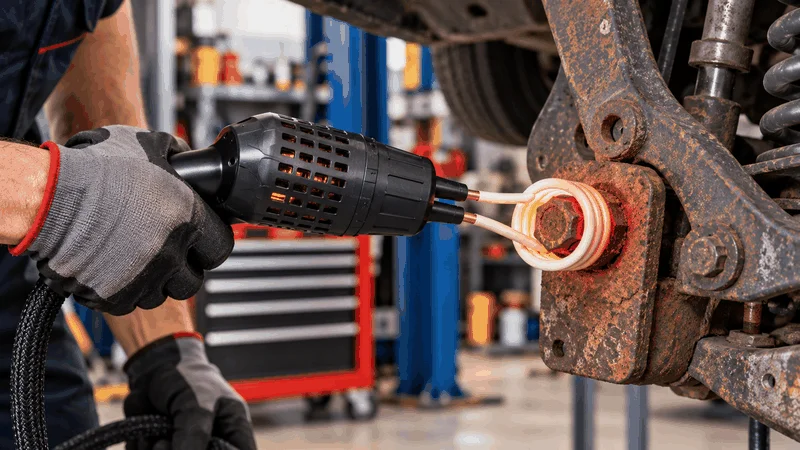
It all comes down to how they produce heat. A torch produces heat by burning gas, creating an open flame that heats whatever it touches. On the other hand, a flameless induction heater produces heat by passing high-frequency alternating current through the coil, producing currents within the fastener around the coil.
This kind of heater does not use any flameless induction heater. The induction heaters work well for ferrous metals such as steel bolts and nuts. The coil produces heat without any open flame. However, heat may transfer to other metals, paint, plastic, rubber, and other parts.
Flameless Induction Heater vs. a Torch: The Key Differences
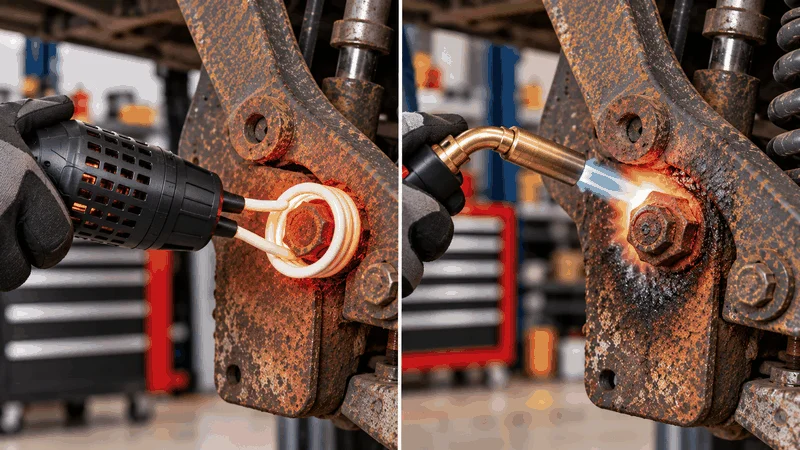
| Factor | Flameless induction heater | Open-flame torch |
| Heat location | Heats conductive metal within the coil’s effective range. | Heats the material being subjected to the flame |
| Fire risk | No open flame, but the heated metal could start a fire. | Flame creates an immediate ignition hazard |
| Nearby parts | It can help avoid direct heat application, but heat can still transfer. | Flame and radiation can affect adjacent parts |
| Aluminium components | Could heat a steel fastener in an aluminum component, but other parts could also be heated. | Can heat the fastener and adjacent aluminum, potentially causing damage |
| Control | Could provide localized heating provided the coil fits properly. | Careful flame control is necessary |
| Best suited to | Many steel fasteners in tight spaces | Large workpieces and applications that require flame heating |
While induction heating offers some safety benefits over flame heating, neither is completely safe. For removing a corroded steel bolt from an inaccessible location, a portable flameless bolt heater can provide a safer alternative to an open-flame torch.
Safety Benefits of a Flameless Induction Heater
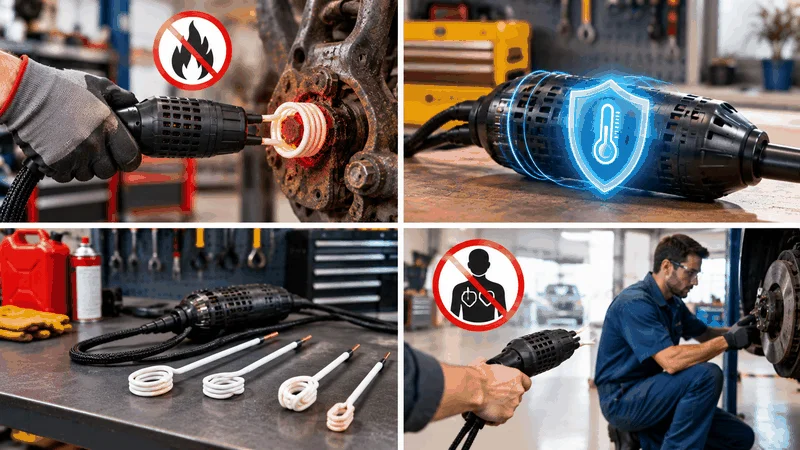
A lack of open flame means that one of the major sources of ignition is absent, which makes induction safer.
What are the safest induction heater kits for small garages, and which models prioritize safety features?
Instead of determining the best torch in terms of safety, focus on these safety elements: overheating protection, duty cycle protection, reverse polarity protection, and coil insulation. Since there is no flame anymore, the torch will not cause a fire hazard.
This does not mean heating is safe around fuel or rubber, so always be careful with hot metal. In the garage, keep the coil away from wires, flammable materials, and medical devices. Always handle flameless induction heating equipment with care, just like any other mechanical equipment.
Which induction heater kits have the fewest reported safety issues, and which ones include built-in protections?
Before buying, check the manual to confirm the manufacturer mentions safety features such as thermal protection, duty cycle restrictions, etc. Don’t assume all models have reverse polarity protection and other features.
While using it, make sure the coil does not contact any automotive flameless induction heater materials. Using a tool from an automotive tool range makes these things easy.
Using a Flameless Induction Heater for Delicate Work
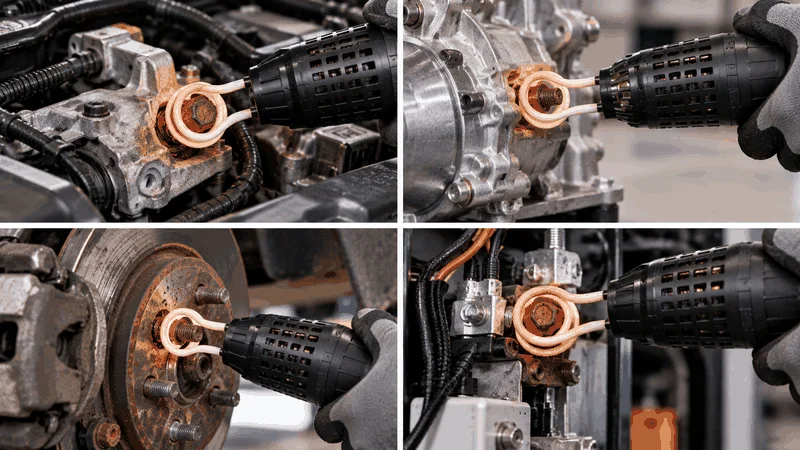
Because the heat is applied only to the fastener, the flameless induction heater is better for applications where a torch would damage the surroundings. Low-power induction heating devices are also available.
What are the best induction heater kits for precision parts,s and which models minimize surface damage?
Since control matters more than power for precision or finished items, use a lower-powered machine, such as a 1kW heater with a small coil that won’t let heat spread throughout the metal. By operating in short bursts, keeping the coil from touching the metal, and stopping when the bolt loosens, the flameless induction heater machine will not leave marks.
Which induction heater kits are best for aluminum parts, and which models are compatible?
The physics is that induction heating effectively heats ferrous metals, but not non-ferrous metals like aluminum. Therefore, a flameless bolt removal toolwon’t heat aluminum. They may help if you need to remove a steel bolt jammed in an aluminum component. The coil will heat the ferrous fastener without heating the aluminum. Any aluminum heater can work for this purpose, as long as you have a suitable coil for the fastener.
Which induction heater kits are recommended for delicate parts, and which are suited for sensitive work?
For wires, sensors, plastics, and thin panels, the rules are the same: controlled output, small coils, and fast heating times. The low-wattage handheld is the most accurate device. Use high-wattage tools for heavy-duty fasteners, well away from sensitive materials. No matter which flameless heat induction tool you use, heat localization and frequent testing, with early stopping, will prevent overheating the part.
Best Flameless Induction Heaters
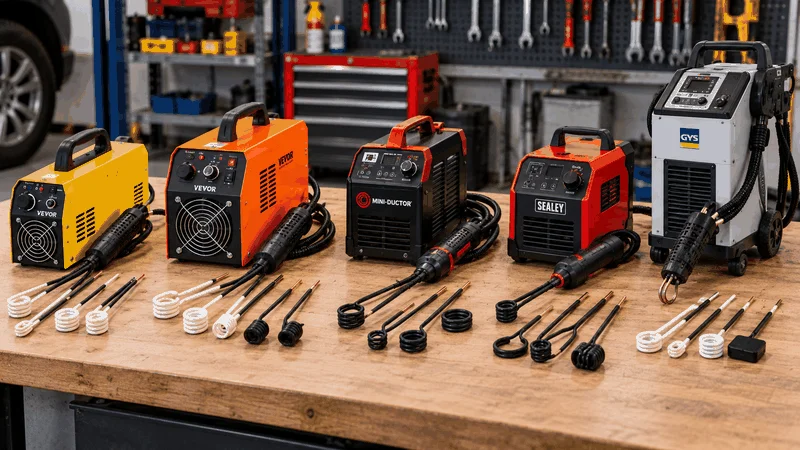
Two VEVOR portable models are displayed next to three other flameless induction heater kits, from a premium handheld to a water-cooled system.
| Model | Power | Supply | Coils / inductor | Type |
| VEVOR 1100 W kit | 1100 W | 230 V (EU) | Up to 10 coils + case | Handheld, air-cooled |
| VEVOR 1800 W kit | 1800 W (EU); 1500 W US version | 230 V (EU) / 110 V (US) | 4 coils + case | Handheld, air-cooled |
| Mini-Ductor Venom HP | 1800 W | 120 V (240 V available) | 3 coils, incl. Bearing Buddy | Handheld, air-cooled |
| Sealey VS230 | 2000 W | 230 V | 7 coils/attachments; 15% duty cycle | Mobile mains unit |
| GYS Powerduction 50LG | 5200 W | 230 V single-phase | 20° inductor head, 3 m lead | Water-cooled station |
The 1100 W VEVOR kit is a good flameless induction heater option at a moderate price for most garage needs, thanks to its 10 coil packs that help loosen suspension and brake bolts.
For tougher bolts and more power, the 1800 W kit is available, and for the 110 V line, the 1500 W US kit is available. The Mini-Ductor Venoch is also a premium hand-held tool with reverse-polarity protection. The Sealey VS230 with panel and trim kits has a 15% duty cycle; and the GYS Powerduction ch is a water-cooled station.
Recommended For Your Project
When a Torch Still Has a Place
Honesty is important; the torch is still relevant. For very heavy loads like a thick flange, a heavy shaft, or even machinery, an open flame heats faster than a small hand torch, and it doesn’t require electricity, making it suitable for remote areas.
Another advantage is that it heats non-ferrous metal without induction, which is less effective here. However, its uncontrollable nature and fire risk make it a rare flameless induction heating tool for heavy-duty work, not for everyday car repairs.
Conclusion
A flameless induction heater kit is another helpful choice for loosening seized bolts in automotive work. It heats the bolt without an open flame, minimizing heat exposure to surrounding components. Heat is still transferred, so good coil placement and heating control are important.
A torch may still help with large workpieces or when you need direct heating. Select a tool that fits the fastener and operate it according to the instructions, making sure no flammable substances are in the vicinity; these are some of your automotive tools along with good practices. Having extra coils on hand can save you from waiting if your coil burns out.
Frequently Asked Questions
What are the best induction heater kits for removing hub bearings from cars?
Match the hubs with an adequate power source and either a bearing or a U-shaped coil; a 1500 W unit will suffice for virtually any automobile race from a common outlet. Heat the race to expansion, then remove the bearing with impact wrenches.
Can a flameless induction heater damage the bolt or nearby parts?
Yes, but only if you use it too much, because too much heat will anneal the bolt or pass to the seals and sensors. Use heat sparingly, keep the coil near the ferrous metal, and stop the moment the fastener comes loose.
Is a flameless induction heater better than a torch for every job?
But not everybody. It is generally easier and safer for controlling automotive fasteners, but using a torch works well for heavy loading and heating non-ferrous metals.