Factory spaces require powerful airflow systems to control heat, enhance comfort, and ensure a safe working environment. The correct solution will be determined by the building’s size, ceiling height, and the amount of work to be done daily. The new factory ceiling fans can enhance ventilation and reduce energy consumption in large industrial and commercial spaces. They are popular in warehouses, factories, and production facilities where airflow is significant. Knowing how to select industrial ceiling fans for large areas helps businesses make better choices. Efficiency, low operating costs, and long-term performance in harsh conditions that require continuous operation are also enhanced by proper selection.
- Types of Factory Ceiling Fans
- Key Features to Check When Selecting Factory Ceiling Fans
- Types of Factory Ceiling Fans
- Key Features to Check When Selecting Factory Ceiling Fans
- Best Factory Ceiling Fans for Industrial and Commercial Spaces
- How to Choose the Right Factory Ceiling Fan
- Common Mistakes to Avoid When Buying Factory Ceiling Fans
- FAQ
Types of Factory Ceiling Fans
Selecting the appropriate fan system is important for ensuring air circulation, reducing heat, and improving worker comfort in industrial areas. There are various types of fans that are suited to various factory arrangements, ceiling height, and environmental conditions.
Understanding the characteristics of each alternative can help businesses improve ventilation and reduce long-term energy costs. Advanced technology has now been used to construct modern factory ceiling fans to enhance cooling performance and energy efficiency.
HVLS (High Volume Low Speed) Fans
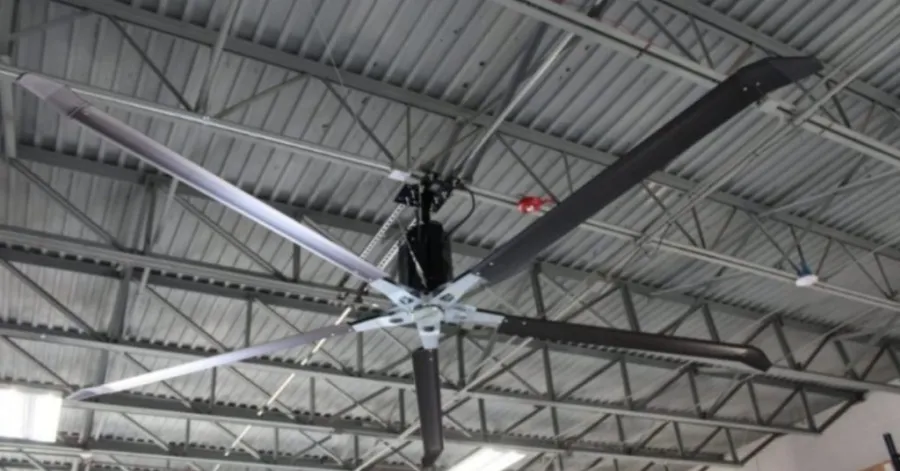
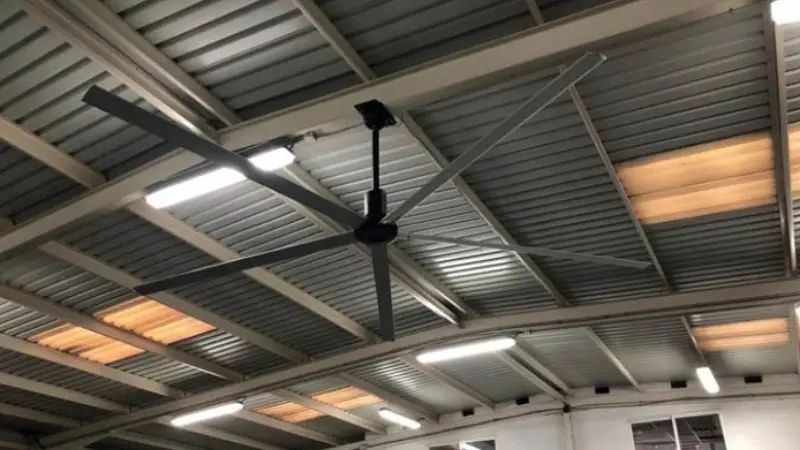
Hot industrial HVLS fans are designed to move a large volume of air at low velocity. These fans are usually fitted in warehouses, factories, production plants, and other big institutions where the circulation of air cannot be easily maintained. Their wide blades distribute air uniformly over a large area, creating a cooling effect for workers and equipment.
These fans are favored by many businesses because they help improve air circulation without consuming much electricity. They are also believed to be among the best alternatives for saving energy in warehouses by using industrial ceiling fans, as they minimize the cooling system load. HVLS fans are frequently recommended when companies inquire about which ceiling fan size to use in a factory with high ceilings and an open floor plan.
High-Speed Industrial Ceiling Fans
Industrial ceiling fans are designed to provide rapid air circulation in crowded work environments where heat and moisture accumulate quickly. These fans are faster-moving and suited to factories with smaller workstations, machinery, or areas that require more concentrated cooling. Their good airflow is known to enhance comfort and favorable working conditions during the day.
Another use of these fans is that they are an ideal product for facilities seeking high-quality ceiling fans for continuous operation. When businesses choose industrial ceiling fans for large areas, they tend to compare fan speed, motor power, and blade design. The installation and location of high-speed industrial fans are also significant factors in ensuring optimal cooling performance.
Smart Industrial Ceiling Fans
Modern factories are increasingly adopting smart industrial ceiling fans for their automated controls and improved energy management. These fans can adjust speed based on room temperature, humidity, or occupancy to help businesses maintain a comfortable room temperature while reducing electricity consumption. Most systems can also be integrated with mobile applications or building management software to make monitoring easier.
Organizations that invest in high-tech factory ceiling fans tend to adopt smart systems to enhance efficiency and reduce long-term operating costs. They come in handy, particularly with a business that is geared towards sustainability and reduced power consumption. When considering the options, many factory owners also take into account the cost of installing factory ceiling fans, the long-term benefits of smart technology, and the less frequent maintenance.
Indoor vs Outdoor Industrial Fans
Outdoor and indoor ceiling fans are made to suit various working environments; therefore, the type of ceiling fan chosen has to be suitable in terms of longevity and performance. In manufacturing plants, storage facilities, and assembly areas where exposure to the weather is not a problem, indoor fans are normally used. The primary concerns of these fans are efficiency in airflow and noise.
Industrial fans used outdoors are constructed using waterproof materials to deal with moisture, dust, and fluctuating temperatures. They are commonly mounted in loading docks, semi-open warehouses, and industrial yards. Companies intending to upgrade their ventilation systems ought to know how to select industrial ceiling fans to use in big buildings based on environmental factors, air moving needs, and the building design. The choice of an appropriate type of fans is also used in regulating the total cost of installation of factory ceiling fans in industries.
Key Features to Check When Selecting Factory Ceiling Fans
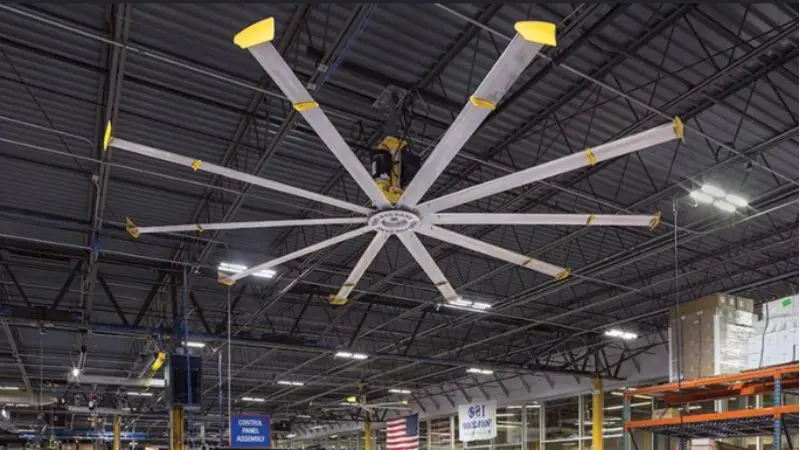
It is not just a matter of size or cost when it comes to selecting the appropriate industrial fan. The fans that are required in factories should operate long hours, move air over a large area, and ensure that the working conditions are safe and comfortable. Every feature has an impact on performance and efficiency in practice.
It is worth investigating airflow requirements, power consumption, and quality of construction before making a decision. This assists companies in choosing the trusted factory ceiling fans that enhance comfort and are low-cost in the long run.
Select the Right Fan Size and Blade Length for Your Factory Space
The size of the fans and the length of the blades determine the amount of air that is dispersed within a factory. There should be large blades to cover extensive spaces and small units to cover small spaces. Improper size results in poor airflow and uneven cooling.
The question that most businesses pose is what size ceiling fan should be used in a factory, since this will always be determined by the height of the ceiling, the layout,t and the space design. HVLS systems are frequently employed in large warehouses since they circulate air over large spaces. Proper sizing will enhance comfort and facilitate better air circulation throughout the facility.
Understand Motor Power and Airflow Strength
The motor power is used to regulate the intensity and consistency of airflow in industrial areas. A powerful motor will allow working long hours and maintaining a constant level of performance even in hot regions. This is important in factories where machines and processes raise the temperature indoors.
The quality of the motors, airflow output, and efficiency should be closely inspected when choosing factory ceiling fans. Powerful motors are highly essential to HVLS fans in hot industrial settings, where a large air flow is required. Both good motor strength minimizes the risk of breakdown and helps to sustain long service life.
Focus on Energy Saving Features for Lower Power Cost
Factories and warehouses are also a huge subject of concern, as a lot of energy is used by the fans,s which are usually turned on all day. The modern systems have speed control, efficient motors, and intelligent automation that minimize the use of electricity and ensure a constant airflow.
Energy-saving industrial ceiling fans are popular in warehouses, as many companies prefer to save money on power and enhance control of air circulation. These systems also minimize the cooling equipment load in big buildings. Business owners who are taught about the selection of industrial ceiling fans in large areas tend to look at those that are able to balance the power of airflow with low energy consumption.
Keep Noise Level Low for a Better Work Environment
The level of noise is also significant in the working areas of industries. Noisey fans may interfere with communication and decrease concentration among employees. The quiet system enhances comfort and ease of everyday life.
The current generation of ceiling fans in factories provides high air flow and low noise. This aids in production zones, packaging zones, and indoor work floors. Low noise level also enhances the general productivity and comfort at work.
Factory spaces require powerful airflow systems to control heat, enhance comfort, and ensure a safe working environment. The correct solution will be determined by the building’s size, ceiling height, and the amount of work to be done daily. The new factory ceiling fans can enhance ventilation and reduce energy consumption in large industrial and commercial spaces. They are popular in warehouses, factories, and production facilities where airflow is significant. Knowing how to select industrial ceiling fans for large areas helps businesses make better choices. Efficiency, low operating costs, and long-term performance in harsh conditions that require continuous operation are also enhanced by proper selection.
Types of Factory Ceiling Fans
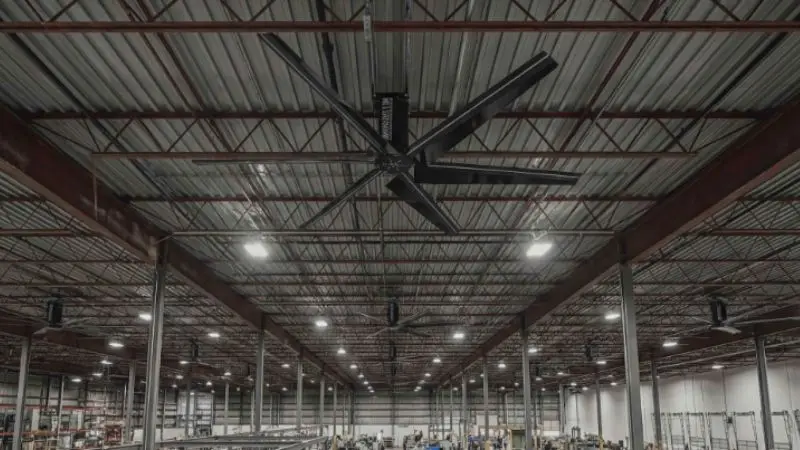
Selecting the appropriate fan system is important for ensuring air circulation, reducing heat, and improving worker comfort in industrial areas. There are various types of fans that are suited to various factory arrangements, ceiling height, and environmental conditions.
Understanding the characteristics of each alternative can help businesses improve ventilation and reduce long-term energy costs. Advanced technology has now been used to construct modern factory ceiling fans to enhance cooling performance and energy efficiency.
HVLS (High Volume Low Speed) Fans
Hot industrial HVLS fans are designed to move a large volume of air at low velocity. These fans are usually fitted in warehouses, factories, production plants, and other big institutions where the circulation of air cannot be easily maintained. Their wide blades distribute air uniformly over a large area, creating a cooling effect for workers and equipment.
These fans are favored by many businesses because they help improve air circulation without consuming much electricity. They are also believed to be among the best alternatives for saving energy in warehouses by using industrial ceiling fans, as they minimize the cooling system load. HVLS fans are frequently recommended when companies inquire about which ceiling fan size to use in a factory with high ceilings and an open floor plan.
High-Speed Industrial Ceiling Fans
Industrial ceiling fans are designed to provide rapid air circulation in crowded work environments where heat and moisture accumulate quickly. These fans are faster-moving and suited to factories with smaller workstations, machinery, or areas that require more concentrated cooling. Their good airflow is known to enhance comfort and favorable working conditions during the day.
Another use of these fans is that they are an ideal product for facilities seeking high-quality ceiling fans for continuous operation. When businesses choose industrial ceiling fans for large areas, they tend to compare fan speed, motor power, and blade design. The installation and location of high-speed industrial fans are also significant factors in ensuring optimal cooling performance.
Smart Industrial Ceiling Fans
Modern factories are increasingly adopting smart industrial ceiling fans for their automated controls and improved energy management. These fans can adjust speed based on room temperature, humidity, or occupancy to help businesses maintain a comfortable room temperature while reducing electricity consumption. Most systems can also be integrated with mobile applications or building management software to make monitoring easier.
Organizations that invest in high-tech factory ceiling fans tend to adopt smart systems to enhance efficiency and reduce long-term operating costs. They come in handy, particularly with a business that is geared towards sustainability and reduced power consumption. When considering the options, many factory owners also take into account the cost of installing factory ceiling fans, the long-term benefits of smart technology, and the less frequent maintenance.
Indoor vs Outdoor Industrial Fans
Outdoor and indoor ceiling fans are made to suit various working environments; therefore, the type of ceiling fan chosen has to be suitable in terms of longevity and performance. In manufacturing plants, storage facilities, and assembly areas where exposure to the weather is not a problem, indoor fans are normally used. The primary concerns of these fans are efficiency in airflow and noise.
Industrial fans used outdoors are constructed using waterproof materials to deal with moisture, dust, and fluctuating temperatures. They are commonly mounted in loading docks, semi-open warehouses, and industrial yards. Companies intending to upgrade their ventilation systems ought to know how to select industrial ceiling fans to use in big buildings based on environmental factors, air moving needs, and the building design. The choice of an appropriate type of fans is also used in regulating the total cost of installation of factory ceiling fans in industries.
Key Features to Check When Selecting Factory Ceiling Fans
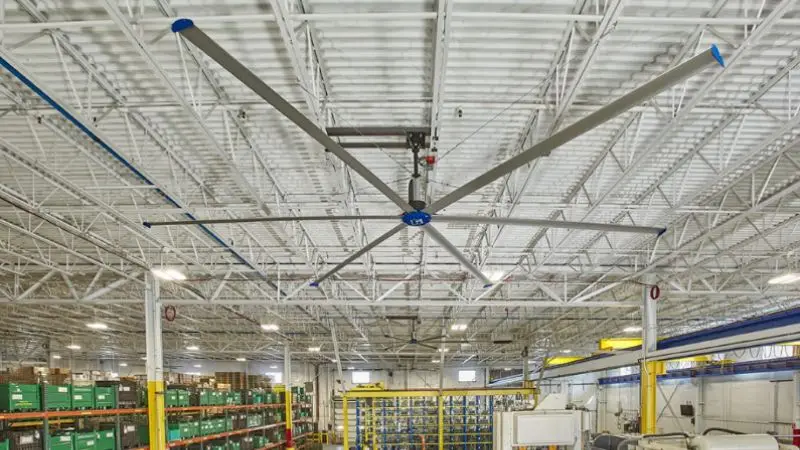
It is not just a matter of size or cost when it comes to selecting the appropriate industrial fan. The fans that are required in factories should operate long hours, move air over a large area, and ensure that the working conditions are safe and comfortable. Every feature has an impact on performance and efficiency in practice.
It is worth investigating airflow requirements, power consumption, and quality of construction before making a decision. This assists companies in choosing the trusted factory ceiling fans that enhance comfort and are low-cost in the long run.
Select the Right Fan Size and Blade Length for Your Factory Space
The size of the fans and the length of the blades determine the amount of air that is dispersed within a factory. There should be large blades to cover extensive spaces and small units to cover small spaces. Improper size results in poor airflow and uneven cooling.
The question that most businesses pose is what size ceiling fan should be used in a factory, since this will always be determined by the height of the ceiling, the layout,t and the space design. HVLS systems are frequently employed in large warehouses since they circulate air over large spaces. Proper sizing will enhance comfort and facilitate better air circulation throughout the facility.
Understand Motor Power and Airflow Strength
The motor power is used to regulate the intensity and consistency of airflow in industrial areas. A powerful motor will allow working long hours and maintaining a constant level of performance even in hot regions. This is important in factories where machines and processes raise the temperature indoors.
The quality of the motors, airflow output, and efficiency should be closely inspected when choosing factory ceiling fans. Powerful motors are highly essential to HVLS fans in hot industrial settings, where a large air flow is required. Both good motor strength minimizes the risk of breakdown and helps to sustain long service life.
Focus on Energy Saving Features for Lower Power Cost
Factories and warehouses are also a huge subject of concern, as a lot of energy is used by the fans,s which are usually turned on all day. The modern systems have speed control, efficient motors, and intelligent automation that minimize the use of electricity and ensure a constant airflow.
Energy-saving industrial ceiling fans are popular in warehouses, as many companies prefer to save money on power and enhance control of air circulation. These systems also minimize the cooling equipment load in big buildings. Business owners who are taught about the selection of industrial ceiling fans in large areas tend to look at those that are able to balance the power of airflow with low energy consumption.
Keep Noise Level Low for a Better Work Environment
The level of noise is also significant in the working areas of industries. Noisey fans may interfere with communication and decrease concentration among employees. The quiet system enhances comfort and ease of everyday life.
The current generation of ceiling fans in factories provides high air flow and low noise. This aids in production zones, packaging zones, and indoor work floors. Low noise level also enhances the general productivity and comfort at work.
@ashtonbrown007 VEVOR Wall-Mount Misting Fan #VevorMistingFan #WallMountFan #Vevor #PatioMistingFan #MistingFan
♬ original sound – AshtonBrown007
Ensure Safety Design and Strong Build Quality
The build quality of industrial fans must be robust as they operate under harsh conditions like heat, dust, and long working hours. Safe design minimizes risk and enhances long-term dependability.
Good factory ceiling fans comprise powerful blades, stable mounts, and corrosion resistance. These characteristics aid in safe working within industrial areas. Proper installation also contributes to fewer maintenance issues and enhances longevity.
Use Smart Control Systems for Easy Operation
Smart control systems help regulate fan speed and airflow via easy remote or automatic controls. Such systems enhance control in big factories where manual adjustment is not feasible.
Most current factory ceiling fans have automatic speed control, which depends on the temperature or usage. This enhances comfort and saves on energy. Smart systems tend to be more economical when it comes to installing factory ceiling fans, as they will eliminate waste and enhance control efficiency.
Best Factory Ceiling Fans for Industrial and Commercial Spaces
Big commercial and industrial areas require robust airflow mechanisms that aid in heat management, comfort, and energy efficiency. The size and workload of fans depend on the type of environment in which they will be used. Air movement is required in warehouses, factories, garages, and storage units to provide safe working environments.
The performance of factory ceiling fans, installation requirements, and the product’s long-term running costs are other factors many buyers compare. Decisions usually concern the choice of industrial ceiling fans for large areas and the cost of installing factory ceiling fans, particularly for large plants.
VEVOR Industrial Ceiling Fan for Warehouses and Large Factory Spaces
VEVOR Industrial Ceiling Fan is suitable for very large industrial premises such as warehouses, factories, and open halls. It operates around a broad blade system that conveys a high amount of air at low speed. This design helps minimize heat concentration and enhance airflow in large areas. It is also effective in a hot industry where machines and production raise the indoor temperature. It is favored by many buyers when they aim at HVLS fans in hot industrial conditions and energy-saving industrial ceiling fans in warehouses, since it facilitates extensive coverage at a reduced power consumption.
Pros
- Coverage of very big industrial areas.
- Has low power to wide airflow.
- Well-built long operation.
Con
- Has a high ceiling height requirement
MacroAir AirVolution D HVLS Fan for Warehouse Airflow Control
MacroAir AirVolution D HVLS Fan is designed to suit big warehouses and logistics areas, where constant air circulation is required during the day. It provides even airflow over open layouts and minimizes hot spots within storage or distribution spaces. It helps to work long hours without failures. It is one of the considerations made by many facility planners when they consider which size ceiling fan is appropriate for a factory, particularly when it has a large warehouse layout that requires fewer and more powerful units.
Pros
- extensive coverage of warehouses.
- Stable performance for long shifts
- Fit well in open storage spaces.
Con
- More expensive than normal fans.
Hunter Industrial Titan Fan for Manufacturing Units
Hunter Industrial Titan Fan suits are used in manufacturing plants where machines generate heat, and airflow needs to remain at equilibrium. It facilitates good air circulation without disrupting production lines. The fan can be used effectively in assembly, workshop, and processing zones. It is commonly chosen when companies seek quality factory ceiling fans that can sustain everyday industrial operations. It is also applicable when planning to select industrial ceiling fans for large areas in manufacturing facilities.
Pros
- Powerful air supply to production floors.
- Stable performance in factories
- Adequate size to production ratio.
Con
- Needs professional installation
Big Ass Fans Powerfoil X4 for Commercial Garage Ventilation
Big Ass Fans Powerfoil X4 is suitable for commercial garages where there is unequal airflow due to heat, vehicle movement, and enclosed spaces. It enhances air flow in the service bays, repair areas,s and in the parking buildings. It helps to make the working conditions of technicians and personnel in closed spaces more comfortable. It is widely applied in cases where factory ceiling fans have to work with dust, heat, and constant activity. It also helps budget for the cost of installing factory ceiling fans in large garage areas.
Pros
- Effective ventilation of garages.
- Sturdy construction to be used extensively.
- Large bay coverage is good.
Con
- Requires good support on the ceiling.
Westinghouse Industrial Ceiling Fan Budget Series
Budget ceiling fans are industrial fans suitable for small factories, workshops, and commercial areas, and they are not expensive. These models rely on simple airflow assistance rather than hi-tech systems. They help enhance comfort in small production or storage units. Most of the small business owners choose them when they begin installing factory ceiling fans. They also contrast them in terms of the cost of installing factory ceiling fans to maintain low costs, but enhance basic ventilation.
Pros
- Low purchase cost
- Easy and simple installation.
- Fits into small areas.
Con
- Limited coverage for large areas
Harbor Breeze Industrial Budget Ceiling Fan Series
Energy-efficient industrial ceiling fans are appropriate for warehouses and large facilities that operate ventilation systems for extended periods. These models have efficient motors and speed control mechanisms, which minimize the consumption of electricity and do not affect the quality of airflow. They facilitate regular air circulation in manufacturing facilities, warehouses, and business establishments. Most buyers choose them when they are oriented on saving energy, industrial ceiling fans in warehouses, and long-term operational savings. They are also consistent with the selection of industrial ceiling fans for large areas where efficiency is a key factor.
Pros
- Minimal power consumption when in operation.
- Improved control of airflow and stability.
- Long-term cost savings
Con
- More expensive initial cost than entry models.
How to Choose the Right Factory Ceiling Fan
Choosing an appropriate system for industrial airflow requires careful planning. The size, ceiling design, and heat levels in factories and warehouses differ, and a single solution cannot be applied to all spaces. An adequate selection enhances comfort, energy consumption, and facilitates the normal day-to-day operations.
Most companies are comparing various factory ceiling fans in terms of performance, price, and life span. The decision also relates to the selection of industrial ceiling fans for large spaces and long-duration operation in industrial settings.
Consider Ceiling Height Before Selecting a Fan
The ceiling height significantly affects fan performance. Large industrial fans can work better with high ceilings, but small models are necessary in low ceilings to prevent safety concerns and poor air circulation. The improperly chosen height may decrease efficiency and cause uneven cooling.
The size of the ceiling fan to use in a factory is another question most factory owners will ask, and ceiling height is one of the determining factors. HVLS systems tend to be effective in high-rise warehouses since they spread air over extensive vertical areas. The right choice of height also enhances safety and airflow balance within the building.
Measure Factory or Warehouse Size Accurately
The size of a factory or a warehouse directly influences the number of fans required and the best airflow system. Big open spaces should be covered with large areas, and small production units should have focused airflow. Poor ventilation or energy waste may result from inaccurate measurement.
Total square footage and layout design are some of the factors used by businesses to assess factory ceiling fans. This measure is also related to the saving of energy by using industrial ceiling fans in warehouses, as this is done by sizing them appropriately to save power. Proper measurement will lead to an improved distribution of airflow and enhance working conditions throughout the facility.
Understand Ventilation Requirements for Your Space
Each industrial area has varying ventilation requirements based on the heat level, use of machinery,y and occupancy. The heavy equipment in factories produces a lot of heat and needs powerful airflow systems. Storage facilities might only require balanced airflow.
Knowing these needs assists businesses in selecting the appropriate factory ceiling fans to perform well in the long run. It also helps in the planning of HVLS fans to use in hot industries where temperature becomes a significant concern. Proper ventilation planning will provide higher-quality air, increased comfort, and safer working conditions.
Compare Airflow Capacity (CFM) Before Buying
Airflow capacity, which is in CFM (Cubic Feet per Minute), indicates the amount of air a fan is able to transfer. Increased CFM indicates greater air movement, which is critical in large factories and warehouses. Reduced CFM can be used in smaller or enclosed areas.
When choosing factory ceiling fans, comparing CFM helps ensure the system is suitable for the space’s needs. This also relates to selecting industrial ceiling fans for large areas, as the airflow strength should match the building’s size. Proper CFM choice enhances efficiency, avoiding excessive use or inefficiency of the fan system.
Check Installation Requirements for Safety and Performance
Installation requirements are significant for the performance and safety of fans. Industrial ceiling fans should be mounted properly, they should have the proper electrical installation, and they should have sufficient clearance from the floor. Ineffective installation may decrease efficiency and pose safety hazards.
Another aspect many buyers consider in their planning is the cost of installing factory ceiling fans, since the complexity of installation affects the overall budget. Good installation practices guarantee reliable functioning and extended service. Adequate installation also enhances the distribution of air and safety in use in industries.
Common Mistakes to Avoid When Buying Factory Ceiling Fans
The purchase of the appropriate industrial fan must be carefully considered, as improper selection may decrease the air circulation, raise the price, and compromise comfort in the workplace. A lot of factories tend to emphasize price or look, but in the industry, performance and longevity are more important.
One should know how factory ceiling fans perform in large areas and how such variables as size, power consumption, and installation influence the overall performance. Eliminating the pitfalls is also useful for enhancing the decision-making process for selecting industrial ceiling fans in large areas and for long-term operating expenses.
Choosing the Wrong Fan Size for Your Factory Space
The size of the fans is significant in the quality of airflow. An undersized fan will not cover the area adequately, whereas an oversized fan can easily end up consuming more energy or producing uneven air circulation. Both scenarios make working in the factory less comfortable and efficient.
What size ceiling fan to install in a factory is also a question many buyers ask, but it is determined by ceiling height and floor space. Adequate sizing ensures even air distribution and improved performance of factory ceiling fans in warehouses and factories. Poor ventilation and higher energy costs are common effects of improper sizing.
Ignoring Energy Consumption and Long-Term Power Cost
One of the most significant criteria in the selection of industrial fans is energy usage. Most of the factories have fans that are used over extended hours, hence inefficient models may lead to a huge electricity bill. Negligence of this aspect results in increased operational costs in the long run.
The ceiling fans made nowadays are designed to save power while providing powerful airflow. This is particularly critical when choosing energy-saving industrial ceiling fans in warehouses, which have long working hours. Energy performance is also important for long-term cost management for businesses and for enhancing efficiency in large facilities.
Overlooking Noise Levels in Industrial Environments
The level of noise is a factor that is usually overlooked when purchasing, but it directly affects the level of comfort and productivity of the workers. Noisey fans may hamper communication, decrease concentration, and make the workplace uncomfortable, particularly in tight-knit industrial areas.
Good quality factory ceiling fans are made in a way that they deliver good air circulation and minimal noise. This is significant when it comes to production lines, workshops, and storage spaces where concentration is an issue. Noise performance checking maintains the improved working conditions and facilitates the daily processes throughout the facility.
Not Checking Warranty and After-Sales Support
Warranty and support are often overlooked, but they are important for long-term reliability. Industrial fans are never off; therefore, maintenance and repair support may impact downtime and cost. Repair costs might rise with time without an appropriate warranty.
Good quality factory ceiling fans are those that are characterized by a good warranty and after-sales service. This is particularly necessary in large systems that are employed in warehouses and factories, and their failure may disrupt operations. Checking support options also helps minimize risks and support long-term performance stability.
Wrap Up
The ability to choose the appropriate industrial fan system enhances the flow of air, comfort, and efficiency in the factories and warehouses. Every space requires a unique solution depending on its size, the amount of heat needed, and its usage frequency. Alternatives such as HVLS systems and energy-efficient models are used to regulate temperature and save on electricity costs. Planning will give a good performance and value in the long run. Quality ceiling fans in factories can be invested in to sustain safe working environments and consistent airflow. Knowledge of installation requirements and capacity also prevents typical errors. On the whole, the correct decision enhances productivity, reduces maintenance, and makes the industrial and commercial areas more comfortable for the workers.
FAQ
What is the ideal size of a ceiling fan in factories?
Optimal size is determined by ceiling height, floor space, and plan. Big factories require larger fans with a greater blade span. Compact models can be applied in smaller areas to achieve balanced airflow and adequate ventilation.
Worth having HVLS fans in warehouses?
Yes, HVLS fans are appropriate in warehouses since they require high air volumes at low speed. They enhance air circulation, minimize heat, and promote energy saving in large open areas with extended working hours.
What is the number of ceiling fans required by a factory?
This depends on the overall space, ceiling height, and the airflow needed. Even large factories may require a number of fans to maintain the air flow evenly, whereas a small facility can probably get by with a single or two units.
Do industrial ceiling fans save electricity?
Yes, industrial fans of today have an efficient motor and regulated speed. They save energy compared to cooling systems, help reduce electricity costs, and still ensure a constant supply of air in large industrial areas.
Is it possible to use factory ceiling fans outside?
Yes, but only weather-resistant models will be appropriate. Fans that are outdoors are resistant to dust, moisture, and temperature variations. It should be properly installed to be safe, durable, and reliable in exposed conditions.