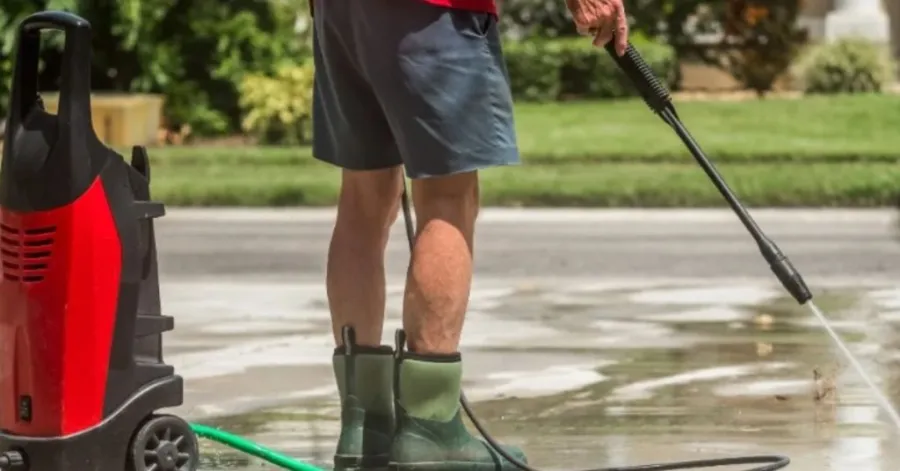
A question that frequently arises is, do pressure washers consume less water as compared to a hose? Many people believe that pressure washers use more water because of the strong spray, but this may not always be the case. High pressure is also used by pressure washers to clean at a faster rate, which enables the washers to clean without using a lot of water compared to a normal garden hose.
Knowing the difference between the two tools in using water will guide you in selecting the appropriate tool for washing cars, driveways, patios, and other exterior surfaces. This guide covers water consumption, efficiency, cleaning performance, and what causes one tool to use less water in day-to-day cleaning activities.
Table of Contents
- How Pressure Washers and Garden Hoses Use Water
- Pressure Washer vs. Garden Hose: Which Uses Less Water?
- Pressure Washer vs. Garden Hose for Different Cleaning Jobs
- What Affects How Much Water Is Used?
- How Pressure Washers and Garden Hoses Use Water
- Pressure Washer vs. Garden Hose: Which Uses Less Water?
- Pressure Washer vs. Garden Hose for Different Cleaning Jobs
- What Affects How Much Water Is Used?
- When Should You Choose a Pressure Washer Instead of a Garden Hose?
How Pressure Washers and Garden Hoses Use Water
Most people think that increased water pressure is related to increased water consumption, but this is not how a pressure washer works. They spray water at a much higher rate than a typical garden hose, but generally consume less water due to their efficiency. Knowing how each cleaning tool functions makes it simpler to compare their performance and water consumption.
Recommended For Your Project
How a Pressure Washer Works
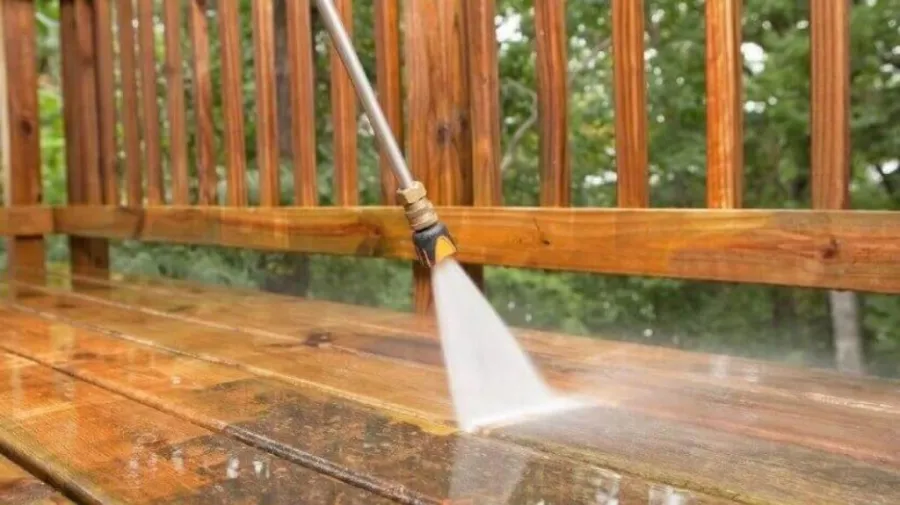
A pressure washer has an engine or motor that drives a pump that raises the pressure of incoming water. This pressurized water is discharged through a small nozzle, producing a focused spray that can be used to remove dirt, mud, mold, and stains quickly. Pressure is measured in pounds per square inch (PSI), and flow is measured in gallons per minute (GPM).
The water is sprayed with much more force; therefore, a pressure washer does not require much water to clean. And by the way, how much water does a pressure washer use per minute? The average domestic pressure washer consumes between 1.2 and 2.5 GPM. This is also why most homeowners ask themselves, are pressure washers water efficient, and in most cleaning scenarios the answer is yes.
How a Garden Hose Works
A garden hose supplies water through the plumbing system of the house without raising the pressure. It does not use force but rather cleans by rinsing the dirt and debris with an unbroken stream of water. The average garden hose discharges 5-10 gallons of water per minute, depending on the water pressure and hose size.
Many jobs take longer to complete because the water is dispersed over a greater area with less cleaning strength. This extended cleaning time increases overall water consumption. Comparing the two approaches, most individuals ask: Are pressure washers very water-consuming, yet a regular garden hose can consume a lot more water when performing the same task?
Pressure Washer vs. Garden Hose: Which Uses Less Water?
The decision between a pressure washer and a garden hose is not just about cleaning performance but also about water usage. Although both tools require water to clean, the amount they use during a cleaning session may be significantly different. Their average water consumption will give us some insight into why pressure washers are usually the more effective choice.
Comparing Average Water Consumption
The amount of water used per minute by a residential pressure washer ranges between 1.2 gallons and 2.5 gallons, and most commercial models have a rate of 3 to 5 GPM. To answer the question of how much water a pressure washer consumes per hour, a domestic-size washer will consume approximately 70 to 150 gallons of water during an hour of full power use.
By contrast, a typical garden hose can consume 300 to 600 gallons per hour since it provides a considerably greater amount of water. This distinction is why so many of you may ask whether pressure washers consume less water than a hose, and in most cases, they do. The reduced water flow and increased cleaning power enable pressure washers to get the same job done with much less water.
Why Pressure Washers Are More Water Efficient
Pressure washers clean dirt, grease, algae, and stains much more quickly because the high-pressure spray does most of the work. Washing a driveway, deck, patio, or vehicle typically requires less time than a regular garden hose, which saves overall water use. Reduced time in the rinsing process also implies reduced water waste.
This is among the primary reasons why pressure washing saves water is a common question among homeowners. Yes, for most outdoor cleaning jobs. The other logical question is whether pressure washing saves water bills since less water is used to get better cleaning results. Frequent use of a pressure washer to clean the outside can help reduce the amount of water used in the future, particularly in areas with large surfaces that would be time-consuming to rinse with a garden hose.
Pressure Washer vs. Garden Hose for Different Cleaning Jobs
Not all outdoor cleaning will need the same level of water or cleaning power. Some can be done using a garden hose, and others can be done much faster using a pressure washer. Comparing the performance of each tool on common household cleaning activities can help you select the most appropriate tool and use water more efficiently.
Which Is Better for Washing Cars?
A pressure washer and a garden hose will both be safe to wash a vehicle, although they operate in different ways. A pressure washer is a high-pressure water spray used to loosen mud, road grime, and dust in a short period of time, so you can clean the car faster. It cleans with the right nozzle and moderate PSI without damaging the paint.
Regular washing can also be accomplished with a garden hose, but more rinsing and scrubbing are often needed to clean hard-to-get-off dirt. Consequently, additional water tends to be consumed in the process. That is why most people ask: do pressure washers consume less water than a hose? In the case of car washing, it is often yes, since the cleaning task is done more quickly with less water.
Which Cleans Driveways and Sidewalks More Efficiently?
Concrete driveways and walks tend to accumulate oil and algae, moss, dirt, and tire marks, which are not easily removed using an ordinary garden hose. A pressure washer directs a focused flow of water that can dissolve tough buildup without taking long periods of time to rinse. The spray is significantly stronger, but the machine has a smaller flow of water than a garden hose.
Comparatively, a hose can be used to clean for a long period without achieving the same cleaning outcome. This is why many homeowners ask: Does pressure washing use less water than a garden hose? For large areas of concrete, pressure washing typically completes the task in less time and uses even less water overall.
Which Works Best for Patios, Decks, and Outdoor Furniture?
Outdoor furniture, patios, fences, and decks are constantly subjected to dust, pollen, mould, mildew, and weather-related debris. A pressure washer can eliminate these contaminants quickly, provided the right nozzle and pressure settings are used. It cleans outdoor surfaces with little scrubbing, saving time.
A garden hose comes in handy for light rinsing, but for stubborn stains, it may require a lot of spraying and handwork. Pressure washers usually use less water overall since they finish the job in a very short time. This is one reason many homeowners ask: Are pressure washers water-efficient, particularly when taking care of bigger outdoor living spaces?
What Affects How Much Water Is Used?
The amount of water consumed during the cleaning process depends on various factors, not the equipment you select. Your machine’s specifications, the water pressure in your house, and even your cleaning method can determine how much water is used. Knowing these factors will help you clean better and waste less water.
How PSI and GPM Affect Water Usage
Pressure washer ratings are measured by two important measurements: PSI (pounds per square inch) and GPM (gallons per minute). PSI is the measure of the force of the water, whereas GPM is the measure of the quantity of water passing through the machine. An increase in PSI enhances cleaning power, which does not necessarily mean that more water needs to be consumed.
Residential pressure washers have 1.2-2.5 gallons per minute, with commercial units having a slightly higher flow rate. If you want to know the number of gallons per minute used by a pressure washer, GPM indicates this information. By choosing a model with the optimal PSI-to-GPM ratio, you can clean effectively without wasting water.
A question that frequently arises is, do pressure washers consume less water as compared to a hose? Many people believe that pressure washers use more water because of the strong spray, but this may not always be the case. High pressure is also used by pressure washers to clean at a faster rate, which enables the washers to clean without using a lot of water compared to a normal garden hose.
Knowing the difference between the two tools in using water will guide you in selecting the appropriate tool for washing cars, driveways, patios, and other exterior surfaces. This guide covers water consumption, efficiency, cleaning performance, and what causes one tool to use less water in day-to-day cleaning activities.
Alt text: Do pressure washers use less water than a hose?
How Pressure Washers and Garden Hoses Use Water
Most people think that increased water pressure is related to increased water consumption, but this is not how a pressure washer works. They spray water at a much higher rate than a typical garden hose, but generally consume less water due to their efficiency. Knowing how each cleaning tool functions makes it simpler to compare their performance and water consumption.
How a Pressure Washer Works
A pressure washer has an engine or motor that drives a pump that raises the pressure of incoming water. This pressurized water is discharged through a small nozzle, producing a focused spray that can be used to remove dirt, mud, mold, and stains quickly. Pressure is measured in pounds per square inch (PSI), and flow is measured in gallons per minute (GPM).
The water is sprayed with much more force; therefore, a pressure washer does not require much water to clean. And by the way, how much water does a pressure washer use per minute? The average domestic pressure washer consumes between 1.2 and 2.5 GPM. This is also why most homeowners ask themselves, are pressure washers water efficient, and in most cleaning scenarios the answer is yes.
How a Garden Hose Works
A garden hose supplies water through the plumbing system of the house without raising the pressure. It does not use force but rather cleans by rinsing the dirt and debris with an unbroken stream of water. The average garden hose discharges 5-10 gallons of water per minute, depending on the water pressure and hose size.
Many jobs take longer to complete because the water is dispersed over a greater area with less cleaning strength. This extended cleaning time increases overall water consumption. Comparing the two approaches, most individuals ask: Are pressure washers very water-consuming, yet a regular garden hose can consume a lot more water when performing the same task?
Pressure Washer vs. Garden Hose: Which Uses Less Water?
The decision between a pressure washer and a garden hose is not just about cleaning performance but also about water usage. Although both tools require water to clean, the amount they use during a cleaning session may be significantly different. Their average water consumption will give us some insight into why pressure washers are usually the more effective choice.
Comparing Average Water Consumption
The amount of water used per minute by a residential pressure washer ranges between 1.2 gallons and 2.5 gallons, and most commercial models have a rate of 3 to 5 GPM. To answer the question of how much water a pressure washer consumes per hour, a domestic-size washer will consume approximately 70 to 150 gallons of water during an hour of full power use.
By contrast, a typical garden hose can consume 300 to 600 gallons per hour since it provides a considerably greater amount of water. This distinction is why so many of you may ask whether pressure washers consume less water than a hose, and in most cases, they do. The reduced water flow and increased cleaning power enable pressure washers to get the same job done with much less water.
Why Pressure Washers Are More Water Efficient
Pressure washers clean dirt, grease, algae, and stains much more quickly because the high-pressure spray does most of the work. Washing a driveway, deck, patio, or vehicle typically requires less time than a regular garden hose, which saves overall water use. Reduced time in the rinsing process also implies reduced water waste.
This is among the primary reasons why pressure washing saves water is a common question among homeowners. Yes, for most outdoor cleaning jobs. The other logical question is whether pressure washing saves water bills since less water is used to get better cleaning results. Frequent use of a pressure washer to clean the outside can help reduce the amount of water used in the future, particularly in areas with large surfaces that would be time-consuming to rinse with a garden hose.
Pressure Washer vs. Garden Hose for Different Cleaning Jobs
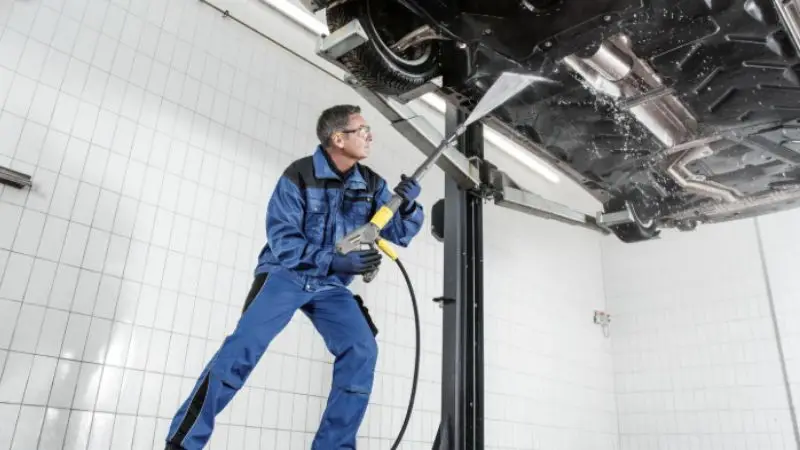
Not all outdoor cleaning will need the same level of water or cleaning power. Some can be done using a garden hose, and others can be done much faster using a pressure washer. Comparing the performance of each tool on common household cleaning activities can help you select the most appropriate tool and use water more efficiently.
Which Is Better for Washing Cars?
A pressure washer and a garden hose will both be safe to wash a vehicle, although they operate in different ways. A pressure washer is a high-pressure water spray used to loosen mud, road grime, and dust in a short period of time, so you can clean the car faster. It cleans with the right nozzle and moderate PSI without damaging the paint.
Regular washing can also be accomplished with a garden hose, but more rinsing and scrubbing are often needed to clean hard-to-get-off dirt. Consequently, additional water tends to be consumed in the process. That is why most people ask: do pressure washers consume less water than a hose? In the case of car washing, it is often yes, since the cleaning task is done more quickly with less water.
Which Cleans Driveways and Sidewalks More Efficiently?
Concrete driveways and walks tend to accumulate oil and algae, moss, dirt, and tire marks, which are not easily removed using an ordinary garden hose. A pressure washer directs a focused flow of water that can dissolve tough buildup without taking long periods of time to rinse. The spray is significantly stronger, but the machine has a smaller flow of water than a garden hose.
Comparatively, a hose can be used to clean for a long period without achieving the same cleaning outcome. This is why many homeowners ask: Does pressure washing use less water than a garden hose? For large areas of concrete, pressure washing typically completes the task in less time and uses even less water overall.
Which Works Best for Patios, Decks, and Outdoor Furniture?
Outdoor furniture, patios, fences, and decks are constantly subjected to dust, pollen, mould, mildew, and weather-related debris. A pressure washer can eliminate these contaminants quickly, provided the right nozzle and pressure settings are used. It cleans outdoor surfaces with little scrubbing, saving time.
A garden hose comes in handy for light rinsing, but for stubborn stains, it may require a lot of spraying and handwork. Pressure washers usually use less water overall since they finish the job in a very short time. This is one reason many homeowners ask: Are pressure washers water-efficient, particularly when taking care of bigger outdoor living spaces?
What Affects How Much Water Is Used?
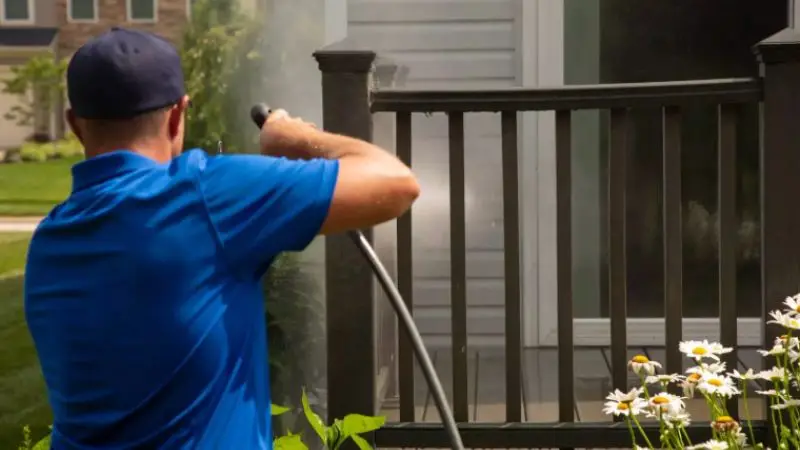
The amount of water consumed during the cleaning process depends on various factors, not the equipment you select. Your machine’s specifications, the water pressure in your house, and even your cleaning method can determine how much water is used. Knowing these factors will help you clean better and waste less water.
How PSI and GPM Affect Water Usage
Pressure washer ratings are measured by two important measurements: PSI (pounds per square inch) and GPM (gallons per minute). PSI is the measure of the force of the water, whereas GPM is the measure of the quantity of water passing through the machine. An increase in PSI enhances cleaning power, which does not necessarily mean that more water needs to be consumed.
Residential pressure washers have 1.2-2.5 gallons per minute, with commercial units having a slightly higher flow rate. If you want to know the number of gallons per minute used by a pressure washer, GPM indicates this information. By choosing a model with the optimal PSI-to-GPM ratio, you can clean effectively without wasting water.
How Hose Size and Water Pressure Change Water Flow
The water used by a garden hose will depend on the size of the garden hose as well as the amount of water pressure in your plumbing system. The larger the hose, the larger the amount of water that can be delivered in a minute, and the higher the pressure in the household, the quicker the water flows. Given that a garden hose does not require pressure but volume, it is usually employed during the cleaning process.
The effect of this is that many homeowners are likely to think that pressure washers waste a lot of water, yet this is not usually the case. A pressure washer is more efficient at regulating water flow, as it does not require a huge volume but high pressure, which is vital for better cleaning results.
How Your Cleaning Method Affects Water Consumption
The way you clean may significantly influence the amount of water you consume. Areas that are heavily dirtied, molded, or greased simply take more time to be clean than those that are lightly soiled. Cleaning efficiency is enhanced by working systematically, with the right spray nozzle, and keeping a steady distance from the surface. Washing can also be shortened by removing loose debris before it is washed.
The question many homeowners have is how much water a pressure washer consumes per hour; however, that can vary with the length of time the machine is operating and the efficiency of the machine’s use. Proper cleaning methods can help minimize water waste, provide better results, and even answer another popular question: can pressure washing save water bills and decrease total outdoor water use in the long term?
When Should You Choose a Pressure Washer Instead of a Garden Hose?
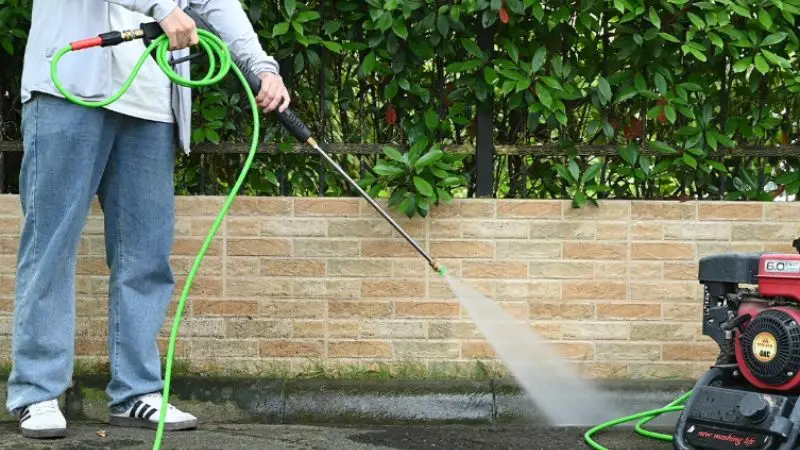
Pressure washers and garden hoses have their role to play in cleaning the outdoors. The decision will be based on the nature of the surface that you are cleaning, its dirtiness, and the time and water that you wish to spend. Knowing when each tool works best will help you get better results without wasting water unnecessarily.
When Is a Pressure Washer the Best Choice?
A pressure washer is more suitable for cleaning up big outdoor surfaces that have accumulated dirt, mold, mildew, algae, grease, or hard-to-clean stains. It is also applied efficiently on driveways, sidewalks, patios, decks, fences, garage floors, and exterior walls due to the high-pressure spray that eliminates dirt in less time without much scrubbing.
The cleaning process takes a lot less time, and thus less water is consumed in total than with a garden hose. When you clean up big outdoor spaces every day, another question that is often asked may also be answered by owning a pressure washer: can pressure washing save you on your water bills? It can potentially reduce outdoor water usage in the long term by using less water and performing tasks more effectively.
When Is a Garden Hose the Better Choice?
A garden hose is suitable for light cleaning activities that do not require high pressure. The vast majority of jobs in which a garden hose would come in handy are those involving watering of plants, washing gardening tools, filling buckets, washing pets, or giving light dusty outdoor furniture a rough rinse. It can also be used on delicate surfaces which may be spoiled by high-pressure water.
A garden hose comes in handy when used normally; however, when it comes to heavy cleaning, it will probably waste more water since it cannot concentrate its power but instead applies a continuous flow of water at high volume. The question that has arisen is: Have you ever wondered whether pressure washers use a lot of water? When comparing pressure washers to a garden hose for cleaning larger areas, it is evident that pressure washers do not consume a great deal of water; in fact, they tend to use less water and deliver a greater cleaning action.
Wrap Up
The decision between a pressure washer and a garden hose depends on the task, but in terms of water efficiency, pressure washers tend to win. Their high-pressure spray is more efficient than the standard garden hose because it removes dirt more quickly and uses fewer gallons of water per minute. On large outdoor surfaces, this translates to faster cleaning, reduced water usage, and possibly lower utility expenses in the long run. Whether you’re cleaning a driveway, washing a car, or refreshing your patio, knowing how each tool functions helps you make a smarter choice. With the appropriate equipment, cleaning will yield better results, and water will be saved where possible.
FAQs
Are the pressure washers more water-intensive than a regular hose?
No. The average residential pressure washer consumes 1.2 to 2.5 gallons per minute compared to an average garden hose that consumes 5 to 10 gallons per minute.
What is the amount of water wasted by a pressure washer in an hour?
The average amount of water wasted by residential pressure washers is about 70 to 150 gallons per hour, which varies based on the gallons-per-minute rating and the total hours the equipment is in use.
Are pressure washers water efficient?
Yes. Pressure washers can also clean more quickly with the help of high-pressure water, which consumes less water overall compared to cleaning with a common garden hose.
Is pressure washing more water efficient than using a garden hose?
Yes. Since pressure washers are designed to clean faster, they tend to accomplish cleaning chores using less water than the usual running of a garden hose.
Will pressure washing lower water bills?
Yes. Household water bills can be reduced in the long run by using a pressure washer to complete large outdoor cleaning projects, which can reduce the total volume of water used.