Keeping food and drinks cold is a must for camping, road trips, and outdoor activities. Coolers may be compressors or traditional coolers. Traditional coolers use ice or frozen containers. Compressor coolers use electricity to keep the temperature at a fixed level. Each option has its own benefits, and the right choice depends on your budget, travel length, cooling requirements, and access to power.
In this article, we’re talking about what a compressor cooler is, its pros and cons, how it compares to a standard ice cooler, and what works better for particular outdoor activities. We also offer practical recommendations to help you choose a cooler that meets your needs and fits your vacation plans.
What Is a Compressor Cooler?
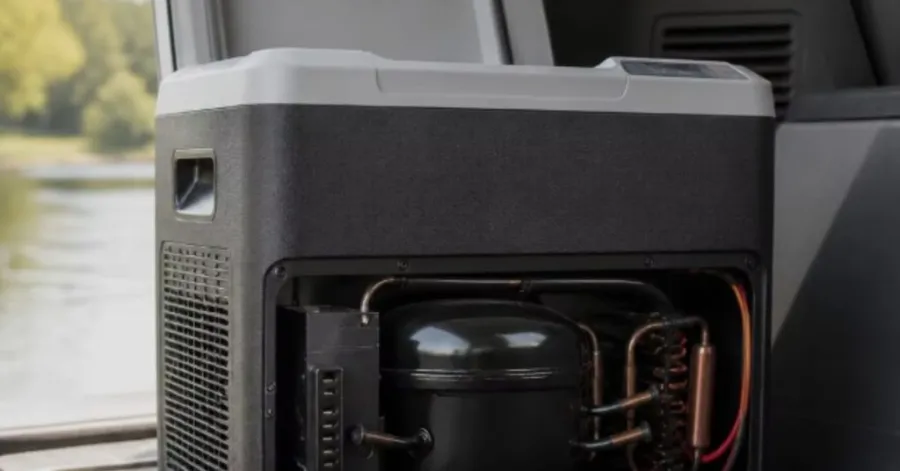
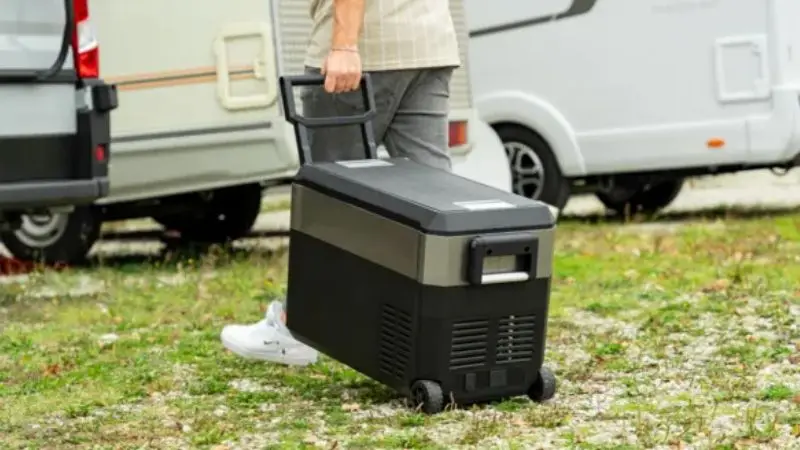
A portable fridge is ideal for camping, road trips, and outdoor activities. It uses a compressor and coolant to carry heat from the interior, like a household refrigerator. Depending on the model, it can be connected to a 12V or 24V car socket, a domestic socket, or a compatible portable power source.
Many compressor coolers contain digital temperature controls, and some even offer freezer functions. What does a compressor cooler do? It uses a cooling system to remove heat and keep the temperature set. The performance depends on ambient temperatures, insulation, ventilation, and electricity availability.
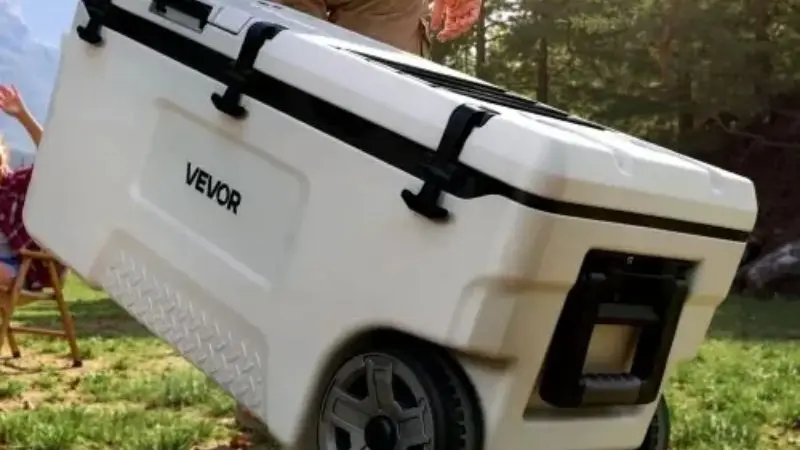
Unlike the conventional ice coolers, compressor coolers do not require any ice, so you do not have to deal with meltwater. But they need power to run.
Pros of Compressor Coolers
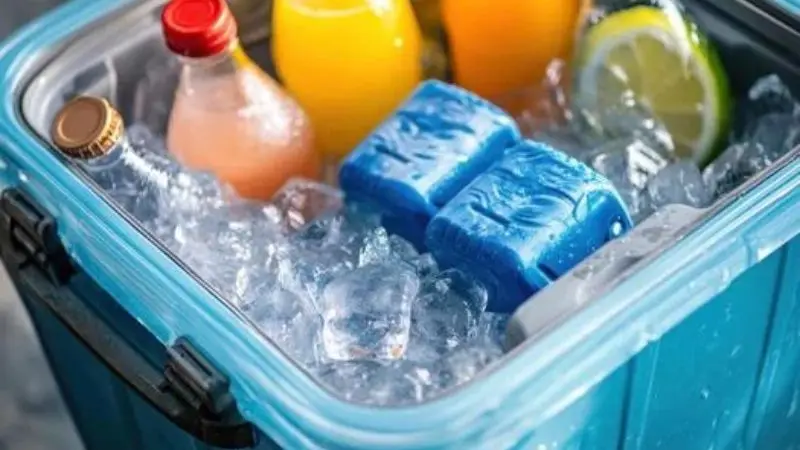
1. Reliable Cooling in Hot Weather
The compressor cooler is pulling heat from the inside to keep it cool in hot weather. This makes them a good choice for summer camp, road trips, and outdoor enjoyment.
Traditional ice coolers can keep food and drinks cold, but as ice melts, their cooling capacity can decrease. The best portable compressor cooler shall ensure reliable cooling for travellers who require reliable temperature management, provided that it has sufficient capacity to perform its functions within the limits set.
2. No Need for Ice
No need to buy, pull, and replace ice with compressor coolers. This is particularly useful on long trips to isolated places where ice can be hard to find.
More room for food and drink without any space-ice will be available. You also don’t drain meltwater. This means that packed food remains dry and cleaning is easy. This is one of the reasons why a portable compressor cooler may be useful for extensive camping trips.
3. Adjustable Temperature Control
You can adjust the temperature with most compressor coolers. If your model has an option for freezing, you can set a colder temperature for frozen items or a refrigerator for fresh food and drink. If you select the best compressor cooler for your consumption at home, look for accurate temperature controls according to the foods and drinks you store the most.
Since temperature depends on how much ice you add, the insulation quality, and external conditions, traditional ice coolers provide less direct control.
To ensure safety, perishable food shall be kept at or below 4°C (40°F). Use a thermometer when needed rather than a hand in order to check the temperature of food.
4. Convenient for Long Trips
Compressor coolers also provide an excellent alternative to a day-to-day search, ground, and long road trip. Without needing ice to top off, it is not dependent on the limited amount of ice, so the food can stay cool. How to select the best compressor cooler for longer trips in the outdoors depends on the duration of your journey, the need for cooling, and the power supply.
You can also make the preparation of dinner easier by carrying with you a wider selection of ingredients. But you have to arrange for battery capacity, charging possibilities, and backup power.
5. Flexible Power Options
Depending on the model, a compressor cooler can be operated on a vehicle’s outlet, a domestic power source, or a compatible portable power source. Some models provide low voltage protection to prevent over-discharge of the car battery. A commercial compressor cooler can assist companies in keeping food, drinks, and other temperature-sensitive items cool during transport.
Check the supported voltage, power consumption, type of connector, and supplied adapters for purchase. When you camp away from your car, make sure your power station has enough juice to run the cooler for your trip.
Cons of Compressor Coolers
1. Higher Initial Cost
Due to their electrical components and cooling systems, Compressor coolers typically cost more than regular coolers. You may also require an additional battery or charging equipment for portable power.
This can be worth the extra cost for a frequent flyer. But the standard ice box is normally more economical for individual picnics and short trips. When searching for the best portable alternatives for a compressor cooler, check your purchase price and ask for extra electrical equipment.
2. Dependence on Electricity
A compressor cooler needs power to cool off actively. If the power supply fails or the battery is discharged, the inside is going to warm up gradually.
Consideration shall be given to energy consumption in units, as well as to how you will recharge it on remote journeys or during extended activities, in the selection of a compressor cooler for industrial applications. A good portable power plant or a backup battery can help keep you cool. You can also charge it if you have sufficient capacity and appropriate conditions for the sun.
3. Potential Vehicle Battery Drain
Keeping the compressor cooler running off the car’s starter battery when the engine is off may turn out to be a problem if you need to start the car while the cooler is running. This can vary based on the condition of the battery, power use of the cooler, and the length of time the device is operating.
The least troublesome way to minimize this risk is by using low-voltage enabling systems, but this does not imply that the battery will be able to provide the requisite starting power. If camping for a night or longer, a secondary auxiliary battery (or portable power station) is an option. The selection of the best compressor cooler depends on its power consumption, safety aspects (battery protection), and the duration of usage.
4. Additional Weight and Operating Sound
Coolers used with the compressor tend to be heavier than just plain insulated coolers because they consist of a compressor, refrigerant circuit, etc. Too easy to use when carrying around, but difficult in a vehicle.
They sometimes can be noisy and vibrate if they run too fast. Look into its noise level and weight specifications when purchasing a portable unit that is quiet enough to use for an overnight stay. The ideal size for a compressor cooler will depend on how much space you have and how much noise you can accommodate.
5. Maintenance and Repair Requirements
Compressor coolers are more mechanical and electrically advanced ice coolers compared to normal ice coolers. The problem may require professional repairs for the compressor, wiring, control, or power connection issues.
No obstruction of ventilation apertures. Clean the inside on a regular basis. Protect the electrical connections from dampness. Follow the manufacturer’s instructions. Prior to purchasing a compressor cooler that is intended for business use, ensure that the warranty offered and serviceability are comparable.
Compressor Coolers vs. Traditional Ice Coolers
| Feature | Compressor Cooler | Traditional Ice Cooler |
| Cooling method | Electricity-powered refrigeration | Ice or frozen packs |
| Temperature control | Usually adjustable | Depends on ice and conditions |
| Ice required | No | Yes |
| Electricity required | Yes | No |
| Initial cost | Usually higher | Usually lower |
| Portability | Often heavier | Often lighter |
| Best suited for | Long trips and vehicle camping | Picnics and short outings |
When the environment requires a prolonged evening temperature for a few days, you wish to keep food frozen, or you are planning a trip that will either have limited access to ice or ice for a period of time, you can buy a compressor cooler. This can be particularly helpful during long travels, as long as there is a reliable source of power.
For people who can’t afford the high cost of an ice chest, a more convenient option tends to be a regular ice chest, especially for shorter trips, where electricity isn’t available, and when someone is on a budget. Don’t just compare sticker price: Consider long-term costs, including electricity, charging equipment, and buying and maintaining ice. These and other points enable you to choose the right compressor cooler based on your budget, cooling requirements, power requirements, and application.
What to Consider Before Buying a Compressor Cooler
When purchasing a compressor cooler, think about size, power requirements, mobility, and temperature range. The sort of cooler that you require will depend on how frequently you travel, exactly how much food you wish to keep, and where you might use your cooler.
- Size: Choose a size that fits snugly, but isn’t too large. Pack all the necessities for mealtime on the tour.
- Power Consumption: What is the power consumption of the cooler? Determine the number of batteries required and how long the battery will last before it needs recharging.
- Weight and size: If it features handles, you’ll need to carry it from the car to your campsite, so take these into account.
- Temperature Range – Ensure that the cooler maintains a temperature it can drop to or bring up to, depending on the criteria of storage.
For those who operate a commercial food, beverage, or temperature-sensitive product transport firm, a commercial compressor cooler may be a convenient solution to keep products cool while in transit. Also take your budget, warranty, and available power source into consideration to make sure you can find one that would suit your outdoor pursuits and storage requirements.
Which Cooler Is Best for Different Outdoor Activities?
This will depend on where you are heading, and how much heat you need for cooling and how much electricity you have access to. If you need a portable compressor cooler without the need for ice on a trip that requires temperature control, you may want to choose the best portable compressor cooler.
- On long journeys: Forget electric ice packs; Switch to an air compressor cooler, as it allows you to refrigerate your room to a specific temperature when connected to a suitable power supply.
- Remote camping and overlanding: With adequate battery capacity or a portable power station, a compressor cooler helps.
- Weekend camping: Either is good. Use a compressor cooler to stop having to replace ice blocks, or a regular cooler if you don’t want to bother with that.
- For beach trips & picnics: This will typically be a less expensive, lighter, and easier-to-carry basic cooler.
- Fishing and outdoor work: Either may be suitable depending on the length of the trip, availability of electricity, storage space, and items that need to be kept cold.
If you are active outside, think about how frequently you go out, and whether you have the right power equipment on hand. These factors may have a very big impact on your purchase value.
Are Compressor Coolers Worth It?
A compressor cooler may prove to be a worthwhile purchase if you travel long distances, camp on extended trips, or travel to places where ice is hard to get. People who have to keep perishables and would like to have temperature-control ability ought to use the best compressor cooler for home use that fits their storage requirements, as long as it works.
When you’re spending an extended amount of time outdoors, you don’t have a lot of money to spend or aren’t using a power source, a traditional cooler is ideal. When you have an abundance of ice, it turns out to be useful for picnics and other brief ventures.
When you are considering, take your trip length, amount of food that must be stored, outside temperatures, required capacity, and access to electricity into account. Make comparisons to select a cooler that is right for your activity and budget.
Conclusion
A compressor cooler cools itself, allows you to set your desired temperature, and is ice-free, making it ideal for long trips on the road and outdoor adventures that last more than a day. It is more expensive and consumes more electricity than others, is heavier and maintenance-intensive, so it may not be for everyone. It is tough to bring on picnics, day trips, and brief trips to camp, and it is cheaper than the snowmen. When deciding on the most effective cooler to travel outdoors with, take into account the amount of money you have, how frequently you travel, the level of “coolness” you require, and if an outlet is available for this purpose.
FAQs
1. Best Portable Refrigerators for Weekend Campers Who Need a Freezer (Top 6)
There are several good solutions, including Dometic CFX3, ICECO VL60, BougeRV CRPRO, Alpicool CF55, EcoFlow GLACIER, and ARB Zero. They provide consistent cooling and freezing performance, plus storage for weekend camping.
2. The Best Camping Coolers That Convert to Car Refrigerators (Top 7)
The camping features of EcoFlow GLACIER Classic, Anker EverFrost 50, BougeRV CRD2, ICECO VL45, Dometic CFX3 35, ARB Zero, and Alpicool CF55 are valuable. Depending on the type, battery-powered models offer cooling without the need for the continuous power of the vehicle.
3. Top 6 Portable Fridges for Hot Summer Times (Best 3).
The following models are worth keeping in mind: Dometic CFX3, ICECO VL45, ARB Zero, BougeRV CRPRO, EcoFlow GLACIER, and Alpicool CF55. Cool them down in an adjustable way with their compressor systems and enjoy performance on hot summer days with good ventilation.
4. Top-Rated 12V Car Refrigerators for Long Highway Trips
Dometic CFX3 45, ICECO VL45, BougeRV CRPRO 30, ARB Zero, Alpicool CF55, EcoFlow GLACIER, EUHOMY 48QT and Whynter FM-45G provide the needed portability, cooling and storage for travelling.
5. Best Energy-Efficient Car Refrigerators for Electric Vehicle Owners (Top 6)
Dometic CFX3, ICECO VL45, BougeRV CRPRO 30, EcoFlow GLACIER, Alpicool C15, and EUHOMY 48QT are good choices. Trips can be made energy-efficient by turning on energy-saving modes, using efficient compressors and ensuring correct insulation.